
Which vials you keep is between you and your provider. What trips up almost everyone who keeps several of them is keeping them straight. Five small clear vials, a bottle and a box of syringes look tidy on day one and chaotic by week three, especially when part of the kit lives in a gym bag.
Here are the ten habits that matter most for active people with a multi-vial kit, ranked by how much trouble each one saves.
Design a case for your multi-vial kit
Add every vial type with its count, plus bottles and supplies. The builder lays out a compact case with a home for each item.
The Rankings: 10 Best Ways to Organize a Multi-Vial Kit
1. Build the Case Around Your Exact Kit
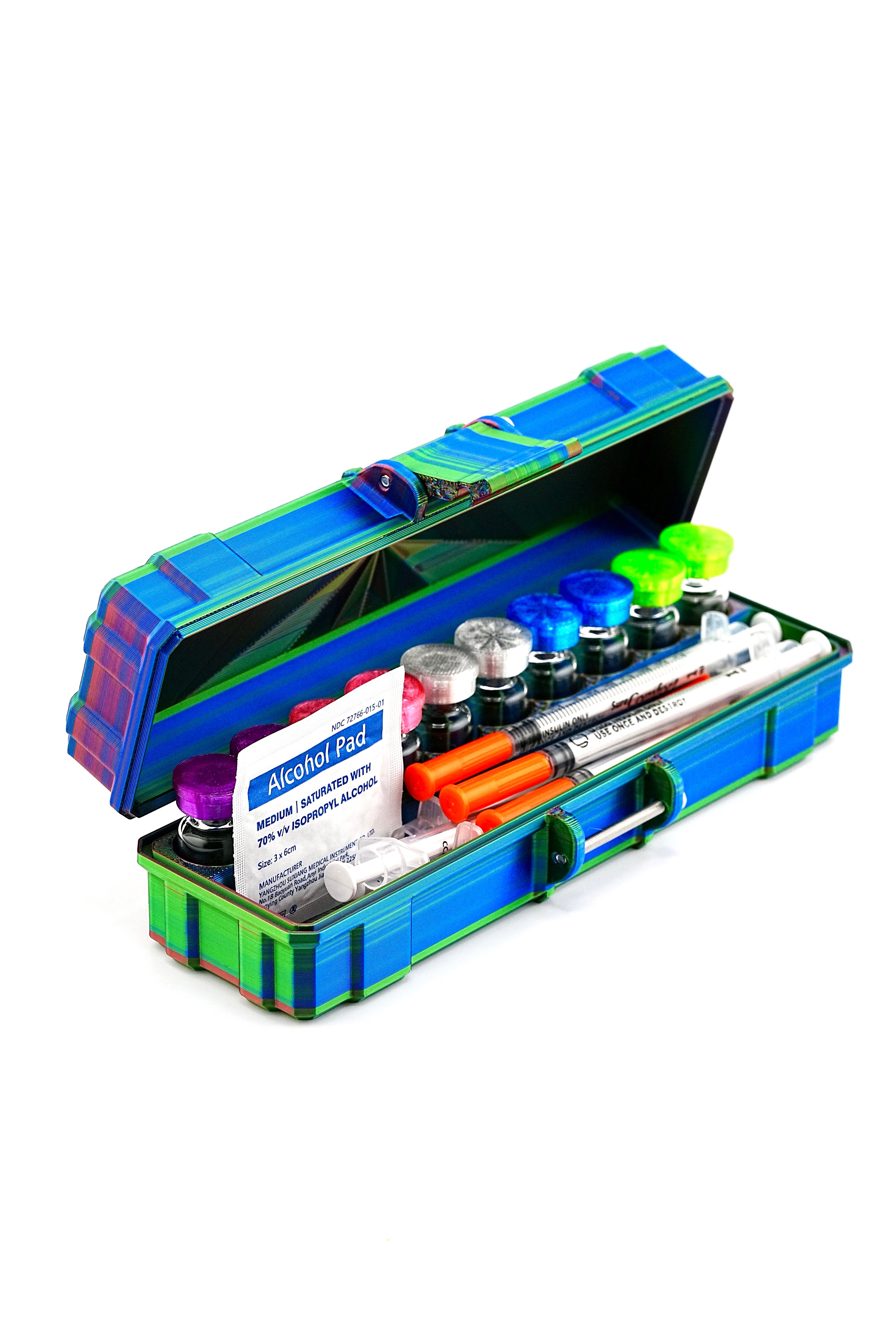
Everything else on this list is easier when the case fits the kit. Stock cases give you a fixed number of one slot size; a multi-vial kit almost never matches. In the PeptideCase™ builder you add each kind of vial with its count, plus the supplies that live with them, and Auto-arrange lays out the most compact case with a fitted pocket or bay for every item. You see the exact size and a 3D view before you order.
2. Give Every Vial a Fixed Pocket
A vial that always goes back to the same pocket is a vial you never have to look for. Decide the layout once (left to right, oldest to newest, or grouped by type) and stick to it. A fixed position also tells you instantly when something is missing.
3. Label Every Vial With a Name and Date
Write a short name, the date it arrived and the date you first opened it on every vial, using a fine marker or a strip of tape. Clear vials of the same size are indistinguishable without labels, and an unlabeled vial is how the wrong one gets picked up. Our vial labeling guide shows a simple format.
4. Color-Code Look-Alike Vials
Labels work when you read them; colors work even when you don't. Give each kind of vial its own cap color and the difference is obvious from above, even half-awake. Custom vial caps come in 3 mL or 10 mL sizes with a cap color plus an icon or one or two letters, and one set can hold several designs.
Color-code your vials
Custom snap-on caps for 3 mL or 10 mL vials, with a cap color plus an icon or letters. Sets from 25 caps.
5. Keep Backups Apart From Vials in Use
Unopened backups belong in a separate section of the case or in a second case entirely. That way you never open a new vial by accident, and you can see at a glance how many you have left. Use the oldest backup first.
6. Keep Supplies in the Same Case
Vials in the fridge, syringes in a drawer and alcohol pads in a gym bag means three trips and vials left out while you hunt. Put the BAC water bottle, syringes and alcohol pads in the case with the vials, each with its own space, so one case out means everything out.
7. Set Up One Fridge Spot
Follow your product labels for temperature. If your vials belong in the fridge, give the case one permanent home, toward the back of a middle shelf, not the door. The door gets swung and bumped constantly, and loose vials there tip and fall. See our fridge organization guide for setting up a shelf.
8. Pack a Gym-Bag Case That Fits the Pocket
Loose vials in a gym bag knock against keys, bottles and chargers with every step. Carry only what you need that day in a small hard case, and size it to the pocket you actually use. Measure the pocket first; if it's narrow, a Deep case (hinge on the short side) usually fits better than a Wide one. Never leave the bag in a parked car with vials inside.
9. Plan Travel as Its Own Kit
For trips, pack only what the trip needs and leave the rest at home. Carry the case on rather than checking it, keep vials in their labeled packaging with any prescription or documentation, and check your airline's rules. If your labels call for cold, the case goes inside an insulated cooler bag with ice packs; a hard case protects and organizes, but it isn't a cooler. Our peptide travel checklist has the full list.
10. Keep an Inventory Card and a Thermometer
A small card in the case lid listing what's in each pocket, how many backups you have and the dates that matter keeps a big kit honest. Add a min/max thermometer next to the case so you can compare the fridge with your labels. If you'd like the thermometer built in, the builder can add a temperature sensor: a clip-in window in the lid or a socket inside the case for a small digital thermometer.
For more on keeping a bigger kit in order, read our guide to organizing several vials and our high-capacity storage guide.
Make your own custom case for a multi-vial kit
The number one habit on this list is the one that makes the other nine easy. In the PeptideCase™ builder, start with an empty case and tap "Add item". Add each kind of vial with its count (3 mL, 10 mL, peptide, glutathione or other size), then a BAC water bottle, syringes, alcohol pads (flat or standing), and a custom space with your own width, depth and height for an inventory card. Every item becomes fitted pockets or an open bay sized for that many, and every storage space has a finger scoop. The tallest item sets the case height and shorter vials stand on a raised floor, so every vial top lines up at the rim. Auto-arrange packs it all into the most compact layout; build a second, smaller case for the gym bag if you carry part of the kit. Big cases get a 5-knuckle hinge and two latches. Build your multi-vial case