Every stack on this list has been selected on three criteria: documented synergy between the compounds, practical real-world adoption in the biohacking and performance communities, and a reasonable storage footprint for the everyday user. The more vials you run, the more critical your storage setup becomes — we'll call out exactly what you need for each one.
Storage requirements are listed per-stack because this is where most people quietly fail. A peptide that degraded in a warm drawer isn't working. A vial you can't identify because you forgot to label it is a liability. The difference between a protocol that works and one that doesn't is often less about the compounds and more about how you store and manage them.
The Stacks
1. The Wolverine Stack — BPC-157 + TB-500
Goal: Injury healing, tendon and ligament repair, systemic tissue regeneration
Compounds: BPC-157 (Body Protection Compound-157) at 250–500mcg per injection, combined with TB-500 (Thymosin Beta-4) at 2–5mg per week during a loading phase, dropping to 2–2.5mg biweekly during maintenance.
Why this combination works: BPC-157 operates locally at the injury site, driving angiogenesis and collagen synthesis. TB-500 operates systemically, promoting cell migration and reducing inflammation across the whole body. Together they address the same problem from two different mechanisms — local and systemic. This is why the stack earned its nickname in the biohacking community.
Dose schedule: BPC-157 is injected daily or twice daily, typically subcutaneously near the injury. TB-500 is injected subcutaneously or intramuscularly twice per week in the loading phase (weeks 1–4), then biweekly for maintenance. A typical full protocol runs 8–12 weeks.
Vial count: 2 active vials at a time. For an 8-week protocol, budget 3–4 vials of BPC-157 and 2–3 vials of TB-500.
Storage requirements: Both compounds store similarly. Lyophilized (dry) powder: -20°C for up to 24 months. Refrigerated dry: 2–8°C for 3–6 months. Reconstituted with BAC water: refrigerate at 2–8°C, use within 4–8 weeks. BPC-157 is extremely light-sensitive — keep it in amber vials or wrapped in foil. TB-500 is moderately light-sensitive. A 6-slot case handles a standard protocol run with room for BAC water.
For more on this stack's storage specifics, see our complete Wolverine Stack storage guide and individual guides for BPC-157 storage and TB-500 storage.
2. The GH Optimizer — CJC-1295 + Ipamorelin
Goal: Growth hormone optimization, body composition improvement, enhanced sleep quality, recovery acceleration
Compounds: CJC-1295 (with or without DAC) combined with Ipamorelin, typically at a 1:1 dose ratio. Common protocol: 100–300mcg of each per injection.
Why this combination works: CJC-1295 is a GHRH analogue — it signals the pituitary to produce more growth hormone. Ipamorelin is a GHRP (growth hormone releasing peptide) — it amplifies the GH pulse and mimics ghrelin. Together they create a synergistic, more pronounced GH release than either compound alone. CJC-1295 without DAC has a short active window (30–60 minutes), making it ideal for timed dosing. CJC-1295 with DAC has a week-long activity window, simplifying the schedule significantly.
Dose schedule: CJC-1295 without DAC + Ipamorelin: 2–3x daily, typically at bedtime and sometimes morning or post-workout. CJC-1295 with DAC: 1–2x per week, always paired with a same-day Ipamorelin injection. Fast for 2 hours before injection for maximum GH response.
Vial count: 2 active vials. With DAC, vials last significantly longer since dosing frequency is lower.
Storage requirements: Both peptides store at 2–8°C dry, -20°C for long-term. Reconstituted: 2–8°C for 4–8 weeks. Neither compound is extremely light-sensitive, but standard opaque storage is still recommended. A 6-slot case with designated positions for each compound and BAC water is sufficient.
See our full CJC-1295 + Ipamorelin storage guide and Ipamorelin storage guide for complete protocols.
3. The GLP-1 Weight Loss Stack — Semaglutide, Tirzepatide, or Retatrutide
Goal: Significant fat loss, appetite regulation, metabolic improvement
Compounds: One of three GLP-1 receptor agonists — Semaglutide (GLP-1 mono-agonist), Tirzepatide (GLP-1 + GIP dual agonist), or Retatrutide (GLP-1 + GIP + glucagon triple agonist). These are technically run solo, not stacked with other peptides, which is why the "stack" here refers to choosing the right compound for your goals.
Why this works: GLP-1 agonists reduce appetite by slowing gastric emptying, increase satiety signaling, and in the case of Tirzepatide and Retatrutide, also improve insulin sensitivity and drive additional metabolic benefits through dual or triple receptor action. Weekly dosing makes these the simplest high-impact peptide protocols available.
Dose schedule: All three are dosed subcutaneously once per week. Titration matters: start low and increase every 4 weeks to tolerance. Semaglutide typically starts at 0.25mg/week; Tirzepatide at 2.5mg/week; Retatrutide at 2mg/week.
Vial count: 1 active vial. A 10ml vial at appropriate concentration typically lasts 4–8 weeks depending on dose.
Storage requirements: Lyophilized: -20°C for long-term; 2–8°C for up to 6 months. Reconstituted: 2–8°C, use within 28–56 days depending on compound. These are among the most stable peptides when refrigerated. A single-slot or 6-slot case works fine; upgrade to a 10-slot when adding complementary recovery compounds.
Storage guides: Semaglutide storage, Tirzepatide storage, Retatrutide storage.
Pro Tip: GLP-1 users who also run BPC-157 report significantly better GI tolerance when combining these protocols. The one-two of appetite control plus gut healing makes a natural pairing — and bumps your active vial count to two, making a proper multi-slot case the obvious next purchase.
4. The Looksmaxing Stack — CJC-1295 + Ipamorelin + GHK-Cu + MT2
Goal: Aesthetic optimization — lean body composition, improved skin quality, melanin production, facial structure enhancement via reduced body fat
Compounds: CJC-1295 with DAC (200mcg, 2x/week) + Ipamorelin (200mcg, nightly) + GHK-Cu (1–2mg/day subcutaneous or topical) + Melanotan 2 (0.25–1mg, 2–3x/week for loading, then weekly maintenance).
Why this combination works: The CJC/Ipa base drives GH release for lean muscle gain and fat loss. GHK-Cu is a copper tripeptide that improves skin elasticity, collagen synthesis, and wound healing — producing the visible "glow" that experienced users describe. MT2 stimulates melanocortin receptors for tanning and appetite suppression, with the well-documented libido side effect as a bonus for many users.
Dose schedule: CJC/Ipa nightly before bed; GHK-Cu daily; MT2 every 2–3 days during loading (4–6 weeks), then weekly. Total active injection days: 5–7 per week depending on overlap.
Vial count: 3–4 active vials. At any time you're managing CJC, Ipamorelin (or combined CJC/Ipa blend), GHK-Cu, and MT2.
Storage requirements: CJC and Ipamorelin: 2–8°C reconstituted. GHK-Cu: particularly light-sensitive — keep in amber or foil-wrapped vials, refrigerated, use within 4 weeks of reconstitution. MT2: standard refrigeration. A 6-slot case handles this stack with room to spare. See GHK-Cu storage guide for detailed light protection instructions. For the full looksmaxing context, see beginner looksmaxing peptides.
5. The Anti-Aging Longevity Stack — Epithalon + GHK-Cu + NAD+
Goal: Cellular rejuvenation, telomere extension, collagen preservation, mitochondrial support — the biohacker's longevity protocol
Compounds: Epithalon (a tetrapeptide derived from the pineal gland) at 5–10mg/day for 10 consecutive days, run 2x per year. GHK-Cu at 1–2mg/day subcutaneous, ongoing. NAD+ precursor peptides or IV NAD+ (as a complementary compound, often run quarterly).
Why this combination works: Epithalon is one of the most researched anti-aging peptides, with human studies showing telomerase activation and increased melatonin production. GHK-Cu supports the connective tissue and skin repair that longevity requires. NAD+ drives mitochondrial function and DNA repair. Together these three target aging at the cellular, structural, and energetic level simultaneously.
Dose schedule: Epithalon is a cycled compound — 10 days on, then off for 6 months before repeating. GHK-Cu runs continuously or in 8-week cycles. NAD+ as needed. This protocol's defining feature is its low injection burden relative to results.
Vial count: 3 vials during an active Epithalon cycle. Outside cycles, typically 1–2 active vials (GHK-Cu + NAD+).
Storage requirements: Epithalon: -20°C lyophilized for up to 24 months; reconstituted, use within 4 weeks at 2–8°C. GHK-Cu: amber vial storage critical, maximum 4–6 weeks reconstituted. NAD+ compounds: highly variable by formulation — follow vendor specifications, generally -20°C for powder, 2–8°C for solution. A 6-slot case covers peak usage. See our Epithalon storage guide and GHK-Cu storage guide.
6. The Body Recomp Stack — Retatrutide + CJC-1295/Ipamorelin + BPC-157
Goal: Aggressive fat loss with simultaneous muscle preservation, anabolic recovery support, and metabolic acceleration
Compounds: Retatrutide (2–4mg/week, subcutaneous) + CJC-1295 with DAC (200mcg, 2x/week) + Ipamorelin (200mcg, nightly) + BPC-157 (250–500mcg/day as needed for injury prevention).
Why this combination works: Retatrutide's triple-agonist mechanism drives exceptional fat loss while preserving metabolic rate better than mono-agonists. The CJC/Ipa combination maintains GH levels that protect lean mass during the caloric deficit that Retatrutide creates. BPC-157 addresses the connective tissue stress that comes with rapid body recomposition — joints and tendons under new mechanical loads benefit from proactive healing support.
Dose schedule: Retatrutide weekly. CJC/Ipa 2x per week and nightly respectively. BPC-157 daily subcutaneous. This is a 5–7 injection-per-week protocol at full implementation.
Vial count: 3 active vials. Budget for 2–4 vials per compound over a 12-week protocol.
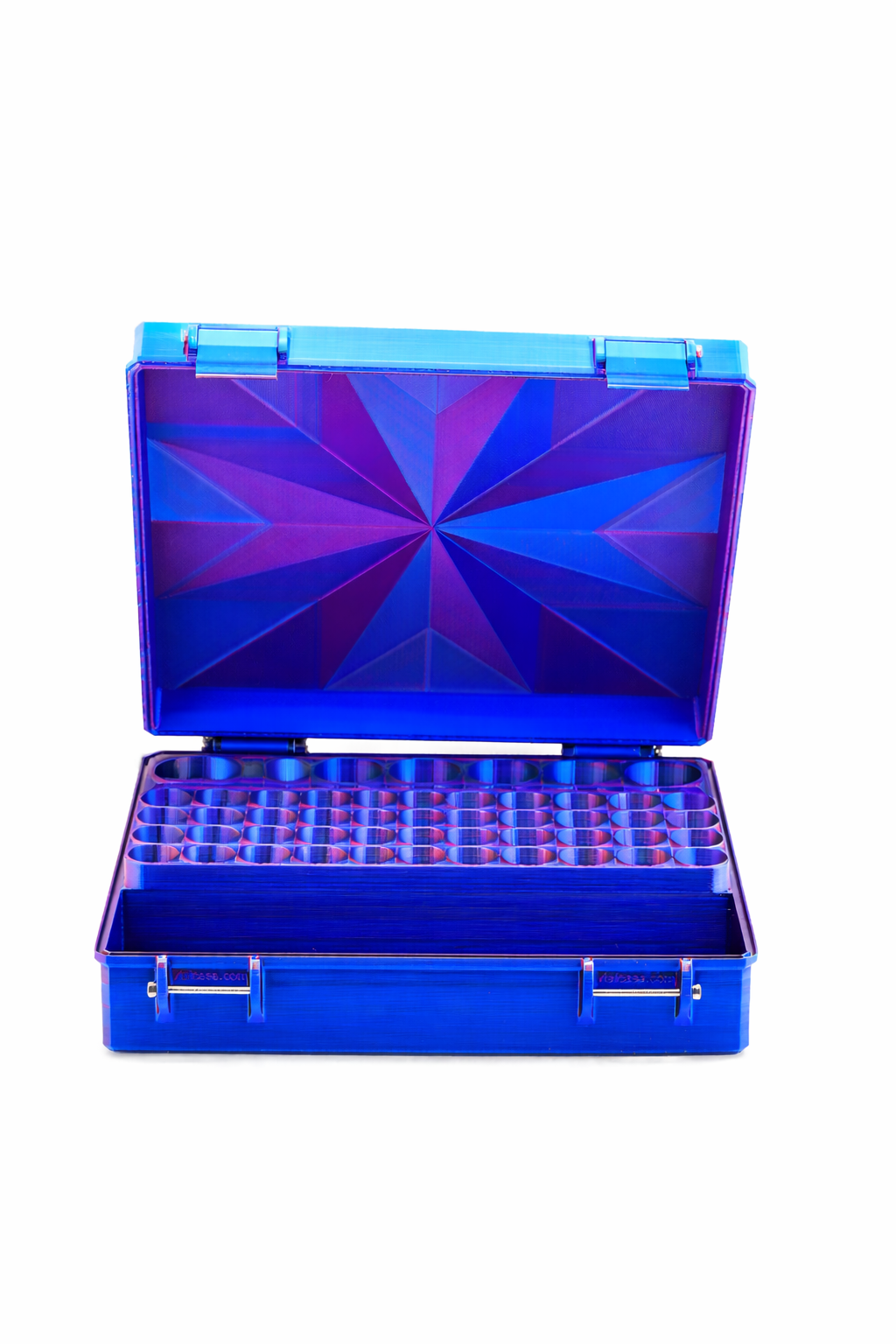
Storage requirements: All three compounds refrigerate at 2–8°C when reconstituted. Retatrutide is stable for 4–6 weeks reconstituted. BPC-157 requires light protection. A 6-slot case works; a 10-slot case is recommended if you're running concurrent backup vials. See Retatrutide storage and BPC-157 storage for complete details.
Pro Tip: On any recomp stack where you're managing 3+ vials, label each one with the compound name and reconstitution date using medical-grade labels before you ever draw from it. A mislabeled Retatrutide and Ipamorelin vial at the same concentration look identical. Dosing the wrong compound isn't just a waste of money — it disrupts your protocol. See our guide to labeling peptide vials for the best system.
7. The Full Biohacker Stack — NAD+ + BPC-157 + CJC-1295/Ipamorelin + GHK-Cu + Epithalon
Goal: Comprehensive optimization across recovery, longevity, body composition, skin health, and cellular rejuvenation
Compounds: Five distinct compounds — NAD+ (peptide or precursor form), BPC-157 (250–500mcg/day), CJC-1295 with DAC (200mcg, 2x/week) + Ipamorelin (200mcg, nightly), GHK-Cu (1–2mg/day), Epithalon (10-day cycles, 2x/year).
Why this combination works: This is the "everything" protocol. Each compound addresses a distinct system — energy and DNA repair (NAD+), tissue healing (BPC-157), GH axis optimization (CJC/Ipa), skin and collagen (GHK-Cu), and telomere/longevity (Epithalon). No redundancy, no wasted overlap. The complexity is real: 5+ injections per week, multiple reconstitution timelines to track, and stringent storage management.
Dose schedule: Daily injections for BPC-157 and GHK-Cu. Nightly for Ipamorelin. 2x/week for CJC with DAC. NAD+ as tolerated. Epithalon only during 10-day cycles. On a full cycle day, you may be drawing from 3–4 separate vials.
Vial count: 5+ active vials during Epithalon cycles. 4 active vials during standard protocol windows.
Storage requirements: This stack's storage complexity is the highest on this list. GHK-Cu and BPC-157 both require light protection. Epithalon and NAD+ formulations may have different temperature requirements from the rest. A 10-slot case is the minimum recommendation — it handles all active vials plus BAC water with organized separation. Detailed storage for each: BPC-157, CJC-1295/Ipamorelin, GHK-Cu, Epithalon.
8. The Recovery + Performance Stack — BPC-157 + TB-500 + Ipamorelin
Goal: Athlete recovery optimization — accelerated tissue repair, reduced downtime between training sessions, improved sleep quality for enhanced anabolic environment
Compounds: BPC-157 (500mcg/day, near injury sites or subcutaneous) + TB-500 (2.5mg, 2x/week loading for 4 weeks, then 2.5mg biweekly) + Ipamorelin (200–300mcg, every night before bed).
Why this combination works: The Wolverine Stack's BPC-157 + TB-500 foundation handles tissue damage from training. Ipamorelin added to this base amplifies overnight GH release during deep sleep — the window when most tissue repair actually occurs. The result is faster recovery between sessions, reduced DOMS, and better sleep quality, which compounds over weeks into significantly faster adaptation.
Dose schedule: Daily BPC-157 injection. Twice-weekly TB-500. Nightly Ipamorelin. This is a 3-injection-per-week minimum protocol (if combining BPC and Ipa in one nightly sub-q), up to 9 injections per week if all are dosed separately.
Vial count: 3 active vials.
Storage requirements: All three compounds store at 2–8°C reconstituted. BPC-157 requires light protection as the most sensitive compound. Ipamorelin is stable and straightforward. TB-500 is moderately light-sensitive. A 6-slot case handles this stack comfortably. See our complete peptide stack storage guide for organization tips when managing three compounds simultaneously.
9. The Sleep + GH Pulse Stack — CJC-1295 + Ipamorelin + Sermorelin
Goal: Optimizing the overnight growth hormone pulse for maximum recovery, anti-aging benefit, and sleep architecture improvement
Compounds: CJC-1295 without DAC (100–200mcg) + Ipamorelin (100–200mcg) + Sermorelin (200–500mcg) — all injected subcutaneously 30–60 minutes before sleep.
Why this combination works: Sermorelin is the oldest clinically used GHRH analogue, with the most established safety profile. CJC-1295 without DAC extends and amplifies the GHRH signal beyond what Sermorelin provides alone. Ipamorelin adds the GHRP component — the GH pulse amplifier. Together these three compounds produce a more complete, physiologically timed GH release that mirrors what healthy young adults experience naturally during deep sleep.
Dose schedule: All three compounds dosed nightly, 30–60 minutes before bed, fasted (no food for 2 hours prior). This is a 1-injection protocol if you combine them in a single draw, or up to 3 separate injections. Most users combine in one syringe.
Vial count: 2–3 active vials. Some users source CJC/Ipa as a pre-blended vial, reducing to 2 total.
Storage requirements: All three store at 2–8°C reconstituted, -20°C lyophilized long-term. None are highly light-sensitive, though standard opaque storage is still best practice. Reconstituted shelf life: 4–6 weeks at 2–8°C. A 6-slot case handles all vials plus BAC water. See our Sermorelin storage guide and Ipamorelin storage guide for full protocols.
10. The Nootropic Stack — Selank + Semax + NAD+
Goal: Cognitive enhancement, anxiety reduction, neuroprotection, and mental clarity — the brain optimization protocol
Compounds: Selank (250–500mcg/day, subcutaneous or intranasal) + Semax (100–300mcg/day, intranasal or subcutaneous) + NAD+ peptide or nicotinamide riboside (500mg–1g oral or IV/subcutaneous depending on formulation).
Why this combination works: Selank is a synthetic analogue of the immunomodulatory peptide tuftsin, with well-documented anxiolytic and nootropic effects in Russian research — it reduces anxiety without sedation and improves memory consolidation. Semax is a synthetic ACTH analogue that upregulates BDNF and improves cognitive function under stress. NAD+ supports the mitochondrial energy substrate that the brain needs to sustain cognitive output. The combination targets mental performance from three angles: anxiety reduction, neuroplasticity, and cellular energy.
Dose schedule: Selank and Semax typically run in 4–8 week cycles. Both can be used daily or 5 days on / 2 days off. NAD+ is often run continuously or in quarterly loading cycles. Intranasal administration for both Selank and Semax reduces injection frequency significantly.
Vial count: 3 active vials. Intranasal vials typically last longer per unit dose than injectable.
Storage requirements: Selank and Semax are both sensitive peptides — refrigerate immediately after reconstitution, use within 2–4 weeks. Both lose potency faster than structural or recovery peptides. NAD+ formulations vary significantly by vendor; follow specific instructions. Avoid freeze-thaw cycles for all three. A 6-slot case is sufficient; keep at the front of your fridge where temperature is most stable and access is easiest. See our complete guide to peptide storage mistakes to avoid the most common failures with sensitive cognitive compounds.
Storage Case Recommendations by Stack Size
The clearest pattern in this list: the more compounds you run, the more critical organized storage becomes. Here is a direct guide to case sizing by active vial count:
| Active Vials | Case Size | Stacks That Apply |
|---|---|---|
| 1–2 vials | 6-slot case | GLP-1 solo, Wolverine Stack |
| 3–4 vials | 6-slot or 10-slot case | GH Optimizer, Looksmaxing, Longevity, Recovery + Performance, Nootropic |
| 5+ vials | 10-slot case | Full Biohacker Stack, Body Recomp Stack (with backups) |
Pro Tip: When managing 3+ vials that look identical — same size, same clear liquid — the only thing standing between you and a dosing error is your label system. Use waterproof labels, write compound name and reconstitution date, and assign a fixed slot position to each compound in your case. Position 1 is always BPC-157. Position 2 is always TB-500. Muscle memory prevents mistakes. See our complete peptide vial labeling guide for the full system.
Universal Storage Rules That Apply to Every Stack
Regardless of which stack you run, these principles apply across the board and are responsible for the majority of peptide degradation failures:
Reconstitute only what you'll use in 4–6 weeks. Keep the rest lyophilized at -20°C. Reconstituted peptides have a limited shelf life regardless of how well you refrigerate them.
Never refreeze a reconstituted vial. The freeze-thaw cycle breaks down the molecular structure. Once you add BAC water, that vial lives in the fridge until it's gone.
Light is the silent killer. UV exposure degrades peptides faster than temperature fluctuations in most cases. Store your case away from any light source. BPC-157 and GHK-Cu are the most vulnerable compounds on this list.
BAC water is non-negotiable. Bacteriostatic water contains 0.9% benzyl alcohol, which prevents bacterial growth in a multi-use vial. Sterile water has no preservative — it's only appropriate for single-use injections. Every stack on this list should be reconstituted with BAC water. See our reconstitution guide for the full protocol.
Temperature consistency beats cold. A vial that sits at a steady 4°C outperforms one that swings between 2°C and 10°C repeatedly. Put your case in the back of the fridge, not the door. Door shelves are the most thermally unstable location in any refrigerator.
This content is for informational and educational purposes only and does not constitute medical advice. Always consult a licensed healthcare provider before beginning any peptide or hormone protocol.