Mistake #1: Leaving Vials on the Counter
The mistake: You draw your morning dose and leave the vial on the bathroom counter or kitchen table while you go about your day. Maybe you forget about it until the evening dose. Maybe it sits there for a few days between uses.
Why it's bad: Two things are happening simultaneously. First, the peptide is warming up — room temperature (20-25°C) is well above the ideal 2-8°C storage range, accelerating degradation reactions. Second, the vial is exposed to ambient light. Even indoor lighting — especially near windows — delivers enough UV to oxidize photosensitive peptides like BPC-157. The longer the exposure, the more potency you lose.
The fix: Return the vial to the refrigerator immediately after drawing your dose. Keep it inside an opaque storage case in the fridge, not loose on a shelf where the fridge light hits it every time you open the door.
Mistake #2: Freezing Reconstituted Peptides
The mistake: You reconstitute a vial with BAC water, then put it in the freezer thinking it will last longer — like freezing leftovers.
Why it's bad: When water freezes, it forms ice crystals. These crystals physically shear peptide bonds, breaking the amino acid chain into fragments that have no biological activity. Unlike food, peptides don't survive freeze-thaw cycles. A reconstituted vial that has been frozen is essentially destroyed, even if the liquid looks normal after thawing.
The fix: Only freeze lyophilized (powder) peptides. Reconstituted peptides must stay refrigerated at 2-8°C. If you won't use a vial within 4-8 weeks, keep it in powder form until you're ready. This is especially important if you buy peptides in bulk from Mexican pharmacies — only reconstitute what you'll use in the near term.
Pro Tip: Place a small piece of tape on your freezer that says "POWDER ONLY — NO RECONSTITUTED VIALS." It sounds obvious, but this mistake is far more common than you'd think, especially in households where multiple people access the same fridge.
Mistake #3: Shaking Instead of Swirling
The mistake: After adding BAC water to a lyophilized peptide, you shake the vial vigorously to dissolve the powder faster.
Why it's bad: Shaking creates mechanical stress — foam, air bubbles, and physical force that can denature peptide bonds. Denatured peptides lose their three-dimensional structure, which is what gives them biological activity. You also introduce air into the solution, which accelerates oxidation. The peptide may dissolve faster, but you've degraded a portion of it in the process.
The fix: Gently swirl or roll the vial between your palms. If the powder doesn't dissolve immediately, set the vial in the refrigerator and check back in 15-30 minutes. Most lyophilized peptides dissolve fully with gentle swirling and a little patience. See our complete reconstitution guide for the full step-by-step process.
Mistake #4: Using Sterile Water Instead of BAC Water
The mistake: You reconstitute your peptide with plain sterile water because it was cheaper, more available, or you didn't know the difference.
Why it's bad: Sterile water has no preservative. Bacteriostatic (BAC) water contains 0.9% benzyl alcohol, which actively prevents bacterial growth inside the vial. Without this preservative, every needle puncture introduces bacteria that can multiply unchecked. Your reconstituted peptide is only safe for 1-2 weeks with sterile water versus 4-8 weeks with BAC water. That's a 75% reduction in usable shelf life.
The fix: Always use BAC water unless you have a documented sensitivity to benzyl alcohol. BAC water is inexpensive and widely available — there's no good reason to use sterile water for multi-dose vials. If you're picking up peptides at a pharmacy in Mexico, grab BAC water at the same time.
Mistake #5: Not Labeling Reconstitution Dates
The mistake: You reconstitute a vial and put it in the fridge without noting when you mixed it. Three months later, you're still drawing from the same vial.
Why it's bad: Reconstituted peptides have a finite shelf life. Even with BAC water and perfect refrigeration, peptide degradation is a gradual, ongoing process. After 4-8 weeks, the compound has lost enough potency that you're essentially injecting an unknown quantity. Without a date, you have no idea whether you're within the safe window.
The fix: Write the reconstitution date on the vial cap, the vial itself (with a fine-tip marker), or a small piece of tape. Include the compound name and concentration too — for example, "BPC 2.5mg/ml 4/1." Set a calendar reminder 4 weeks out to reconstitute a fresh vial.
Pro Tip: If you're running multiple peptides, color-coded vial caps combined with date labels create an instant visual system. You can see at a glance what each vial contains and when it expires. Check out our peptide storage guide for more organization strategies.
Mistake #6: Storing Peptides in a Ziploc Bag
The mistake: You toss your vials, syringes, and alcohol swabs into a Ziploc bag and call it a day. Maybe you wrap each vial in a paper towel for "padding."
Why it's bad: A Ziploc bag provides zero protection against the things that actually degrade peptides. It's transparent (light passes right through), offers no impact protection (glass vials can crack or shatter against each other), provides no insulation (temperature changes affect the contents immediately), and looks suspicious to TSA agents and border officers during travel.
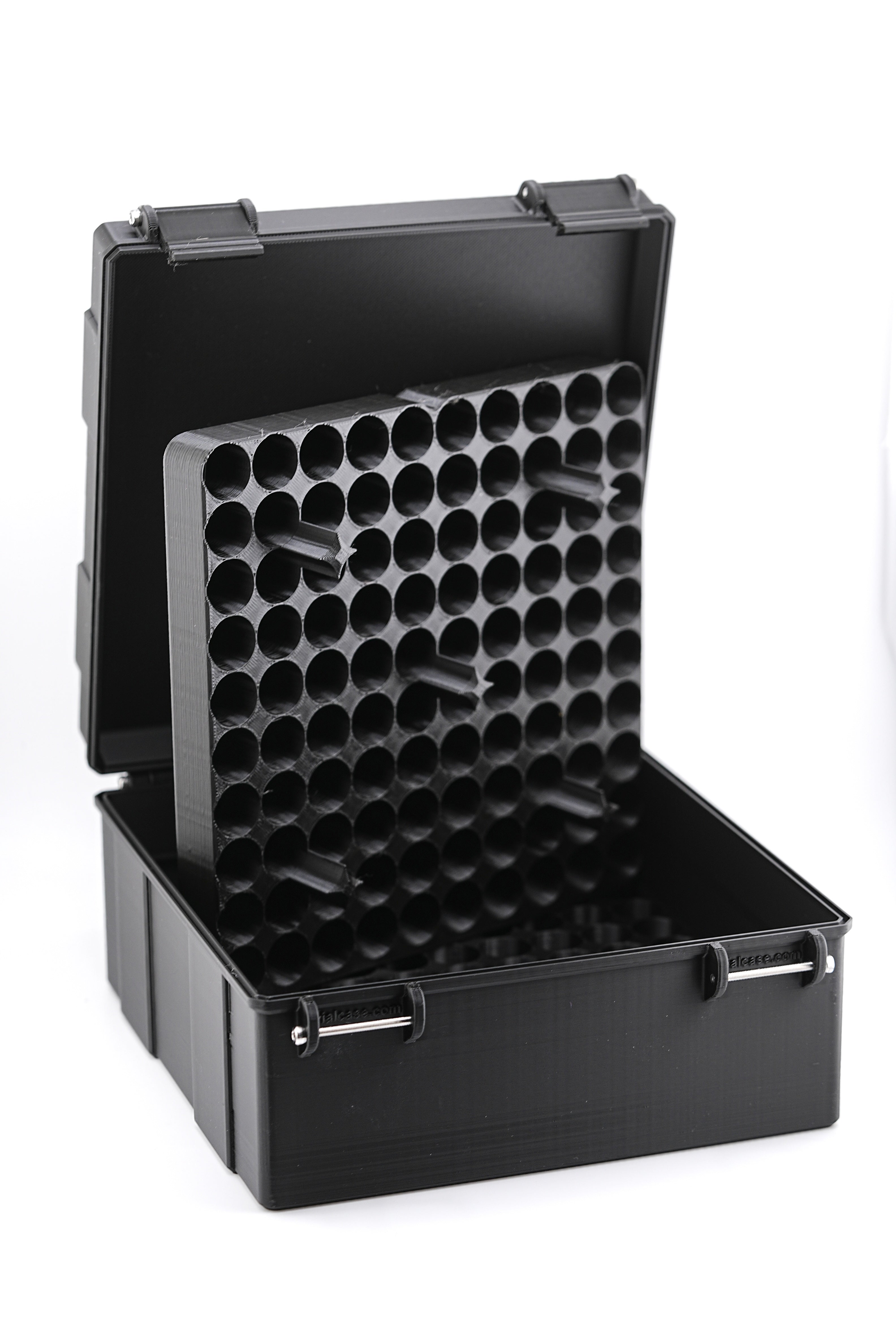
The fix: Use a purpose-built peptide storage case with individual foam slots for each vial. A hard-shell case blocks light, absorbs impact, provides some insulation, and presents a professional appearance at security checkpoints. The cost of a proper case is less than the cost of a single vial of BPC-157 — and it protects every vial you'll ever own.
Mistake #7: Checking Peptides in Luggage
The mistake: You pack your peptide vials in your checked suitcase because you don't want to deal with TSA questions at the checkpoint.
Why it's bad: The cargo hold of a commercial aircraft is a nightmare for peptides. Temperatures can drop to -40°C at cruise altitude (freezing and destroying any reconstituted peptides) or spike during tarmac time in hot climates. Pressure changes can cause vial stoppers to pop. Rough baggage handling can shatter glass vials. And if your luggage is lost, so are your peptides — and your entire protocol is disrupted.
The fix: Always carry peptides in your carry-on bag. TSA explicitly allows injectable medications in carry-on luggage with no liquid size limit. The brief conversation at the checkpoint ("I have medically necessary injectables") takes 10 seconds. Compare that to the risk of losing hundreds of dollars worth of peptides to cargo hold conditions.
This is doubly important if you're flying back with GLP-1 medications or returning from a peptide purchase trip. Keep everything in an organized carry-on case.
The Pattern: Notice that a proper storage case fixes almost every mistake on this list. It blocks light (#1), separates reconstituted from powder vials (#2), organizes by compound (#5), replaces the Ziploc bag (#6), and travels in your carry-on (#7). A single purchase solves 5 out of 7 problems.
The Bottom Line
Peptides aren't cheap — whether you're buying domestically or making the drive across the border into Mexico for better prices. Every dollar you spend on peptides is wasted if your storage practices are degrading the compounds before they reach your body.
The fix for most of these mistakes comes down to two things: a proper storage case and consistent refrigeration. Get those right, and your peptides will maintain their potency for their full intended shelf life.
For a comprehensive deep-dive into each storage variable, read our complete peptide storage guide.