What Is Bacteriostatic Water?
Bacteriostatic water (BAC water) is sterile water that contains 0.9% benzyl alcohol as a preservative. The benzyl alcohol inhibits bacterial growth, which is critical because every time you insert a needle through a vial's rubber stopper, you introduce a potential pathway for contamination.
BAC water is the gold standard for peptide reconstitution because it dramatically extends the usable life of your reconstituted compound. Without the preservative, bacteria can colonize the vial within days, degrading the peptide and creating a safety risk.
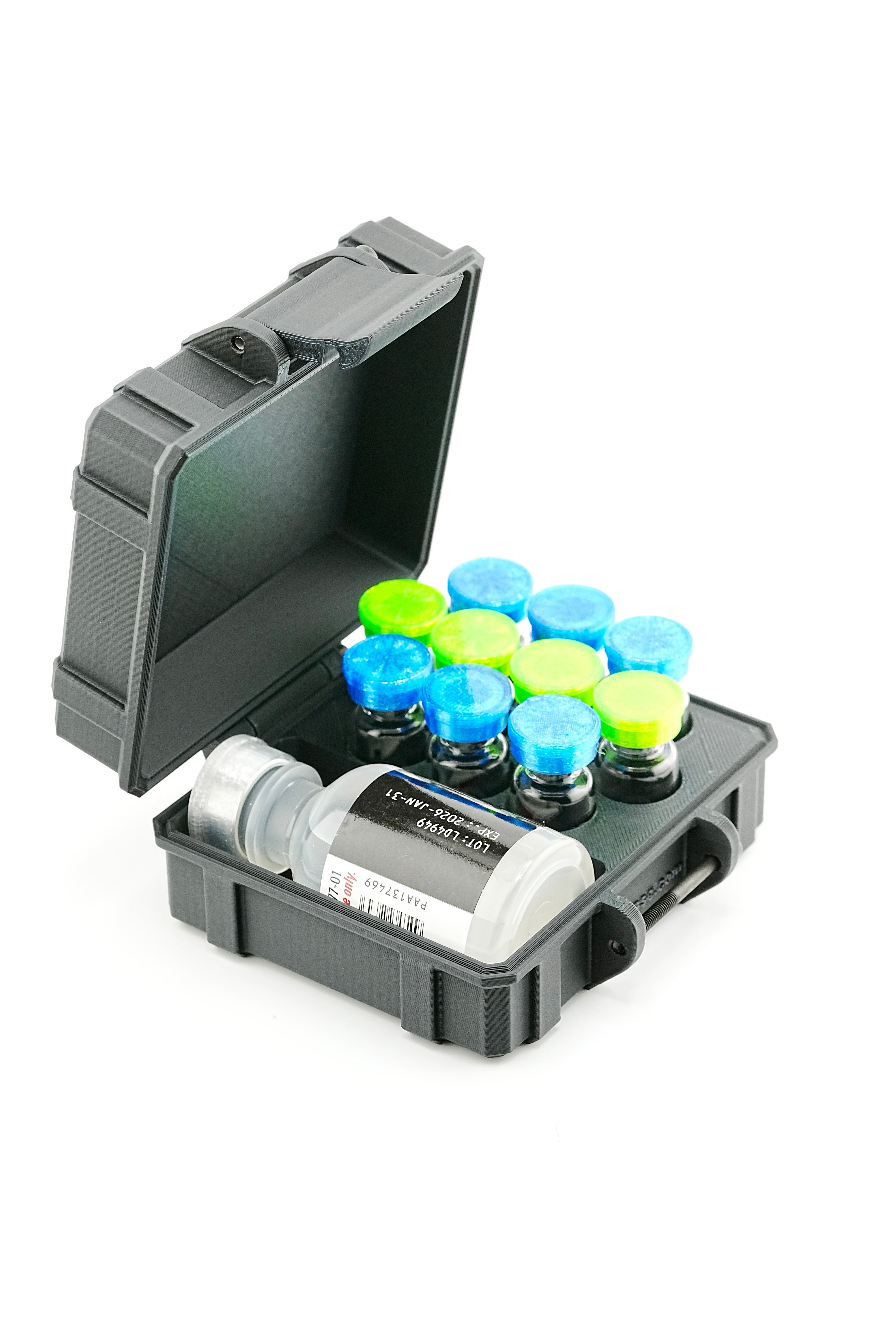
BAC water is widely available in the U.S. and is also one of the most common items people pick up at Mexican pharmacies alongside their peptide purchases. If you're traveling with peptides, having a dedicated slot in your case for the BAC water vial keeps everything organized.
BAC Water vs. Sterile Water: Which to Use
This is one of the most common questions in the peptide community, and the answer is almost always BAC water. Here's the comparison:
- BAC water (bacteriostatic): Contains 0.9% benzyl alcohol. Reconstituted peptides last 4-8 weeks refrigerated. Multiple needle punctures are safe. This is the right choice for most peptides.
- Sterile water: No preservative. Reconstituted peptides should be used within 1-2 weeks. Each needle puncture increases contamination risk. Only use if you have a specific reason (e.g., benzyl alcohol sensitivity).
Using sterile water when BAC water is available is one of the top peptide storage mistakes — it cuts your shelf life by 75% or more.
Pro Tip: BAC water typically comes in 10ml or 30ml vials. A 10ml vial is enough to reconstitute multiple peptide vials. Store your BAC water in the larger 10ml slot of your case, separate from your 3ml peptide vials.
Step-by-Step Reconstitution
Follow these steps carefully. The reconstitution process takes about 5 minutes and should be done in a clean environment.
- Prepare your workspace. Wipe down a clean, flat surface. Gather your peptide vial, BAC water, an insulin syringe (typically 1ml/100 unit), and alcohol swabs.
- Clean the vial tops. Swab the rubber stopper of both the peptide vial and the BAC water vial with an alcohol pad. Let them air dry for a few seconds.
- Draw the BAC water. Insert the syringe into the BAC water vial and draw the desired amount of water (see dosing calculations below). Common volumes are 1ml or 2ml depending on your desired concentration.
- Inject slowly along the vial wall. This is the most important step. Insert the needle into the peptide vial and aim the stream of water against the glass wall, not directly onto the lyophilized powder. Let the water trickle down gently. Direct force can damage peptide bonds.
- Swirl gently — never shake. Once the water is added, gently roll or swirl the vial between your palms until the powder is fully dissolved. The solution should be clear. Never shake a peptide vial. Vigorous shaking creates foam, introduces air, and can denature the peptide through mechanical stress.
- Refrigerate immediately. Once reconstituted, place the vial in your storage case and refrigerate at 2-8°C. The clock is now ticking on your shelf life.
- Label the vial. Write the reconstitution date on the vial cap or a small piece of tape. This is the only way to track when the vial should be discarded.
Dosing Calculations
Dosing depends on two factors: the total peptide content in your vial (in milligrams or micrograms) and how much BAC water you add. Here's a simple formula:
Concentration = Total peptide / Volume of BAC water added
For example, with a 5mg BPC-157 vial:
- Add 1ml BAC water = 5mg/ml (each 0.1ml = 500mcg, each 10 units on syringe = 500mcg)
- Add 2ml BAC water = 2.5mg/ml (each 0.1ml = 250mcg, each 10 units = 250mcg)
- Add 2.5ml BAC water = 2mg/ml (each 0.1ml = 200mcg, each 10 units = 200mcg)
Most insulin syringes are 1ml total with markings every 2 units (0.02ml). Choose a BAC water volume that makes your target dose easy to measure. If your daily dose is 250mcg, adding 2ml of BAC water to a 5mg vial means each 10-unit mark on the syringe equals exactly 250mcg — simple and error-proof.
Pro Tip: Write the concentration directly on the vial — for example, "BPC-157 2.5mg/ml, recon 4/1" — so you never have to recalculate. This is especially important when you have multiple peptides at different concentrations.
Storage After Reconstitution
Once your peptide is reconstituted, proper storage determines how long it stays effective:
- Refrigerate at 2-8°C immediately. Do not leave reconstituted vials at room temperature longer than it takes to draw your dose.
- Use an opaque case. Reconstituted peptides in solution are more vulnerable to light degradation than lyophilized powder. A hard-shell case blocks all ambient light.
- Keep vials upright. Minimize contact between the solution and the rubber stopper.
- Track your dates. BAC water reconstitution = 4-8 weeks. Sterile water = 1-2 weeks. Discard after the appropriate window, even if there's solution remaining.
Organizing Reconstituted vs. Unreconstituted Vials
If you buy peptides in bulk — whether from a domestic supplier or from pharmacies in Mexico — you'll likely have a mix of reconstituted (active) and unreconstituted (stored) vials. Keeping these organized prevents costly mistakes:
- Use different case zones. Keep reconstituted vials in one section and lyophilized vials in another. Our cases have distinct 3ml and 10ml sections that make this natural.
- Color-coded caps. Use different colored snap-on caps for reconstituted vs. unreconstituted vials. One color for active, another for storage.
- Temperature zones. Reconstituted vials stay in the fridge. Unreconstituted long-term storage goes in the freezer. Never mix these up — frozen reconstituted peptide is destroyed.
For a complete overview of peptide organization strategies, see our storage guide.
Storing BAC Water Vials
BAC water itself has storage requirements that are often overlooked:
- Room temperature is fine for unopened BAC water. Once opened (needle-punctured), refrigerate for extended life.
- 28-day rule: Once opened, a BAC water vial should be used within 28 days per USP guidelines. After that, discard and open a fresh vial.
- Protect from light. While less photosensitive than peptides, BAC water stored in clear vials benefits from being inside an opaque case.
- Dedicated slot. BAC water comes in 10ml vials — keep it in a 10ml slot in your case, physically separated from your peptide vials to avoid mix-ups.
Bottom Line: Reconstitution is simple once you've done it a few times. The key is cleanliness, gentle handling, and immediate refrigeration. Using BAC water instead of sterile water is the single biggest thing you can do to extend your peptide's usable life.