What Is Retatrutide?
Retatrutide (LY-3437943) is a triple-agonist peptide that targets GIP, GLP-1, and glucagon receptors simultaneously. In clinical trials, participants lost up to 24% of their body weight over 48 weeks — numbers that have surpassed both Semaglutide and Tirzepatide in head-to-head comparisons. It's being called the most powerful weight loss peptide ever developed.
Because of its potency and cost, Retatrutide demands proper storage. A single vial can cost $50-$150+ depending on concentration and source. Improper storage doesn't just reduce effectiveness — it can render the compound completely inactive, turning an expensive peptide into expensive water.
Retatrutide Storage Temperature
Like all GLP-1 peptides, Retatrutide is a protein chain that unfolds (denatures) when exposed to heat. Temperature control is the most critical factor in maintaining potency:
- Lyophilized (powder) Retatrutide: Store at -20°C (-4°F) for long-term storage (6-24 months). Refrigeration at 2-8°C (36-46°F) is acceptable for 3-6 months.
- Reconstituted (liquid) Retatrutide: Always refrigerate at 2-8°C (36-46°F). Use within 4-6 weeks when reconstituted with bacteriostatic water.
- Never freeze reconstituted Retatrutide. Ice crystal formation physically shears peptide bonds. Once mixed, keep it cold but never frozen.
Pro Tip: Retatrutide is typically dosed weekly, meaning a single reconstituted vial may sit in your fridge for 4+ weeks. Use BAC water (not sterile water) to maximize shelf life, and always store in the back of the fridge where temperature is most stable — not the door.
Light Sensitivity
Retatrutide shares the same light sensitivity as other peptides in the GLP-1 class. UV and visible light accelerate oxidation of amino acid residues, particularly tryptophan and methionine, which are present in the Retatrutide sequence. Exposure to direct sunlight for even 30 minutes can begin measurable degradation.
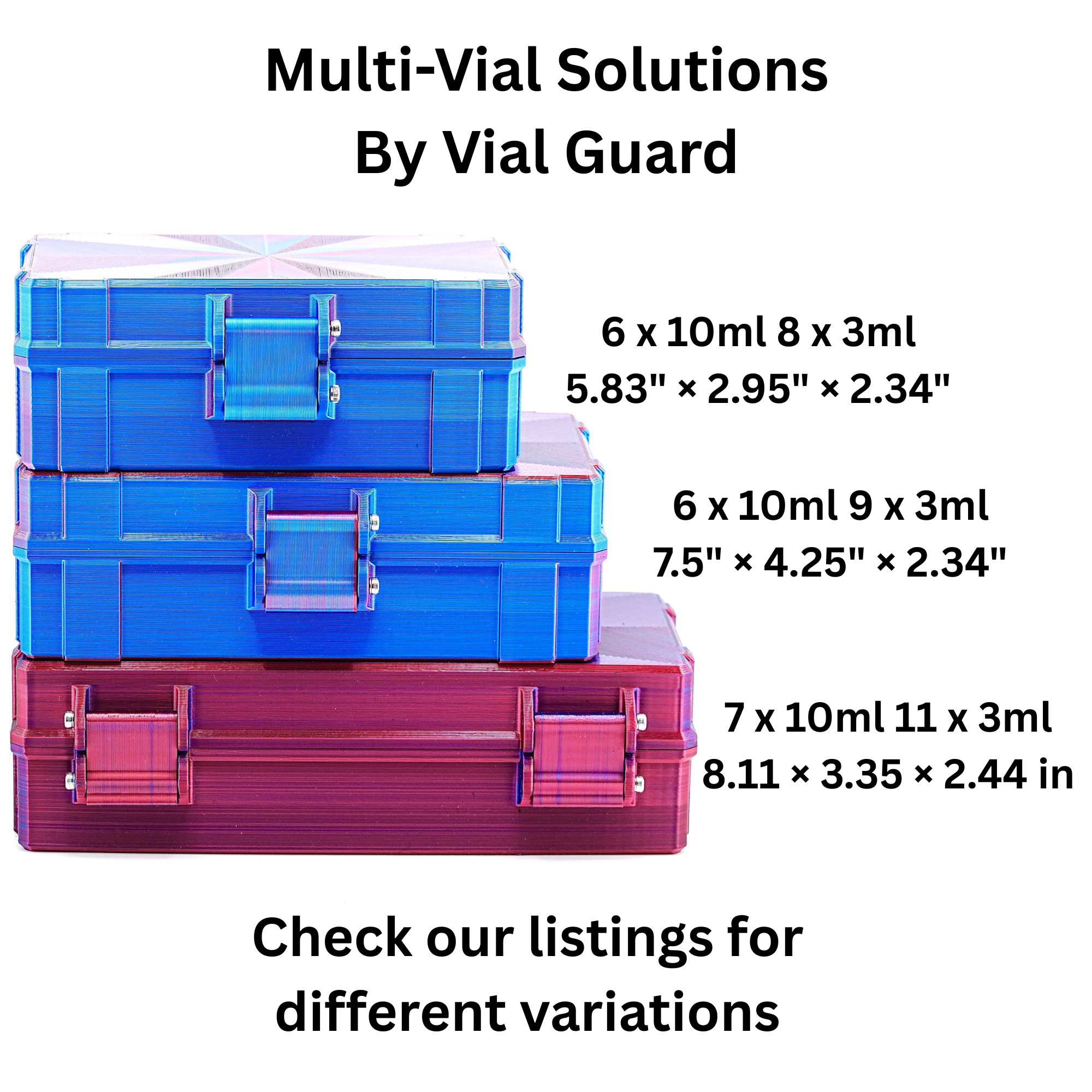
Amber vials provide partial protection but don't block all wavelengths. The most effective solution is storing your vials inside a fully opaque, hard-shell case that eliminates 100% of ambient light exposure — especially important during the weeks between doses when the vial sits in your fridge.
Reconstitution & Shelf Life
Most research-grade Retatrutide comes as a lyophilized powder that requires reconstitution before use. The solvent you choose directly impacts how long the compound remains viable:
- Bacteriostatic (BAC) water: The 0.9% benzyl alcohol preservative inhibits bacterial growth. Reconstituted Retatrutide in BAC water lasts 4-6 weeks refrigerated. This is the gold standard for weekly-dosed peptides.
- Sterile water: No preservative. Use within 5-7 days maximum. Each needle puncture introduces contamination risk without the benzyl alcohol safety net.
Because Retatrutide is typically dosed once per week, a vial reconstituted with sterile water may not last a full dosing cycle. BAC water is essentially mandatory for this compound. For a complete walkthrough, see our BAC water reconstitution guide.
Retatrutide vs. Other GLP-1 Storage
How does Retatrutide storage compare to its GLP-1 predecessors?
- vs. Semaglutide: Similar storage requirements. Both need refrigeration and light protection. Retatrutide may be slightly more heat-sensitive due to its larger molecular size (triple-agonist structure).
- vs. Tirzepatide: Nearly identical storage needs. Both are weekly injections with similar reconstitution shelf lives. If you're switching from Tirzepatide to Retatrutide, your existing storage setup should work.
- vs. Pre-filled pens (Ozempic, Mounjaro): Pharmaceutical pens come in temperature-controlled packaging with preservatives. Research-grade Retatrutide in vials requires more hands-on storage management — making a proper case even more important.
Switching from Tirz to Reta? If you're already storing Tirzepatide vials, you don't need a different setup. The same peptide storage case that holds your Tirzepatide vials will work perfectly for Retatrutide — same 3ml vial size, same temperature requirements.
Travel with Retatrutide
Whether you're traveling domestically or internationally, Retatrutide requires the same precautions as any reconstituted peptide:
- Always carry on. Cargo holds experience extreme temperature swings that will destroy reconstituted peptides.
- Use a hard-shell, opaque case. Protects from light, impact, and keeps your vials organized at TSA checkpoints.
- Include a cold pack for trips over 2 hours. Wrap in cloth to prevent direct contact with vials.
- Keep vials upright to minimize stopper contact with the solution.
- Carry your receipt or documentation — especially important for newer compounds like Retatrutide that security may be less familiar with.
For a detailed TSA walkthrough, see our guide on traveling with peptides through airport security.
Why a Storage Case Matters for Retatrutide
Retatrutide isn't cheap. At $100+ per vial, even a single degraded vial is an expensive loss. A dedicated peptide storage case protects your investment by solving every storage problem at once:
- Complete light blocking — opaque shell eliminates photodegradation
- Impact protection — precision-cut foam slots prevent glass breakage
- Organized storage — separate slots for Retatrutide vials, BAC water, and syringes
- Temperature stability — insulated construction maintains cold chain during transport
- Fridge-ready — compact footprint fits in any refrigerator without taking up shelf space
If you're running Retatrutide alongside other compounds — BPC-157 for recovery, or GHK-Cu for skin — a multi-slot case keeps everything separated, labeled, and at the right temperature. Check out our complete peptide storage guide for more on organizing multi-compound protocols.
Bottom Line: Retatrutide is the most powerful GLP-1 compound available — but only if you store it correctly. Refrigerate, protect from light, use BAC water, and invest in a case that does the work for you.