What Is GHK-Cu?
GHK-Cu (glycyl-L-histidyl-L-lysine copper complex) is a naturally occurring copper peptide found in human plasma, saliva, and urine. It was first identified in the 1970s, but has recently surged in popularity due to research highlighting its roles in:
- Skin regeneration — stimulates collagen and elastin synthesis, reduces wrinkles, and improves skin elasticity
- Wound healing — accelerates tissue repair and reduces scarring
- Hair growth — increases hair follicle size and stimulates growth
- Anti-inflammation — modulates inflammatory gene expression
- Gene expression — over 4,000 genes are influenced by GHK-Cu, many associated with aging reversal
GHK-Cu is unique among peptides because it contains a copper ion chelated within its structure. This copper component gives it powerful biological activity — but also creates specific storage challenges that other peptides don't have.
Why GHK-Cu Storage Is Different
The copper ion in GHK-Cu creates a unique storage consideration: oxidation. Copper is a redox-active metal, meaning it can cycle between oxidation states (Cu+ and Cu2+) when exposed to oxygen, light, or heat. When the copper oxidizes inappropriately, the peptide-copper complex can dissociate, leaving you with free copper ions and an inactive peptide fragment.
This makes GHK-Cu more sensitive to:
- Oxygen exposure — each needle puncture introduces air into the vial
- Light — UV light accelerates copper oxidation reactions
- pH changes — the copper-peptide bond is pH-sensitive; improper reconstitution solvents can destabilize it
Visual Indicator: GHK-Cu solution has a characteristic blue/blue-green tint from the copper ion. If your reconstituted GHK-Cu turns colorless, brown, or develops a greenish precipitate, the copper complex has degraded. Fresh solution should maintain its distinctive blue hue.
GHK-Cu Storage Temperature
- Lyophilized GHK-Cu: Store at -20°C (-4°F) for long-term storage (12-24 months). Refrigeration at 2-8°C is acceptable for 3-6 months. The lyophilized form is reasonably stable, but the copper component benefits from colder temperatures.
- Reconstituted GHK-Cu: Refrigerate at 2-8°C. Use within 3-4 weeks with BAC water. The reconstituted form is less stable than many other peptides due to the copper oxidation risk.
- Room temperature: Avoid. The combination of warmth and dissolved oxygen in the solution accelerates copper oxidation significantly.
Reconstitution Tips Specific to GHK-Cu
- Use BAC water. The benzyl alcohol in BAC water provides preservative action that's especially important given GHK-Cu's sensitivity to contamination.
- Reconstitute gently. Swirl — never shake. Vigorous agitation introduces oxygen bubbles into the solution, accelerating copper oxidation.
- Don't over-dilute. A more concentrated solution has proportionally less dissolved oxygen per unit of peptide. Standard reconstitution volumes (1-2ml per vial) are appropriate.
- Minimize air in the vial. When drawing your dose, don't inject excess air into the vial. Some users even fill the headspace with the syringe before withdrawing to minimize air exposure.
GHK-Cu in Anti-Aging Stacks
GHK-Cu is rarely used alone. It's typically stacked with other longevity and anti-aging peptides. Common combinations include:
- GHK-Cu + Epithalon — copper peptide for tissue repair + telomere support for cellular aging. Both need refrigeration and light protection.
- GHK-Cu + BPC-157 — skin/tissue repair from two angles. BPC-157 is more light-sensitive, so storage should accommodate BPC's needs.
- GHK-Cu + CJC-1295/Ipamorelin — anti-aging + growth hormone support. Multiple daily doses from the GH peptides means frequent fridge access.
- GHK-Cu + MOTS-c — tissue-level and mitochondrial anti-aging. MOTS-c has similar storage requirements.
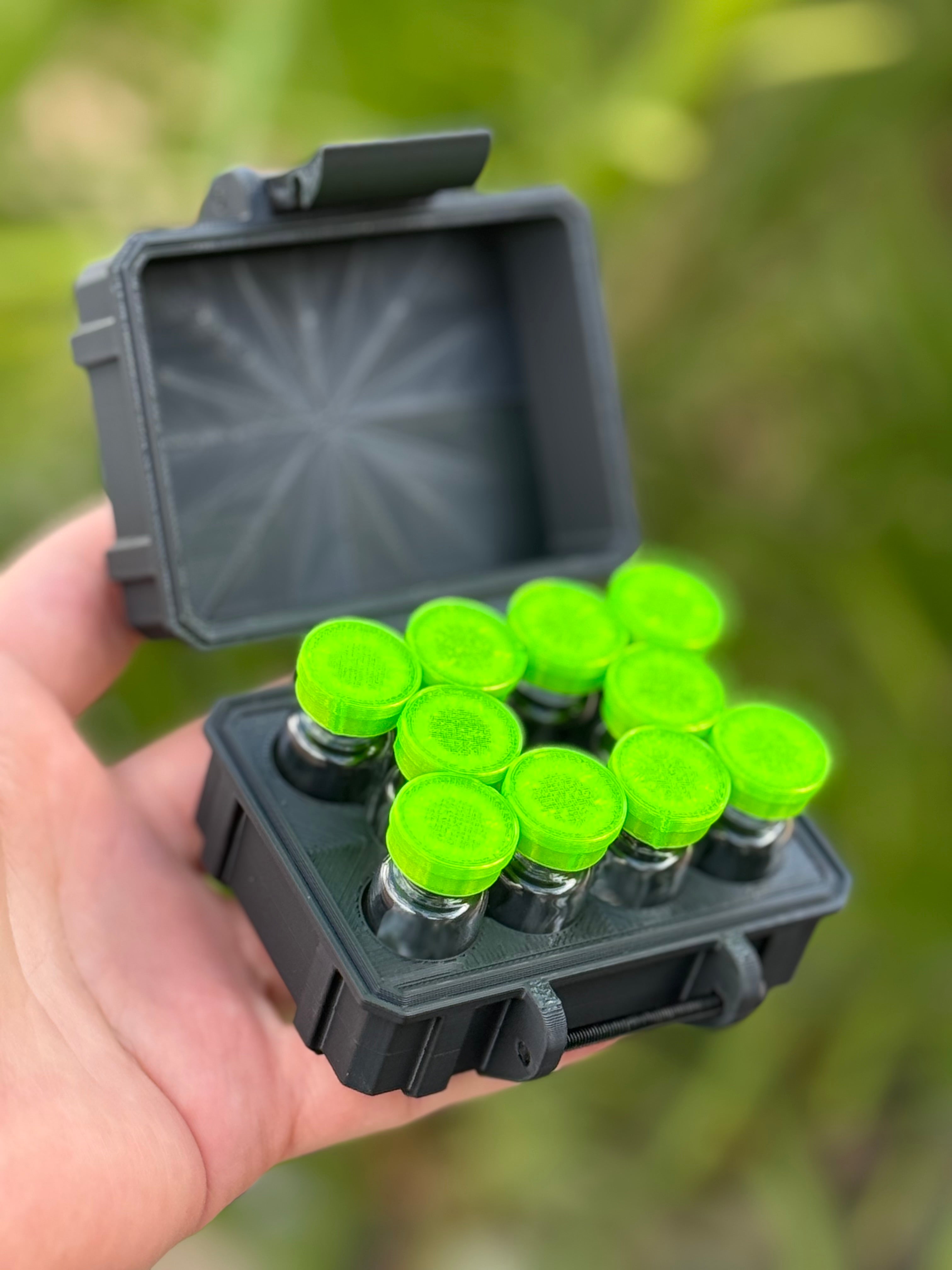
Multi-peptide anti-aging stacks can mean 3-5 vials in simultaneous use. A multi-slot storage case keeps your entire protocol organized, labeled, and protected in one place.
Topical vs. Injectable GHK-Cu Storage
GHK-Cu is used both topically (in creams and serums) and via subcutaneous injection. Storage differs:
- Injectable GHK-Cu (vials): Standard peptide storage — refrigerate, protect from light, use within 3-4 weeks reconstituted. This is what our cases are designed for.
- Topical GHK-Cu (creams/serums): Usually formulated with stabilizers that extend shelf life. Store in the fridge for maximum potency, but these are generally more stable than injectable formulations.
Pro Tip: Some longevity enthusiasts use both — injectable GHK-Cu for systemic effects and topical for targeted skin application. Keep your injectable vials in a peptide case in the fridge, and your topical in the fridge door. Never mix up the two.
How Long Does GHK-Cu Last?
| Form | Storage | Shelf Life |
|---|---|---|
| Lyophilized | -20°C (freezer) | 12-24 months |
| Lyophilized | 2-8°C (fridge) | 3-6 months |
| Reconstituted (BAC water) | 2-8°C (fridge) | 3-4 weeks |
| Reconstituted (sterile water) | 2-8°C (fridge) | 5-7 days |
Signs Your GHK-Cu Has Degraded
- Color loss: Fresh GHK-Cu has a blue/blue-green tint. If it becomes colorless, the copper has dissociated.
- Green precipitate: Greenish particles settling at the bottom indicate copper oxidation and complex breakdown.
- Brown discoloration: Advanced oxidation products can appear brown.
- Cloudiness: Any haziness suggests protein aggregation or contamination.
- Reduced skin effects: If your protocol stops producing visible skin improvement, the compound may have degraded.
Why a Storage Case Matters for GHK-Cu
GHK-Cu's copper component makes it uniquely sensitive to light-driven oxidation. A proper peptide storage case provides:
- Complete light blocking — critical for preventing copper oxidation
- Consistent cold storage — stays organized in the fridge between doses
- Multi-vial capacity — holds your entire anti-aging stack in one place
- Impact protection — prevents glass breakage, especially important for the distinctive blue solution that would stain everything
Bottom Line: GHK-Cu is a uniquely powerful anti-aging peptide — and uniquely sensitive to storage conditions thanks to its copper component. Keep it cold, dark, and sealed. The characteristic blue color is your built-in freshness indicator. If it's blue, you're good. If it's not, it's time for a new vial.