What Is TB-500?
TB-500 is a synthetic fragment of Thymosin Beta-4, a naturally occurring protein found throughout the body in high concentrations at injury sites. It's one of the most widely used recovery and repair peptides in the research community, valued for its reported ability to support tendon and ligament healing, reduce inflammation, and promote tissue regeneration after acute injuries. Athletes, biohackers, and wellness researchers often cycle it during injury recovery or stack it with BPC-157 for a synergistic repair effect.
Unlike GLP-1 peptides or growth hormone secretagogues that are dosed daily, TB-500 follows a very different schedule: typically 2–5mg twice weekly during a loading phase of 4–6 weeks, then dropping to weekly maintenance doses. This infrequent dosing means a single reconstituted vial may sit in your refrigerator for 3–6 weeks between uses — making proper storage not just important, but critical to your protocol's effectiveness.
Temperature Requirements: Lyophilized vs. Reconstituted
Like all peptides, TB-500 exists in two distinct states with different storage requirements:
- Lyophilized (freeze-dried) TB-500: This is the most stable form. Store at -20°C (-4°F) for long-term storage of up to 24 months. If you plan to use a vial within 1–3 months, refrigeration at 2–8°C (36–46°F) is acceptable. Keep away from light and temperature swings.
- Reconstituted TB-500 in BAC water: Refrigerate at 2–8°C (36–46°F) at all times. Never freeze reconstituted peptides — ice crystal formation physically damages the peptide chains and destroys potency. Expect a useful shelf life of 4–6 weeks when stored correctly.
- Room temperature: Acceptable only during the brief window between drawing your dose and injecting. Never leave reconstituted TB-500 at room temperature for extended periods. Even an hour on the counter in a warm room accelerates degradation.
Pro Tip: Because TB-500 doses are spaced 3–7 days apart, it's easy to forget when you last opened and reconstituted a vial. Label every vial with the reconstitution date using a small piece of medical tape and a marker. A vial with no date should be treated as suspect — this is one of the most common peptide storage mistakes people make.
Light Sensitivity and Why Amber Vials Aren't Enough
TB-500 is moderately sensitive to UV and visible light. Photooxidation degrades the peptide's amino acid chain over time, reducing bioactivity. Many peptide suppliers ship TB-500 in amber glass vials specifically to reduce UV transmission — and this helps. But it's not a complete solution.
Amber glass blocks UV wavelengths below approximately 400nm but still transmits significant visible light. Your refrigerator light cycles on and off dozens of times per day. Over 4–6 weeks of storage, that cumulative exposure adds up. The most effective approach is storing your vials inside an opaque, light-blocking case inside the refrigerator — eliminating ambient light exposure entirely regardless of vial color.
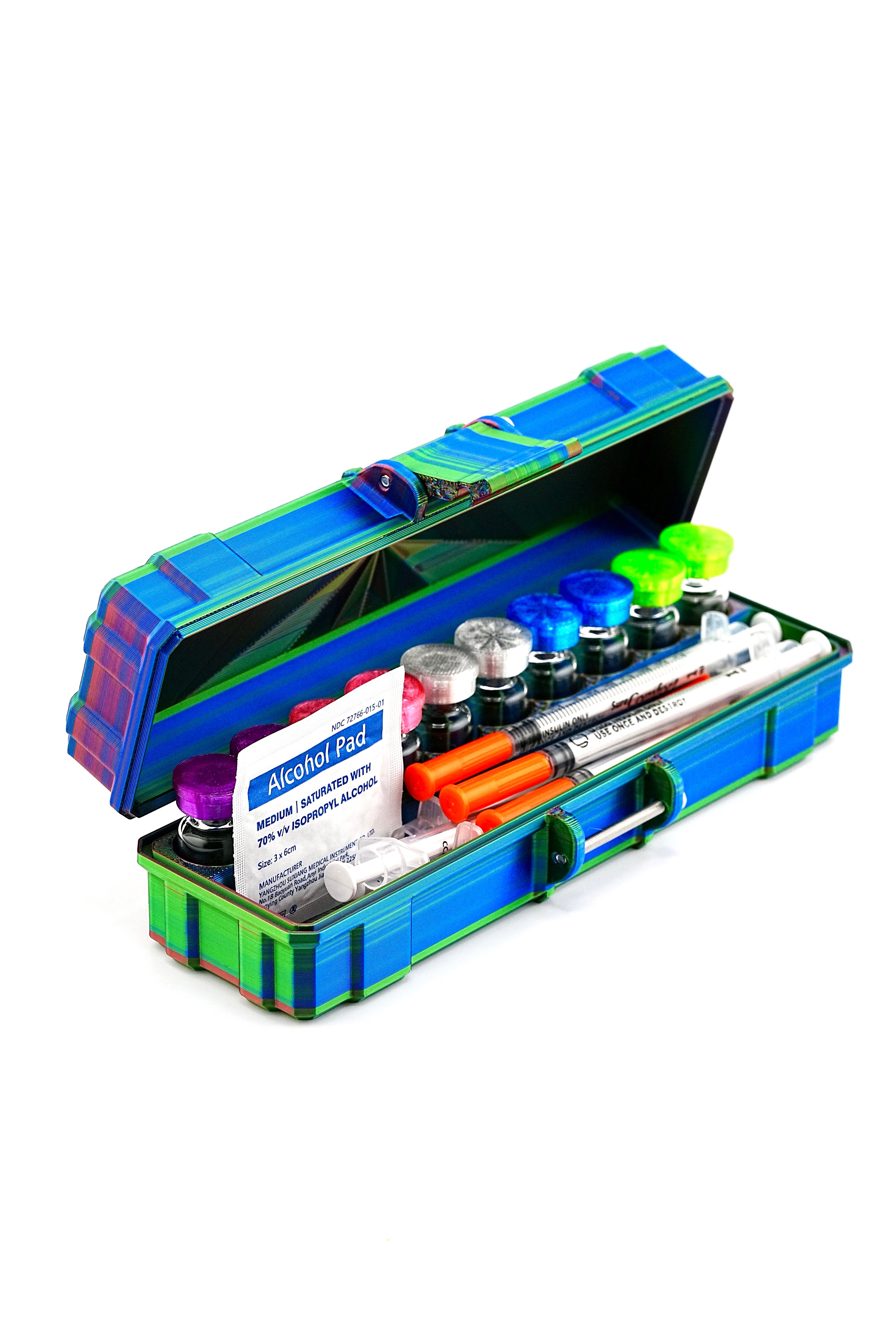
A purpose-built peptide storage case handles this automatically. It blocks 100% of ambient light, keeps vials organized and upright, and protects them from the physical jostling that happens every time someone opens the refrigerator door.
Reconstituting TB-500: Step-by-Step
Proper reconstitution is as important as proper storage. A poorly reconstituted vial introduces contamination risk and can cause aggregation that reduces the effective dose. Here's the correct method:
- Use bacteriostatic water (BAC water): BAC water contains 0.9% benzyl alcohol, which inhibits bacterial growth and extends the reconstituted shelf life to 4–6 weeks. Never use plain sterile water for TB-500 — without a preservative, the shelf life drops dramatically and contamination risk increases with every puncture of the vial stopper.
- Calculate your reconstitution volume: A common approach is adding 2ml of BAC water to a 5mg vial, giving you a concentration of 2.5mg/ml. Adjust based on your dose per injection.
- Inject slowly down the vial wall: Insert the needle against the inner glass wall and let the BAC water run down the side rather than spraying directly onto the powder. This prevents foaming and reduces denaturation risk.
- Gently swirl, never shake: Shaking introduces air bubbles and shear stress that can fragment peptide chains. Swirl gently until fully dissolved, which may take 2–5 minutes for TB-500.
- Inspect before use: The solution should be clear and colorless. Any cloudiness, particulates, or color change means the vial should be discarded.
Our complete BAC water reconstitution guide covers the detailed process for all common peptide types.
Stacking TB-500 with BPC-157: The Wolverine Stack
TB-500 and BPC-157 are frequently stacked together — a combination commonly called the Wolverine Stack — for synergistic injury repair. TB-500 promotes systemic repair and migration of stem cells to injury sites, while BPC-157 provides localized regenerative effects and gut protection. Together, they cover more recovery ground than either alone.
Conveniently, their storage requirements are nearly identical: both are refrigerated at 2–8°C, both are light-sensitive, and both benefit from BAC water reconstitution with a 4–6 week shelf life. This means a single organized peptide case can house both vials side by side without any compromise.
If you're running a Wolverine Stack, consider a case with dedicated slots that keep your TB-500 vials separate from your BPC-157 vials and your BAC water supply. The VialCase lineup is designed specifically for multi-compound protocols with labeled, separated compartments.
Pro Tip: When running a TB-500 loading phase with twice-weekly dosing, reconstitute only one vial at a time. Keep additional lyophilized vials frozen until you need them. This ensures your active supply never exceeds the 4–6 week refrigerated shelf life, even during a longer protocol.
Shelf Life: Making Your Vial Last the Whole Protocol
Here's the practical math that makes TB-500 storage so important. A typical 5mg vial reconstituted at a 2.5mg/ml concentration contains 2ml of solution. At a loading dose of 2.5mg twice weekly, one vial lasts exactly two weeks. At a maintenance dose of 2.5mg weekly, the same vial stretches to four weeks — right at the edge of ideal reconstituted shelf life.
If you're using a 10mg vial at maintenance doses, your reconstituted peptide may need to remain stable for 6–8 weeks. At that point, storage quality is the difference between a protocol that works and one that fades as the weeks progress. Consistent refrigeration at 2–8°C, complete light blocking, and minimizing stopper punctures all work together to preserve potency through the final dose.
An organized peptide storage case keeps your vials at the back of the fridge where temperatures are most stable, protects from light, and reduces handling — three of the four key factors in extending reconstituted shelf life.
Traveling with TB-500
TB-500's less-frequent dosing schedule actually makes travel somewhat easier — you may only need a single dose across a multi-day trip. But the cold-chain requirement doesn't change because the dosing is less frequent.
For any trip over 4 hours, pack your TB-500 vials in an insulated case with a pre-chilled gel ice pack. Keep the case in your carry-on — cargo hold temperatures are completely unpredictable and will degrade your peptide. At your destination, locate refrigeration within 30 minutes of arrival. A hotel minifridge set to its coldest setting typically runs 2–6°C, which is within the acceptable range.
For international trips, review the destination country's regulations on research peptides before departing. Our international travel guide covers documentation and customs best practices in detail.
Bottom Line: TB-500's long dosing intervals mean a single reconstituted vial needs to stay potent for weeks. The peptide is doing the heavy lifting on your recovery — proper storage is the only way to guarantee it's still at full strength for dose three, four, and five.