What Is BPC-157?
BPC-157 (Body Protection Compound-157) is a synthetic peptide derived from a naturally occurring protein found in gastric juice. It has gained massive popularity in the research and wellness community for its reported regenerative properties, including support for tendon, ligament, and gut healing. Because it's a peptide — a chain of 15 amino acids — it's inherently fragile and degrades rapidly when stored incorrectly.
Whether you're sourcing BPC-157 domestically or buying peptides in Mexico where prices are often significantly lower, proper storage is non-negotiable. A vial that sits on your bathroom counter for a week might retain only a fraction of its original potency. Understanding the three enemies of BPC-157 — heat, light, and contamination — is the first step toward protecting your investment.
Storage Temperature: The Most Critical Factor
Temperature control is the single biggest factor in BPC-157 shelf life. The rules differ depending on whether your peptide is in lyophilized (freeze-dried powder) or reconstituted (liquid) form:
- Lyophilized BPC-157: Store at -20°C (-4°F) for long-term storage. This keeps the peptide bonds stable for 12-24 months. If you don't have a dedicated freezer, refrigeration at 2-8°C (36-46°F) is acceptable for 3-6 months.
- Reconstituted BPC-157: Always refrigerate at 2-8°C (36-46°F). Never freeze reconstituted peptides — the freeze-thaw cycle creates ice crystals that physically shear peptide bonds, destroying the compound.
- Room temperature: Minimize exposure. Reconstituted BPC-157 left at room temperature begins degrading within hours. Even lyophilized powder loses potency over weeks at ambient temperatures.
Pro Tip: If you're driving back from Mexico with BPC-157 vials, the car interior can easily reach 40-50°C (104-122°F) in summer. Use an insulated case with a cold pack — never leave vials in a hot vehicle. A proper peptide storage case with insulation is essential for cross-border trips.
Light Sensitivity: Why BPC-157 Needs an Opaque Case
BPC-157 is extremely photosensitive. UV and visible light accelerate oxidation of the peptide bonds, particularly the methionine residue in its amino acid chain. Studies have shown that light-exposed BPC-157 solutions can lose significant potency within days — even under normal indoor lighting.
This is why amber vials help, but they're not sufficient on their own. Amber glass blocks some UV wavelengths but still transmits visible light. The best protection is storing your vials inside a fully opaque, hard-shell case that blocks 100% of ambient light.
If you're traveling with peptides through TSA or driving back from a pharmacy in Mexico, your vials will be exposed to hours of ambient light during transit. An opaque case eliminates this exposure entirely.
Reconstitution & Shelf Life
Once you reconstitute BPC-157 from lyophilized powder into a solution, the clock starts ticking. The type of water you use makes a dramatic difference in how long the compound remains viable:
- Bacteriostatic (BAC) water: Contains 0.9% benzyl alcohol, which inhibits bacterial growth. Reconstituted BPC-157 in BAC water lasts 4-8 weeks when refrigerated. This is the recommended option for most users.
- Sterile water: Contains no preservative. Reconstituted BPC-157 in sterile water should be used within 1-2 weeks and carries a higher contamination risk with each needle puncture of the vial stopper.
For a complete walkthrough on mixing peptides, see our BAC water reconstitution guide. Always label your vials with the reconstitution date — this is one of the most common storage mistakes people make.
Pro Tip: Many people who buy BPC-157 in Mexico purchase multiple vials at once due to the lower cost. Keep unreconstituted vials frozen and only reconstitute what you'll use within a month. This maximizes the overall shelf life of your supply.
Travel Storage: Keeping BPC-157 Safe on the Go
Whether you're flying domestically, crossing the U.S.-Mexico border, or just commuting with your daily protocol, BPC-157 travel storage requires planning:
- Always carry on, never check. Cargo holds on aircraft experience extreme temperature swings (-40°C to +50°C). Checked luggage can also be subjected to rough handling that shatters glass vials.
- Use a hard-shell case. A crush-resistant case protects glass vials from impact and blocks light simultaneously. TSA agents are far less likely to question an organized case compared to loose vials in a Ziploc bag.
- Cold packs for long transits. If your total travel time exceeds 2-3 hours, include a small gel cold pack (not direct ice) to keep temperatures in the 2-8°C range. Wrap the pack in a cloth to prevent freezing your vials on contact.
- Carry documentation. If you have a prescription or purchase receipt, keep it with your peptides. This is especially important when crossing international borders with peptides purchased in Mexico.
- Keep vials upright. Reconstituted vials should remain upright to minimize stopper contact with the solution, reducing contamination risk.
Why a Dedicated Storage Case Matters
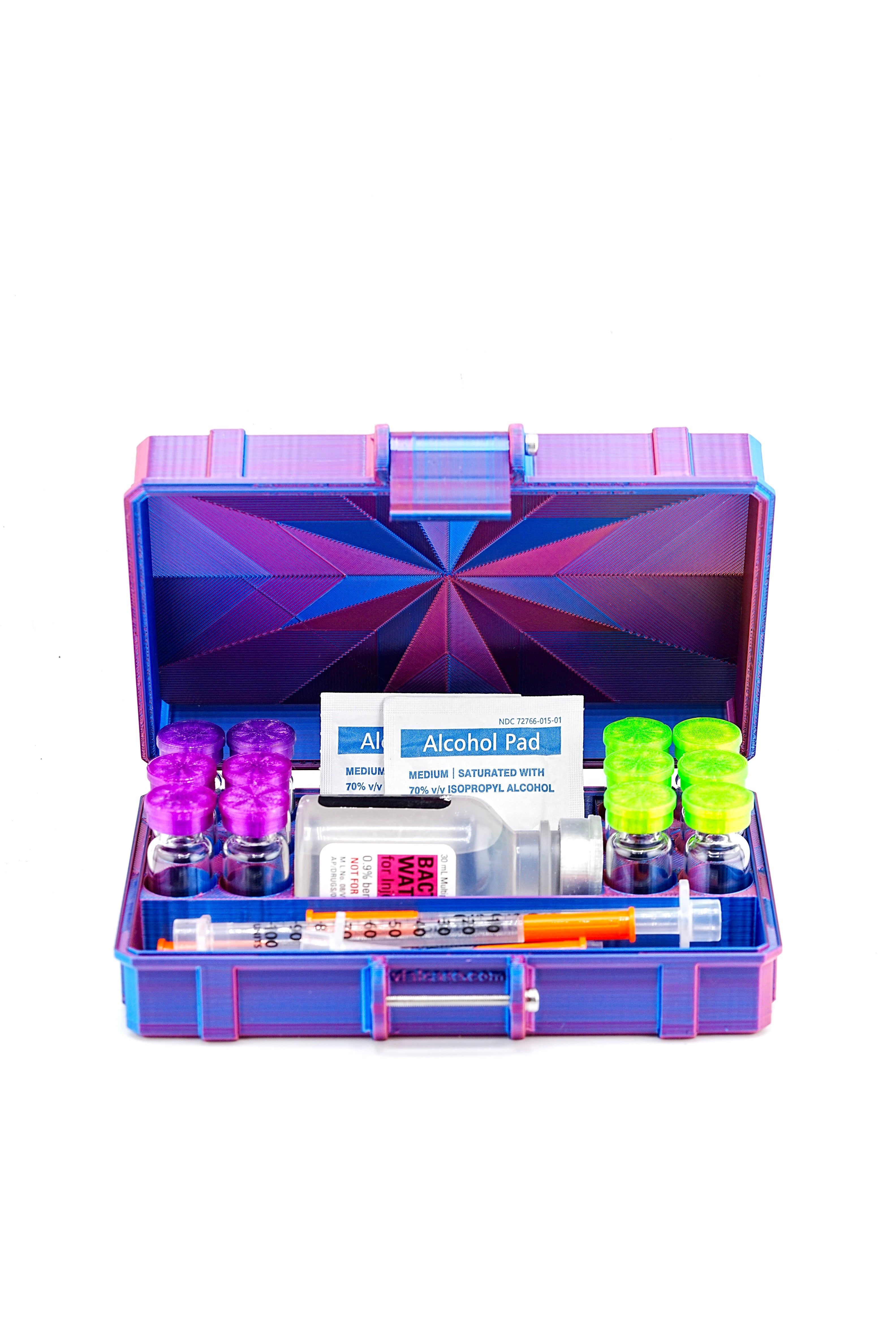
A proper peptide storage case isn't a luxury — it solves every BPC-157 storage problem simultaneously. Here's what a purpose-built case provides:
- Complete light blocking — opaque shell eliminates photodegradation entirely
- Impact protection — machined foam slots prevent glass-to-glass contact and absorb drops
- Organization — separate slots for 3ml peptide vials and 10ml BAC water vials prevent mix-ups
- Temperature stability — insulated construction slows heat transfer during transport
- Travel confidence — an organized, professional-looking case reduces questions at TSA and border checkpoints
If you're running BPC-157 alongside other peptides or GLP-1 medications, a multi-slot case keeps everything separated and labeled. Check out our complete peptide storage guide for more on organizing multi-compound protocols.
Bottom Line: BPC-157 is only as effective as the care you put into storing it. Refrigerate, shield from light, use BAC water, and invest in a case that does the protecting for you.