What Is Epithalon?
Epithalon (also spelled Epitalon) is a synthetic tetrapeptide — just four amino acids: Ala-Glu-Asp-Gly — originally derived from research on the pineal gland by Soviet scientist Vladimir Khavinson in the 1980s. The pineal gland produces a natural polypeptide called epithalamin; Epithalon is the synthetic, bioactive fragment of that compound.
The mechanism that earned Epithalon the nickname "the longevity peptide" centers on telomere biology. Research suggests Epithalon activates telomerase, the enzyme responsible for maintaining telomere length. Telomeres are the protective caps at the ends of chromosomes that shorten with each cell division — shorter telomeres are associated with cellular aging, reduced immune function, and increased disease risk. By supporting telomerase activity, Epithalon is theorized to slow or partially reverse this cellular clock.
Beyond telomere extension, the research literature documents effects on melatonin production (via pineal gland stimulation), immune modulation, antioxidant activity, and hormonal regulation. These are long-game, systemic effects — which is why the protocol is structured as a short, intensive cycle rather than daily maintenance dosing.
Typical Epithalon Protocols
Understanding the standard protocols is essential before addressing storage, because the timing of dosing determines your storage strategy:
- Standard cycle: 10mg total dose administered over 10 days (1mg/day), or 20mg over 20 days (1mg/day). Some protocols use 2mg/day over 10 days for a 20mg total.
- Injection route: Subcutaneous or intravenous. IV is used in some clinical settings; subcutaneous is standard for self-administration.
- Frequency: Twice yearly (spring and fall are common). Some longevity-focused users run one annual cycle; others run 3–4 per year.
- Cycle cost: A 10mg cycle typically costs $50–150 depending on source and purity. A 20mg cycle scales proportionally.
The key insight: you are running an intensive 10–20 day cycle, then going months without dosing. The storage challenges are completely different from a daily-dose peptide like sermorelin or BPC-157.
Storage Temperature Requirements
Epithalon follows standard peptide storage guidelines, but the long inter-cycle storage periods make freezer discipline especially critical:
- Lyophilized (powder) Epithalon: Store at -20°C (-4°F) for long-term stability. Properly frozen lyophilized Epithalon retains potency for 24–36 months. If you purchase a year's supply in advance, the freezer is non-negotiable.
- Refrigerator for powder: Acceptable short-term (weeks to a few months) if you're about to start a cycle. For anything beyond 2–3 months between cycles, use the freezer.
- Reconstituted Epithalon: Refrigerate at 2–8°C. Use within 28–30 days. This aligns well with a 10–20 day cycle — reconstitute at the start of your cycle and the vial will remain potent throughout.
- Never freeze reconstituted peptide. The ice crystal formation during freezing physically destroys the peptide structure. Once reconstituted, it stays refrigerated until gone.
Pro Tip: Because cycles are months apart, label your freezer-stored Epithalon vials with the purchase date and expected potency expiry. A vial sitting in the freezer for 18 months is fine — but you should know it's been there 18 months, not guess. A permanent marker on the vial cap takes 5 seconds and eliminates all uncertainty.
The Unique Storage Challenge: Months Between Cycles
Most peptide storage advice assumes you're using your peptide regularly — daily or weekly. Epithalon breaks this assumption completely. Here's what makes it different:
- Long-term freezer storage between cycles. If you run twice-yearly cycles, your second vial (or backup stock) might sit in the freezer for 5–6 months between sessions. Freezer burn, temperature fluctuations from a frost-free freezer cycling on and off, and poorly sealed vials can all degrade peptide quality over this period.
- Vial retrieval after long dormancy. When you pull a vial from the freezer after months, it should be brought to refrigerator temperature slowly. Place it in the fridge for 30–60 minutes before reconstituting. Thermal shock from going directly from -20°C to room-temperature BAC water is unnecessary stress on the lyophilized powder.
- Single-cycle reconstitution timing. Don't reconstitute more than you'll use in one cycle. If your cycle is 10 days at 1mg/day, reconstitute one 10mg vial with 5ml BAC water (2mg/ml) and use it over 10 days. Keep remaining vials in the freezer as powder.
Light Sensitivity During a 10-Day Cycle
Epithalon, like most peptides, is sensitive to UV and visible light exposure over time. During an active 10-day cycle, your reconstituted vial is being punctured once or twice daily and sitting in the fridge between doses. Light exposure from the fridge door opening repeatedly adds up over 10 days.
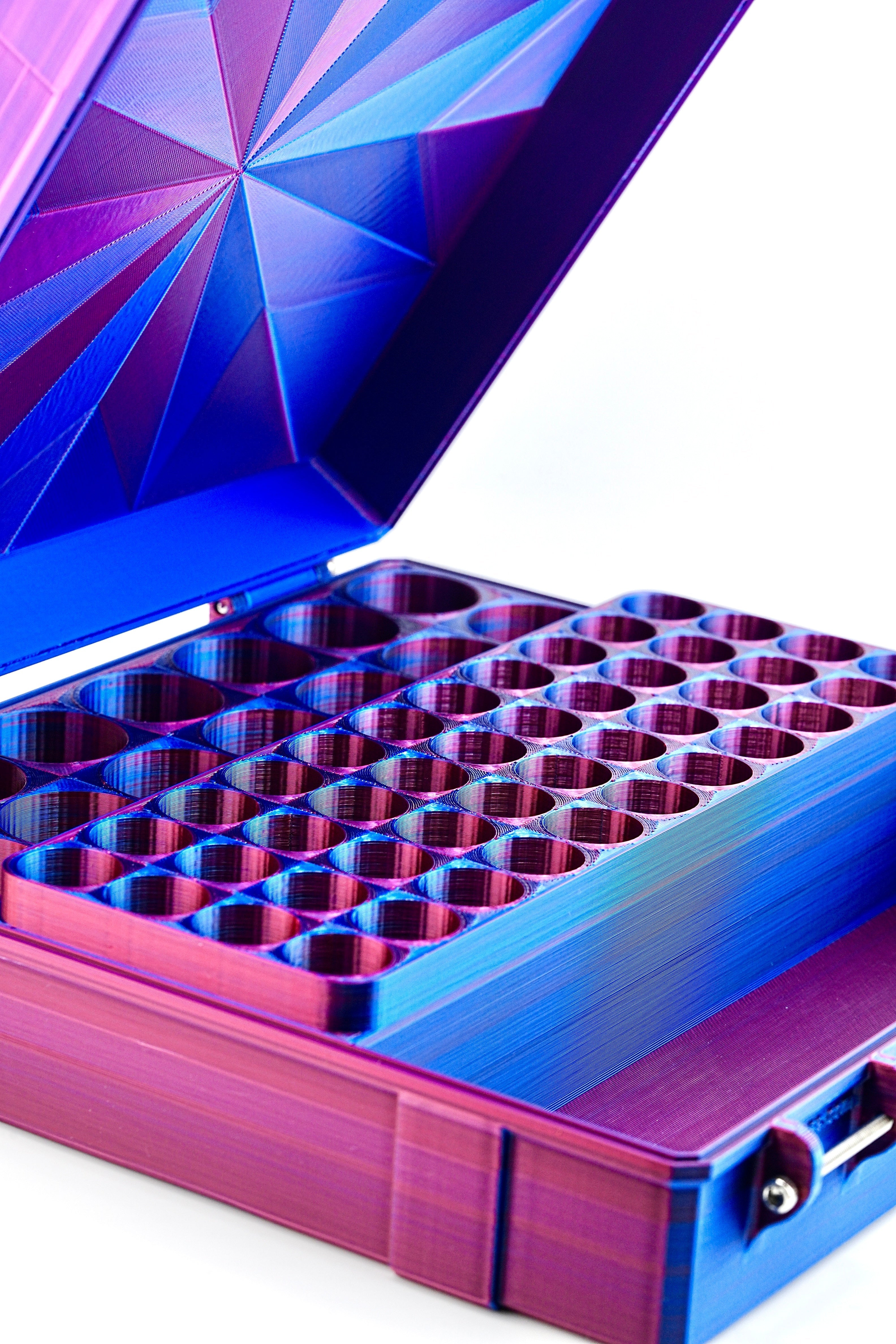
Storing the reconstituted vial inside an opaque case eliminates cumulative light exposure entirely. This is one of the most overlooked sources of gradual peptide degradation — not dramatic UV exposure, but the sustained low-level light each time the refrigerator opens. A purpose-built peptide case provides complete protection without any behavioral change on your part.
Traveling During an Active Epithalon Cycle
This is where storage logistics get genuinely important. A 10–20 day cycle is long enough that travel is likely during at least one cycle per year. Unlike peptides you could theoretically pause and restart, Epithalon's protocol is designed as a continuous run — daily dosing for the full cycle duration is how the research was conducted and how the effects are achieved.
- Don't skip days if traveling. The cycle is short; find a way to maintain it. Even a one-week trip during a 10-day cycle means you need to bring your vial.
- Hard-shell case in carry-on. Never check a reconstituted peptide vial. A hard-shell peptide case with foam-lined slots protects against the physical shock of TSA handling and airline cargo hold temperatures.
- Cold pack for flights over 3 hours. Keep the vial at 2–8°C throughout transit.
- Hotel fridge on arrival. Verify the mini-fridge works before unpacking — many hotel fridges run at borderline temperatures (8–12°C). If yours is unreliable, request a replacement or use the ice bucket method (insulated case + ice) as a backup.
Because each day of your cycle matters, a travel disruption that compromises your Epithalon vial doesn't just waste $10 of peptide — it potentially invalidates the entire 10-day cycle investment of $50–150.
Stacking Epithalon with GHK-Cu for Anti-Aging Protocols
Epithalon and GHK-Cu (copper peptide) are the two most commonly combined longevity-focused peptides. GHK-Cu promotes collagen synthesis, wound healing, and tissue regeneration, while Epithalon addresses cellular aging at the telomere level. Many anti-aging practitioners run both concurrently during the Epithalon cycle.
From a storage perspective, both peptides have compatible requirements: freeze dry stock, refrigerate reconstituted, protect from light. The practical advantage is that both fit in the same peptide case during an active cycle. A case with 4–6 dedicated slots handles your Epithalon vial, GHK-Cu vial, BAC water, and syringes in a single organized unit — whether you're at home or traveling for days 4–8 of your cycle.
Pro Tip: At $50–150 per cycle and twice-yearly frequency, you're spending $100–300 annually on Epithalon alone. A quality peptide case is a one-time purchase that protects every future cycle. The math on protecting a $100 investment with a $40 case isn't complicated.
Signs Your Epithalon Has Degraded
Because cycles are infrequent, it's easy to lose track of storage quality between sessions. Before starting a new cycle, verify your vials are still good:
- Powder should be white and free-flowing. Any clumping, discoloration, or caking of lyophilized powder indicates moisture intrusion or temperature excursion.
- Reconstituted solution should be water-clear. Any cloudiness, particulates, or color in the solution means discard and replace.
- Check the vial seal. A compromised septum (cracked rubber, visible damage) means the vial may have been contaminated. Don't inject from a compromised vial.
- Know your freeze history. A vial that experienced a power outage and thawed, even partially, may have degraded. When in doubt, discard. The cost of a replacement vial is far lower than the cost of a failed cycle.