The anti-aging peptide landscape has matured dramatically. Where researchers once relied on a handful of compounds, today's protocols stack multiple targeted peptides to address telomere erosion, mitochondrial dysfunction, GH decline, skin integrity, and systemic inflammation simultaneously. This ranking covers the mechanisms that matter, the protocols that get used, and — critically — the storage requirements that keep these compounds viable from day one through the final dose.
Every peptide on this list degrades if stored incorrectly. Some lose potency within weeks at room temperature. Others survive years in a properly maintained cold-chain. Understanding the difference is not optional — it is the difference between a protocol that works and one that wastes thousands of dollars. For a full breakdown of shelf life variables, see our peptide shelf life guide.
The Rankings: 10 Best Anti-Aging Peptides for 2026
1. Epithalon (Epitalon) — Telomerase Activator
Epithalon holds the top position because its mechanism is unique among all peptides in this list: it directly activates telomerase, the enzyme responsible for extending telomeres — the protective caps on chromosomal DNA that shorten with every cell division. The tetrapeptide Ala-Glu-Asp-Gly was isolated from the pineal gland and has been studied extensively by Vladimir Khavinson's group at the St. Petersburg Institute of Bioregulation, with data going back over three decades. Demonstrated effects include extended cellular lifespan in vitro, improved melatonin synthesis, and reduced markers of oxidative stress.
Typical protocol: Most practitioners run Epithalon in two courses per year, each lasting 10 consecutive days. Daily dose ranges from 5–10 mg administered subcutaneously or intravenously. The twice-yearly cycling mirrors the original clinical research design and is thought to allow cumulative telomere elongation over multi-year use.
Storage: Lyophilized Epithalon is stable at 2–8°C (standard refrigeration) for up to 24 months when protected from light. After reconstitution, use within 28 days and keep refrigerated. Do not freeze reconstituted peptide. Light sensitivity is high — amber vials or opaque storage is strongly recommended. See the dedicated Epithalon storage guide for full protocol details.
2. GHK-Cu — Copper Peptide Gene Regulator
GHK-Cu (glycyl-L-histidyl-L-lysine copper complex) is the most broadly acting compound on this list in terms of genomic reach. Research from Loren Pickart's lab has demonstrated that GHK-Cu modulates the expression of over 4,000 human genes — approximately 31% of the genome — promoting genes associated with tissue repair and suppressing genes associated with inflammation and cancer progression. Clinically relevant effects include increased collagen and elastin synthesis, improved skin density and thickness, accelerated wound healing, stimulation of hair follicle growth, and potent antioxidant activity via upregulation of superoxide dismutase and catalase.
Typical protocol: Systemic use involves subcutaneous injection at 1–2 mg per day for 4–8 week cycles. Topical formulations (0.1–1% GHK-Cu) are used daily for skin applications. Injectable and topical protocols are frequently run concurrently for comprehensive skin and systemic benefit.
Storage: Lyophilized GHK-Cu is stable at 2–8°C for 18–24 months. The copper chelate is sensitive to light and extreme pH; always store away from direct light. Reconstituted solution should be used within 30 days under refrigeration. For full handling instructions, see the GHK-Cu anti-aging storage guide.
3. BPC-157 — Body Protection Compound
BPC-157 is a 15-amino-acid peptide derived from a protective protein found in human gastric juice. Its anti-aging relevance centers on the gut-brain axis: chronic gut inflammation and intestinal permeability are now well-established accelerators of systemic aging, and BPC-157 is arguably the most effective compound available for restoring gut integrity. Beyond the GI tract, it accelerates healing of tendons, ligaments, and muscle tissue, promotes angiogenesis, and exhibits significant neuroprotective properties. Its systemic regenerative profile makes it a core compound in any comprehensive anti-aging stack.
Typical protocol: 250–500 mcg subcutaneously once or twice daily. For GI-focused use, oral administration in capsule form is increasingly common. Cycles of 4–8 weeks followed by 2–4 weeks off are standard. Continuous low-dose maintenance protocols (250 mcg/day) are also used.
Storage: Lyophilized BPC-157 is stable at 2–8°C for up to 24 months; freeze (-20°C) for storage beyond one year. After reconstitution, refrigerate and use within 28 days. Minimally light sensitive but best stored away from UV exposure. Full storage details at the BPC-157 storage guide.
4. Sermorelin — GHRH Analogue
Sermorelin is a 29-amino-acid analogue of growth hormone-releasing hormone (GHRH), the endogenous signal that prompts the pituitary to secrete GH in its natural pulsatile pattern. Unlike exogenous GH, sermorelin works through the body's own feedback loops — it cannot produce supraphysiological GH levels, and it preserves the natural pulse architecture that governs the anabolic and regenerative effects of GH. The anti-aging case for sermorelin rests on restoring youthful GH secretion patterns: improved sleep quality (especially deep-wave sleep), enhanced body composition, faster tissue repair, improved skin thickness, and better metabolic function.
Typical protocol: 200–500 mcg subcutaneously before bed, 5–7 nights per week. Nighttime administration aligns with the largest natural GH pulse. Cycles of 3–6 months are typical. Some protocols run it year-round at lower doses.
Storage: Lyophilized sermorelin requires refrigeration at 2–8°C. Shelf life is typically 12–18 months unmixed. Post-reconstitution stability is shorter than most peptides — use within 14–21 days and keep refrigerated at all times. Light sensitive; store in opaque containers. See our sermorelin storage guide for detailed handling notes.
Pro Tip: Sermorelin and CJC-1295 are among the most temperature-sensitive peptides in a typical anti-aging stack. If you are running both simultaneously, they cannot sit in the same refrigerator drawer as your more stable compounds without a proper case — temperature gradients near the door can fluctuate by 4–6°C, which degrades these peptides faster than most users realize.
5. CJC-1295 + Ipamorelin — The GH Stack
If sermorelin is the conservative GHRH option, CJC-1295 (with or without DAC) is the high-potency version. CJC-1295 with DAC (Drug Affinity Complex) binds to albumin in the bloodstream, extending its half-life from minutes to approximately 8 days and creating sustained GH elevation rather than discrete pulses. Paired with Ipamorelin — a selective GH secretagogue that amplifies the GH pulse without significantly affecting cortisol or prolactin — this combination produces the most consistent chronic IGF-1 elevation of any peptide stack available. Elevated IGF-1 drives protein synthesis, fat mobilization, collagen production, and cellular repair throughout the body. This is the most widely used GH-optimization protocol in anti-aging medicine as of 2026.
Typical protocol: CJC-1295/DAC at 2 mg once weekly; Ipamorelin at 200–300 mcg subcutaneously 2–3 times daily. Alternatively, CJC-1295 without DAC at 100 mcg combined with Ipamorelin 100–200 mcg, administered together before bed or post-workout. Cycle length: 8–12 weeks on, 4 weeks off.
Storage: Both peptides require refrigeration at 2–8°C in lyophilized form. CJC-1295 is relatively stable, with shelf life up to 24 months unmixed; Ipamorelin shelf life is 18–24 months. Post-reconstitution, both should be used within 28 days. Light sensitive — minimize UV exposure. See the Ipamorelin storage guide for handling specifics.
6. NAD+ (Injectable) — Mitochondrial Coenzyme
NAD+ is not a peptide in the strict sense, but injectable NAD+ belongs in every serious anti-aging protocol discussion. It is the essential coenzyme for over 500 enzymatic reactions, with particular dominance in mitochondrial electron transport (Complex I), DNA repair via PARP enzymes, and activation of sirtuins — the longevity-associated deacetylases that regulate gene expression in response to caloric restriction and stress. NAD+ levels decline approximately 50% between age 40 and 60 in most tissues. Injectable NAD+ bypasses the gut absorption limitations of oral precursors (NMN, NR) and produces rapid restoration of cellular NAD+ pools.
Typical protocol: IV infusion protocols range from 250–1000 mg over 4–8 hours, typically 3–10 sessions over 2 weeks for loading, followed by monthly maintenance infusions. Subcutaneous protocols (25–100 mg daily) are increasingly used as an at-home alternative to IV.
Storage: Injectable NAD+ is highly sensitive to heat, light, and oxidation. Store lyophilized powder at -20°C for long-term storage; at 2–8°C if use is within 30 days. Reconstituted solution is unstable — use within 24 hours. Strict light protection is essential. Full storage protocol at the NAD+ peptide storage guide.
Pro Tip: NAD+ is one of the few compounds where freezer storage is genuinely required for anything beyond 30-day use. If your stack includes both refrigerator-stable peptides (BPC-157, GHK-Cu) and freezer-required compounds (NAD+, long-term Epithalon), a dedicated vial case that moves between environments without scrambling your organization is not a convenience — it is essential for protocol integrity.
7. TB-500 (Thymosin Beta-4) — Systemic Tissue Repair
Thymosin Beta-4 (TB-500) is a 43-amino-acid peptide that regulates actin polymerization, the fundamental process underlying cell migration and tissue regeneration. Its anti-aging significance goes beyond injury recovery: TB-500 reduces chronic systemic inflammation, promotes new blood vessel formation (angiogenesis), supports nerve regeneration, and has demonstrated cardiac-protective effects in multiple animal models. Chronic low-grade inflammation is one of the primary drivers of biological aging ("inflammaging"), making TB-500's systemic anti-inflammatory activity directly relevant to longevity protocols.
Typical protocol: Loading phase: 2.0–2.5 mg twice weekly for 4–6 weeks. Maintenance: 2.0–2.5 mg once weekly or biweekly. Subcutaneous or intramuscular injection. Often cycled with BPC-157 for comprehensive tissue maintenance.
Storage: Lyophilized TB-500 is stable at 2–8°C for up to 24 months. Store at -20°C for periods exceeding one year. Post-reconstitution, refrigerate and use within 28 days. Moderately light sensitive. See our TB-500 storage guide for full details.
8. SS-31 (Elamipretide) — Mitochondria-Targeted Peptide
SS-31 (D-Arg-2'6'-dimethylTyr-Lys-Phe-NH2) is a tetrapeptide that selectively targets the inner mitochondrial membrane, where it binds cardiolipin — the phospholipid that anchors Complex I, II, and IV of the electron transport chain. By stabilizing cardiolipin structure and reducing electron leak, SS-31 dramatically reduces mitochondrial reactive oxygen species (ROS) production without disrupting ATP synthesis. In aging tissue, mitochondrial dysfunction and elevated ROS are upstream causes of cellular senescence, metabolic decline, and organ failure. SS-31 represents the most mechanistically precise mitochondria-targeted intervention currently available to researchers.
Typical protocol: Clinical trials have used 0.05–0.25 mg/kg subcutaneously daily. Research protocols typically use 5–15 mg subcutaneously daily in 4–8 week cycles. As a newer compound in general research use, protocols are still being refined.
Storage: SS-31 is highly sensitive to oxidation given its redox-active chemistry. Store lyophilized powder at -20°C; use 2–8°C storage only for periods up to 30 days. After reconstitution, use within 48–72 hours; the antioxidant properties of the peptide are paradoxically compromised by oxidative degradation in solution. Strict light protection required. Keep separate from other vials to prevent cross-contamination.
9. Selank — Anxiolytic Nootropic
Selank is a synthetic analogue of the immunomodulatory peptide tuftsin, developed by the Institute of Molecular Genetics in Moscow. Its anti-aging relevance rests on the cortisol-aging axis: chronic psychological stress and elevated cortisol are among the most well-documented accelerators of biological aging, promoting telomere shortening, suppressing immune function, increasing visceral fat accumulation, and degrading sleep quality. Selank reliably reduces anxiety and cortisol output, improves working memory and cognitive clarity, and modulates the IL-6 and TNF-alpha inflammatory pathways. It is the only compound on this list that directly targets stress-mediated aging.
Typical protocol: 250–500 mcg subcutaneously or intranasally once to twice daily. Intranasal administration is common due to rapid CNS uptake. Cycles of 10–14 days on, with several days off, are standard. Can be used as needed for acute stress events.
Storage: Lyophilized Selank is stable at 2–8°C for 12–18 months. Reconstituted intranasal solution should be kept refrigerated and used within 30 days. Moderate light sensitivity. The intranasal formulation is more vulnerable to temperature fluctuation than injectable peptides — consistent cold storage is especially important.
10. Humanin — Mitochondria-Derived Peptide
Humanin is a 21-amino-acid peptide encoded in the mitochondrial 16S rRNA gene — making it one of a class of "mitokines," mitochondria-derived signaling peptides that coordinate cytoprotection throughout the body. Humanin levels decline significantly with age and are inversely correlated with IGF-1 signaling, a key longevity pathway. Its effects include protection against amyloid beta toxicity (relevant to Alzheimer's pathology), reduction of insulin resistance, suppression of apoptosis in neurons and cardiomyocytes, and downregulation of excessive IGF-1 signaling — the same pathway targeted by caloric restriction for longevity. Humanin is ranked last not because it is least important, but because it is the least available and least standardized compound in this list as of 2026.
Typical protocol: Research protocols use 2–4 mg subcutaneously daily or several times weekly. Dosing conventions are still emerging as this compound moves from basic research into more widespread use. Often run as a short adjunct cycle rather than a continuous protocol.
Storage: Humanin lyophilized powder should be stored at -20°C for long-term stability. Short-term storage (up to 2 weeks) at 2–8°C is acceptable. Post-reconstitution, use within 24–48 hours. Highly sensitive to freeze-thaw cycling — aliquot before freezing and do not refreeze reconstituted solution.
The Anti-Aging Stack Most Practitioners Run
Among practitioners who work with these compounds regularly, one combination has emerged as the evidence-based foundation stack for systemic anti-aging: Epithalon + GHK-Cu + NAD+ + CJC-1295/Ipamorelin. Here is the logic behind each choice and why they complement each other without redundancy.
Epithalon addresses the root cause — telomere erosion — that limits cellular replication capacity. It is cycled twice per year in discrete 10-day courses, so it does not require daily management during off periods.
GHK-Cu provides the broadest genomic coverage of any peptide, upregulating repair pathways across virtually every tissue type. It runs continuously or in extended cycles and covers the skin, connective tissue, and systemic antioxidant defense that Epithalon does not directly address.
NAD+ operates at the mitochondrial level — restoring the coenzyme pool that powers cellular energy metabolism, DNA repair, and sirtuin activity. It addresses the metabolic decline layer of aging that neither telomere nor gene-regulation peptides reach directly.
CJC-1295/Ipamorelin restores the hormonal environment of younger physiology through chronic IGF-1 elevation and improved GH pulsatility. This drives the anabolic and regenerative processes that make the other compounds more effective — better protein synthesis means better uptake of GHK-Cu's collagen-building signals, and improved mitochondrial health (from NAD+) enhances the energy available for GH-driven repair.
Running this stack means managing four to five separate vials simultaneously, each with different reconstitution dates, different shelf lives, different temperature requirements, and different light sensitivity profiles. NAD+ may need to be stored separately in a freezer. Epithalon is only active during its 10-day cycle. CJC-1295 lasts weeks; Ipamorelin doses are drawn daily. The organizational complexity is real, and it is where most protocols break down — not from bad compounds, but from degraded compounds.
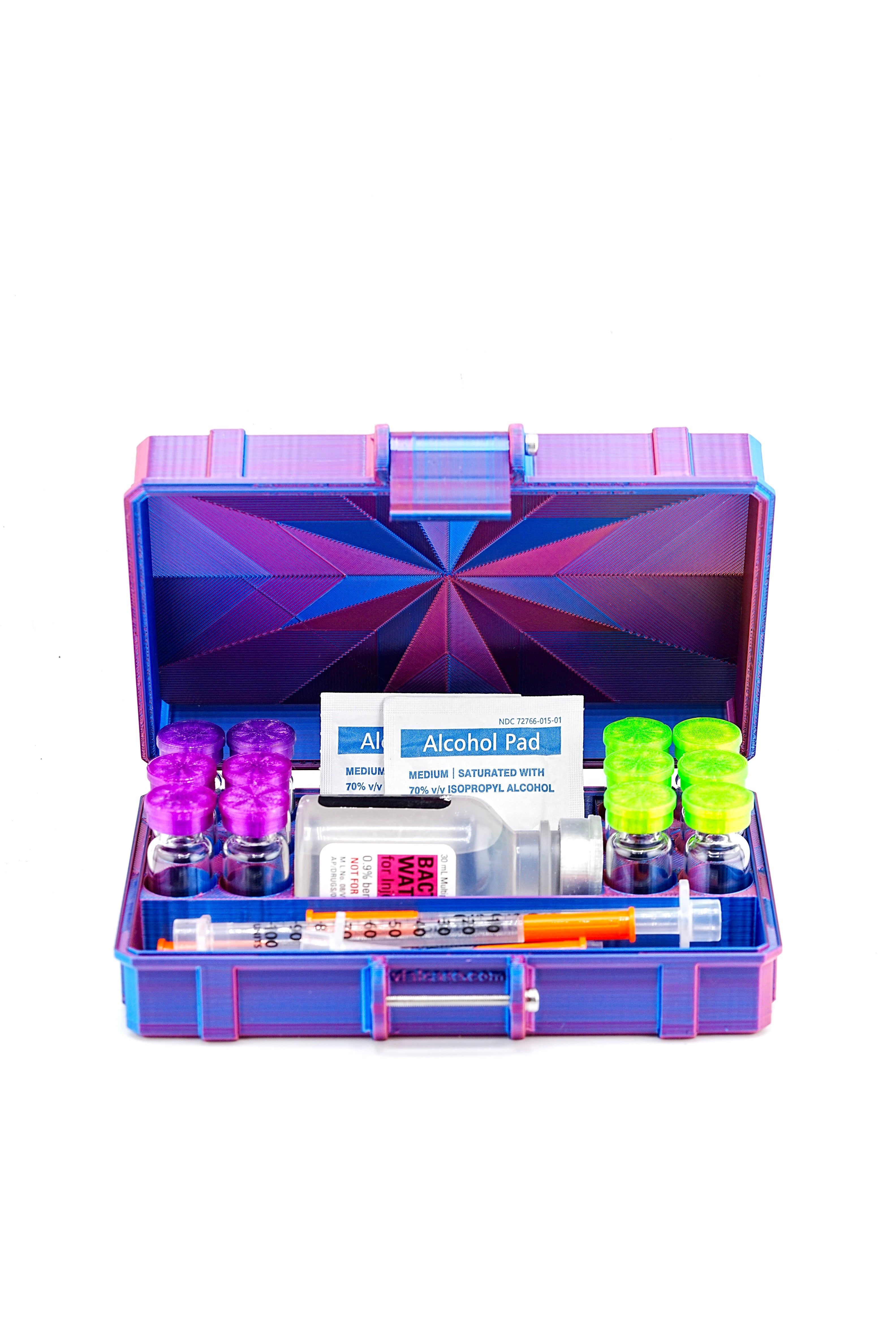
A dedicated, purpose-built case that holds all active vials in a single organized unit — clearly labeled, at consistent temperature, protected from light — is what keeps a four-compound protocol running cleanly. See our guide to organizing a peptide protocol and our peptide storage temperature chart for reference.
Pro Tip: When running the full Epithalon + GHK-Cu + NAD+ + CJC/Ipa stack, label each vial with its reconstitution date and expiry date using a fine-tip marker on the cap. Vials that look identical — same size, same clear solution — have very different expiry windows. A 10ml NAD+ vial reconstituted on the same day as a CJC-1295 vial needs to be used within 24 hours; the CJC-1295 is still good for 28 days. Without clear labeling inside a dedicated case, errors are inevitable.
Storage Complexity Grows With Protocol Sophistication
Every compound on this list requires cold storage. Most require protection from light. Several require freezer-level storage for long-term stability. When you are running a single peptide, a spare shelf in the refrigerator may be adequate. When you are running a four-compound anti-aging stack with staggered reconstitution dates and different expiry windows, an unorganized approach to storage directly degrades your protocol outcomes.
The top 10 peptide storage cases guide covers the full range of purpose-built options. For the beginner running their first compound, see the beginner peptide stack storage guide. For common errors that silently degrade peptide potency, see our peptide storage mistakes guide. And for the mechanics of reconstitution itself, the reconstituting peptides with bacteriostatic water guide covers everything from draw technique to storage after mixing.
The compounds on this list represent thousands of dollars in research investment per protocol cycle. The storage infrastructure that preserves them is a fraction of that cost. Get the case right and the compounds will perform. Cut corners on storage and no amount of protocol sophistication will save the degraded peptide in the vial.
This content is for informational and educational purposes only and does not constitute medical advice. Always consult a licensed healthcare provider before beginning any peptide or hormone protocol.