The Two-State Rule: Lyophilized vs. Reconstituted
Every peptide exists in one of two states, and shelf life depends entirely on which one you're dealing with:
- Lyophilized (freeze-dried powder) — the most stable form. Months to years of shelf life depending on storage temperature
- Reconstituted (in solution) — the active, usable form. Weeks of shelf life at best, and highly dependent on the solvent used
The transition from lyophilized to reconstituted is a one-way trip. Once you add water, you cannot re-lyophilize at home. This is why proper planning matters — only reconstitute what you'll use within the shelf life window.
Lyophilized Shelf Life by Storage Condition
For sealed, unreconstituted peptides:
- Frozen at -20°C: 12-24 months. This is the gold standard for long-term storage. Some peptides remain stable beyond 36 months at this temperature
- Refrigerated at 2-8°C: 3-6 months. Perfectly fine for peptides you plan to use within a few months
- Room temperature (20-25°C): weeks to a few months, depending on the compound. Not recommended for anything you're keeping longer than 2-3 weeks
- Above 30°C: rapid degradation. Days to weeks. This is the danger zone during shipping, travel, and summer storage
For a complete breakdown of freezer storage best practices, see our freezer storage guide.
Reconstituted Shelf Life: BAC Water vs. Sterile Water
The solvent you use to reconstitute makes a dramatic difference in how long the peptide remains stable:
Bacteriostatic Water (BAC Water): 4-8 Weeks
BAC water contains 0.9% benzyl alcohol, which acts as a preservative. This inhibits bacterial growth and extends shelf life to 4-8 weeks when refrigerated at 2-8°C. This is why BAC water is the overwhelming choice for reconstitution.
Sterile Water: 1-2 Weeks
Sterile water has no preservative. Once you puncture the vial stopper, bacteria can colonize the solution. Shelf life drops to 1-2 weeks refrigerated, and some conservative guidelines say 48-72 hours. Use sterile water only when you plan to use the entire vial quickly.
Pro Tip: Always use BAC water unless you have a specific reason not to. One 10ml vial of BAC water ($3-5) can reconstitute multiple peptide vials and extends shelf life by 4-6x compared to sterile water.
Compound-Specific Shelf Life
While the general rules above apply broadly, some compounds have specific considerations:
BPC-157
- Lyophilized, frozen: 18-24 months
- Reconstituted with BAC water, refrigerated: 4-6 weeks
- BPC-157 is relatively stable but highly photosensitive — UV light is its biggest enemy. Store in a dark case or wrapped in foil
Tirzepatide (Compounded)
- Compounded vials (already in solution): typically labeled 28-42 days refrigerated by the compounding pharmacy
- Multi-dose 10ml vials from Mexican pharmacies may have different expiration stamps — always check the printed date
- Never freeze compounded Tirzepatide — it's already in solution
CJC-1295 (with or without DAC)
- Lyophilized, frozen: 12-18 months
- Reconstituted with BAC water: 3-4 weeks refrigerated
- CJC-1295 with DAC is slightly more stable in solution than without DAC due to the drug affinity complex
Ipamorelin
- Lyophilized, frozen: 18-24 months
- Reconstituted with BAC water: 4-6 weeks refrigerated
- One of the more stable peptides in solution — tolerates slight temperature fluctuations better than most
TB-500 (Thymosin Beta-4)
- Lyophilized, frozen: 12-18 months
- Reconstituted with BAC water: 4-6 weeks refrigerated
- Relatively forgiving in terms of stability — a good peptide for beginners learning storage discipline
Signs of Degradation: When to Discard
Degraded peptides don't always look different, but when visual signs appear, they're unmistakable:
- Cloudiness or turbidity — a clear solution turning hazy indicates bacterial contamination or peptide aggregation. Discard immediately
- Visible particles or floaters — any particulate matter means the peptide is compromised
- Color change — most peptide solutions are clear to very slightly yellow. Any darkening or unusual color is a red flag
- Reduced efficacy — the most subtle sign. If you notice a peptide that was working well is now producing weaker results at the same dose, degradation is the likely cause
- Unusual smell — BAC water has a faint benzyl alcohol smell. Any strong or off odor means contamination
Pro Tip: When in doubt, throw it out. Peptides are an investment, but injecting a contaminated solution is never worth the risk. Discard and reconstitute a fresh vial. For tips on tracking dates, see our protocol organization guide.
Mexican Pharmacy Peptides: Special Considerations
If you're purchasing peptides from Mexican pharmacies — whether compounded Tirzepatide, BPC-157 blends, or other compounds — there are a few shelf-life-specific things to watch for:
- Check the manufacturing date — not just the expiration date. Some pharmacies compound in batches, and a vial might have been sitting on the shelf for weeks before you buy it. Manufacturing date + storage conditions = real remaining shelf life
- Transport degrades shelf life — the drive back from Mexico (or the flight) subjects vials to hours of suboptimal temperature. A hard-shell travel case with cold packs is essential to preserve what you've paid for
- Compounded solutions may have shorter shelf life — unlike mass-manufactured pharmaceuticals, compounded peptides from Mexican farmacias may use different stabilizers or concentrations. When in doubt, use them sooner rather than later
- Store immediately on arrival — the first thing you should do when you get home is sort vials into fridge (reconstituted) and freezer (lyophilized). Every hour at room temperature counts
Maximizing Shelf Life: The Complete Checklist
Every one of these factors contributes to how long your peptides remain potent:
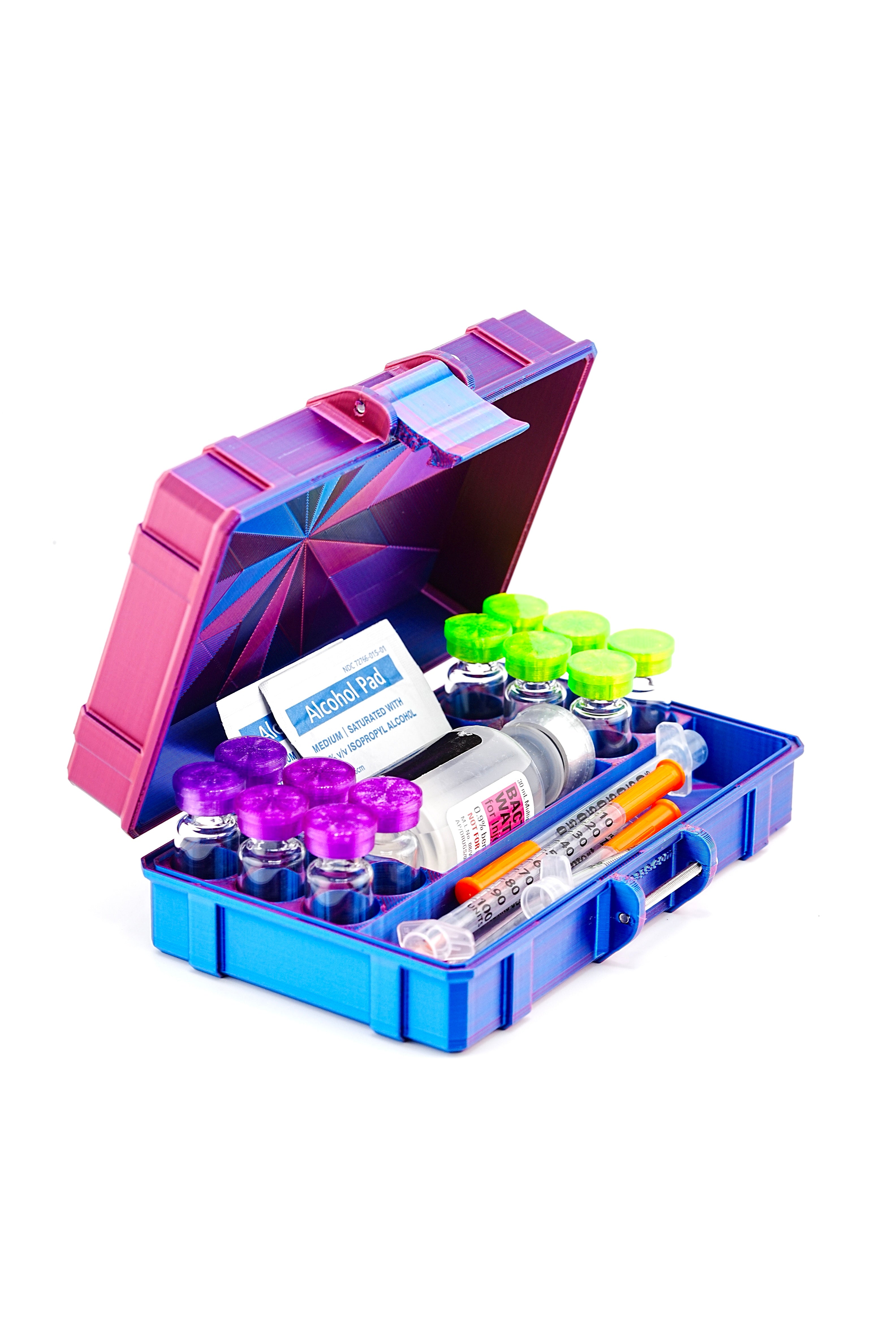
- Use a proper case — a dedicated peptide storage case blocks UV light, prevents physical damage, and keeps vials upright
- Maintain consistent temperature — avoid the fridge door (temperature swings every time it opens). Store vials in the back or middle shelf
- Minimize light exposure — keep vials in an opaque case, not loose on a shelf. Even brief UV exposure accelerates degradation
- Use BAC water — always, unless specifically contraindicated
- Don't shake — gentle swirl only. Shaking creates bubbles and can mechanically shear peptide bonds
- Clean injection technique — alcohol-swab the stopper before every draw. Contamination is the #1 cause of premature degradation
- Label and date everything — know exactly when each vial was reconstituted and when to discard it
- Freeze backups — keep unreconstituted stock at -20°C and only thaw what you need. See our freezer storage guide
For the complete picture on peptide storage best practices, visit our Peptide Storage Guide.