
Most people who keep peptide vials make at least one of these mistakes. None of them are exotic. They're the everyday habits that crack vials, lose vials, or leave you unsure which vial is which. The good news is that each one has a simple fix, and most of the fixes are the same fix.
One note before the list: this page doesn't cover storage temperatures. Those come from the storage instructions on your product label or from your pharmacist or provider, and they can differ from one product to the next.
Give every vial a home
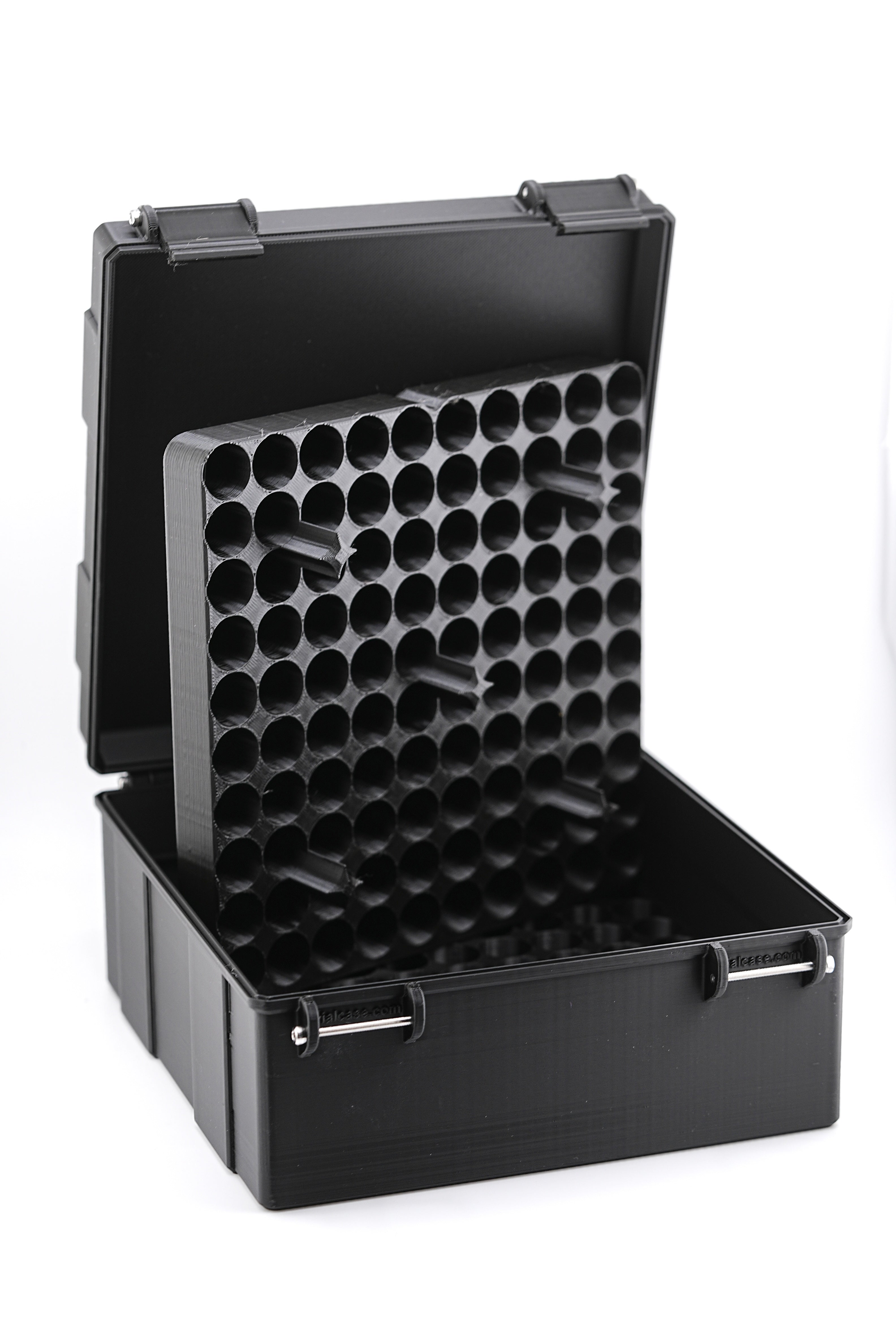
Design a case with a fitted pocket for each vial and space for your supplies, sized to your fridge shelf and your carry-on.
Mistake #1: Leaving Vials on the Counter
The mistake: You use a vial and leave it on the bathroom counter or kitchen table while you get on with your day. Maybe it's still there that evening. Maybe it sits there for days between uses.
Why it's bad: A vial out of its place is a vial that isn't where its label says it should be. It's also in the way: counters get wiped, bumped and cluttered, and a small glass vial is easy to knock into the sink or onto a tile floor. If your label says to protect the contents from light, a counter by a window is the opposite of that.
The fix: Put the vial back where its label says as soon as you're done, inside a case with a pocket that's always waiting for it. When every vial has a home, putting it away takes two seconds and becomes automatic.
Mistake #2: Keeping Vials Loose in the Fridge Door
The mistake: The fridge door shelf looks like the perfect spot for small bottles, so the vials go there, standing loose next to the condiments.
Why it's bad: The door is the most bumped, swung and slammed part of the fridge. Anything standing loose there tips, rattles and eventually falls out when someone grabs a jar in a hurry. The door is also the spot that warms up first every time it's open, which makes it harder to keep to whatever your label asks for.
The fix: Move the vials into a case on a middle shelf, toward the back. The case gives them one fixed spot, keeps them upright, and makes them one object that nobody in the house moves by accident. See our peptide fridge organization guide for more on setting up a shelf.
Mistake #3: Using a Case That Doesn't Fit Your Vials
The mistake: You buy a case sold for "vials" and drop your vials into slots that are a little too wide, or squeeze them into slots that are a little too narrow.
Why it's bad: Too wide, and the vials rattle and swing into each other every time the case moves, which scuffs stoppers and stresses glass. Too narrow, and you force each vial in and pull it out by the cap, which is how vials get dropped. Many "vial" cases are built for lab tubes or cosmetic samples, not for 3 mL and 10 mL vials.
The fix: Measure your vials and buy, or build, a case with pockets sized for them. In a custom case, every pocket is made for the vial you said goes there, and shorter vials stand on a raised floor so their tops line up at the rim, easy to grab.
Mistake #4: Keeping Your Supplies Scattered
The mistake: Vials in the fridge, syringes in a bathroom drawer, alcohol pads in a gym bag, the BAC water bottle somewhere in the kitchen.
Why it's bad: Every time you need something, you're opening four places and leaving vials out while you hunt. Scattered supplies are also how something gets forgotten when you pack for a trip.
The fix: Keep the whole kit in one case: vials, syringes, alcohol pads and the BAC water bottle, each with its own space. Taking the case out gives you everything; putting it back puts everything away.
Mistake #5: Not Labeling Your Vials
The mistake: You put a vial in the fridge without writing anything on it. A few weeks later you have three small clear vials that look identical.
Why it's bad: Unlabeled vials invite the most avoidable error there is: picking up the wrong one. And without a date, you're guessing when a vial was first opened, which makes it impossible to follow any in-use instructions on the label.
The fix: Write a short name and the date you first opened it on every vial, using a fine-tip marker or a small piece of tape. If you keep several vials, add color: different cap colors make each vial obvious at a glance. Our guide on how to label peptide vials walks through a simple system.
Color-code your vials
Custom snap-on caps for 3 mL or 10 mL vials, with a cap color plus an icon or letters. Sets from 25 caps.
Mistake #6: Storing Peptides in a Ziploc Bag
The mistake: You toss your vials, syringes and alcohol pads into a zip bag and call it done. Maybe each vial gets wrapped in a paper towel for "padding".
Why it's bad: A zip bag protects against nothing. It's see-through, it has no structure, so glass vials knock against each other, and anything set on top of it presses straight onto the glass. At airport security, a bag of loose vials and syringes is also the hardest kind of packing to explain. See our guide to traveling with peptides for how to pack for screening.
The fix: Use a hard case with a fitted pocket for each vial. The shell takes the knocks and the squeeze instead of the glass, the latch keeps it shut, and the organized layout makes sense to anyone who looks inside.
Mistake #7: Checking Peptides in Luggage
The mistake: You pack your vials in your checked suitcase so you don't have to deal with questions at the checkpoint.
Why it's bad: Checked bags are thrown, stacked and crushed, and you have no control over where they sit or how warm or cold they get along the way. Bags also get delayed and lost, and if yours does, your vials go with it.
The fix: Carry your vials on. TSA allows medically necessary liquids in carry-on bags beyond the usual liquids limit when you declare them. Keep the vials in their labeled packaging where possible, carry any prescription or documentation, and check your airline's current rules. If your label calls for refrigeration, pack the hard case inside a cooler bag with gel ice packs. The case protects the glass; the cooler handles temperature.
The pattern: Notice that one change fixes almost every mistake on this list. A hard case with a home for each item keeps vials off the counter (#1), out of the door (#2), in pockets that fit (#3), together with their supplies (#4), out of the zip bag (#6) and in your carry-on (#7). That's six of seven problems solved by one object.
Make your own custom case that fixes these mistakes
A ready-made case fixes some of these mistakes; a case designed around your kit fixes all the ones a case can. In the PeptideCase™ builder you start with an empty case, tap "Add item" and pick exactly what you keep: 3 mL vials, 10 mL vials, peptide vials or other size vials, syringes, alcohol pads (flat or standing), a BAC water bottle, pens, or a custom space with your own width, depth and height. Each item becomes fitted pockets or an open bay sized for that many, so nothing rattles and nothing is homeless. The tallest item sets the case height and shorter vials stand on a raised floor, so every vial top sits at the rim with a finger scoop to grab it. Auto-arrange packs it all into the most compact layout and shows the exact size, so you can check it against your fridge shelf and your carry-on. Add a name or icon to the lid if several people in the house keep vials. Design a case that fits your kit
The Bottom Line
Most peptide storage mistakes come down to two things: vials without a fixed home, and vials without a label. Fix those with a case that fits what you keep and a labeling habit you actually follow, and follow your product label for everything to do with temperature. For a broader look at keeping several vials in order, read our guide to organizing a multi-vial kit.