The recovery peptide category has become the most practically useful segment of the research peptide market. Where anti-aging stacks often require years to evaluate, recovery peptides produce observable results within days to weeks — a torn tendon that was on a 6-month timeline heals in 10 weeks; chronic joint pain that had become a training ceiling drops to a manageable background level. The compounds on this list work through distinct mechanisms, and when stacked correctly they address recovery from multiple angles simultaneously.
What separates a protocol that delivers from one that disappoints is rarely the compound selection — it is storage. Reconstituted peptides are fragile. Temperature spikes degrade them. Light exposure degrades them. Disorganized vials lead to dosing errors. Every entry in this list includes a storage section because a peptide stored incorrectly is a peptide that does not work. For a comprehensive reference, see our peptide storage temperature chart and peptide shelf life guide.
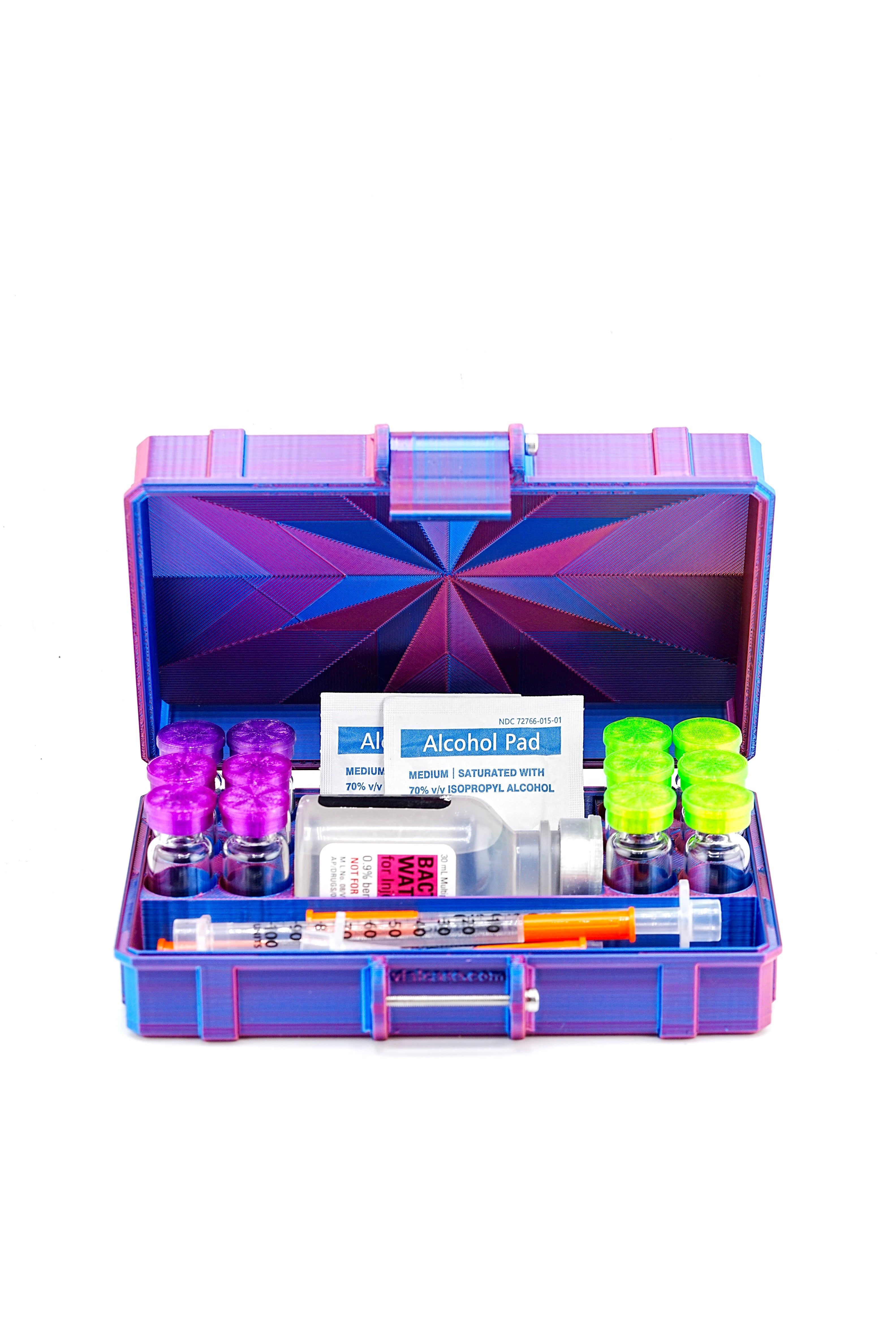
The Rankings: 10 Best Recovery Peptides for 2026
1. BPC-157 — The Gold Standard for Injury Recovery
BPC-157 (Body Protection Compound-157) is a 15-amino-acid synthetic peptide derived from a protective protein found in human gastric juice. It sits at the top of every credible recovery peptide ranking because no other compound matches its breadth of healing activity: it accelerates repair of tendons, ligaments, muscle, bone, gut lining, and peripheral nerves. Its mechanisms include upregulation of growth hormone receptor expression in tendon fibroblasts, promotion of angiogenesis at injury sites via VEGF upregulation, modulation of the nitric oxide system for improved blood flow, and potent anti-inflammatory activity without immune suppression. It works locally when injected near the injury site and systemically when injected subcutaneously away from the injury — giving practitioners flexibility in administration strategy.
Typical protocol: 250–500 mcg subcutaneously once or twice daily. For localized tendon or ligament injuries, subcutaneous injection as close as practically possible to the injury site is preferred. For gut, nerve, or systemic use, standard subcutaneous injection in the abdominal region is standard. Cycles of 4–8 weeks are typical; some practitioners run continuous low-dose maintenance at 250 mcg/day.
Storage: Lyophilized BPC-157 is stable at 2–8°C for up to 24 months. For storage beyond one year, freeze at -20°C. After reconstitution with bacteriostatic water, refrigerate and use within 28 days. Minimally light sensitive but should be kept away from direct UV exposure as a matter of good practice. Full handling protocol in the BPC-157 storage guide.
2. TB-500 (Thymosin Beta-4) — Systemic Actin-Binding Repair
TB-500 is the logical complement to BPC-157 in any serious recovery protocol. Where BPC-157 excels at localized tissue repair and gut-axis healing, TB-500 operates systemically through a different mechanism: it binds to actin, the structural protein fundamental to cell migration and tissue regeneration, and upregulates the actin-sequestering protein beta-4 thymosin throughout the body. This mechanism allows TB-500 to drive repair at multiple injury sites simultaneously — a significant advantage for athletes managing accumulated wear across joints, tendons, and muscle simultaneously. TB-500 also promotes new blood vessel formation (critical for delivering nutrients and removing waste at chronic injury sites), reduces systemic inflammation via downregulation of inflammatory cytokines, and has demonstrated nerve regeneration capacity in animal models.
Typical protocol: Loading phase: 2.0–2.5 mg subcutaneously or intramuscularly twice weekly for 4–6 weeks. Maintenance phase: 2.0–2.5 mg once weekly or biweekly. The loading phase is important — TB-500's systemic mechanism requires building up adequate tissue concentrations before full effect is observed. Most practitioners see significant improvement by weeks 3–4 of the loading phase.
Storage: Lyophilized TB-500 is stable at 2–8°C for up to 24 months. Store at -20°C if holding for longer than one year. Post-reconstitution, keep refrigerated and use within 28 days. Moderately light sensitive — store in a case away from ambient light. Full details at the TB-500 storage guide.
3. GHK-Cu — Anti-Inflammatory Healing Accelerator
GHK-Cu (glycyl-L-histidyl-L-lysine copper complex) is best known in anti-aging contexts for its gene-regulatory effects, but its role in acute and chronic injury recovery is equally compelling. The copper peptide activates over 4,000 genes, including a large cluster associated with inflammation resolution and tissue repair. Specifically relevant to recovery: GHK-Cu reduces TNF-alpha and IL-6 expression (key pro-inflammatory cytokines that slow healing when chronically elevated), accelerates wound closure, promotes new blood vessel formation, and stimulates collagen and elastin synthesis in connective tissue. For athletes dealing with chronic tendinopathy, fascial damage, or skin-level injuries, GHK-Cu provides a layer of healing activity that neither BPC-157 nor TB-500 covers as directly.
Typical protocol: Injectable: 1–2 mg subcutaneously daily during acute recovery phases, tapering to every other day for maintenance. Topical formulations (0.1–1% GHK-Cu) are applied directly to surface injuries, bruising, or areas of chronic inflammation twice daily. Injectable and topical use are frequently combined.
Storage: Lyophilized GHK-Cu is stable at 2–8°C for 18–24 months. The copper chelate is sensitive to light — store away from direct light exposure at all times. Post-reconstitution, use within 30 days under refrigeration. See the GHK-Cu storage guide for complete handling instructions.
4. CJC-1295 + Ipamorelin — GH Elevation for Recovery
Growth hormone is the master regulator of tissue repair. It drives protein synthesis, mobilizes fat for energy during recovery, stimulates IGF-1 production in peripheral tissues, and improves sleep quality — the period when the majority of physical recovery occurs. CJC-1295 (a long-acting GHRH analogue) combined with Ipamorelin (a selective GH secretagogue) produces sustained, physiologically appropriate GH and IGF-1 elevation that accelerates recovery between training sessions and dramatically improves the rate of healing from acute injuries. The combination is preferred over exogenous GH in recovery contexts because it works through the body's own pituitary axis, preserving feedback regulation and avoiding the side effects associated with supraphysiological GH administration.
Typical protocol: CJC-1295/DAC at 2 mg once weekly; Ipamorelin at 200–300 mcg subcutaneously before bed (and optionally post-workout). The bedtime dose capitalizes on the natural GH pulse during slow-wave sleep. For acute injury recovery, twice-daily Ipamorelin dosing (morning and evening) is common. Cycle length: 8–12 weeks.
Storage: Lyophilized CJC-1295 and Ipamorelin both require refrigeration at 2–8°C, with shelf lives of 18–24 months unmixed. Post-reconstitution, use within 28 days. Both are light sensitive — store in a dedicated case away from ambient light. See the Ipamorelin storage guide and sermorelin storage guide for comparative GHRH storage context.
Pro Tip: When running CJC-1295/Ipamorelin alongside BPC-157 and TB-500 for acute injury recovery, you are managing three to four reconstituted vials simultaneously with different draw frequencies — TB-500 twice weekly, CJC-1295 once weekly, Ipamorelin daily, BPC-157 once or twice daily. Label every vial with reconstitution date and expiry date the moment you mix it. A single unlabeled vial in a refrigerator drawer creates dosing uncertainty that undermines the entire protocol.
5. IGF-1 LR3 — Satellite Cell Activator for Muscle Repair
IGF-1 LR3 (Insulin-like Growth Factor-1 Long R3) is a modified analogue of endogenous IGF-1 with a substituted amino acid and N-terminal extension that dramatically extends its half-life (from minutes to approximately 20–30 hours) and reduces its binding to IGF-binding proteins, increasing the fraction of free, bioavailable IGF-1. IGF-1 is the most anabolic recovery peptide available — it directly activates satellite cells (muscle stem cells that fuse with damaged muscle fibers to repair and grow them), drives protein synthesis through the mTOR pathway, inhibits protein degradation, and promotes the proliferation of fibroblasts in connective tissue. For muscle-specific recovery — hypertrophy, muscle fiber repair after eccentric loading, or muscle damage from trauma — no compound on this list is more targeted or more potent.
Typical protocol: 20–50 mcg subcutaneously or intramuscularly once daily, typically post-workout. IGF-1 LR3 cycles are kept short — 4–6 weeks — due to receptor desensitization with prolonged use. It is best used as a concentrated intervention during acute recovery phases rather than as a continuous maintenance compound.
Storage: IGF-1 LR3 requires freezer storage (-20°C) for long-term stability. At 2–8°C, shelf life is reduced to 4–6 weeks. Post-reconstitution, use within 14–21 days under refrigeration. Highly sensitive to temperature fluctuation — do not leave at room temperature for extended periods. Aliquot before freezing to avoid repeated freeze-thaw cycling, which degrades activity rapidly.
6. Sermorelin — Sleep-Mediated Recovery Enhancement
Sermorelin occupies a distinct niche in the recovery stack: it is the most conservative and well-tolerated way to restore youthful GH pulsatility, with a particular emphasis on optimizing sleep quality. This matters for recovery because slow-wave (deep) sleep is when the majority of GH secretion occurs, and GH during sleep drives the protein synthesis, tissue repair, and cellular restoration that make the next day's training possible. Athletes who are sleeping poorly are recovering poorly, regardless of what other peptides they use. Sermorelin directly addresses this by amplifying the nighttime GH pulse without disrupting natural feedback mechanisms.
Typical protocol: 200–500 mcg subcutaneously 30–60 minutes before bed, 5–7 nights per week. The bedtime timing is not optional — sermorelin's utility in recovery is specifically tied to its amplification of the sleep-associated GH pulse. Daytime use largely wastes the compound's primary recovery benefit.
Storage: Lyophilized sermorelin is stable at 2–8°C for 12–18 months. Post-reconstitution stability is shorter than most peptides — use within 14–21 days under refrigeration. Light sensitive; store in an opaque case. The sermorelin storage guide covers handling and reconstitution in detail.
7. Hexarelin — GH Pulse and Collagen Synthesis
Hexarelin is a synthetic hexapeptide GH secretagogue that produces the strongest GH pulse of any peptide in its class — stronger than Ipamorelin, stronger than GHRP-6, and with direct cardiovascular protective effects that are independent of its GH-stimulating activity. For recovery purposes, the key advantage of Hexarelin is its potent stimulation of collagen synthesis and joint repair. It has demonstrated direct activity at GH secretagogue receptors in joint tissue, making it particularly effective for cartilage, tendon, and ligament recovery where IGF-1 and collagen production are the rate-limiting factors. The tradeoff is receptor desensitization with continuous use — Hexarelin is best run in short, targeted cycles rather than as a long-term daily compound.
Typical protocol: 100–200 mcg subcutaneously once or twice daily. Due to receptor desensitization, most practitioners limit continuous use to 4–6 weeks before a 2–4 week break. Post-workout and bedtime are the preferred administration windows. Often stacked with CJC-1295 (rather than Ipamorelin) for maximum joint-focused recovery.
Storage: Lyophilized Hexarelin is stable at 2–8°C for up to 24 months. Post-reconstitution, refrigerate and use within 28 days. Light sensitive — consistent cold storage in an opaque case is recommended. Hexarelin in solution is somewhat less stable than Ipamorelin; err on the side of shorter post-reconstitution use windows (21 days rather than 28) if potency is a concern.
8. AOD-9604 — Cartilage Repair Beyond Fat Loss
AOD-9604 is a modified fragment of human growth hormone (hGH176–191) that was originally developed as a fat-loss compound. Its recovery relevance emerged from subsequent research demonstrating that it stimulates cartilage repair through mechanisms beyond its lipolytic activity. AOD-9604 activates chondrocytes (the cells responsible for cartilage maintenance and repair), promotes proteoglycan synthesis in articular cartilage, and reduces cartilage degradation by inhibiting matrix metalloproteinase activity. For athletes with osteoarthritic changes, chronic joint injury, or cartilage wear from high-impact training, AOD-9604 addresses a healing target that most other recovery peptides do not reach directly.
Typical protocol: 300–500 mcg subcutaneously daily, typically in the morning on an empty stomach (to maximize the lipolytic component if that is a secondary goal) or at any time if the focus is purely cartilage repair. Cycles of 8–12 weeks. Often stacked with BPC-157 and TB-500 for comprehensive joint recovery.
Storage: Lyophilized AOD-9604 is stable at 2–8°C for 18–24 months. Post-reconstitution, use within 28 days under refrigeration. Moderate light sensitivity — standard protected storage applies. As an hGH fragment, AOD-9604 is more temperature-stable than full-length GH but should still be treated with the same cold-chain discipline.
9. PT-141 — Neuroinflammation and Mood During Injury Recovery
PT-141 (Bremelanotide) is primarily known as a melanocortin receptor agonist used for sexual dysfunction, but its recovery applications are increasingly recognized. Melanocortin receptors (MC1R, MC3R, MC4R) are expressed throughout the central nervous system and have well-documented roles in reducing neuroinflammation, modulating pain perception, and regulating mood. During extended injury recovery — particularly injuries requiring weeks of training restriction — neuroinflammation and the psychological burden of forced inactivity are real barriers to optimal healing. PT-141 addresses both: it reduces neuroinflammatory cytokine expression, improves mood and motivation via MC4R activity in the hypothalamus, and may reduce central sensitization to chronic pain. This is not a primary healing compound, but as a support tool during difficult recovery periods, it has a legitimate place in a comprehensive protocol.
Typical protocol: 0.5–1.0 mg subcutaneously or intranasally as needed, typically 2–3 times per week during recovery phases where mood and motivation are significantly impacted. Not intended for daily continuous use. Often added to a recovery stack during the most restrictive weeks of an injury protocol.
Storage: Lyophilized PT-141 is stable at 2–8°C for 18–24 months. Post-reconstitution, refrigerate and use within 28 days. Moderate light sensitivity. Store alongside other recovery peptides in a dedicated case to maintain consistent temperature and organization.
Pro Tip: A full recovery stack — BPC-157, TB-500, CJC-1295/Ipamorelin, and a supporting compound like GHK-Cu or AOD-9604 — means managing four to five active vials at once, each with different dosing frequencies, different reconstitution dates, and different expiry windows. Without a dedicated organized case, the risk of drawing from an expired vial, cross-contaminating vials, or losing track of what has been dosed is significant. This is the exact scenario a purpose-built peptide case eliminates. See our guide to organizing a multi-peptide protocol for practical setup advice.
10. Selank — Cortisol Reduction for Faster Return to Training
Selank closes out the list as the mental and neuroendocrine recovery tool. Elevated cortisol during injury recovery is not just a mood issue — it is a catabolic signal that directly opposes the anabolic and reparative actions of the other compounds in this list. Cortisol breaks down collagen, suppresses protein synthesis, impairs immune function (which is required for tissue repair), and degrades sleep quality. Selank, a synthetic analogue of the immunomodulatory peptide tuftsin, reliably reduces cortisol output and anxiety, modulates IL-6 and TNF-alpha expression, and improves cognitive function during the stress of forced training restriction. Athletes who have dealt with serious injuries know that the psychological component of recovery is real — Selank addresses it at the neurochemical level rather than leaving it unmanaged.
Typical protocol: 250–500 mcg subcutaneously or intranasally once to twice daily. Intranasal administration produces rapid CNS uptake and is preferred when acute anxiety or cortisol elevation is the primary target. Cycles of 10–14 days on, several days off are typical. Can be used on an as-needed basis during peak stress periods of an injury recovery timeline.
Storage: Lyophilized Selank is stable at 2–8°C for 12–18 months. Reconstituted intranasal solution is more vulnerable to temperature fluctuation than injectable formulations — consistent cold storage at 2–8°C is essential. Use within 30 days post-reconstitution. Moderate light sensitivity.
The Wolverine Stack: BPC-157 + TB-500
If this list can be distilled to a single practical starting point, it is this combination. The Wolverine Stack — named for its near-fictional healing speed — pairs BPC-157 and TB-500 in a protocol that covers the two most critical recovery mechanisms simultaneously: localized tissue repair (BPC-157) and systemic actin-mediated regeneration (TB-500). Together, they address injuries from multiple angles, reduce systemic inflammation, promote angiogenesis, and drive cellular migration to injury sites throughout the body.
The stack works because the two compounds are mechanistically complementary without being redundant. BPC-157 operates primarily through the nitric oxide system, growth hormone receptor upregulation, and direct gut-axis restoration. TB-500 operates through actin sequestration and systemic beta-4 thymosin expression. There is no meaningful overlap between these pathways — running both simultaneously means getting the full benefit of each, not a diluted version of one.
Standard Wolverine Stack Protocol:
- BPC-157: 250–500 mcg subcutaneously once to twice daily, injected near the injury site when possible
- TB-500 (loading): 2.0–2.5 mg subcutaneously or intramuscularly twice weekly for 4–6 weeks
- TB-500 (maintenance): 2.0–2.5 mg once weekly or biweekly after the loading phase
- Total cycle: 8–12 weeks for significant structural injuries; 4–6 weeks for acute muscle damage or inflammation
For a complete breakdown of the Wolverine Stack protocol, dosing rationale, and expected recovery timelines, see the dedicated Wolverine Stack: BPC-157 + TB-500 guide.
Storage: The Variable Most Recovery Protocols Get Wrong
The Wolverine Stack means two reconstituted vials drawing simultaneously — BPC-157 drawn once or twice daily, TB-500 drawn twice weekly. Add a GH peptide for sleep and systemic recovery, and you are at three or four active vials. Each has a different reconstitution date. Each has a different expiry window (TB-500 at 28 days, BPC-157 at 28 days, Sermorelin at 14–21 days). Each is a clear liquid in a clear vial that looks identical to the others at 5 a.m. before your first injection of the day.
The most common peptide storage mistakes — drawing from an expired vial, skipping refrigeration for even a few hours, exposing vials to light during daily use — all happen more frequently when there is no organizational system. A dedicated case that holds all active vials, labeled clearly, at consistent temperature, is the infrastructure that makes a multi-compound recovery protocol actually work.
For guidance on reconstituting your recovery peptides correctly, see our guide to reconstituting peptides with bacteriostatic water. For a side-by-side comparison of storage cases built for this type of multi-vial protocol, see our top 10 peptide storage cases review. And if you are newer to peptide protocols and building your first recovery stack, the beginner peptide stack storage guide covers the fundamentals without assuming prior experience.
Recovery peptides are among the most clinically impactful compounds available to researchers and self-experimenters. The difference between a protocol that delivers and one that disappoints is almost always execution — and execution starts with knowing that the compound in the vial is still viable when you draw it.
This content is for informational and educational purposes only and does not constitute medical advice. Always consult a licensed healthcare provider before beginning any peptide or hormone protocol.