
The Danger Zones, Stated Plainly
Every peptide and GLP-1 product comes with storage instructions, and those instructions set the range your vials should stay in. The danger zones aren't numbers on a chart. They're the everyday places where you lose control of the temperature without noticing: a parked car, a checked bag, a doorstep, a mailbox, a weak hotel fridge, the fridge door.
Two kinds of trouble come up again and again:
- Too warm for too long. A vial spends longer somewhere warm than its label allows, usually because nobody realized how hot that spot gets.
- Too cold. A vial whose label says not to freeze ends up somewhere that freezes, often in winter shipping or touching an ice pack.
Most of these events are invisible. Nothing looks different afterward, which is exactly why it pays to know the danger zones in advance and to keep a thermometer where your vials live.
Put a thermometer window in your case
Design a vial case with a clip-in sensor window or inside socket for a small digital thermometer, sized to fit your fridge shelf or cooler bag.
Your Label Sets the Range, Not This Page
Different products, and the same product in different forms, can carry different instructions, and those instructions change. Follow the storage instructions on your product label or from your pharmacist or provider.
If a vial has been somewhere you're not sure about (a long afternoon in the car, a delivery that sat outside, a fridge that turned out to be warm), don't guess and don't rely on how it looks. Note what happened, for how long, and ask your pharmacist or provider before you use it.
Specific Danger Scenarios
Abstract advice becomes useful when you map it to real situations. These are the places that catch people out every summer and every winter.
The Hot Car Interior
A car parked in the sun gets far hotter inside than the air outside, and it happens within minutes, not hours. The glove box, center console and door pockets are some of the warmest spots of all. A vial left there during a quick grocery stop can spend that time well outside what most labels allow. The fix is simple: the case comes with you when you leave the car.
Checked Airline Luggage
A checked bag goes somewhere you can't see, check on or adjust, and it may sit on a hot ramp or in a cold hold along the way. Bags also get delayed and lost. That's why practically every travel guide says to carry vials in your cabin bag. See our TSA travel guide for documentation and screening tips.
Delivery Trucks and Doorsteps in Summer
Delivery vehicles aren't climate-controlled, and a box left on a sunny porch heats up fast. Cold packs in a shipment only buy so much time, and weather delays use it up. Track temperature-sensitive deliveries, bring them inside as soon as they arrive, and if the cold packs are warm when you open the box, contact the pharmacy or sender right away instead of guessing.
Mailbox in Winter
An outdoor mailbox in a cold snap works like a freezer. A delivery that sits there for an afternoon can freeze, and liquid in a glass vial can crack the glass as it freezes. In winter, watch delivery alerts, bring packages in immediately, or have them held somewhere heated.
Hotel Room Fridge
Hotel mini-fridges vary a lot. Some barely cool, especially in a hot room or with the setting turned down; others have a freezing spot near the cooling plate at the back. Put a small thermometer inside on day one, before you trust it with your vials, and ask the front desk for a different fridge if it's off.
Why a Case Is Not a Cooler
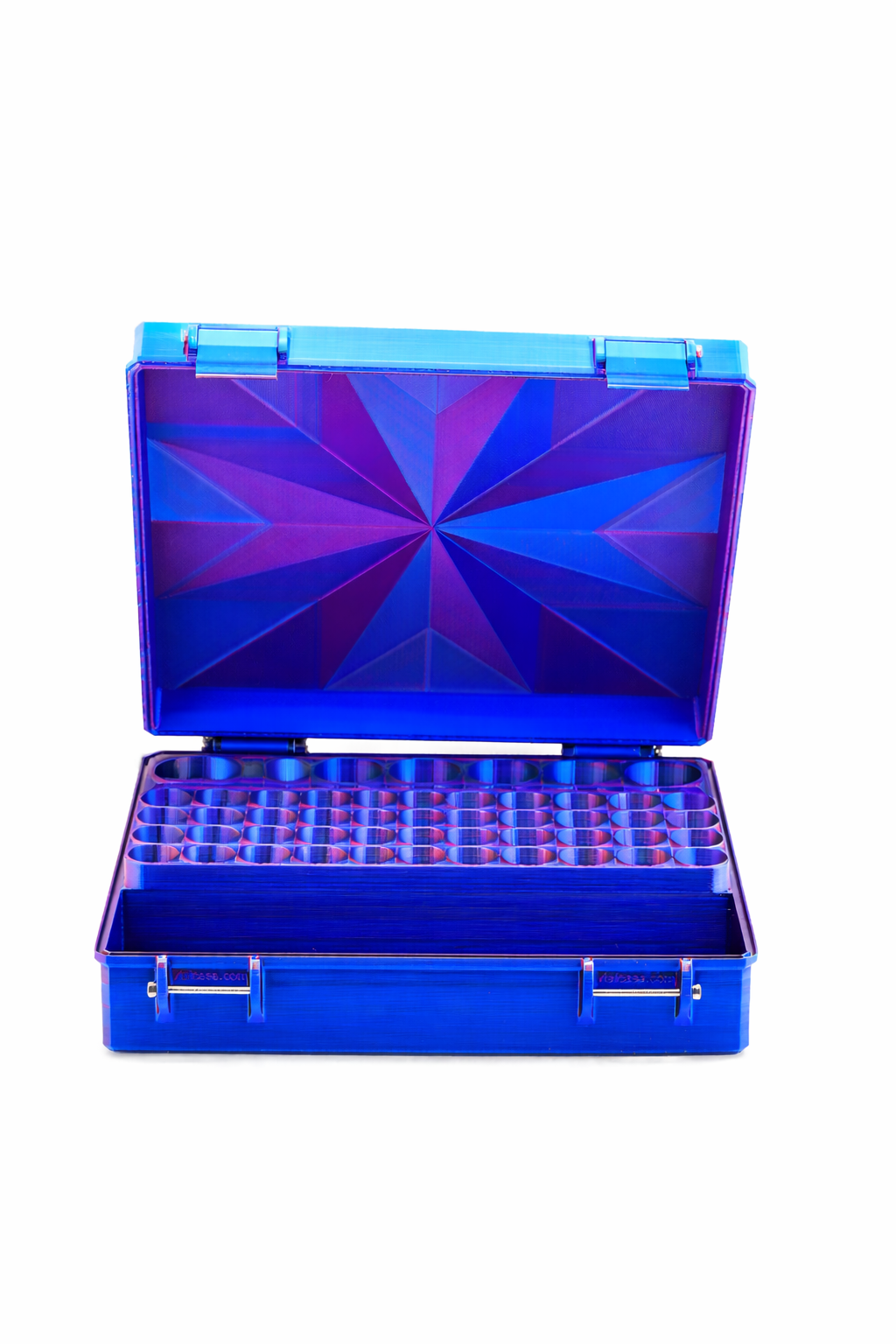
It's worth being clear about this, because it's the most common misunderstanding about vial cases. A hard case protects vials from breakage and keeps them organized and easy to find. It is not insulated and it doesn't keep anything cold. A case can sit inside your fridge, and it can sit inside a cooler, but it can't replace either.
For trips, treat temperature and protection as two jobs. An insulated cooler bag with gel ice packs handles temperature; the hard case inside it holds every vial in its own pocket so nothing rattles or breaks. If your label says not to freeze, keep a layer, such as a cloth or the case wall, between the ice packs and the vials so nothing sits directly against a frozen pack.
Practical Monitoring: Hardware That Catches Problems Early
You can't react to a temperature event you didn't know happened. A little hardware goes a long way:
- A min/max digital fridge thermometer. It records the highest and lowest readings since you last reset it. Check it weekly and compare against your label. Models with an external probe let you read the display without opening the door.
- A Bluetooth temperature logger. It sends readings to your phone, which helps you spot fridge swings, catch a power outage while you were away, and see what a cooler bag actually did on a long trip.
- Indicator stickers and freeze-watch labels. Single-use stickers that change color permanently past a set threshold. Stick one on an incoming shipment or inside a cooler bag to see whether it got too warm or too cold.
- A thermometer that lives with the vials. A thermometer on the other side of the fridge tells you about that side of the fridge. The PeptideCase™ builder offers a temperature sensor item, either a clip-in window in the lid or a socket inside the case, sized for a small digital thermometer, so the reading comes from right next to your vials.
A Simple Routine for Each Danger Zone
| Danger zone | What goes wrong | What to do |
|---|---|---|
| Parked car | Heats up fast in the sun | Take the case with you, every time |
| Checked bag | Out of your control; can be lost | Carry vials on, in a case, with documentation |
| Summer doorstep | Box sits in the sun after delivery | Track it, bring it in, report warm cold packs |
| Winter mailbox | Can freeze | Bring it in right away or hold it somewhere heated |
| Hotel fridge | Too weak, or a freezing spot at the back | Check it with a thermometer on day one |
| Fridge door | Warms every time it's opened; vials fall | Keep the case on a middle shelf instead |
| Power outage | Fridge warms while you're away | Keep the door shut, check the min/max reading, ask your pharmacist if unsure |
For more on outages, see our power outage guide, and for setting up a fridge shelf, our fridge organization guide.
Keep a Simple Storage Log
A vial's storage story is the sum of everything that happened to it, not just the last event. If a vial rode in a late summer delivery, then a weak hotel fridge, then a long drive in a cooler, you'll want to tell your pharmacist all of it, not just the part you remember.
A few lines in your phone are enough: the date a vial arrived, anything unusual about the delivery, trips it went on, and any min/max readings that looked off. Use older vials first, so nothing sits around longer than it needs to, and when you're unsure about a vial's history, ask rather than guess.
Make your own custom case with a temperature sensor window
If you want to know what your vials are actually sitting in, put the thermometer in the case. In the PeptideCase™ builder, start with an empty case, tap "Add item" and add your vials (3 mL, 10 mL, peptide, other size) and supplies, then add the temperature sensor: a clip-in window in the lid, or a socket inside the case, for a small digital thermometer. Every item becomes fitted pockets or an open bay sized for that many, and Auto-arrange packs it all into the most compact layout. The builder shows the exact length, width and height, so you can make sure the case fits your fridge shelf or slides into the cooler bag you already own. Remember the limits: the case is a protective organizer and will not keep anything cold by itself. Pair it with a cooler and ice packs on the road, and follow your label at home. Design a case with a sensor window