
Flying to Europe with GLP-1 pens or peptide vials comes down to two jobs: knowing which border rules apply where you land, and packing your medication so it arrives intact, labeled and documented. Europe's legal geography is more complicated than one map suggests — Schengen, the EU and the UK overlap but are not the same thing.
This guide covers the geography, the documents that answer border questions, and how to pack a long-haul medication kit. Rules change and vary by country and by your nationality, so always confirm the current rules with your airline and the destination's customs authority before you fly.
Design a case for your Europe trip
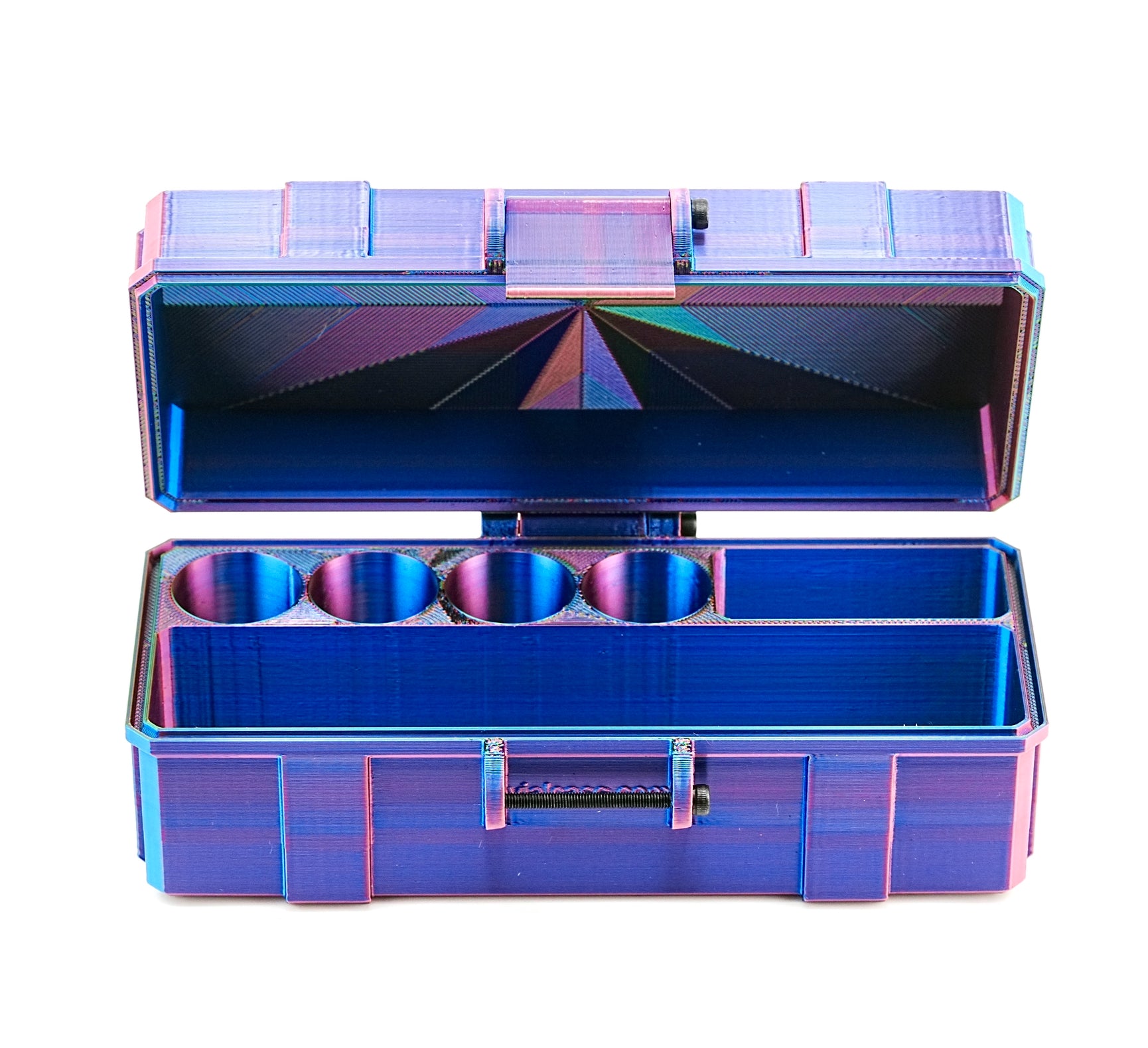
Add the pens, vials and supplies you are flying with, and the builder lays out a hard travel case sized to fit inside your cooler.
Schengen, the EU, and the UK Are Three Different Things
Before any discussion of medication rules, it is worth fixing the geography. American travelers regularly conflate "Europe," "the EU," and "Schengen," and at the border that confusion costs you time. The three overlap but they are not identical:
- The Schengen Area is a 26+ country border-free zone. You clear immigration and customs once, at your first Schengen port of entry, and then move freely between member states without further passport checks.
- The European Union (EU) is a political and economic bloc of 27 countries with a shared customs union and shared regulatory bodies (like the EMA, the European Medicines Agency).
- The United Kingdom left the EU after Brexit and was never in Schengen. The UK runs its own customs and medicines regime under the MHRA.
The two big mismatches travelers always trip on:
- Ireland is in the EU but not in Schengen. If you fly from New York to Dublin, you clear Irish customs separately. If you then fly Dublin to Paris, you clear Schengen on arrival in Paris.
- Switzerland is in Schengen but not in the EU. Swiss customs is separate from EU customs for goods, but for short-stay travel Switzerland follows Schengen-style entry.
Iceland, Norway, and Liechtenstein are also Schengen but not EU. Cyprus, Bulgaria, Romania, and Croatia have moved through various stages of Schengen accession in recent years; check current status close to your travel dates.
The single most useful fact for travelers with medication: in Schengen, you formally clear customs only once. If you fly Newark → Amsterdam → Madrid, your customs interaction happens at Schiphol, and the rules of that first entry country are the ones you need to have checked. The Madrid leg is essentially a domestic flight from a passport-control standpoint.
Personal-Use Medication Across Schengen
Every Schengen country lets travelers bring prescription medication for their own use. The framework is broadly similar across member states, even though each has its own national medicines law underneath.
The general rule, repeated in country after country, looks like this:
- You may bring a reasonable personal supply of prescription medication for the length of your trip.
- "Reasonable" is commonly read as up to about three months' supply — neatly aligned with the Schengen 90/180 visa rule — but check your entry country's own limit.
- Documentation (prescription, pharmacy label, or a letter from your prescriber) is recommended and resolves most border questions.
- Controlled substances (narcotics, certain stimulants, some psychotropics) need extra paperwork — often a Schengen Certificate under Article 75 of the Schengen Convention. Check whether anything you carry is controlled in your entry country before you go.
The practical effect is that a traveler arriving in Frankfurt, Paris, Amsterdam, Madrid, Rome, or Lisbon with labeled, documented personal medication is doing something countless passengers do every day. Organized, labeled, documented is the standard to aim for.
The 90-Day Schengen Rule and What It Means for Medication Supply
Most US, Canadian, UK, Australian, and similar passport holders enter Schengen visa-free under the 90/180 rule: up to 90 days in the Schengen Area within any rolling 180-day window. After that, you must either leave the Schengen zone or hold a long-stay national visa from a specific country.
For packing, the 90/180 rule is your practical ceiling for a single trip:
- For short trips: pack what the trip needs plus a small buffer for delays.
- For longer trips: pack the trip supply plus a buffer, and make sure your documentation covers the whole amount.
- For trips approaching the full 90 days: confirm your entry country's personal-use limit before you pack, and don't bring more than you can show is for your own use.
If you are planning a stay longer than 90 days (digital nomad, sabbatical, retirement, study abroad), you'll be on a long-stay national visa, and the medication conversation shifts toward an in-country prescription, which we cover further down.
Country-Specific Quirks Within Schengen
Even though Schengen harmonizes border-crossing logistics, each member state has its own medicines law and its own regulator. These are the ones travelers ask about most.
Germany — The BtMG
Germany operates the Betäubungsmittelgesetz (BtMG) — the federal Narcotics Act — which lists controlled substances on three annexes. The BtMG is what triggers extra paperwork for travelers carrying opioids, certain ADHD medications, and benzodiazepines into Germany. If nothing you carry is on those annexes, the standard personal-use documentation applies. Frankfurt and Munich are among Europe's busiest transatlantic arrival points.
France — ANSM and the Pharmacie Network
France's medicines regulator is ANSM (Agence Nationale de Sécurité du Médicament). France follows the broader Schengen framework for travelers' personal medication. Its quirk is the strength of its pharmacie network — pharmacies are highly regulated, everywhere, and the natural place to go if you need supplies mid-trip.
Italy and Spain — High-Volume Tourism Hubs
Italy and Spain both follow the standard Schengen model for personal-use medication. Their airports — FCO (Rome Fiumicino), MXP (Milan Malpensa), MAD (Madrid Barajas), and BCN (Barcelona) — process millions of travelers a year. The Italian agency is AIFA; Spain's is AEMPS. Both follow EMA harmonization standards, and GLP-1 medications are widely prescribed in both countries.
Switzerland — In Schengen, Not in the EU
Switzerland joined Schengen in 2008 but remains outside the EU. For airline travelers, the practical effect is invisible: Zurich (ZRH) and Geneva (GVA) function as Schengen entry points, and your passport stamp, customs flow, and 90/180 calculation work like a Frankfurt or Madrid arrival.
Where Switzerland differs is goods customs — it has its own customs union separate from the EU. Swiss medicines are regulated by Swissmedic, and travelers' personal-use medication follows the same general framework as its Schengen neighbors. If you fly from a non-Schengen country (like the UK or US) directly into Switzerland, you clear Schengen at ZRH or GVA and your medication clears Swiss customs at the same checkpoint.
Netherlands — A Common Transit Hub
Schiphol (AMS) is one of the largest transit hubs in Europe, and Dutch customs (the Douane) handles a constant flow of US transatlantic arrivals. The Dutch medicines regulator is the CBG-MEB. Because so many itineraries connect here, Schiphol is often where US travelers make their single Schengen entry — so it's the country whose rules you should check.
The UK Post-Brexit — A Separate Customs Universe
Since 1 January 2021, the United Kingdom operates fully outside EU customs. Flying into Heathrow (LHR), Gatwick (LGW), or Manchester (MAN) means clearing UK Border Force on arrival, regardless of where you are flying from.
The UK regulator is the MHRA (Medicines and Healthcare products Regulatory Agency). UK rules let travelers bring a reasonable personal supply of prescription medication for their stay. The general guidance, broadly in line with the EU framework, is:
- Up to three months of prescription medication for personal use is generally accepted with documentation.
- GLP-1 medications are widely prescribed in the UK through both NHS and private prescriptions.
- Controlled drugs under UK schedules (which are not the same as EU lists) can require a personal licence for longer trips. Check the UK government's current guidance for anything you carry.
Practical implication: if your itinerary is "fly to London, then take the Eurostar to Paris," you clear UK customs at Heathrow, then Schengen in Paris (Eurostar's terminal handles the Schengen check). Two separate checks, two sets of rules to confirm, but one well-organized, well-documented kit covers both.
Documentation Strategy for European Travel
Across Schengen, the EU, and the UK, the three documents that resolve nearly all border questions are the same:
- Original prescription packaging with the pharmacy label. For GLP-1 pens and boxed medication, this is the gold standard. The label ties the medication to your name and a licensed prescriber.
- A letter from your prescriber on clinic letterhead. Especially useful where there's no branded box. It should state that you're under the clinic's care, that the medication is prescribed to you, and ideally list each medication by name.
- A pharmacy label on each vial. Many US pharmacies label vials with the patient name and prescription number. For border purposes this works much like a prescription bottle.
Combine them. Bring all three if you can — original packaging, prescriber letter, pharmacy-labeled vials. The extra effort is close to zero, and at a border desk it makes everything simpler. Our travel checklist covers the full pre-departure list.
GLP-1 Medications in Europe — Familiar Territory
One reassuring fact for transatlantic GLP-1 travelers in 2026: GLP-1 medications are widely prescribed across European markets. They're mainstream in European medicine.
What that means for your trip:
- Border officers and pharmacists commonly see GLP-1 pens in their original packaging.
- European pharmacists may be able to help with an equivalent product if you lose your supply mid-trip and can arrange a valid local prescription.
- European doctors are familiar with the drug class if you need care while you're away.
For more on packing GLP-1 pens and vials for any trip, see our guide to traveling with GLP-1 and peptide vials.
Products Without a Pharmacy Label — Check Before You Pack
If something in your kit has no pharmacy label and no prescription behind it, don't guess. Rules on unapproved products differ by country and change over time. Check with your entry country's customs authority before you travel, and if you can't confirm it's allowed, leave it at home. We can't advise on bringing anything into a country beyond its published rules.
Major European Airports and Where You Clear Customs
Your first point of entry decides which rules you need to have checked. Here's how the major transatlantic gateways line up in 2026:
| Airport | Country | Schengen? | Where you clear customs |
|---|---|---|---|
| AMS (Schiphol) | Netherlands | Yes | On arrival; covers onward Schengen flights |
| FRA (Frankfurt) | Germany | Yes | On arrival; covers onward Schengen flights |
| CDG (Paris) | France | Yes | On arrival; covers onward Schengen flights |
| MAD (Madrid Barajas) | Spain | Yes | On arrival; covers onward Schengen flights |
| FCO (Rome Fiumicino) | Italy | Yes | On arrival; covers onward Schengen flights |
| ZRH (Zurich) | Switzerland | Yes (not EU) | On arrival; Swiss customs at the same checkpoint |
| LHR (London Heathrow) | UK | No (post-Brexit) | On arrival; again at your first Schengen stop |
| DUB (Dublin) | Ireland | No (EU only) | On arrival; again at your first Schengen stop |
If your destination is the UK, flying into LHR or MAN directly keeps the itinerary simpler than connecting through a Schengen hub first — one set of rules to check instead of two.
Long-Haul Flight Cooling Strategy
Transatlantic flights typically run 7-11 hours from the East Coast and 10-13 hours from the West Coast, plus time at both airports. If your labels call for refrigeration, that's a long stretch without a fridge, so plan it deliberately — and check your product label for how long it may be kept out of the fridge.
The standard approach:
- A hard case inside an insulated pouch or small cooler. The case keeps vials upright, separated and protected; the cooler with a frozen gel pack does the cooling. A case on its own is not a cooler.
- Carry-on, never checked. Checked bags get lost, sit on hot or freezing ramps, and get crushed. Keep medication with you.
- A thermometer helps. A small digital thermometer in the cooler tells you how things are holding up without opening the case.
- For very long itineraries (12+ hours plus connections), plan for a fresh cold pack along the way. Many airport hotels and lounges can freeze a gel pack for you; an overnight connection gives plenty of margin.
For coolers that work at airport security, see our guide to the best travel coolers for GLP-1. The US side of the trip is covered in our TSA travel guide, and wider trips in our international travel guide.
Staying Longer Than 90 Days — Local Prescription Transfers
If your stay stretches beyond a 90-day Schengen visa-free stay, you'll be on a long-stay national visa, and your medication plan needs to evolve. Three options, in increasing order of stability:
- Continue with your US prescription, with trips home in between. Workable for stays where you fly back at least once. Each re-entry is a fresh personal-use arrival, so document it the same way every time.
- Transfer to a local European prescription. GLP-1 medications are widely available through European GPs and private clinics. Bring your US prescription history and a brief medical summary; many European prescribers can continue care, and a locally filled prescription avoids carrying a long-term supply across borders.
- Establish care fully in your destination country. For year-long stays or longer, register with a local GP, get a national health number where applicable, and operate as a local patient.
Returning to the US with Leftover Medication
The flight home raises a question every transatlantic traveler eventually asks: what about the medication you didn't use?
- Check U.S. Customs and Border Protection's current guidance on travelers bringing personal medication home before you fly.
- Use the same documentation that worked outbound. Original packaging, prescriber letter, pharmacy-labeled vials.
- Answer questions honestly. If an officer asks about medication, a straightforward answer and organized paperwork resolve things quickly.
- If you filled a prescription abroad, keep the foreign pharmacy label and prescription with it, and check FDA and CBP guidance on bringing it into the US.
What NOT to Do When Flying to Europe with Peptides
- Do not check medication in your hold luggage. Bags get lost, ramps get hot or freezing, and you lose control of the cooler your labels may require.
- Do not assume Schengen means "no rules." It means one customs entry — the medicines rules of your entry country still apply, and they vary.
- Do not arrive at a European border without documentation. Without paperwork, a short conversation becomes a long one.
- Do not bring more than you can show is for your own use. Large quantities look commercial, whatever the intent.
- Do not lie if asked directly. Honest disclosure of personal medical use, backed by documents, is always the right answer.
- Do not pack vials loose. A long-haul day of overhead bins and security trays is hard on glass; keep every vial in a fitted slot.
Make Your Own Custom Travel Case for Europe
A long-haul trip is the hardest test a vial case faces: security trays, overhead bins, a cooler bag and a hotel fridge on the other end. A case built around your exact kit handles it best. In the PeptideCase™ builder you start with an empty case, tap "Add item" and pick what you're bringing — GLP-1 pens or pen cartridges, 3 mL or 10 mL vials, peptide vials, syringes, alcohol pads — and how many. Each becomes fitted pockets or an open bay, so nothing rattles over the Atlantic.
Auto-arrange packs everything into the most compact layout, and the builder shows the exact length, width and height, so you can check the case fits inside your travel cooler before you order. Add the temperature sensor item for a small digital thermometer you can read through a window in the lid. A print-in-place snap hinge and locking latch keep the lid shut in your bag, and you can print your name or initials into the lid so it's easy to spot in a security tray.