
When the power goes out and your vials are in the fridge, the goal is simple: keep the fridge closed as long as you can, and if the outage drags on, move every vial into a cooler in one calm trip. How long your vials can be out of normal storage depends on the product, so follow the storage instructions on your product label or from your pharmacist or provider. This guide is about the part you control: being ready, moving fast, and not losing or breaking anything in the dark.
The people who handle outages best have one thing in common: all their vials already live in one case, so there's nothing to hunt for. You can design that case around your own vials.
Make your outage plan a one-grab move
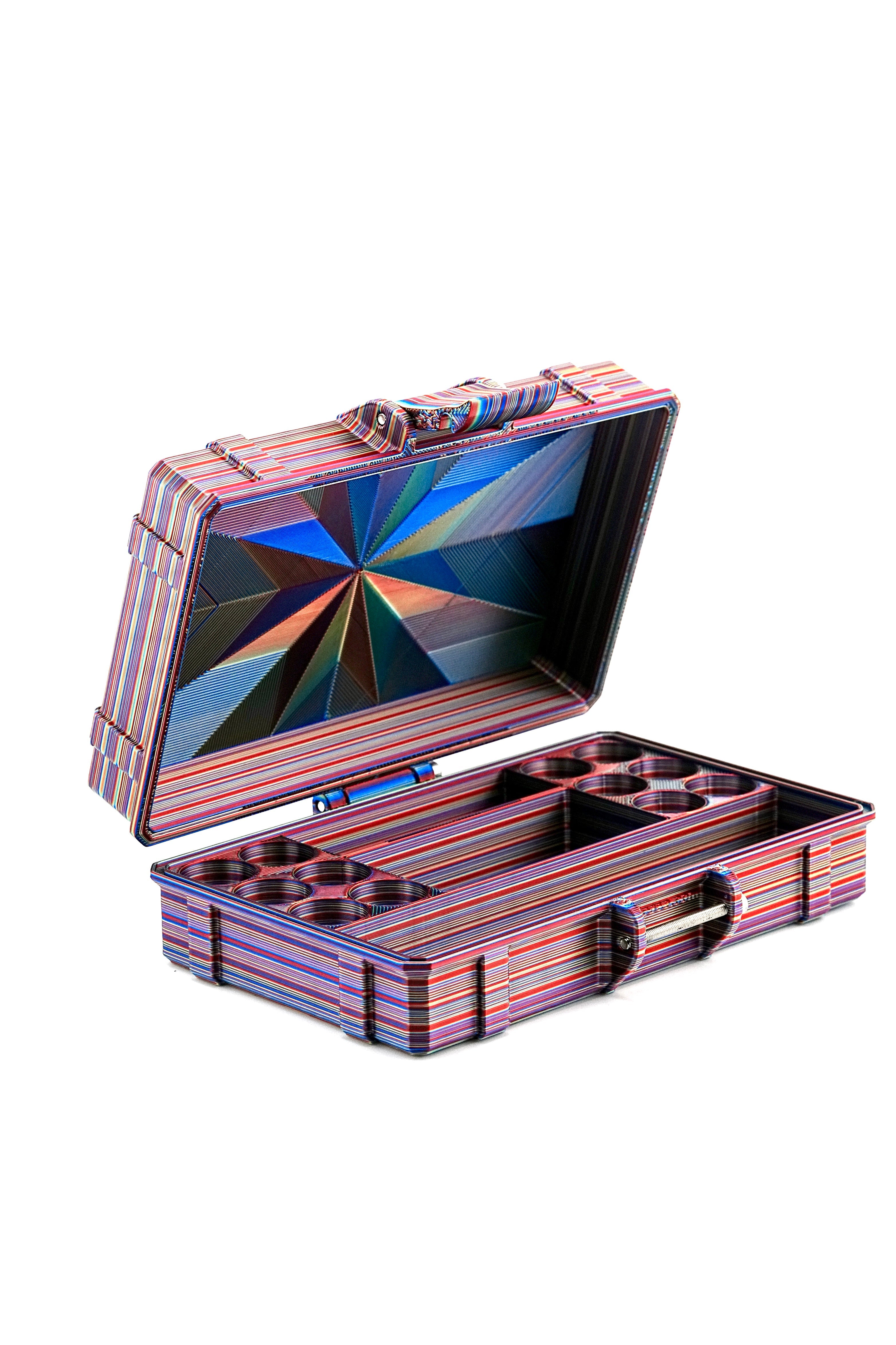
Design a hard case that holds every vial you keep, sized to drop straight into your cooler when the power goes out.
Before the Outage: Set Up Your One-Grab Kit
The most effective outage plan is the one you set up before anything happens. Three things make it work:
- Every vial in one hard case, inside the fridge. If your vials are scattered across shelves, an outage means opening the fridge for a long search with a flashlight. If they're all in one latched case, you grab one thing and close the door.
- A pre-frozen gel pack in the freezer, always. Keep a gel ice pack frozen at all times so you're not sourcing ice from a neighbor at 2 a.m.
- An insulated cooler that the case fits inside. Measure it once. A case that's too big for your cooler is a problem you want to discover on a quiet afternoon, not during a storm.
A small digital thermometer helps too: one in the fridge tells you whether it's still holding the range your label calls for, and one in the cooler tells you how it's doing.
Pro Tip: Keep a flashlight or headlamp near the fridge. Most outages happen in storms, often at night, and a one-trip grab is much easier when you can see the case.
Immediate Actions: The First 30 Minutes
When the power goes out, your fridge becomes an insulated box. A closed fridge stays cold much longer than an open one, and every opening lets cold air out. So step one is counterintuitive: don't open the fridge.
Here's the priority sequence:
- Don't open the fridge. The cold air inside is your biggest asset right now. Opening the door to "check" just lets it out.
- Find out how long the outage will last. Check your utility provider's app or text a neighbor. A short blip needs no action. A storm outage predicted to last many hours does.
- Read your label. Check what your product label or pharmacy instructions say about time out of the fridge, so you know how much of a hurry you're in.
- If it's going to be long: get the cooler ready first, then open the fridge once. Grab your vial case and the frozen gel pack in one organized trip, not several.
- Pack the cooler. Put the closed case in the cooler with the gel pack wrapped in a cloth, so the pack never touches the case or vials directly. Close the lid and note the time.
Why One Case Makes This So Much Easier
Compare the two versions of that grab. With loose vials, you're holding the fridge open while you find every vial, carry them in your hands, and hope none rolled behind the leftovers. With one case, you lift it out, the fridge closes, and every vial goes into the cooler upright and separated, inside a rigid shell that keeps the ice pack and anything else in the cooler off the glass.
Be clear about what the case does and doesn't do: it's a protective organizer, not a cooler. It doesn't keep anything cold by itself. The fridge, and then the cooler and its ice, do the cooling; the case makes the move fast and keeps everything protected and accounted for.
How Long Does a Cooler Hold Cold?
It depends on the cooler, the size of the ice pack, how frozen it was, how warm the house is, and how often you open the lid. Rather than trusting a number from the internet, put a small thermometer in the cooler and check it. A few things reliably help:
- Bigger, colder ice packs last longer than thin gel sheets.
- A cooler wrapped in towels or blankets holds cold longer than one sitting bare in a warm room.
- A cool, shaded spot in the house beats a sunny kitchen counter.
- Keeping the lid closed matters as much as it does with the fridge. Resist the urge to check.
Ice Sourcing: Your Options If the Outage Drags On
If the power stays out longer than your ice lasts, you need more cold or a new home for your case. In order of preference:
- A neighbor's fridge. Usually the fastest and most reliable option. Because everything is in one labeled case, it's easy to hand over and easy to find later. Put your name on the lid.
- Bagged ice from a gas station or store. Put the ice in the cooler around your case and wrap the cooler in towels.
- Dry ice. Some grocery stores sell it. It is extremely cold and can freeze or crack glass on contact, and it needs ventilation. Wrap it in several layers of newspaper and never let it touch your case or vials directly.
- A generator-powered mini-fridge. If you have or can borrow a generator, a small fridge running on it brings your setup back to normal. Check it with a thermometer against your label's range.
After an Extended Outage
If your vials spent longer outside normal storage than your label allows, or you're not sure, don't guess. Ask your pharmacist or provider whether they're still usable. You can't judge that by looking at a vial.
Once the power is back, check the fridge has returned to the range your label calls for before you move the case back in. Then refreeze your gel pack straight away, so the kit is ready for next time.
Design your own custom case for outage-ready storage
An outage plan is only as quick as your grab. In the PeptideCase™ builder you start with an empty case, tap "Add item", and add everything you keep in the fridge: 3 mL vials, 10 mL vials, peptide vials, pens or pen cartridges, syringes, alcohol pads or a BAC water bottle. Each item becomes fitted pockets or an open bay sized for that many, shorter vials stand on a raised floor so every vial top lines up at the rim, and every space has a finger scoop.
Auto-arrange packs it all into the most compact layout, and the builder shows the exact length, width and height, so you can make sure it fits inside your cooler before you order. Add a temperature sensor window in the lid or a socket inside the case for a small digital thermometer. Choose Black or RGB Metallic, Wide or Deep, one or two latches, and put your name on the lid for the neighbor's fridge. It's printed to order in the US.