
When one vial costs far more than everything else in your fridge, a storage mistake hurts right away. A tipped vial, a cracked stopper, a vial grabbed by mistake or left in a hot car is not a small loss.
This guide is about protecting expensive vials the practical way: a fixed, fitted spot in a hard case, clear separation from everything else, labels that never fail, a steady place in the fridge, and a travel setup that never leaves the vial exposed.
Design a case for your most valuable vial
Give every vial a fitted pocket of its own, add supplies and a thermometer window, and preview the case in 3D.
Temperature: the label is the only source
Expensive vials tempt people to hunt for the "perfect" storage temperature online. Don't. For temperature, follow the storage instructions on your product label or from your pharmacist or provider, every time. If a vial was ever stored outside those instructions, ask them before you use it.
A case supports those instructions; it doesn't replace them. It is a protective organizer, not a cooler. It sits inside your fridge, or inside a cooler when you travel, and keeps the vial upright, separated, labeled and in the dark while the fridge does the cooling.
Why expensive vials deserve the most protection
Most storage mistakes are cheap when the vial is cheap. With an expensive vial, the same mistakes cost real money:
- Breakage: a vial knocked off an open shelf or crushed in a bag is simply gone.
- A damaged stopper: vials clinking together can chip glass or damage the stopper, and a damaged vial is one you shouldn't use.
- A wrong grab: picking up the wrong vial wastes one and leaves the other in doubt.
- A storage slip: a vial left in the door shelf, on the counter or in a parked car is no longer stored the way its label asks.
Every one of these is a handling problem, and a well-set-up case prevents all of them.
Give it a fixed pocket it never shares
The single most useful rule: your most expensive vial gets its own fitted pocket, in the same position every time, and nothing else ever goes in that pocket. Fixed placement does two things. Your hand learns where the vial is, so you stop searching through other vials to find it. And an empty pocket is instantly obvious, so you notice right away if the vial didn't come back.
A fitted pocket also keeps the vial standing upright and away from every other vial, so it can't tip, roll or clink against its neighbors when the case moves.
Keep it separate from other vials and supplies
Expensive vials usually share the fridge with others: other peptide vials, a BAC water bottle, maybe GLP-1 or TRT vials. Lookalike vials sitting side by side are exactly how wrong grabs happen. Set up the case so that can't happen:
- Its own zone. Keep this vial, and anything that belongs specifically with it, together in one section of the case, apart from your other vials.
- Supplies in their own spaces. A BAC water bottle in its own bay, syringes in their own trough, alcohol pads in their own spot, never loose among the vials.
- A distinct color. Give it a color nobody else in your fridge uses, on a tape band or a colored cap, so it stands out before you read a word.
- Active and reserve apart. The vial in use sits in front; sealed spares sit behind it or in a separate case.
For a full system, see our guides to organizing several peptide vials and peptide fridge organization.
Color-code your vials
Custom snap-on caps for 3 mL or 10 mL vials, with a cap color plus an icon or letters. Sets from 25 caps.
Labels that never fail
An expensive vial with a smudged label is an expensive question mark. Label every vial with:
- The full name
- A vial number if you have more than one
- The date you opened it
- The discard date from the product label or your pharmacist
- Any handling note your pharmacist or provider gave you
Use lab freezer tape or a waterproof label and a permanent marker, since paper labels peel off in fridge condensation. Our guide on how to label peptide vials covers materials and color-coding.
Light and placement in the fridge
If your label says refrigerate, put the case on a middle shelf toward the back. The door shelf sees the biggest swings every time it opens and gets bumped the most; the back of a middle shelf is the steadiest spot in most fridges.
If your label says protect from light, a closed case with a solid lid keeps the vial in the dark every time the fridge light comes on. An open shelf, a clear container or a zip bag does not.
A small digital thermometer near the case tells you whether your fridge is actually holding steady. Fridges with tired door seals or overpacked shelves can run unevenly, and with expensive vials it is worth knowing. A case with a temperature sensor window keeps that thermometer right in the lid.
Traveling with expensive vials
- Always carry on. Never put expensive vials in checked luggage, where bags get thrown, delayed and lost.
- Never leave the case in a car. A parked car gets very hot in summer and very cold in winter, fast. The case comes with you.
- Cool it if the label says so. Put the case inside a small cooler with a gel ice pack wrapped in a cloth. Avoid dry ice, which can freeze things solid.
- Keep vials upright. Fitted pockets hold every vial standing, even when the bag is on its side.
- Carry documentation. Keep medication in its original labeled packaging where possible, bring your prescription, and check TSA, airline and destination rules yourself. See our TSA guide.
Quick reference: protecting an expensive vial
- Temperature: follow your product label or your pharmacist or provider
- A fitted pocket of its own, same spot every time
- Its own zone and color, apart from lookalike vials
- A complete, waterproof label with the discard date
- A closed case on a middle shelf toward the back, never the door
- Carry-on only, never left in a car, in a cooler if the label calls for cold
Design your own custom case for expensive vials
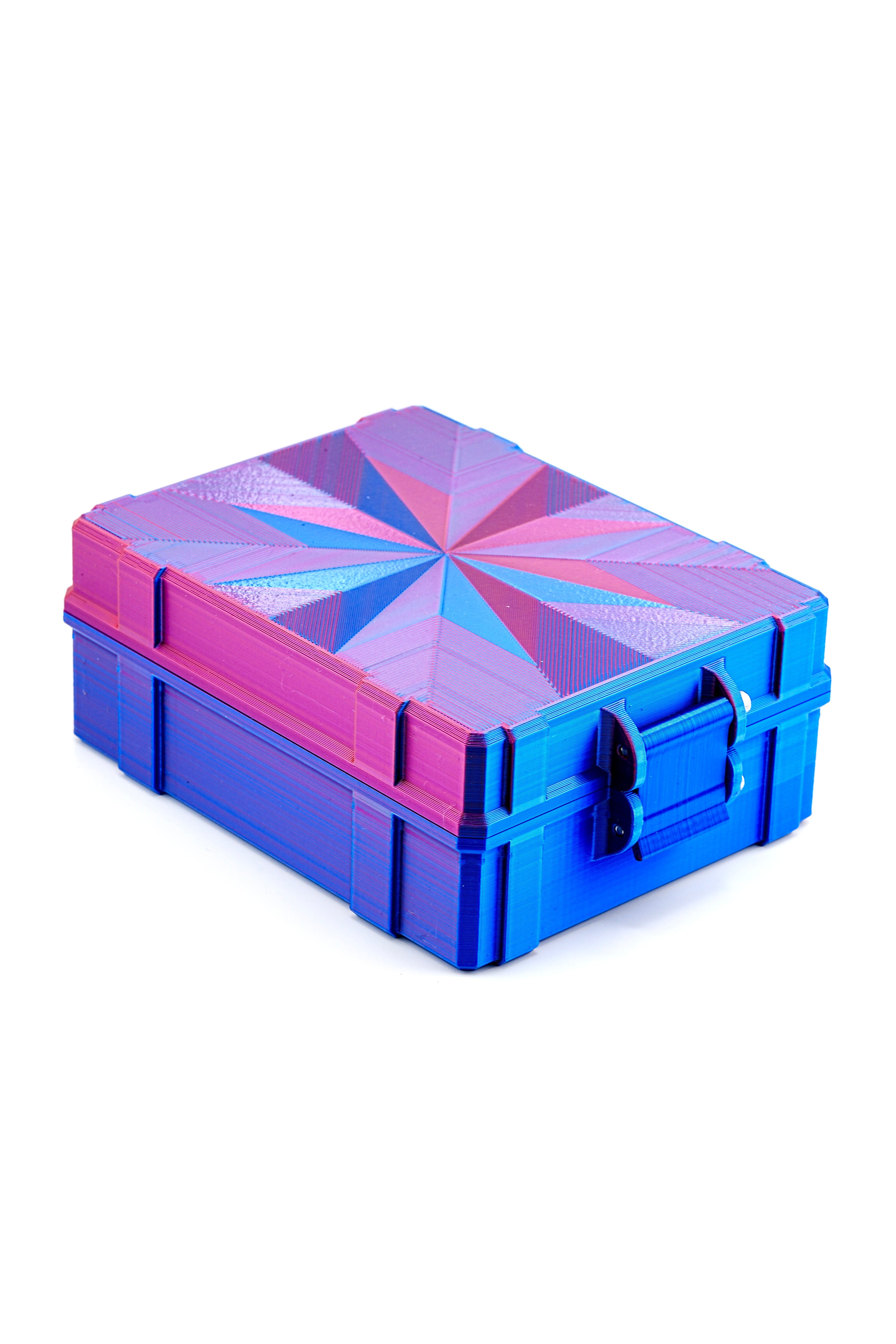
When a vial costs this much, a case built around it makes sense. The PeptideCase™ builder starts with an empty case: tap "Add item," choose peptide vials, 3 mL vials or other size vials, and add each one you keep, along with a BAC water bottle, syringes, alcohol pads or a temperature sensor if they belong in the same case. Every item becomes fitted pockets or an open bay sized for that count, each with a finger scoop so you can lift a vial out without knocking the others.
Shorter vials stand on a raised floor so every top lines up at the rim, Auto-arrange finds the most compact layout, and the builder shows the case size plus top, lid and 3D views before you order. A print-in-place snap hinge and locking latch keep the lid shut; choose two latches for extra security. Printed to order in the US at exactly the size shown. Build a case for your most valuable vials