
What This Page Is About
If you landed here searching for looksmaxing, here is the honest version: we don't make claims about what any vial does for your looks, and we don't rank compounds. Those are questions for your provider. What we do know is cases. A looksmaxing routine often means several small vials kept at once, plus the supplies that go with them, and that is exactly the kind of kit that gets messy fast.
So this guide is about one thing: keeping a multi-vial kit organized, protected and easy to use, at home and on the road. For how to store any vial, follow the storage instructions on your product label or from your pharmacist or provider. A case is a protective organizer, not a cooler; it sits in your fridge or inside a cooler bag.
Design a case for your whole vial kit
Add every vial and supply in your kit, give each its own fitted pocket, and pair it with color-coded custom caps.
Why Multi-Vial Kits Get Messy
One vial is easy to keep track of. Four or five are not, especially when they are the same size with similar labels. The usual problems:
- Look-alike vials. Several 3 mL vials side by side, one label half rubbed off, and it's no longer obvious which is which.
- Glass on glass. Loose vials in a box or bag knock together every time it moves, and small chips add up.
- Split-up supplies. Vials in the fridge, alcohol pads in the bathroom, syringes in a drawer. Something is always missing.
- Light and clutter. Vials sitting loose on a shelf get the fridge light every time the door opens, and if your label says to protect from light, that works against you.
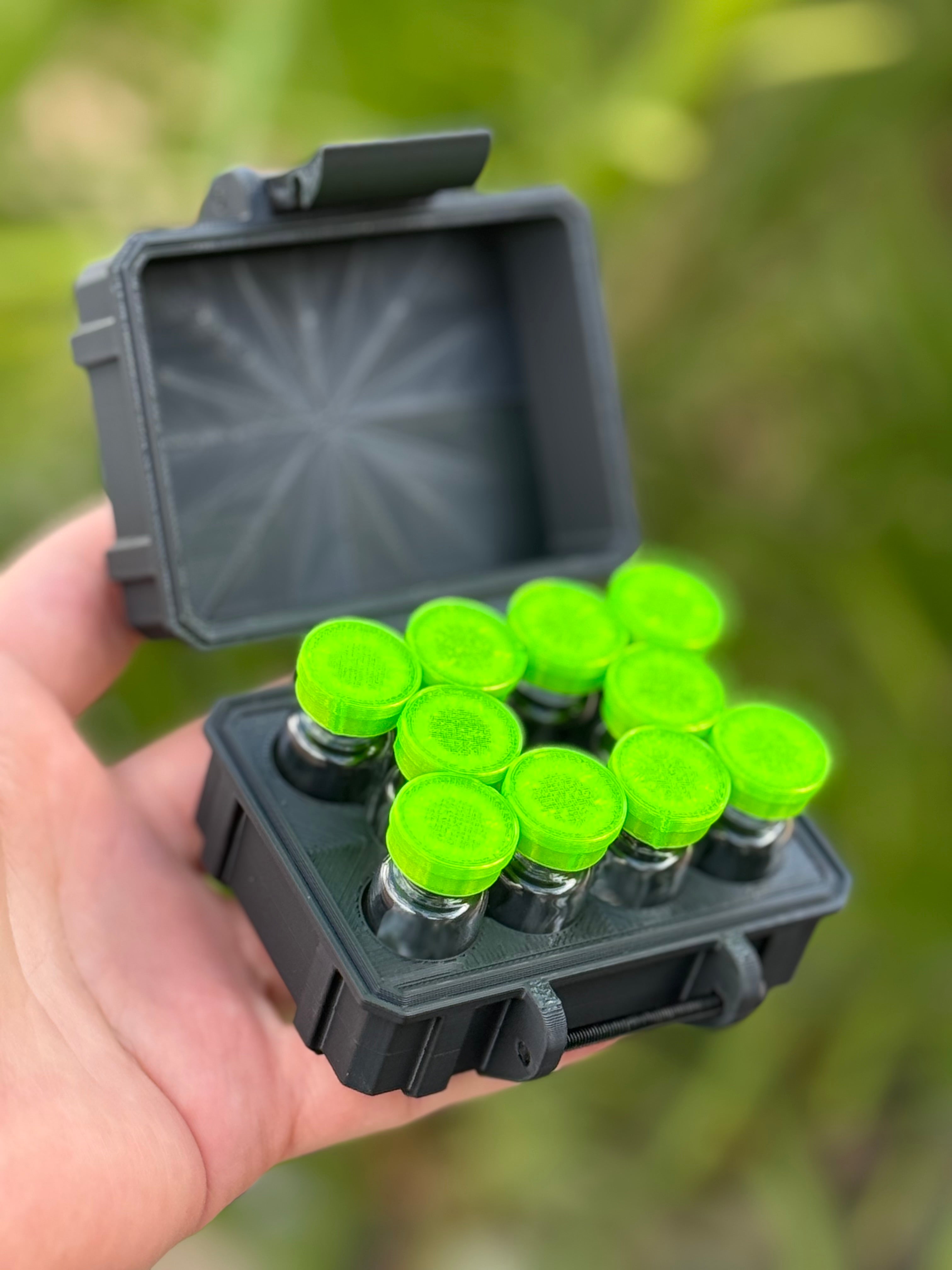
A Simple System for a Multi-Vial Kit
- One pocket per vial. Every vial gets its own fitted pocket, standing upright. No vial touches another.
- A fixed position for each kind. Decide which pockets hold which vial and never change it. Your hand learns where to go.
- Color-coded caps. One cap color per kind of vial, visible from above. It is the fastest check there is.
- Label the side and the cap. Write what it is and any date your label or pharmacist tells you to track, like the day you opened it.
- Spares apart from open vials. Unopened vials get their own pockets so the vial in use is always obvious.
- Supplies in their own bays. Alcohol pads, syringes and a water bottle live in the same case, so the whole kit moves together.
Our guide on how to label peptide vials covers labels that survive fridge moisture.
Color-code your vials
Custom snap-on caps for 3 mL or 10 mL vials, with a cap color plus an icon or letters. Sets from 25 caps.
Fridge, Counter and Bathroom
Keep the kit wherever your product label says the vials belong. If that is the fridge, put the closed case at the back of a middle shelf, the steadiest spot in most home refrigerators, and away from the door rack. If you take the case out to use it, bring it straight back rather than leaving vials on a bathroom counter, where steam and clutter are hard on labels. A closed case on the counter at least gives each vial a place to go back to instead of rolling into the sink.
See our peptide fridge organization guide for more on shelf setup.
Taking the Kit on the Road
- Carry on, don't check. Keep the case with you on flights.
- Cooler bag outside, hard case inside. When your label calls for cold, pack the closed case in an insulated bag with a gel ice pack, wrapped so it doesn't touch the glass.
- Bring paperwork. Original labeled packaging where possible, plus any prescription. Check your airline's and destination's current rules yourself.
- No parked cars. Take the case with you, even for a quick stop.
Our peptide travel checklist has the full packing list.
What to Look for in a Kit Case
- Pockets sized to your exact vials, not generic slots
- Room for every supply you use with the kit
- A hard shell and a latch that stays shut
- A size that fits your fridge shelf and your bag
- Easy one-vial access, so you don't disturb the rest

Design your own custom multi-vial kit case
A case designed around your kit beats any generic organizer. In the PeptideCase™ builder, start with an empty case, tap "Add item" and add each part of the kit with its count: peptide vials, 3 mL vials, 10 mL vials, glutathione vials, other size vials, alcohol pads (flat or standing), syringes, a BAC water bottle, or a custom space for anything else. Every item becomes fitted pockets or an open bay sized for that many, each with a finger scoop.
The tallest item sets the case height, and shorter vials stand on a raised floor so every top lines up at the rim, where your cap colors are easy to read. Auto-arrange makes the layout as compact as possible, and you can check the top, lid and 3D views before you order. Choose Black or RGB Metallic, Wide or Deep, single or dual latches, and put a word, an icon or your own logo on the lid. Then match it with a set of custom caps. Build your kit case