
More and more people now get their GLP-1 prescription as a glass vial from a compounding pharmacy instead of a pre-filled pen. Switching formats isn't just a billing change. A vial is a different object to handle, store and pack: it's glass, it travels with supplies, and it has none of the protection a pen body and carton give you.
This guide covers the practical side of that switch: what changes between a pen and a vial, protecting vials from light and breakage, setting up your fridge, and packing for trips. For temperatures and how long a product can be used, the rule never changes: follow the storage instructions on your product label or from your pharmacist or provider.
Design a case for your GLP-1 vials and pens
Add your vials, pen and supplies. The builder fits them into the most compact hard case for your fridge shelf and travel bag.
Pens vs Vials: What Changes When You Switch
A pre-filled pen is designed to be handled. It has a sturdy body, a cap, and it comes in a carton. A compounded vial is a small glass bottle with a rubber stopper. Here's how that plays out day to day:
| Pre-filled pen | Glass vial | |
|---|---|---|
| Breakage risk | Low: plastic body and cap | Higher: glass can chip or crack if dropped or knocked |
| Supplies | Pen needles, if your pen uses them | Syringes, alcohol pads and a sharps container travel with it |
| Light protection | Usually comes in a carton | Often just a bag or nothing, unless you add a case |
| Rolling around the fridge | Rolls, but survives | Rolls, tips and can crack against other items |
| Storage instructions | On the product label | On the pharmacy label; may differ from a pen's |
The last row matters most. Never assume a vial follows the same storage rules as a pen, or the other way around. Read the label that came with the product you actually have.
Storage Rules Come From Your Label
Different products, and different pharmacies, can give different instructions. The only temperature and timing guidance you should follow is the one on your product label or from your pharmacist or provider. If anything is unclear, or the label is missing, call the pharmacy before you store it.
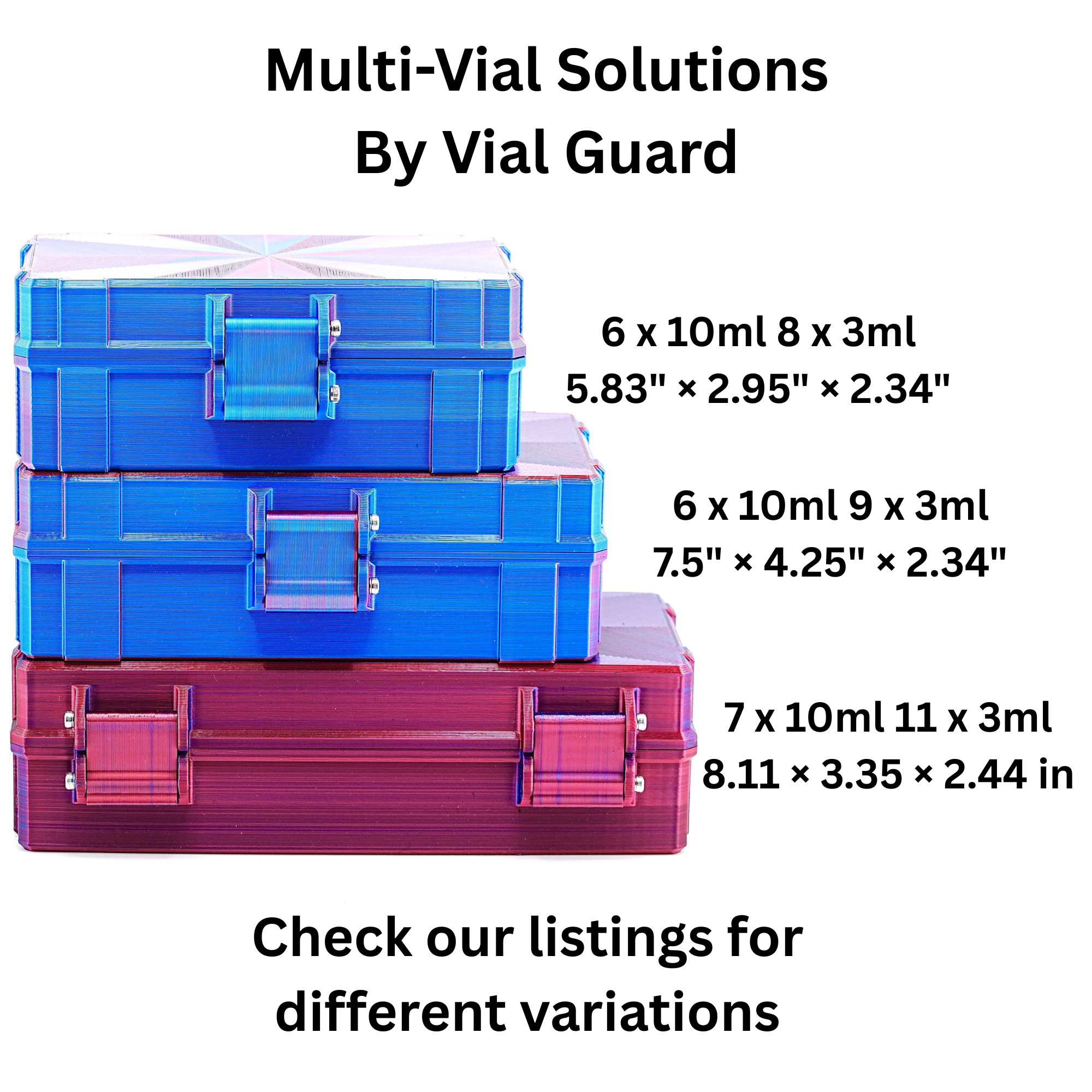
It also helps to be clear about what a case does and doesn't do. A hard vial case is a protective organizer, not a cooler. It doesn't keep anything cold on its own. At home it sits in your fridge; on the road it sits inside a cooler bag with ice packs.
Light Protection: An Often-Overlooked Risk
Many GLP-1 product labels say to protect the contents from light, which is why pens usually come in a carton. When you switch to a glass vial stored on a fridge shelf, that carton protection is gone.
A bare vial on a shelf is lit up every time the fridge door opens, and in a busy kitchen that's many times a day. The fix is simple: keep vials inside a closed case on the shelf. It keeps them out of direct light, stops them rolling into each other, and gives them one place to live.
Fridge Setup for GLP-1 Vials and Pens
- Main shelf, not the door. The door swings and warms every time it opens, and it's where vials get knocked out.
- Not against the back wall. In many fridges the back of the shelf can run cold enough to freeze.
- One case, one spot. The case lives in the same place every week, so the vial goes straight back after use.
- Supplies with the vial. Keep syringes and alcohol pads in the same case so you're not hunting through drawers.
- Labeled and dated. Write the date you open each vial on its label. If you keep a backup vial, a different cap color for each makes them easy to tell apart.
Our fridge organization guide has more placement ideas.
Color-code your vials
Custom snap-on caps for 3 mL or 10 mL vials, with a cap color plus an icon or letters. Sets from 25 caps.
Traveling with GLP-1 Vials vs a Pen
Here's where the two formats feel most different. A pen tucks into a pocket; a vial needs real protection, plus its supplies. Before any trip, check what your label says about storage for the format you have, then pack accordingly:
- Carry on, never check. Cargo holds are not climate-controlled like the cabin, and checked bags are handled roughly.
- Declare it at TSA. Medically necessary liquids are allowed in carry-on bags above 3.4 oz. Keep the original pharmacy label on the vial and your prescription handy.
- Bring the cold if your label calls for it. Pack the closed case in an insulated cooler bag with gel ice packs, with a cloth between the packs and the vials so nothing sits against a frozen surface.
- Check the hotel fridge before you trust it. Some run warm; others freeze at the back.
- Going abroad? Read our international travel guide and check your destination's current rules yourself.
Why a Storage Case Pays for Itself
A single cracked vial, a vial lost behind the groceries, or a vial left in the fridge door for a week means a replacement, a call to the pharmacy and possibly a gap in your schedule. Those are the losses a case prevents: breakage, light exposure, disorganization and grabbing the wrong vial.
Beyond that, a case makes the routine easier. Everything you need is in one place, the vial is always in the same pocket, and the whole kit moves from fridge to cooler bag in one piece when you travel.
Make your own custom GLP-1 vial and pen case
Switching formats, or keeping both a pen and vials, is exactly where a ready-made case falls short. The PeptideCase™ builder starts with an empty case: tap "Add item" and pick what you keep and how many. Add 3 mL or 10 mL vials, other size vials, a peptide pen or injector pen, pen cartridges, syringes and alcohol pads. Each item becomes fitted pockets or an open bay sized for that many, with a finger scoop in every space.
Auto-arrange packs everything into the most compact layout and shows the exact case size and height, so you can check it fits your fridge shelf and your cooler bag. The tallest item sets the height, and shorter vials stand on a raised floor so every top lines up at the rim. Choose Black or RGB Metallic, a wide or deep shape, and single or dual latches on a print-in-place snap hinge. It is printed to order in the US.