
Most GLP-1 medications come one of two ways: as pens, or in standard glass vials. Whether your vials hold tirzepatide or semaglutide, the storage questions people actually struggle with are the same: where in the fridge, how to stop vials breaking, how to keep several vials straight, and how to pack them for a trip.
The first rule is simple. For temperature and how long a vial or pen can be out of the fridge, follow the storage instructions on your product label or from your pharmacist or provider. Those instructions differ between products and between branded and compounded versions, and they are the only reliable source for yours. Everything else in this guide is about the part a label doesn't cover: protecting, organizing and carrying your GLP-1 vials and pens.
Design a GLP-1 case for your vials and pens
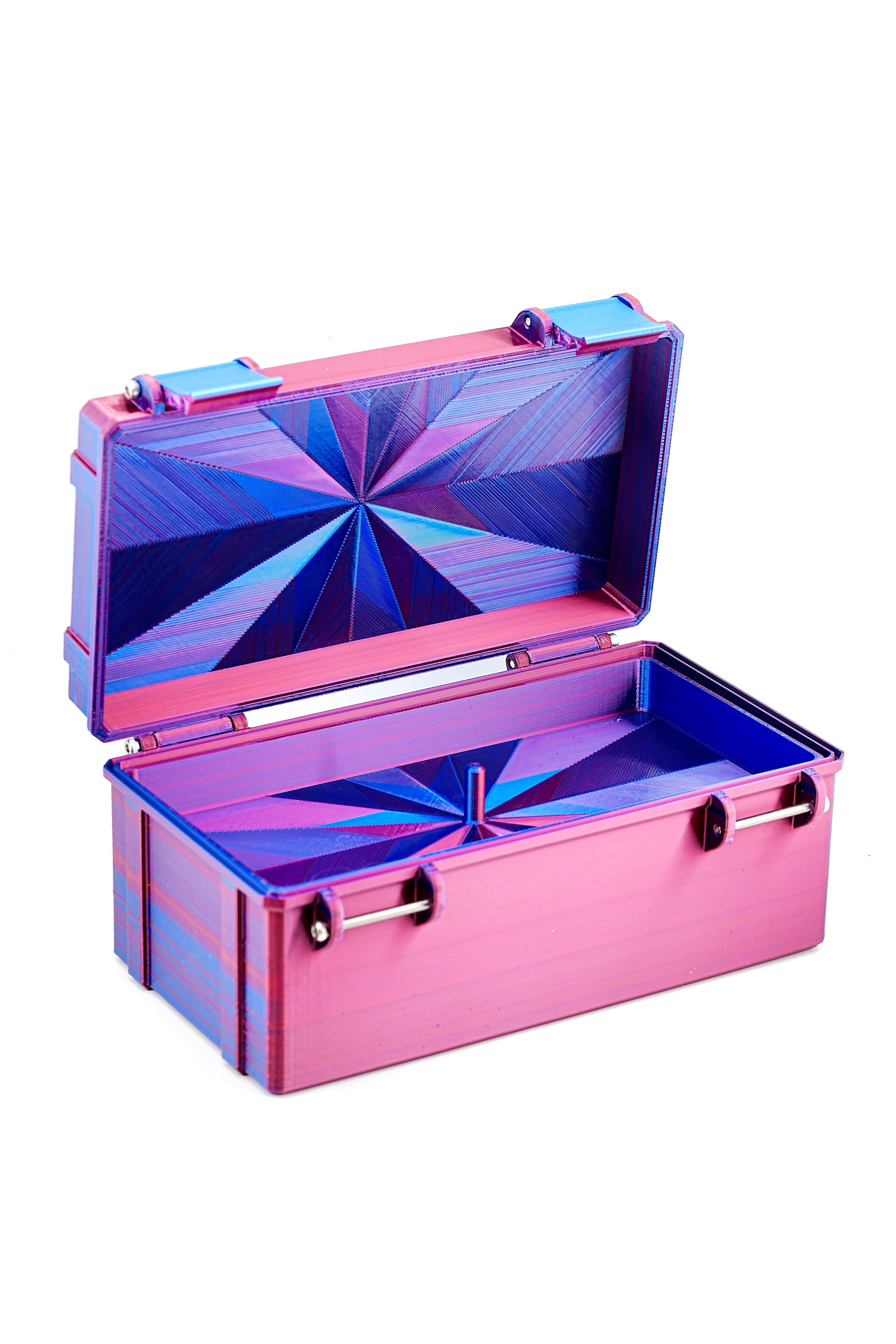
Add your GLP-1 vials, pens and supplies and the builder lays out a compact hard case with a fitted pocket for each.
Vials vs. Pens: Why Storage Feels Different
A pen is a sealed, rigid device with its own housing. A vial is a small glass bottle with a rubber stopper, and it has none of that protection. Vials can tip, roll, crack against each other, or get knocked off a shelf by a jar of pickles. Their labels smudge in a damp fridge. And because they all look alike, it's easy to grab the wrong one when you keep more than one.
That's why a dedicated case matters most to vial users: a pocket for every vial so nothing touches, a lid that closes, and one kit you can lift out of the fridge in one move. It helps pen users too, especially when they carry spare pens or pen cartridges.
Common GLP-1 Storage Mistakes
Most people make at least one of these. None of them has anything to do with the label's numbers; they're all about where and how the vials are kept:
- Storing pens or vials in the fridge door. The door is the warmest part of most refrigerators, it fluctuates the most, and it swings and rattles every time it opens. Keep your case on a middle shelf toward the back.
- Leaving a vial on the counter. It's easy to set a vial down and forget it. Make it a habit that the vial goes back into its pocket in the case, and the case goes back where your label says it belongs, right away.
- Placing vials next to the vent or freezer compartment. The area right in front of the cooling vent or under a freezer compartment can get much colder than the rest of the fridge. Keep your case a little forward of the back wall, and check what your label says about freezing.
- Tossing loose vials in a bag for travel. Glass vials crack or shatter without impact protection, and a bag in the sun gets hot. Use a hard case, inside a cooler if your label says to keep them cold.
- Keeping vials in a clear container. Check what your label says about light; many products come in a carton for a reason. A closed case keeps vials out of the fridge light once the carton is gone.
Organizing Multiple GLP-1 Vials
If you keep more than one GLP-1 vial — a spare, a second kind of vial, or vials for two people in one house — organization is what stops mix-ups:
- Give each kind of vial its own zone. Use separate rows or pockets in your case for each kind, and keep them in the same place every time. Color-coded vial caps make the difference obvious at a glance.
- Label with the date you opened it. Write the date you first opened each vial on a small piece of tape, and keep any "use by" date from your label or pharmacist next to it.
- One open vial per kind. Keep the vial in use in the front pocket and spares behind it, so you never open a second one by accident.
- Give supplies their own space. Syringes, alcohol pads and any other bottles you keep with your vials should have their own pockets or bay, not rattle around between the vials.
Color-code your vials
Custom snap-on caps for 3 mL or 10 mL vials, with a cap color plus an icon or letters. Sets from 25 caps.
Traveling with GLP-1 Medications
Whether you're flying or driving, packing GLP-1 vials and pens comes down to a few rules. Always check the current rules of your airline, TSA and your destination yourself before you go:
- Carry on, don't check. Checked bags can get very hot or cold in transit and are thrown around. Your case goes in your carry-on or personal item.
- Medications in carry-on. TSA generally allows medically necessary liquids and medications, including pens and vials, in carry-on bags beyond the usual liquid limit. Tell the officer at the checkpoint and expect that your case may be inspected.
- Keep the label and paperwork. Keep medications in their original labeled packaging where you can, and carry the pharmacy label, prescription printout or a provider's letter. This matters most for compounded versions without branded packaging.
- Use a cooler when your label calls for cold. A hard case isn't a cooler and doesn't keep anything cold. If your label says to keep vials or pens cold on the move, put the closed case inside an insulated cooler with an ice pack, wrapped so the pack doesn't sit directly against the case.
- Hotel rooms. Ask for a mini-fridge when you book, check it with a small thermometer, and put the whole case inside.
For a full breakdown of airport rules and packing, see our complete guide to flying with peptides.
What to Look for in a GLP-1 Storage Case
- Pockets sized for your vials. Most GLP-1 vials are 3 mL or 10 mL. A case built for one size rattles or won't close with the other.
- Room for pens and cartridges if you use them, so they don't ride loose next to glass.
- A rigid shell and a positive latch. Soft pouches pass knocks straight to the glass, and zippers can half-open in a bag.
- A small footprint. It has to fit your fridge shelf and the inside of your cooler bag.
Design your own custom GLP-1 case
Instead of hunting for a case that almost fits, build one that does. In the PeptideCase™ builder you start with an empty case, tap "Add item", and add what you keep: 3 mL vials, 10 mL vials, a peptide pen or injector pen, pen cartridges, syringes, alcohol pads or a BAC water bottle, and how many of each. Every item becomes fitted pockets or an open bay sized for that many. The tallest item sets the case height, and shorter vials stand on a raised floor so every vial top lines up at the rim, easy to grab, with a finger scoop in every space.
Auto-arrange packs everything into the most compact layout, and the builder shows the case length, width and height with a top view, a lid view and a 3D view, so you can check it against your fridge shelf and cooler bag. Choose Black or RGB Metallic, a Wide or Deep shape, one or two latches, and add text or an icon to the lid if you share a fridge. It is printed to order in the US.