
Some vials get used every day. Others get used for a short stretch and then sit untouched for a long time before the next one. That second pattern creates storage problems most guides ignore: vials that get buried at the back of a fridge, labels that fade or fall off while nobody is looking, and a vague memory of "I think that's the new one."
This guide is about the case side of the problem: keeping vials you use only occasionally protected, labeled and easy to find, and keeping the ones you are using right now organized at home and on the road.
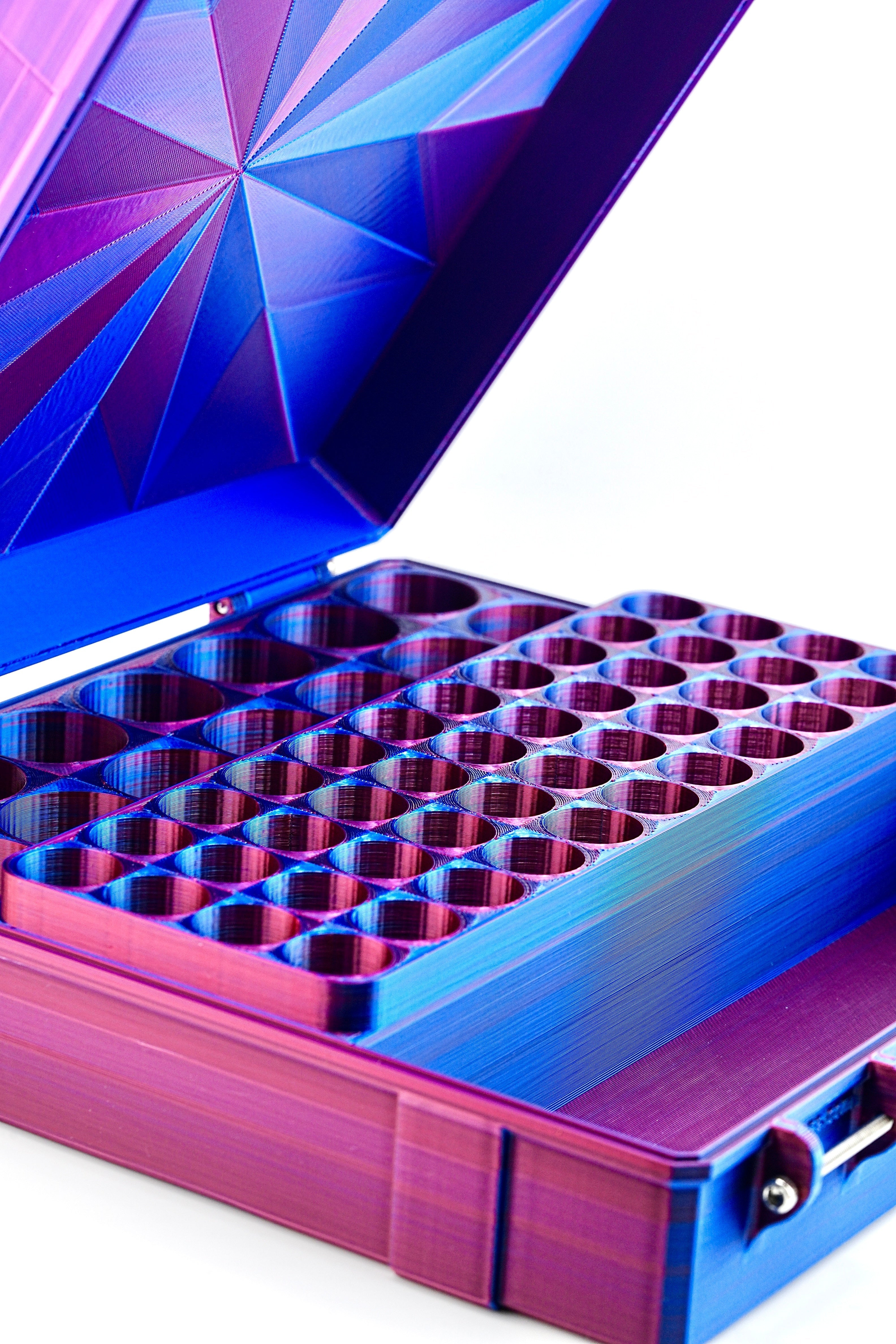
Design a reserve case and a travel case
Size one case for sealed spares and one for daily use. Label each lid so you can tell them apart at a glance.
Temperature: follow your label
We don't publish storage temperatures or timelines for any compound. For temperature, follow the storage instructions on your product label or from your pharmacist or provider, and if you are unsure about a vial that has been stored a long time, ask them before you use it.
What a case does is make those instructions easy to keep. It is a protective organizer, not a cooler: it can sit in a fridge or in a cooler, but the fridge or cooler does the cooling. The case keeps every vial upright, separated, labeled and in the dark while it waits.
The real challenge: long gaps between uses
Most storage advice assumes you open the fridge and use your vials every day. When there are long gaps between uses, different things go wrong:
- Vials get buried. A box that nobody opens gets pushed to the back, slid under groceries or knocked over during a fridge cleanout.
- Labels fail quietly. Condensation lifts tape and smears ink a little at a time. By the time you need the vial, the label may be unreadable.
- Memory fails louder. When was this one bought? Opened? Which one is the spare? After a long gap, you genuinely won't remember.
- Spares get separated. One vial ends up in the fridge door, another in a drawer, a third in a travel bag from last time.
The fix is boring and effective: one dedicated case for the vials you are holding in reserve, kept in one spot, with every vial labeled and dated.
Set up a reserve case and an active case
If you keep several vials and only use one stretch at a time, split them into two groups:
- Reserve case: sealed vials waiting their turn, each in its own pocket, stored wherever their label says. This case gets opened rarely, so it lives in the same spot every time and nothing else goes in it.
- Active case: the vial you are using now, plus its supplies (a BAC water bottle, syringes, alcohol pads), each in its own space. This is the case that gets opened daily and travels with you.
Keeping them apart means you never open a reserve vial by accident, and you can always see at a glance how many sealed vials you have left.
Label for the long haul
A label that only has to last a week can be a strip of masking tape. A label that has to survive a long wait in a damp fridge needs more care. On every vial, write:
- The full name
- A vial number (#1, #2, #3) so you use them in order
- The date you got it
- The date you opened it, once you do
- The discard date from the product label or your pharmacist
Use lab freezer tape or a waterproof polyester label with a permanent marker; both hold up to condensation far better than paper. Add a color code too, such as a colored band or cap for each kind of vial, so a reserve vial is recognizable even if its label has worn. Our guide on how to label peptide vials covers materials in detail.
Pro tip: Tape a short list inside your reserve case lid or keep it in your phone: each vial, its number and the date you got it. When you come back after a long gap, the list answers every question in seconds.
Color-code your vials
Custom snap-on caps for 3 mL or 10 mL vials, with a cap color plus an icon or letters. Sets from 25 caps.
Keep light off vials during daily use
During a stretch of daily use, the active vial comes out of the fridge often, and the fridge light hits anything standing on an open shelf every time the door opens. If your label says to protect the vial from light, keep it in a closed case between uses rather than loose on a shelf. A closed, solid case keeps it in the dark without any extra effort on your part. Amber glass helps with UV but still lets visible light through; see amber vs. clear vials.
Put the case on a middle shelf toward the back, away from the door, which is the steadiest and least jostled spot in most fridges.
Traveling during a stretch of daily use
A stretch of daily use is often long enough that a trip lands in the middle of it. The active case is built for exactly this:
- Bring only the active case. Reserve vials stay home in their own case, untouched.
- Carry on, don't check. Keep the case in your carry-on or personal item, away from cargo holds and baggage handlers.
- Cool it if the label says so. Pack the case inside a small cooler with a gel ice pack wrapped in a cloth, so it never presses directly against the glass.
- Carry documentation. Keep medication in its original labeled packaging where you can, bring your prescription or a note from your prescriber, and check TSA, airline and destination rules yourself. See our guide to flying with vials.
- Check the hotel fridge. Some run warm. Make sure it is actually cold before relying on it, and keep the case on one shelf.
Keeping it alongside other vials
If these vials share a fridge with others, the reserve-and-active setup scales nicely. Give each kind of vial its own row and color, keep all sealed spares in the reserve case, and keep only what you are using in the active case. One vial out at a time, back in its pocket before the next comes out.
Before you start again: a quick check
When you come back to your reserve case after a long gap, take a minute before opening anything:
- Read every label. Replace any that are lifting or smudged now, while you still know what is what.
- Check the dates against the discard date from the product label or your pharmacist.
- Inspect the glass and stopper. A cracked vial or a damaged stopper is a vial you shouldn't use.
- Think about storage history. If the fridge failed or the vials were left out while you weren't paying attention, ask your pharmacist or provider before using them.
Design your own custom reserve and travel cases
A reserve case and an active case rarely need the same layout, which is exactly where the PeptideCase™ builder helps. Start with an empty case, tap "Add item" and choose what goes in it: peptide vials, 3 mL vials or other size vials for your reserve case, and the same vials plus a BAC water bottle, syringes and alcohol pads for your active case. Every item becomes fitted pockets or an open bay sized for that count, each with a finger scoop.
Shorter vials stand on a raised floor so every top lines up at the rim, and Auto-arrange packs everything into the most compact layout. The builder shows the case size and a top, lid and 3D view before you order. Put "Reserve" or "Travel" on the lid in a second color, or pick Black for one and RGB Metallic for the other, so you can tell them apart at a glance. Each case is printed to order in the US. Design your reserve case