
The Universal Truth Across All Six Cruise Lines
Before getting into line-specific policy, the headline is the same across every major cruise operator: personal medications are allowed on board, including peptide vials, GLP-1 pens and vials, TRT and other prescription medications you carry for your own use. No major cruise line in 2026 prohibits passengers from bringing legitimate personal medications on board.
What varies between lines is how each handles three logistical questions:
- Cabin refrigeration: Is there a fridge in your specific cabin category, and is it a true refrigerator or just a beverage cooler?
- Special Services / Access Office: What's the documented process for requesting a medical-grade refrigerator if your cabin doesn't have one?
- Sharps disposal: Where and how do you discard used syringes during the voyage?
Get those three questions answered before you sail, and pack your vials in a hard case that keeps them upright and separated. The line-by-line guides below cover each question.
Design a cruise case around your vials
Add the vials, pens and supplies you sail with, and the builder lays out a compact hard case that slides into any cabin fridge.
Already covered: If you're sailing on Carnival, Royal Caribbean, or NCL, see our cruise ship travel guide for those lines specifically. The general principles below apply, but those three lines have their own dedicated breakdown.
Disney Cruise Line
Disney Cruise Line (DCL) is the family-focused operator running the Disney Magic, Wonder, Dream, Fantasy, Wish, and Treasure ships. Their medication policy is permissive, but their stateroom cooling situation requires planning ahead.
Disney's Medication Policy
Disney Cruise Line allows guests to bring necessary medications on board, including medications in vials and pens. There is no prohibition on GLP-1 or peptide vials, and security at embarkation focuses on contraband (alcohol over allowance, weapons), not medical kits. Guests with documented medical needs are accommodated through Disney's Special Services team.
The Disney Stateroom "Cooler" Problem
This is the biggest practical issue with Disney sailings: most Disney staterooms include a small in-room cooler (sometimes called a "beverage cooler"), not a true refrigerator. These coolers run noticeably warmer than a kitchen fridge, so they usually can't hold the refrigerated range printed on a medication label.
If your label says "refrigerate," don't treat a Disney stateroom cooler as a fridge for a week-long sailing.
The fix is straightforward but requires a phone call before you sail.
How to Request a Medical Refrigerator on Disney
- Contact Disney Cruise Line's Special Services team one to two weeks before sailing. The phone number is on the contact page of the DCL website.
- Explain that you have medications requiring refrigeration. You don't need to specify the medication name; "medications for personal medical use" covers everything.
- Disney will arrange for a medical-grade refrigerator to be placed in your stateroom at no charge. This is a documented accommodation, not a special favor.
- Confirm the request a few days before sailing by checking your reservation or calling back.
The medical fridge is typically a small countertop unit that holds true refrigeration temperatures. It will be in your stateroom when you arrive on embarkation day.
Disney Sharps Disposal
Disney's onboard medical center (located on every ship) handles sharps disposal. You can either:
- Request a sharps container delivered to your stateroom. Call guest services after boarding.
- Collect used syringes in a hard travel container and bring them to the medical center mid-voyage and at the end of the cruise.
Cabin stewards on Disney ships are trained to leave hazardous waste alone, so never put syringes in stateroom trash. Disney's housekeeping rules treat that as a serious safety issue.
Disney bottom line: Treat the in-room cooler as a beverage cooler, not a fridge. Call Special Services one to two weeks ahead to arrange a medical refrigerator. Once that's done, your sailing is otherwise straightforward, and Disney's medical infrastructure on board is solid.
Princess Cruises
Princess Cruises operates a fleet of 15+ ships across global itineraries (Alaska, Europe, Asia, Caribbean, Panama Canal). Princess has a longstanding reputation for accommodating older passengers with chronic medication needs, which makes its infrastructure for medications that need refrigeration well developed.
Princess Medication Policy
Princess Cruises permits passengers to bring personal medications, including GLP-1 pens and peptide vials. Embarkation is similar to other major lines: bags go through X-ray, and security is looking for contraband, not medication.
Princess maintains an Access Office that handles medical accommodation requests. The Access Office is a dedicated department, not just a guest services line, and it is experienced with insulin-dependent diabetic guests, oncology patients, and, increasingly, GLP-1 users.
Princess Stateroom Refrigeration
Most Princess staterooms include a mini-refrigerator as standard equipment. The exceptions tend to be older ships in lower interior cabin categories, but even there, fridges are common.
The Princess mini-fridge is a true refrigerator rather than a beverage cooler. If you're booked in a stateroom without a fridge, the Princess Access Office can arrange a medical refrigerator at no charge.
How to Contact the Princess Access Office
- Visit the Princess Cruises website and search for "Access Office" or "Onboard Special Needs Form."
- Submit the special needs form at least two weeks before sailing.
- List your accommodation as "medical refrigerator for personal medications."
- Princess will confirm the accommodation in writing before sailing.
Princess Sharps Disposal
The Princess Medical Center on each ship handles sharps disposal. Standard practice: request a sharps container at the Medical Center on day one of your voyage. They can also pick up filled containers from your stateroom mid-voyage on longer sailings.
Holland America Line
Holland America Line (HAL) skews toward longer itineraries (Mediterranean, Alaska, world cruises), which means travelers on Holland America often face extended-trip packing challenges beyond what shorter itineraries require.
Holland America Medication Policy
Holland America allows passengers to bring personal medications on board. Their Guest Services team and Medical Center are well equipped to handle medication accommodations, particularly given Holland America's older guest demographic and longer voyage lengths.
Holland America Stateroom Refrigeration
Most Holland America staterooms, across Pinnacle, Signature, and Vista class ships, include a mini-refrigerator. Suite categories all include refrigeration. A minority of standard inside cabins on older ships (notably some Vista class category L and M cabins) may not have a fridge, in which case Holland America's medical refrigerator program covers the gap.
Long-Voyage Considerations on HAL
If you're sailing a two-week Mediterranean itinerary, a three-week Panama Canal voyage, or a Grand World Voyage on Holland America, your vial supply needs careful planning:
- Pack a small surplus. A few spare vials and supplies cover breakage, a lost item, or an itinerary that runs long because of weather delays.
- Bring extra supplies from home. Long voyages may pass through ports where pharmacy access for replacement supplies is unreliable, so pack what you need in sealed, labeled packaging.
- Plan for time zone shifts. Cruises crossing several time zones shift ship time a little at a time. If your routine is time-sensitive, ask your provider how to handle the change before you sail.
- Verify cold pack swap-out access. If you'll need cold packs for long port-day excursions, freezer access on board is via the cabin fridge's small freezer compartment, the Medical Center, or guest services. Confirm this on day one.
MSC Cruises
MSC Cruises is the third-largest cruise line in the world, with major operations in Europe, the Caribbean, and a growing North American presence. MSC's medication policy is permissive, but North American passengers should know that onboard signage and crew language often default to Italian or multi-language, which can occasionally affect how requests are framed.
MSC Medication Policy
MSC Cruises permits guests to bring necessary medications on board, including medications in vials and pens. There is no specific restriction on GLP-1 or peptide vials. Embarkation security focuses on prohibited items, not medication.
For MSC sailings departing from European ports, your embarkation involves a security check that mirrors airport-style screening. Mention your medication upfront, and the process is fast.
MSC Stateroom Refrigeration
MSC staterooms across most categories include a mini-bar refrigerator. The MSC Yacht Club and Aurea Experience suites all include refrigeration. Standard interior cabins on the older Lirica-class ships may have a smaller fridge or none, so verify when booking.
Important MSC quirk: the mini-bar fridge in many MSC cabins is preset to a warmer setting to suit beverages rather than true refrigeration. On day one, check the setting. If it is set to beverage-cooler mode, turn it down to the coldest non-freezing setting and let it stabilize overnight before you rely on it for anything your label says to refrigerate.
MSC Sharps Disposal
The MSC Medical Center handles sharps disposal. Request a sharps container through the medical center, or via guest services if the medical center is closed when you arrive on board (some smaller MSC ships have limited medical center hours on embarkation day).
Celebrity Cruises
Celebrity Cruises sits in the premium tier of the Royal Caribbean Group portfolio, with the Edge-class ships representing some of the most modern cruise infrastructure in the industry. Celebrity's medication policy and accommodations follow the same general framework as Royal Caribbean.
Celebrity Medication Policy
Celebrity allows guests to bring personal medications on board. Their Special Needs department handles formal accommodation requests, including medical refrigeration.
Celebrity Stateroom Refrigeration
All Celebrity staterooms across Edge, Solstice, Millennium, and X-class ships include a mini-bar refrigerator as standard. The Celebrity Edge-class fridges are true refrigerators; confirm by checking the setting on day one and adjusting if needed.
The Retreat suite categories on Celebrity ships include slightly larger refrigeration, which is convenient if you're traveling with several vials plus a sterile water bottle.
Celebrity Sharps Disposal
Celebrity's medical center provides sharps disposal containers on request. Standard procedure: ask guest services after boarding, and a container will be delivered to your stateroom. The medical center handles the actual disposal at the end of the voyage.
Virgin Voyages
Virgin Voyages, the adults-only line that launched with the Scarlet Lady in 2021 and now operates four ships, has the most modern infrastructure of any cruise line we cover here. For travelers carrying vials, Virgin Voyages is the easiest line to sail on.
Virgin Voyages Medication Policy
Virgin Voyages permits guests to bring personal medications on board. Their booking and guest services platform, which is primarily app-based, makes accommodation requests straightforward. The line is adults-only (18+), which means security and crew interactions tend to be more matter-of-fact than on family-focused lines.
Virgin Voyages Stateroom Refrigeration
This is where Virgin Voyages stands out: all Virgin Voyages cabins include a mini-fridge as standard equipment, including the Insider (interior) categories. The fridges are stocked with complimentary still water that you can move aside, and they work as true refrigerators.
For most peptide and GLP-1 travelers, no special arrangement is needed on Virgin Voyages: your vial case goes straight into the cabin fridge when you arrive.
Virgin Voyages Sharps Disposal
The Virgin Voyages medical center (called "the Wellness team") provides sharps disposal. Request a container through the Virgin Voyages app messaging system or at the medical center directly. Response times are typically same-day.
Virgin Voyages bottom line: The easiest cruise infrastructure of any major line for travelers with vials. Standard fridges in every cabin, a mature app-based services platform, and no kid-management overhead at the medical center mean fast turnarounds for medical requests.
Cabin Refrigeration: Quick Reference Across All Six Lines
Here's the at-a-glance summary of stateroom refrigeration policies:
| Cruise Line | Standard Cabin Fridge? | Medical Fridge Available? | Best Contact Path |
|---|---|---|---|
| Disney | Beverage cooler only | Yes (request it) | Special Services, one to two weeks ahead |
| Princess | Yes (most cabins) | Yes | Princess Access Office |
| Holland America | Yes (most cabins) | Yes | Guest Services / Medical Center |
| MSC | Yes (check the setting) | Yes | Medical Center on board |
| Celebrity | Yes (all categories) | Yes | Special Needs department |
| Virgin Voyages | Yes (all cabins) | Yes | Virgin Voyages app messaging |
Embarkation: What to Expect on Any of These Lines
Cruise embarkation across all six lines follows roughly the same flow:
- Arrive at the cruise terminal, typically two to four hours before sailing.
- Check-in: show your ID and ticket, and complete the check-in questionnaire.
- Bag drop: large suitcases go through a separate intake and are delivered to your cabin later. Do not put medication in checked luggage.
- Security screening: carry-on bags go through X-ray. Cruise security is not TSA; they're looking for contraband (mostly alcohol over the line's allowance), not medication.
- Board the ship, usually with a photo at the gangway, then access to public areas while cabins are finalized.
Your vial case goes in your carry-on bag during embarkation. The total time from terminal arrival to your cabin (where the fridge lives) is typically one to three hours. A hard case protects the vials; it is not a cooler, so if your label calls for refrigeration, put the case inside an insulated pouch with a gel cold pack for that stretch.
Port Day Strategy: Same Across All Lines
Port days are where cruise travel gets complicated for anyone carrying vials. The principle is identical across Disney, Princess, Holland America, MSC, Celebrity, and Virgin Voyages:
- Leave your full supply in the cabin fridge when you go ashore. Your fridge keeps running even when you're off the ship.
- Bring only what you need that day. Pack it in a small case inside an insulated pouch with a cold pack, which covers most excursions in typical port-day weather.
- Plan your day around the ship. Take care of anything time-sensitive before you leave in the morning or after you return in the afternoon, so the full kit never has to come ashore.
- Don't dispose of sharps at port. Local disposal rules in Caribbean and Mediterranean ports vary, and the ship's medical center is the cleanest option.
What Documentation to Bring (All Lines)
None of the six lines legally require a prescription to bring personal medications on board. Bringing documentation makes everything smoother and resolves any embarkation or medical center questions in seconds. In order of strength:
- Prescription label on original packaging. If you have a US prescription, bring the medication in its labeled box or pharmacy-labeled vials.
- Provider letter on clinic letterhead stating that you are a patient under their care and are authorized to travel with your medications. This covers the vast majority of scenarios.
- Personal statement, typed and signed, listing your medications, vial count, and trip dates. Not as authoritative as a physician letter, but it signals organization.
If your cruise starts or ends with a flight abroad, read our international travel guide and check each country's current rules yourself before you go.
What to Pack: Cruise-Specific Vial Kit
Whether you're on Disney with kids, Princess on an Alaska itinerary, or Virgin Voyages in the Caribbean, the packing list is essentially identical:
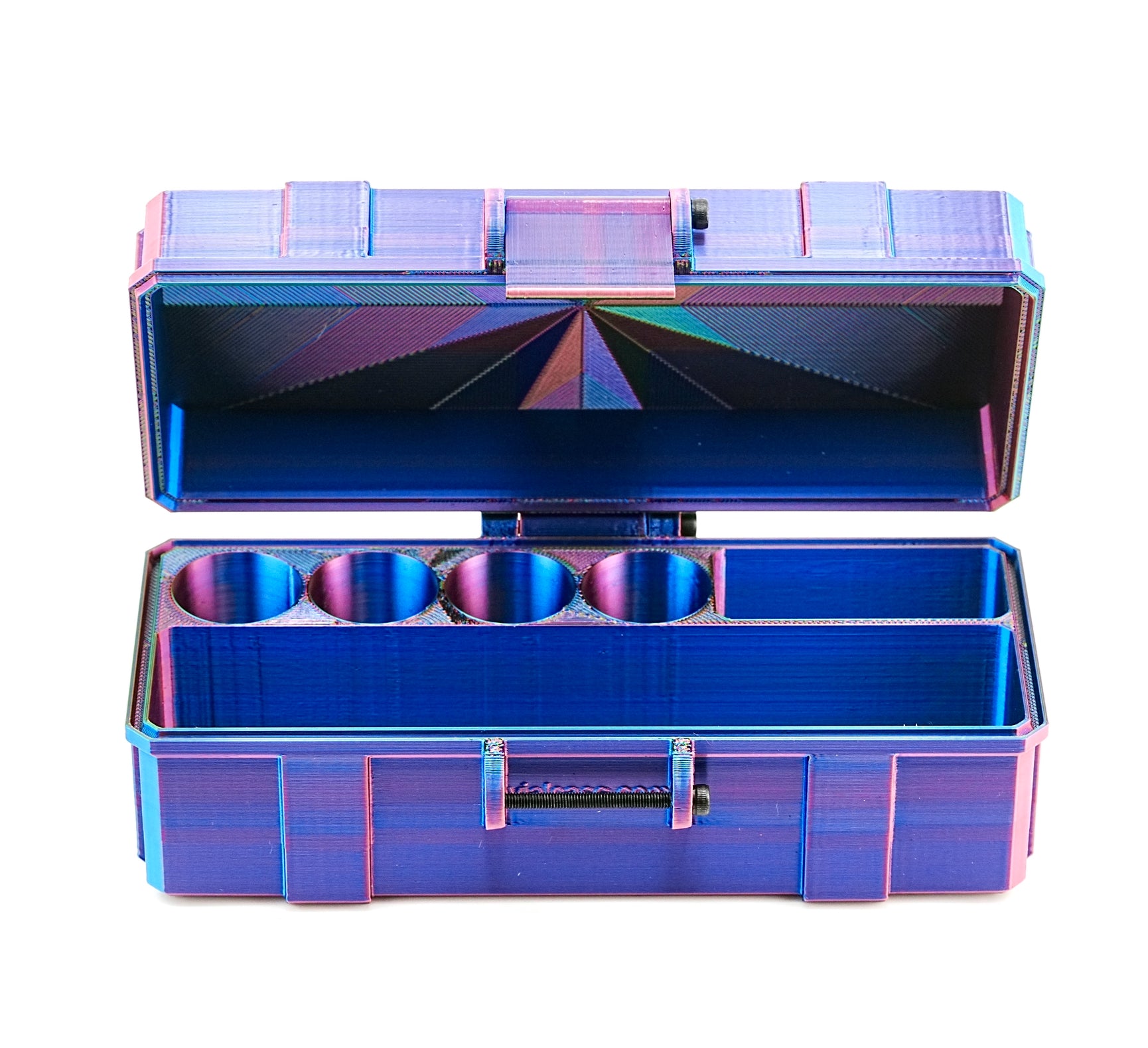
- Hard-shell vial case sized for what you carry (3 mL or 10 mL vials, pens, or both). It goes in the cabin fridge for the whole sailing. You can design a custom case with a fitted pocket for every vial you pack.
- Insulated travel pouch with a gel cold pack, for port days when you carry something ashore, or for embarkation day before you reach your cabin.
- Your other supplies (syringes, alcohol pads, a sterile water bottle) in sealed, labeled packaging, with a few extra. A dropped item on a ship deck is a lost item.
- Documentation: physician/provider letter or prescription. Keep one copy in your case, one in your travel document folder.
- Backup hard sharps container for day one, before you receive a proper container from the ship's medical center.
Storage gear matters more on cruises. Your vials live in a small cabin fridge for a week or two, often jostled by ship motion. A hard-shell case with a fitted pocket for every vial prevents the breakage that turns a great vacation into an emergency call to your provider. See our review of the best peptide travel cases for 2026.
What NOT to Do on Any Cruise Line
- Do not put vials in checked luggage at embarkation. Suitcases are routed through dock staging where temperatures vary widely. Carry your vial case on your person.
- Do not assume "mini-fridge" means medical refrigeration without verifying. Disney coolers in particular run too warm. MSC fridges may default to beverage-cooler settings. Always check the fridge on day one.
- Do not leave vials on a nightstand or desk. Cabin AC cycles when you're out. Follow your label and keep them in the fridge if it says to refrigerate.
- Do not dispose of sharps in cabin trash. Every line has a process; use it.
- Do not bring your full vial supply ashore. Bring only that day's needs in an insulated pouch; leave the rest in the cabin fridge.
- Do not skip the documentation. Even when it isn't legally required, a short provider letter prevents long medical center conversations.
Make your own custom cruise vial case
A cruise kit is rarely one neat box of identical vials. It might be a few 3 mL vials, a 10 mL vial, a pen, and a sterile water bottle, all of which have to survive a carry-on, a cabin fridge and a rolling sea. With the PeptideCase™ builder you start with an empty case, tap "Add item," and pick exactly what you carry and how many. Each item becomes fitted pockets or an open bay sized for that count, and Auto-arrange packs everything into the most compact layout.
The tallest item sets the case height, and shorter vials stand on a raised floor so every vial top lines up at the rim, easy to grab in a dim cabin. Every space has a finger scoop. Choose Black or RGB Metallic, a Wide or Deep shape, and one or two locking latches, and check the top view, lid view and 3D view to see the exact size before it's printed to order in the US. It's a protective organizer, not a cooler, so it slides into the cabin fridge or an insulated pouch. Design your cruise case now
Multi-Country Itineraries: Customs Considerations
Cruises often visit several countries in a single sailing. For brief port stops where you stay in port or join a cruise-line shore excursion, formal customs scrutiny is minimal, because you're not entering the country in the same sense as flying in.
That said, the rules of thumb still apply:
- European Mediterranean cruises (Italy, Spain, France, Greece, Croatia): personal-use medications are generally accepted. Documentation is recommended for any extended pre- or post-cruise stay.
- Mexican Riviera cruises: Mexico generally allows personal-use medications. Keep them in labeled packaging and check current rules before you sail.
- Caribbean cruises: most Caribbean nations defer to the cruise line for brief port stops, and personal-use quantities of medication rarely raise questions.
- Alaska cruises with Canadian port stops (Vancouver, Victoria): Canada allows personal-use medications with documentation. See our broader international travel guide.
Rules change, so confirm your cruise line's and each port country's current requirements yourself before you sail.