
The Quick Answer
Yes. Major cruise lines — Norwegian Cruise Line (NCL), Royal Caribbean, and Carnival — allow passengers to bring personal medications, including injectable medications and the syringes that go with them. Cruise security is not run by the TSA; it follows each cruise line's own policy, so check your line's current rules before you sail.
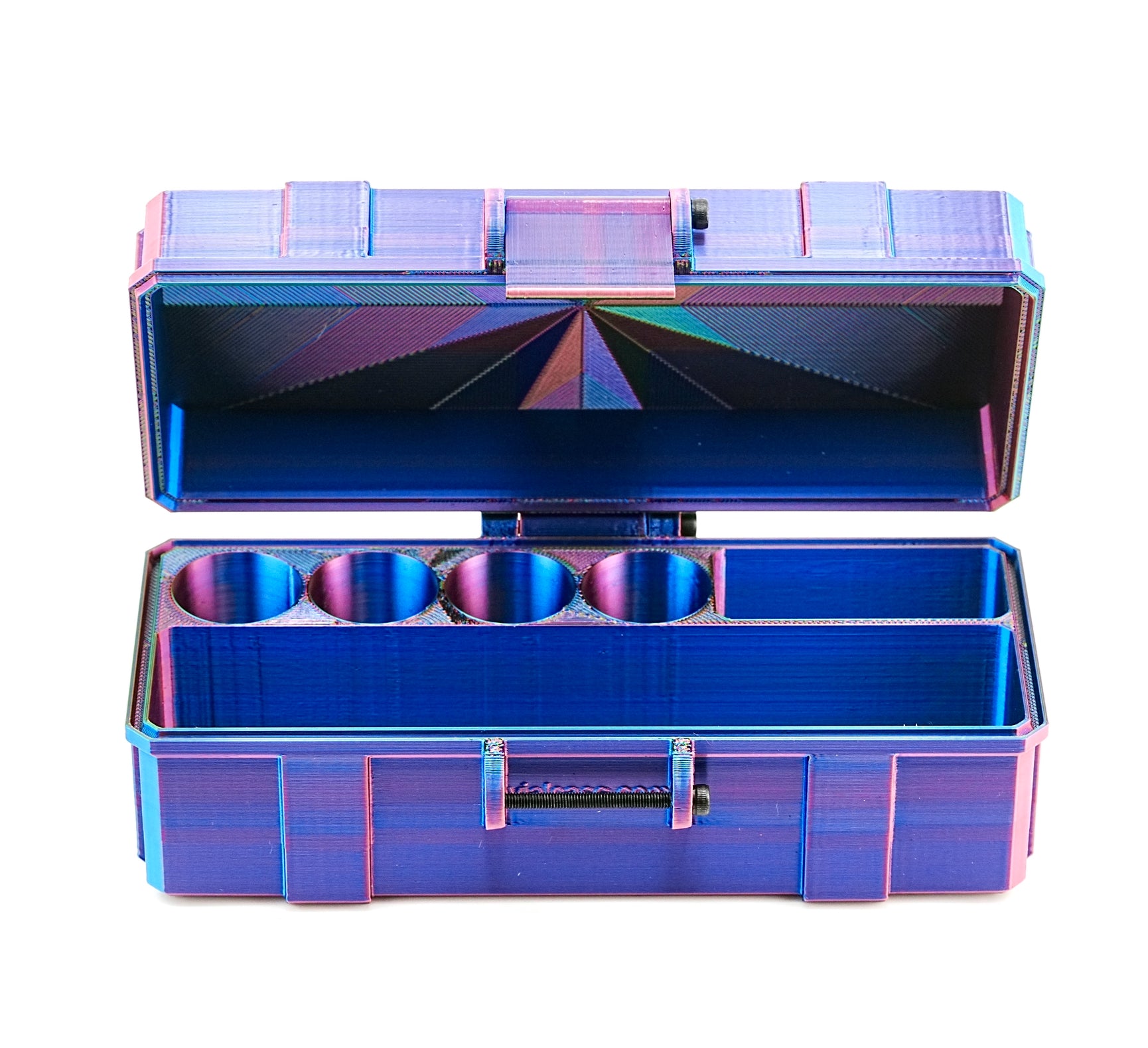
That said, "allowed" and "effortless" aren't the same thing. The rest of this guide walks you through embarkation, cabin storage, port days, sharps disposal, and international stops, so your vials stay safe, organized and with you for the entire voyage. The single most useful thing you can bring is a hard case that holds every vial and supply you're traveling with, and you can design one around your exact kit.
Design a cruise case for your vials
Add the vials and supplies you're bringing and the builder lays out a compact hard case that fits the cabin fridge and your day bag.
Key difference from flying: Unlike airport checkpoints, cruise embarkation is managed by the cruise line itself, not a federal agency. Cruise security personnel follow cruise line policy, not TSA policy. That can mean more flexibility in some areas — but it also means rules vary by line, and you should verify current policy directly with your cruise line before you sail.
How Cruise Ship Security Differs from the Airport
When you board a cruise ship, your bags go through an X-ray machine that looks nearly identical to the one at an airport. The difference is who's running it and what they're looking for.
At an airport, TSA operates under federal authority and follows published guidelines for medically necessary liquids and medications. Those rules are standardized across U.S. airports and documented at tsa.gov. For a breakdown, see our guide to TSA rules for peptides.
At cruise embarkation, security is staffed by the cruise line's contracted personnel. Their main concerns are prohibited items (alcohol over the allowance, weapons, contraband) and safety. They are not operating under TSA authority, and there is no single "medically necessary liquids" rule that applies across cruise lines. Each line has its own policy, and those policies tend to be more permissive about personal medications than passengers expect.
In practice, passengers with organized, clearly labeled medication kits are rarely held up. Cruise security staff see passengers traveling with insulin, GLP-1 pens and vials, and other medications on every single sailing. A neat, latched case with everything in its original labeled packaging looks exactly like what it is.
Norwegian Cruise Line (NCL) Medication Policy
NCL's guest policy states that passengers may bring medications for personal medical use, and injectable medications fall under that allowance. NCL recommends — but does not require — that passengers carry documentation for their medications, particularly for anything that comes with syringes.
Practically speaking, if you board an NCL ship with a small case containing your vials, syringes, and alcohol pads, you will very likely pass through embarkation without comment. The security team is looking for bottles of vodka and knives, not scrutinizing medication cases.
NCL provides sharps disposal containers on board. Ask your cabin steward or guest services when you board. Don't wait until the last day — request it early and use it throughout the voyage.
If you want belt-and-suspenders peace of mind, carry a letter from your prescribing physician or telehealth provider stating that you travel with prescribed medications and syringes. You likely won't need it at embarkation, but it's useful at ports and provides a clean paper trail.
Royal Caribbean Medication Policy
Royal Caribbean's policy is similar: medications for personal medical use are permitted on board. Royal Caribbean notes that passengers with medical needs can contact its Access & Inclusion team in advance for accommodations, which can include medical equipment storage.
Importantly for anyone traveling with vials: cabins in most modern Royal Caribbean ship categories come with a mini-refrigerator as a standard amenity. If your label calls for refrigeration, your case of vials can go straight into the cabin fridge without special arrangements.
If you're booking an older ship or a lower cabin category where a fridge isn't standard, call Royal Caribbean's Access & Inclusion desk before your cruise. They can arrange a medical refrigerator in your cabin when there's a documented medical need. This is a formal process — they handle these requests regularly for insulin-dependent passengers.
Royal Caribbean also recommends carrying medical documentation for medications when traveling to international ports. This is especially relevant if your itinerary includes countries with stricter customs rules.
Carnival Cruise Medication Policy
Carnival's health and safety policy permits passengers to bring medications and related supplies for medical necessity. Like the other major lines, Carnival does not specifically call out peptides — but personal medications fall within its standard allowances.
Carnival ships have mini-fridges in most cabin categories. If yours doesn't have one, contact guest services after boarding and request a medical refrigerator. Keep your request simple: "I have medications that require refrigeration." This is a routine request on any sailing.
Carnival provides sharps disposal through the ship's medical center. If you need a sharps container in your cabin, the medical center can supply one — standard practice in an industry that serves insulin-dependent passengers on every sailing.
Documentation note: None of the major cruise lines require a prescription for medications at embarkation. But a one-page letter from your physician, telehealth provider, or clinic stating that you travel with prescribed medications and syringes makes the whole process smoother — at embarkation, at the medical center when you request a sharps container, and at any port where you carry medications ashore. It takes five minutes to obtain and removes every gray area.
What Documentation to Bring
Cruise lines generally don't ask you to produce a prescription to board with medications. But documentation serves a practical purpose: it signals legitimacy and resolves questions before they become problems.
Here's what works, from strongest to weakest:
- Prescription from a licensed physician. If you have a prescription for your medication, bring it in its labeled pharmacy packaging along with the paper prescription if you have it. This is the gold standard.
- Telehealth provider letter. A letter on clinic letterhead stating that you are a patient under their care and that you have been prescribed medications you travel with covers almost every situation you'll meet on a cruise.
- Simple personal statement. A clear, typed, signed statement listing the medications and supplies you're carrying and the length of your trip. It's not as authoritative as a physician letter, but it shows organization and intent.
Keep everything in its original labeled packaging where you can; that matters more than any letter. Check our full peptide travel checklist for what to pack and what documentation to prepare before any trip.
Cabin Refrigeration: What to Expect
Most modern cruise ship cabins include a mini-refrigerator as a standard amenity. These are consumer mini-fridges, not medical-grade cold storage, so put a small fridge thermometer inside on day one and check that it holds the range your product label calls for.
When it does, that's genuinely good news: your vials can stay in the cabin fridge for the whole voyage without special cooling equipment. Your hard vial case goes inside the fridge and keeps everything organized and protected, the same way it sits in your refrigerator at home. Remember the case is a protective organizer, not a cooler; the fridge does the cooling.
A few things to verify and watch for:
- Confirm your cabin category has a fridge. Some inside cabins on older ships use mini-bar units set to keep drinks cool rather than cold. Check your cruise line's cabin page or call ahead.
- Don't crank the fridge to its coldest setting without checking. Some cabin mini-fridges run cold enough to freeze items near the back. Most labels say not to freeze vials. Use a middle setting and keep your case on a middle shelf, away from the back wall.
- Request a medical fridge if needed. If your cabin doesn't have a fridge or the one you have runs inconsistently, guest services can arrange a proper medical refrigerator. This is a documented process for insulin-dependent passengers — use it.
- Temperature swings from the door. Cabins are small and the fridge is often tucked under a counter. Avoid opening it over and over on hot port days.
The Port Day Storage Challenge
Port days are where cruise travel gets complicated. When you leave the ship for a shore excursion, you're leaving your cabin fridge behind. You have two practical options:
- Bring only what you need for the day, in a cooler. If you need something with you ashore, take only that day's vials and supplies. Put them in a small hard case, then put the case inside an insulated cooler bag with a gel cold pack if your label says to keep them cold. The hard case keeps the ice pack and everything else in your bag off the glass.
- Leave everything aboard. If nothing needs to come ashore, plan your day so it doesn't. Your full supply stays in the cabin fridge, nothing leaves the ship, and there's nothing to keep cold on the excursion. This is the simplest approach.
Don't leave vials in a hot cabin. When you go ashore, the cabin AC may ease off in an empty room and cabin temperatures can climb. The fridge keeps running regardless — vials stored inside it are where your label wants them. The danger is vials left on a nightstand or desk. Keep everything in the fridge when you're not in the cabin.
How Long Can Vials Stay Out of the Fridge on a Port Day?
This is the question that decides whether anything comes ashore with you, and the honest answer is: it depends on the product, so follow the storage instructions on your product label or from your pharmacist or provider. Labels differ, and they are the only reliable source for your specific vials. We won't give you a number.
What we can tell you is how to pack for whatever your label says. If it allows room temperature, a hard case in your day bag, kept out of direct sun, protects the glass from knocks and drops. If it says keep cold, put that hard case inside an insulated cooler with a frozen gel pack wrapped in a cloth, and keep the cooler in the shade. Caribbean port days are hot, and a black day bag on a sunny beach gets hotter still. When in doubt, leave it aboard.
Sharps Disposal on Cruise Ships
Don't put used syringes in your cabin trash. It's a safety issue for cabin staff and a policy violation on every major cruise line.
Every major cruise line has a process for sharps disposal. Here's how to handle it:
- Ask guest services when you board. Request a sharps container for your cabin: "I travel with medications and syringes and need a sharps disposal container for my cabin." This is a routine request — they handle it for diabetic passengers on every sailing.
- Alternatively, collect used syringes in a sealed hard container (a sturdy travel pill case works) and bring it to the ship's medical center for disposal.
- Don't try to dispose of sharps at port. Local disposal rules in Caribbean ports, Mexico, and Central America vary. It's not worth the complexity. Keep everything on board and use the ship's disposal system.
Most cruise medical centers handle sharps disposal for passengers throughout the voyage. It's a standard service, not an exception.
International Ports: What You Need to Know
Cruise itineraries often involve brief stops in several countries in a single week. For short visits within the port area or on a cruise line excursion, you usually aren't going through the formal immigration process you'd face at an airport — but local laws still apply to anything you carry ashore.
A few rules of thumb:
- Don't bring your full supply ashore on port days. If you leave the ship with everything and something goes wrong — you miss the ship, you're delayed, your bag is lost — you're dealing with foreign rules without your supply. Bring only what you need for that day.
- Research the rules for extended stays. An overnight in port or a pre/post cruise stay in a foreign city involves formal customs entry. Check that country's current rules for traveling with medications before you go. Our guide to international travel with peptides covers the basics.
- Keep documentation and labels with you. If you carry medications ashore, keep them in their original labeled packaging with your physician's letter. In the unlikely event of a customs question at a port, it answers it immediately.
Canadian Port Stops
If your itinerary includes Canadian ports — Vancouver, Victoria, Halifax, Quebec City — you'll be dealing with Canada Border Services Agency (CBSA) rules. Canada generally allows travelers to bring personal-use quantities of medications.
For cruise passengers making brief port stops, entry procedures are usually handled through the cruise line and are much simpler than flying into Canada. That said, Canada takes medication declarations seriously.
If you carry medications ashore in a Canadian port:
- Be prepared to declare your medications if asked.
- Personal-use quantities are the key threshold — a supply proportionate to your trip is what officers expect to see.
- Keep everything in its original labeled packaging, with your prescription or physician letter.
- Check CBSA's current guidance yourself before you sail; if you're unsure, leave your case in the cabin fridge for the day.
Alaska cruises that pass through Canadian waters without port stops involve no Canadian customs interaction. Only port stops where you disembark trigger Canadian entry rules.
Practical approach for Canadian ports: Leave your vial case in the cabin fridge and enjoy the port without carrying medications ashore. Most Alaska and Pacific Northwest itineraries make this easy — port stops are daytime only and you're back on board by dinner.
What to Pack: Your Complete Cruise Peptide Kit
Packing for a cruise means planning for two storage situations: the ship (where you have a fridge) and port days (where you may not). Here's a complete packing list:
- Hard-shell vial case. Your main storage for every vial — it goes inside the cabin fridge, keeps vials organized and protected from breakage, and makes it easy to see what you have left. You can design one sized for your 3 mL or 10 mL vials and supplies.
- Insulated cooler bag with a gel cold pack. For port days when you need something with you. Freeze the cold pack in the cabin fridge's freezer compartment (if it has one) or ask room service for ice.
- Syringes. Individually capped, in their own compartment of your case. Bring a few more than you need — anything dropped on a ship deck is gone.
- Alcohol pads. They take no space and you can't improvise them at sea. A builder case can hold them flat or standing.
- Documentation letter. Physician or telehealth letter covering your medications and syringes. Keep a copy in your case and a separate copy in your travel document folder.
- Small fridge thermometer. To check the cabin fridge holds the range your label calls for.
- Small hard container for used sharps. While you wait for the sharps container from guest services, a small hard container (like a sturdy travel pill case) covers you on day one.
What NOT to Do
A few mistakes that turn a routine cruise into a real problem:
- Don't pack vials in the luggage you hand over at the terminal. At the cruise terminal, large suitcases go through a separate intake and are delivered to your cabin later — sometimes hours after sailing. Meanwhile your luggage sits on loading docks in direct sun, in holds without temperature control, and in corridor staging areas. Carry your vial case with you during embarkation, just as you would at an airport.
- Don't leave vials on a nightstand or desk when you leave the cabin. Cabin temperatures on a Caribbean sailing can climb when the AC cycles. When you leave, vials go back in the fridge, inside their case. Always.
- Don't throw syringes in the cabin trash. Ask for a sharps container. This is non-negotiable for safety and policy reasons.
- Don't bring your entire supply on port excursions. Bring only what you need for the day. Your full supply stays in the cabin fridge.
- Don't assume cruise policies haven't changed. The policies described here reflect major cruise line practices as of 2026, and they can change. Always verify current policy directly with your cruise line before you sail, especially for international itineraries.
Cruise vs. Other Types of Travel
For vial logistics, a cruise ship is one of the more accommodating ways to travel. Compare it with other scenarios:
- Flying domestically gives you TSA rules and carry-on limits, but no fridge in transit. See our TSA travel guide for flying specifics.
- Road trips mean managing temperature across car trunks, hotel rooms and rest stops. More flexibility in what you bring, but temperature is entirely on you. Our road trip guide covers that scenario.
- International flights add customs rules and country-specific requirements on top of airport security. More planning required. See our guide on international travel with peptides.
- Cruise ships give you a fridge in most cabins, a security process focused on contraband rather than medications, and a floating hotel as your base. The main challenges are port days and sharps disposal — both manageable with the right preparation.
Bottom line: A cruise is one of the friendlier ways to travel with vials. You have a fridge in your cabin, a medical center on board, and staff who are used to passengers with medical needs. Prepare your documentation, carry your case on during embarkation, keep everything in the fridge when you're not using it, and request a sharps container on day one. That covers the vast majority of what you need to do.
Design your own custom cruise travel case
A cruise kit has to work in two places: the cabin fridge and your day bag. A case designed around exactly what you're bringing does both. In the PeptideCase™ builder you start with an empty case, tap "Add item", and add your trip's 3 mL vials, 10 mL vials, peptide pen or pen cartridges, syringes and alcohol pads, with how many of each. Every item gets fitted pockets or an open bay, shorter vials stand on a raised floor so every top lines up at the rim, and every space has a finger scoop, so nothing rattles around as the ship moves.
Auto-arrange packs it all into the most compact layout, and the builder shows the exact length, width and height, so you can check it fits your cooler bag and the cabin fridge shelf. Add the temperature sensor item (a clip-in window in the lid or a socket inside the case) if you want to carry a small digital thermometer with your vials. Choose Black or RGB Metallic, Wide or Deep, one or two latches, and add your name to the lid so it's easy to spot. It's printed to order in the US.