
Why Cars Are So Dangerous for Vials
Most people know that leaving medication in a hot car is bad. But the heat involved is usually much worse than people imagine. On a sunny summer day, a dashboard can get hot enough to burn your hand, the trunk bakes, and even the back seat with the windows up gets far hotter than the outside air within minutes of parking.
Many medication labels warn against heat and say to keep the product out of hot places, and a parked car is about the hottest place most vials will ever go. Follow the storage instructions on your product label or from your pharmacist or provider, and treat a parked car as off-limits unless your label says otherwise.
The answer isn't to "be careful" or park in the shade; shade helps less than you'd think. The real answer is a plan: keep vials in a hard case inside an insulated bag with a cold source if your label calls for one, in the coolest part of the car, and take them with you whenever you leave the vehicle.
Design a road trip case that fits your cooler bag
Add the vials and supplies you're bringing, check the exact case size, and get a hard case that keeps glass from rattling on the highway.
Pro Tip: Never leave vials in the car when you stop, even for ten minutes. Interiors heat up faster than most people expect, and a quick stop turns into a half-hour errand more often than not. Carry your case with you every time you leave the vehicle.
Best Placement in the Car
Where you put your vial case in the car matters as much as the insulation around it. From coolest to hottest:
- Front passenger footwell (best): the lowest point, most shielded from direct sun, and closest to the air conditioning vents while you drive. With the A/C running, this area stays closest to cabin temperature.
- Rear passenger footwell (good): similar to the front footwell, a little further from the A/C airflow. Better than the seat.
- Rear seat (fine while driving, risky when parked): okay while the car is moving with A/C running; a problem when parked, because seat surfaces soak up sun quickly.
- Glove box (avoid): enclosed, with no A/C circulation. It heats up even on mild days.
- Trunk (avoid): the worst spot in the car, with no A/C and maximum heat. Keep vials out of the trunk entirely.
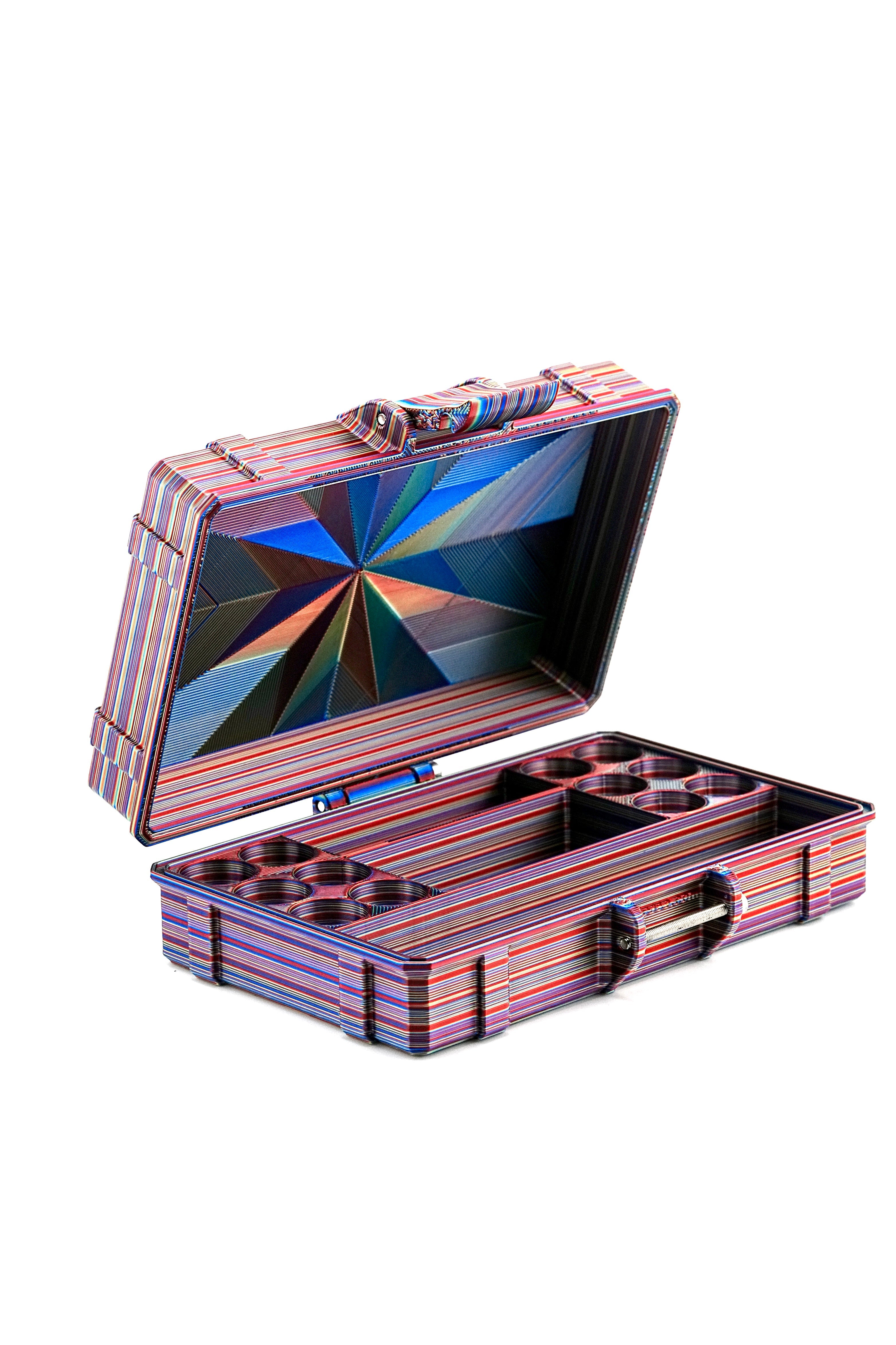
Wherever the case rides, secure it so it isn't sliding around on a hard stop. A hard case with a fitted pocket for each vial keeps the glass from rattling for hours on the highway.
Cold Pack Duration: Planning Your Stops
If your label calls for refrigeration, plan your cold source around real conditions. Standard gel ice packs (the flat blue ones) typically last 4 to 8 hours in a well-insulated container at room temperature, and 2 to 4 hours in a hot car even with insulation. Plan your refresh stops around realistic temperatures, not optimistic ones.
A practical framework for different trip lengths:
- Under 4 hours of driving: one standard gel ice pack in an insulated bag alongside your hard-shell vial case is usually enough. Freeze the pack overnight, and wrap it in a thin cloth so it doesn't press directly against the vials.
- 4 to 8 hours of driving: use two gel ice packs and rotate them, one packed against the case and one in a small cooler bag. Or use a larger phase-change pack rated to last longer, which costs more but removes the mid-trip swap.
- Multi-day road trips: plan ice or fridge access. Gas stations sell ice almost everywhere in the US, and a small soft cooler alongside your vial case gives you enough cold to bridge long legs between stops. Many chain hotels will keep medication in a refrigerator overnight if asked.
On longer drives, a stop every few hours for a fresh bag of ice costs almost nothing and keeps the cooler cold. If you're driving through remote areas with few stops, bring more ice up front.
Crossing Borders by Car: Mexico and Canada
Land border crossings are different from domestic driving. US Customs and Border Protection (CBP) and the Mexican and Canadian border authorities can all inspect what's in your vehicle.
Driving into Mexico or Canada: each country has its own rules for bringing medication across the border, and they change. Check the current rules for what you're carrying before you go. Keep medication in its original labeled packaging, carry your prescription or a doctor's letter, bring only what you need for the trip, and declare anything you're required to declare.
Re-entering the US: CBP at land crossings can inspect your vehicle. Answer questions honestly, declare anything CBP requires you to declare, and have your prescription and labels ready. Check CBP's current rules before your trip.
Keep it organized and reachable: at any border, an organized, labeled case that you can hand over and open in seconds makes an inspection quick. A bag of loose vials buried under luggage does the opposite.
Pro Tip: At land border crossings, a hard-shell case with labeled vials in their own pockets looks like what it is: a medical kit. A custom case from the PeptideCase™ builder holds your vials and supplies in a tidy layout you can show at a glance. Design one for your trip.
State-by-State Legal Variation
Driving across state lines with your own prescribed medication in its original labeled packaging is routine for most travelers. Rules for some products can differ by state, though. If you have any doubt about something you carry, check the rules for the states on your route or ask your pharmacist before you leave, and keep your prescription and pharmacy labels with the case for the whole drive.
Rest Stop Fridge Options
On multi-day road trips, access to a fridge at overnight stops takes the pressure off your ice packs. Practical options:
- Hotel room mini-fridge: available at most chain hotels. Request a room with a mini-fridge when you book if it isn't standard. A compact vial case fits easily in any mini-fridge.
- Hotel front desk refrigerator: many hotels will store clearly labeled medication in an office or kitchen refrigerator overnight. A brief, matter-of-fact request ("Can you refrigerate my medication overnight?") is rarely declined.
- Truck stop travel centers: big travel centers sell ice and drinks around the clock, which makes them good places to refresh a cooler, even if their fridges aren't for storing your things.
- 12V car coolers: basic plug-in coolers only cool so far below the outside temperature, so they may not match a "refrigerate" label. A true 12V plug-in refrigerator holds fridge temperatures and is worth considering for frequent road trippers. Check it with a thermometer against your label's range.
Packing Your Road Trip Vial Kit
The ideal road trip setup puts your hard-shell vial case inside a soft insulated bag, with cold packs, any syringes and alcohol pads you use (sealed in their packaging), a sterile water bottle if it's part of your kit, and a small sharps container, all in one organized kit. Everything is in one place, reachable without digging through luggage, and protected from bumps.
A vial case does double duty on road trips: it's your fridge organizer at home and your travel organizer on the road. The hard shell keeps vials from being jostled in the car, and a compact footprint lets it fit in an insulated lunch bag with cold packs alongside. At the hotel, it comes straight out of the bag and goes into the mini-fridge. No repacking, no rearranging.
For flying, see our companion guide to TSA rules for vials and our international travel guide.
Design your own custom road trip case
A road trip case has to do two jobs: protect glass from hours of vibration, and fit inside the insulated bag you already own. The PeptideCase™ builder lets you size it for both. Start with an empty case, tap "Add item," and pick what you're bringing: 3 mL vials, 10 mL vials, peptide vials, other size vials, syringes, alcohol pads, a BAC water bottle, a pen or pen cartridges, and how many of each. Every item becomes fitted pockets or an open bay sized for that count, so nothing rattles on the highway.
Auto-arrange packs everything into the most compact layout, and the builder shows the exact length, width and height, so you can check it fits your cooler bag before you order. Shorter vials stand on a raised floor so every vial top lines up at the rim, and every space has a finger scoop. Choose a Wide or Deep shape to suit your bag, and one or two locking latches. It's a protective organizer, not a cooler, printed to order in the US. Build your road trip case