Skin quality is no longer just about moisturizers and SPF. The people running the most advanced anti-aging and aesthetics protocols in 2026 are working at the molecular level — using peptides that directly regulate collagen gene expression, extend cellular lifespan, elevate growth hormone, and repair the extracellular matrix. The compounds on this list aren't cosmetics. They're signal molecules that tell your skin cells what to do.
What follows is a ranked breakdown of the 10 most effective peptides for skin improvement in 2026, covering mechanism, application method, protocol structure, and — critically — storage requirements. Because every one of these compounds is temperature and light sensitive, and a degraded peptide does nothing for your skin regardless of how well-designed your protocol is.
1. GHK-Cu (Copper Peptide) — The Most Researched Skin Peptide
GHK-Cu is the gold standard. It is a naturally occurring tripeptide (glycine-histidine-lysine) that complexes with copper ions and has been studied since the 1970s. Plasma levels decline from approximately 200 ng/mL at age 20 to 80 ng/mL at age 60 — and that drop correlates directly with declining skin repair capacity.
Mechanism: GHK-Cu upregulates over 4,000 genes, including those encoding collagen I, collagen III, elastin, fibronectin, and VEGF. It simultaneously downregulates genes associated with inflammation and oxidative stress. In skin specifically, it increases collagen synthesis, reduces wrinkle depth, improves skin density and firmness, and accelerates wound healing. No other topical or injectable compound has this breadth of documented cellular activity.
Application: Both topical and injectable protocols exist. Injectable subcutaneous administration allows for systemic distribution; topical compounded serums deliver localized benefit. Injectable protocols typically run at 1–3 mg/day for 4–8 weeks, cycled.
Storage: GHK-Cu is highly sensitive to both light and oxidation. The copper ion is the active center — expose it to UV and it oxidizes, turning your blue-tinted solution colorless and inactive. Lyophilized powder: store at 2–8°C, stable 12–24 months. Reconstituted: refrigerate at 2–8°C, use within 30 days, protect from all light exposure. Never freeze reconstituted solution. Amber-coated or fully opaque vials are mandatory.
For the full storage breakdown and a visual of what degradation looks like, see the GHK-Cu skin glow and looksmaxing guide and the GHK-Cu anti-aging storage guide.
2. Epithalon — Telomerase Activation and Cellular Longevity
Epithalon (Epitalon) is a synthetic tetrapeptide (Ala-Glu-Asp-Gly) derived from the pineal gland peptide Epithalamin. It is the only peptide with peer-reviewed evidence of telomerase activation in human somatic cells — the mechanism by which cells extend their replicative lifespan.
Mechanism: Epithalon activates telomerase, the enzyme that extends telomere length. Short telomeres are a fundamental driver of cellular senescence — the "zombie cells" that accumulate with age, secrete inflammatory cytokines, and impair tissue regeneration. By restoring telomerase activity, Epithalon extends the number of cell divisions available to skin fibroblasts, directly improving skin cell turnover rate and reducing the senescence burden in aging skin. Animal and in vitro studies show reduced oxidative markers, improved melatonin regulation, and extended lifespan metrics.
Protocol: Twice-yearly cycles are standard. A typical course is 10 mg/day for 10–20 days (100–200 mg total per cycle), run spring and fall. Injectable subcutaneous or IV administration.
Storage: Lyophilized powder: store at 2–8°C, stable 12–18 months. Reconstituted: refrigerate, use within 21 days. Light sensitive — protect from UV. Freezing lyophilized powder at -20°C extends shelf life significantly for long-term stock. See the complete Epithalon storage guide for cycle-specific storage logistics.
3. CJC-1295 + Ipamorelin — The #1 Injectable Skin Stack
The combination of CJC-1295 (a GHRH analogue) and Ipamorelin (a selective GHRP) is the most widely used growth hormone peptide stack. Taken together, they produce a synergistic, pulsatile GH release that mimics youthful secretion patterns without suppressing natural production.
Mechanism: CJC-1295 extends the half-life of GHRH signaling; Ipamorelin selectively stimulates the pituitary to release GH. The downstream effect of chronically elevated GH and IGF-1 on skin is well-documented: increased dermal thickness, elevated collagen density (especially type I), reduced subcutaneous fat (the layer that causes skin to look puffy and unfirm), and improved skin hydration. GH also accelerates wound healing and increases fibroblast proliferation. This makes CJC/Ipa the top-ranked systemic skin stack by volume of use and research depth.
Protocol: 100 mcg CJC-1295 + 100 mcg Ipamorelin, injected subcutaneously 5 nights/week before sleep. 12–16 week cycles are typical, with 4–6 week breaks. Some protocols run continuously at lower doses.
Storage: Both peptides are lyophilized. Store unmixed at 2–8°C for up to 18–24 months; freeze at -20°C for long-term. Reconstituted CJC-1295 is stable at 2–8°C for up to 4 weeks; Ipamorelin for up to 21 days. Moderate light sensitivity — standard fridge conditions with a protective case are sufficient. Full details at the CJC-1295/Ipamorelin storage guide.
Pro Tip: If you're running CJC/Ipa primarily for skin benefits, the timing matters as much as the dose. Administer within 30 minutes of sleep onset to sync with the natural nocturnal GH pulse — this maximizes skin repair during the period when dermal cell turnover is highest.
4. BPC-157 — Wound Healing, Scarring, and Skin Barrier
BPC-157 (Body Protection Compound 157) is a 15-amino acid synthetic peptide derived from a naturally occurring protein in gastric juice. It has an unusually broad healing profile and is one of the most commonly used "first peptide" compounds due to its safety record and versatility.
Mechanism: BPC-157 upregulates VEGF (vascular endothelial growth factor), accelerating angiogenesis and improving blood supply to healing tissue. It promotes fibroblast migration and collagen synthesis, modulates nitric oxide pathways, and exhibits systemic cytoprotective effects. In skin specifically: dramatically accelerated wound closure, reduced scar formation, improved barrier function after injury or inflammatory insult, and anti-inflammatory activity across dermal layers.
Protocol: Subcutaneous injection near target tissue or oral/sublingual for systemic effect. Typical dosing: 250–500 mcg/day in 1–2 injections. 4–8 week protocols for acute wound healing; ongoing lower-dose administration for maintenance.
Storage: Lyophilized powder stable at 2–8°C for 12–24 months. Reconstituted: 2–8°C, stable 14–21 days. Moderate light sensitivity — no amber vials strictly required, but fridge darkness preferred. Avoid freeze-thaw cycling once reconstituted. Full breakdown in the BPC-157 storage guide.
5. Melanotan 2 (MT2) — UV-Independent Tan and Visual Skin Tone
Melanotan 2 is a synthetic analogue of alpha-MSH (melanocyte-stimulating hormone) that binds MC1R receptors on melanocytes and triggers melanogenesis — the production of eumelanin (dark pigment) — without requiring UV exposure to initiate the process.
Mechanism: MT2 bypasses the UV-to-melanocyte signaling pathway. A standard loading protocol produces a deep, even tan across all skin types. Beyond aesthetics, increased melanin density provides real photoprotection (eumelanin is a UV absorber) and dramatically improves visual skin contrast — making muscle definition, facial bone structure, and skin texture more visible. MT2 also suppresses appetite and has libido-enhancing side effects via MC4R binding.
Protocol: Loading: 0.5–1 mg/day subcutaneous injection for 1–2 weeks until desired tan is achieved. Maintenance: 0.5 mg 2–3x/week, combined with minimal UV exposure to lock in color.
Storage: This is the most storage-critical compound on the list. MT2 is extremely photosensitive — it is degraded by the same UV radiation it protects you from. Lyophilized: 2–8°C for 12–24 months; -20°C for multi-year storage. Reconstituted: 2–8°C, maximum 4 weeks, strict light protection. Must be stored in amber vials or inside an opaque case at all times. Temperature excursions above 25°C cause rapid degradation. Full protocol at the Melanotan 2 storage guide.
6. Sermorelin — Nightly GH Stimulation for Skin Repair
Sermorelin is a 29-amino acid analogue of endogenous GHRH. It was the first GHRH analogue approved for clinical use (growth hormone deficiency in children) and remains one of the most accessible GH secretagogues for adults seeking anti-aging effects.
Mechanism: Sermorelin stimulates the pituitary to release GH in a pulsatile, physiological pattern — maintaining negative feedback mechanisms that prevent GH excess. Elevated GH during sleep drives IGF-1 production in the liver, which downstream promotes skin fibroblast proliferation, collagen synthesis, and epidermal regeneration. Sermorelin is particularly effective at restoring the blunted nocturnal GH pulse that characterizes aging from the mid-30s onward.
Protocol: 200–500 mcg subcutaneous injection 30–60 minutes before sleep, 5–7 nights/week. Standard cycle: 3–6 months on, 1–2 months off.
Storage: Lyophilized powder: 2–8°C, stable 18–24 months; -20°C for long-term. Reconstituted: 2–8°C, use within 14–21 days. Sermorelin is moderately light-sensitive and highly temperature-sensitive post-reconstitution — degradation accelerates sharply above 8°C. Store in the back of the fridge, never in the door. See the Sermorelin storage guide for protocol-specific logistics.
Pro Tip: Sermorelin's skin benefits compound over time. Unlike exogenous HGH which produces immediate but suppressive effects, Sermorelin's pulsatile stimulation preserves pituitary sensitivity — meaning the longer you run it, the better your natural GH axis functions during off-cycles. Plan for 3-month minimums before evaluating skin outcomes.
7. Thymosin Alpha-1 — Immune Modulation and Skin Immunity
Thymosin Alpha-1 (TB Alpha-1) is a 28-amino acid peptide derived from Thymosin Fraction 5, naturally produced in the thymus. It is FDA-approved in multiple countries for hepatitis B and C treatment and is used clinically as an immune modulator.
Mechanism: TA-1 stimulates dendritic cell maturation, enhances T-cell function, and upregulates Toll-like receptor expression on innate immune cells. For skin, the key benefit is its anti-inflammatory modulating action: chronic low-grade skin inflammation ("inflammaging") is a primary driver of collagen degradation, wrinkle formation, and impaired barrier function. By reducing inflammatory signaling without blunting immune defense, TA-1 helps maintain the anti-inflammatory skin environment required for optimal repair and collagen maintenance. It also improves response to skin infections and reduces flare severity in inflammatory conditions.
Protocol: 1.6 mg subcutaneous injection, 2x/week. Typical cycles: 6–12 weeks for immune normalization; ongoing at reduced frequency for maintenance.
Storage: Lyophilized powder: 2–8°C, stable 12–24 months; -20°C for long-term. Reconstituted: 2–8°C, stable 14–21 days. Moderate light sensitivity. TA-1 is relatively stable compared to other peptides on this list but should still be protected from temperature excursions and light exposure.
8. TB-500 — Skin Perfusion and Anti-Inflammatory Repair
TB-500 is a synthetic analogue of Thymosin Beta-4 (TB4), a naturally occurring peptide found in virtually all nucleated cells. TB4 is present in high concentrations in platelets and wound fluid, where it plays a central role in tissue repair signaling.
Mechanism: TB-500 promotes actin polymerization in cells — the structural protein that enables cell migration during healing. It is a potent stimulator of angiogenesis (new blood vessel formation), which is critical for skin health: well-perfused skin has better oxygen and nutrient delivery, faster repair, and a more vibrant appearance. TB-500 also reduces chronic skin inflammation by downregulating inflammatory cytokines and shows specific activity in wound closure and scar reduction. It synergizes with BPC-157 (the "Wolverine Stack") for enhanced skin and tissue repair.
Protocol: 2.0–2.5 mg subcutaneous or intramuscular injection, 2x/week for 4–6 weeks (loading phase), then 2.0–2.5 mg/month for maintenance.
Storage: Lyophilized: 2–8°C, stable 18–24 months; -20°C for long-term. Reconstituted: 2–8°C, stable up to 30 days. Light sensitivity: moderate. TB-500 is one of the more stable reconstituted peptides but should still be stored away from light and temperature variation. Full guide at the TB-500 storage guide.
9. Selank — Cortisol Reduction and Sleep-Driven Skin Repair
Selank is a synthetic heptapeptide analogue of tuftsin developed by the Russian Institute of Molecular Genetics. It is approved as an anxiolytic in Russia and is widely used in the research community for its nootropic and stress-modulating properties.
Mechanism: Selank's skin benefits operate through two pathways. First, it reduces cortisol and stress-driven inflammation — chronically elevated cortisol degrades collagen (cortisol upregulates MMP enzymes that break down collagen I and III), impairs wound healing, and drives sebum overproduction. Second, Selank improves sleep architecture — specifically increasing slow-wave sleep depth, the phase during which 70–80% of daily growth hormone secretion occurs and during which skin cell regeneration is highest. Reduced cortisol + deeper sleep = a dramatically improved nightly skin repair environment.
Protocol: Nasal administration (intranasal spray) is most common: 250–500 mcg per nostril, 1–3x/day. Injectable subcutaneous protocols also exist at similar doses. Most users run it as a daily anxiolytic throughout longer protocols.
Storage: Lyophilized powder: 2–8°C, stable 12–18 months; -20°C for long-term. Reconstituted / intranasal solution: 2–8°C, stable 14–30 days depending on formulation. Moderate light sensitivity. For storage alongside Semax (another Russian peptide commonly stacked with Selank), see the Selank and Semax storage guide.
10. NAD+ — Cellular Energy and DNA Repair for Skin Aging
NAD+ (nicotinamide adenine dinucleotide) is a coenzyme present in all living cells. While not a peptide in the strict amino acid sequence sense, it is marketed and stored as a lyophilized injectable compound and operates in the same protocol context as the peptides above. NAD+ levels decline approximately 50% from age 20 to age 60.
Mechanism: NAD+ is the essential substrate for sirtuins (SIRT1–7) — the primary longevity enzymes that regulate DNA repair, mitochondrial biogenesis, and cellular stress response. In skin, NAD+ depletion impairs PARP-1 (poly ADP-ribose polymerase), the enzyme responsible for repairing UV-induced DNA damage (the primary cause of photoaging). Restoring NAD+ levels via IV, subcutaneous injection, or high-dose oral/nasal supplementation reduces photoaging markers, improves keratinocyte DNA repair capacity, and restores mitochondrial function in aging dermal fibroblasts.
Protocol: IV infusions (250–500 mg/session, 1–2x/week) for rapid repletion. Subcutaneous injection (100 mg/day) is a more practical maintenance protocol. High-dose oral precursors (NMN or NR, 500–1000 mg/day) are a third option, though bioavailability is significantly lower than injectable routes.
Storage: Lyophilized NAD+ powder: 2–8°C, stable 12–18 months; -20°C for long-term. Reconstituted: 2–8°C, use within 7–14 days. NAD+ is highly sensitive to both light and temperature — oxidation degrades the active nicotinamide ring rapidly. Amber vials or complete light protection are required. Do not store near the fridge door. Full protocol breakdown at the NAD+ peptide storage guide.
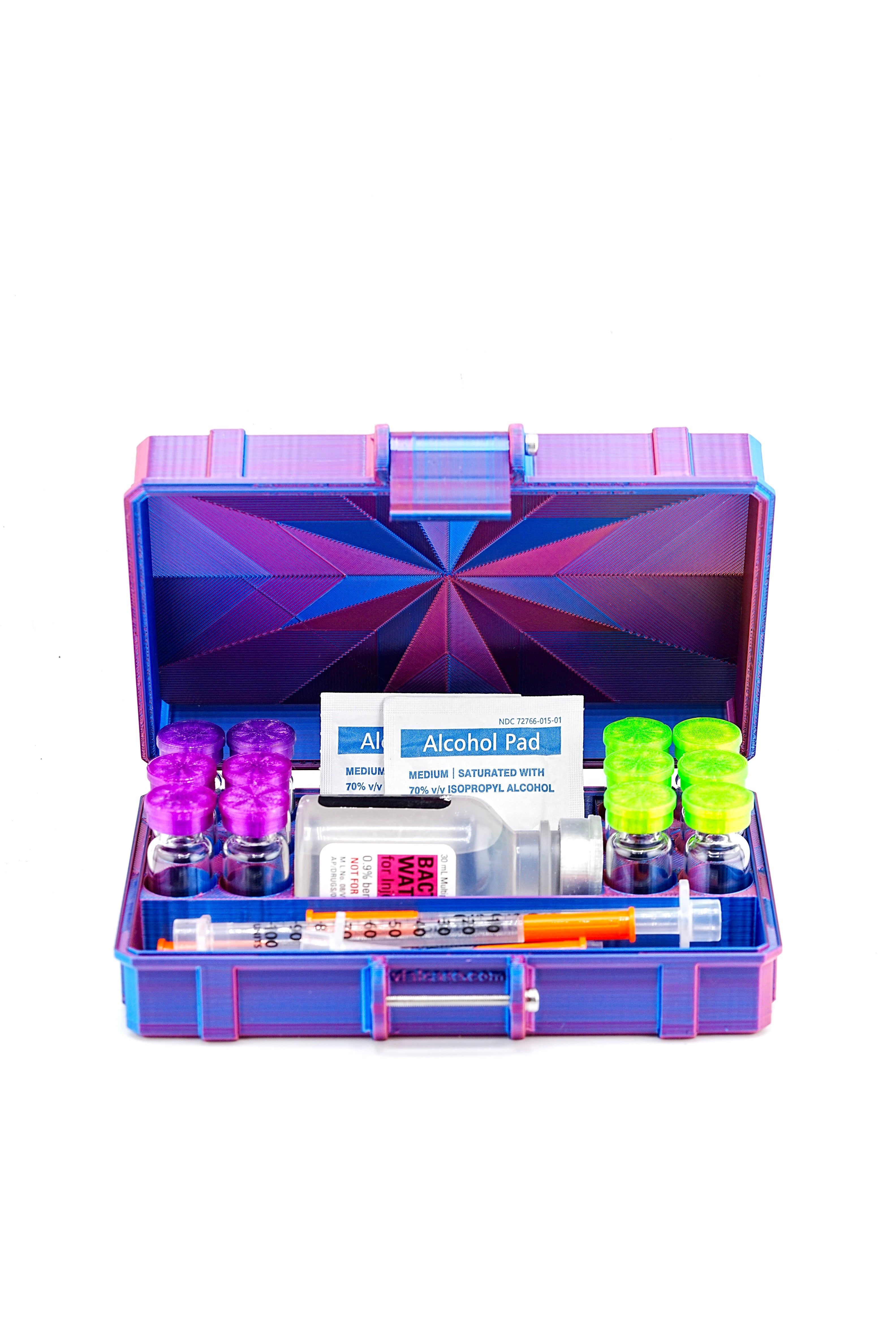
The Best Skin Stack: GHK-Cu + CJC/Ipamorelin + Epithalon
If you're building a skin-focused peptide protocol and want maximum benefit from three compounds, this is the stack the evidence points to:
- GHK-Cu — Direct collagen and elastin upregulation. Works at the gene expression level. Provides immediate-to-medium-term skin quality improvement visible within 4–8 weeks.
- CJC-1295 + Ipamorelin — Systemic GH elevation that increases dermal thickness, collagen density, and reduces subcutaneous fat. The body-wide hormonal driver that makes the other compounds work better.
- Epithalon — Telomere extension and cellular lifespan. The long-game play. Run twice yearly to continuously reset the aging clock at the cellular level, keeping skin fibroblasts in a younger replicative state.
Together these three compounds address skin aging at three separate levels: molecular (collagen gene expression via GHK-Cu), hormonal (GH/IGF-1 axis via CJC/Ipa), and cellular (telomere biology via Epithalon). No other three-compound stack covers this breadth.
Storage Requirements for the Full Skin Stack
Running this stack means a minimum of 3 reconstituted vials in your fridge at once — often 4–5 when you account for BAC water and reserve stock. Each has different requirements:
- GHK-Cu: Strictest light requirements of the three. Must be in amber or opaque container, protected from every light exposure. Reconstituted shelf life of 30 days at 2–8°C.
- CJC-1295 (reconstituted): 2–8°C, up to 4 weeks; Ipamorelin reconstituted: 2–8°C, up to 21 days. Both need consistent cold — no temperature swings. A dedicated case keeps all three in a single organized, dark environment.
- Epithalon (during cycle): 2–8°C while actively in use. Off-cycle stock should be frozen at -20°C to preserve potency between your two yearly cycles.
Pro Tip: When running the full skin stack, the single biggest degradation risk isn't temperature — it's cumulative light exposure from opening the fridge multiple times per day. A purpose-built opaque storage case eliminates this entirely. Every time your fridge light hits those vials, you're losing a fraction of their potency. Multiply that by 90 days and the difference between a case and no case is measurable in results.
Storage Summary: Quick-Reference Chart
Every compound on this list shares three core vulnerabilities: temperature instability above 8°C (reconstituted), light sensitivity, and degradation from freeze-thaw cycling once mixed. The peptide storage temperature chart provides a comprehensive quick-reference across all compounds, and the peptide shelf life guide covers exactly how long each peptide remains potent under different storage conditions.
For a structured breakdown of the most common storage errors that destroy protocol outcomes — including leaving vials in the fridge door, using clear vials for light-sensitive compounds, and improper BAC water ratios — see the top peptide storage mistakes guide.
Why Proper Storage Is the Missing Variable in Most Skin Protocols
Here's the part of skin peptide discussions that almost nobody addresses: you can have a perfectly designed protocol — the right compounds, the right doses, the right timing — and still see suboptimal results if your peptides have degraded. GHK-Cu that has been exposed to daily fridge light for 6 weeks may have lost 30–50% of its activity. Reconstituted CJC-1295 left at room temperature during a travel day may be significantly less potent than fresh. MT2 stored in a clear vial directly under the fridge light may have degraded enough that your "loading dose" is delivering a third of the intended melanocyte signal.
The compounds on this list represent a meaningful financial investment — typically $200–$600/month depending on what you're running. A proper storage case is not a luxury item in that context. It is the infrastructure that protects your investment and ensures your protocol delivers the results you designed it for.
For a dedicated multi-vial skin stack, you need a case that provides: light-proof interior, foam-slotted vial retention, consistent 2–8°C thermal environment (back of middle shelf, never the door), and enough capacity to accommodate 4–6 active vials plus BAC water. The best peptide case for 2026 guide reviews the top options for skin stack storage specifically.
This content is for informational and educational purposes only and does not constitute medical advice. Always consult a licensed healthcare provider before beginning any peptide or hormone protocol.