What to Look for in a Peptide Case
Before diving into specific products, here are the five features that separate a real peptide case from a repurposed jewelry box:
- UV protection — peptides like BPC-157 and CJC-1295 are photosensitive. An opaque, fully enclosed shell blocks 100% of ambient light, extending shelf life significantly
- Crush resistance — glass vials are fragile. A hard-shell case withstands luggage compression, drops, and the general abuse of travel — especially important for trips across the border to Mexico
- Precise vial fit — slots machined for specific vial sizes keep vials upright, secure, and separated. Loose vials rattle, chip, and can break stoppers
- Capacity — how many vials do you carry? A case that's too small forces you to leave vials loose; too big and you're hauling unnecessary bulk
- Temperature compatibility — can it go in the fridge? The freezer? Materials need to tolerate -20°C without cracking or warping
The Lineup: Every Case Category Reviewed
Starter Cases: 2-4 Slots
Perfect for single-peptide users or daily carry. If you're running one compound — say BPC-157 plus a vial of BAC water — a compact 2-4 slot case is all you need.
Best for: GLP-1 pen users, single-protocol beginners, gym bag carry
Capacity: 2-4 vials (3ml or 10ml depending on the model)
Pros: Ultra-portable, fits in a pocket or purse, affordable entry point
Cons: No room for growth. If you add a second peptide to your stack, you'll outgrow it immediately
Mid-Range Cases: 10-20 Slots
The sweet spot for most peptide users. These cases handle a multi-peptide protocol with room for BAC water, backup vials, and often include syringe storage.
Best for: multi-peptide stacks (BPC-157 + TB-500 + GLP-1), users who keep both active and backup vials
Capacity: 10-20 vials in mixed sizes
Pros: Enough capacity for most protocols, organized zones for different vial sizes, often includes syringe compartment
Cons: May not be enough for bulk buyers or people importing large quantities from Mexico
Pro Tip: If you're unsure between a 10-slot and 20-slot case, go with the 20. Your collection will grow. Nobody regrets having extra capacity, but plenty of people outgrow their first case within months. Read our protocol organization guide to plan your setup.
Pro Level: The Vial Vault Pro 56
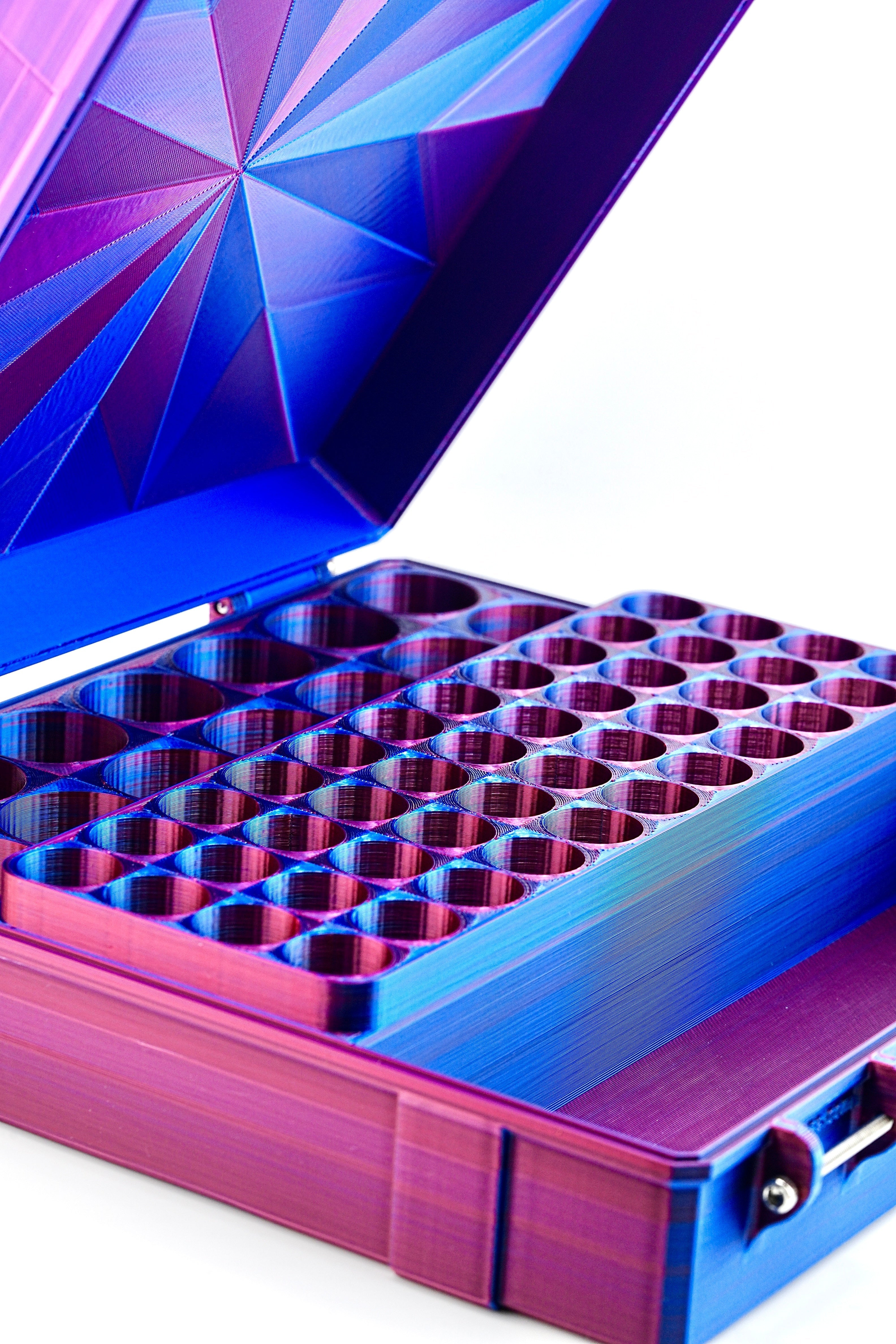
The flagship. 56 precision-machined slots for 3ml and 10ml vials, organized in labeled rows with a dedicated syringe section. Hard-shell construction, fully opaque, fridge and freezer safe.
Best for: serious users running 3+ peptides, bulk buyers, anyone who imports from Mexico and needs to organize 20-50+ vials
Capacity: 56 vials in mixed 3ml/10ml configuration
Pros: Massive capacity without being unwieldy, professional-grade build quality, labeled zones for protocol organization, works in both fridge and freezer
Cons: Higher price point (but cost-per-slot is actually lower than smaller cases), too large for daily carry to the gym
Bulk Storage: 50, 100, and 200+ Slots
For the serious collector or resupply tripper. If you're crossing the border into Mexico and bringing back 50-100 vials at a time, individual cases won't cut it. Bulk storage solutions use modular inserts that stack in a freezer or dedicated shelf.
Best for: bulk importers, long-term stockpilers, users who buy 6-12 months of supply at once
Capacity: 50-200+ vials
Pros: Maximum capacity, modular design (add trays as needed), optimized for freezer storage
Cons: Not portable; these are home storage solutions. Pair with a smaller travel case for trips
Travel Cases: Hard-Shell for Flights and Mexico Trips
This is a critical category. If you fly with peptides, drive across the US-Mexico border, or even just commute to the office, you need a case that's built for transit.
What makes a travel case different:
- Impact-rated shell — survives being dropped, squeezed in an overhead bin, or tossed by baggage handlers (always carry on, but still)
- Secure latching — won't pop open in your bag
- TSA-friendly — organized, labeled cases look professional at security. A bag of loose vials and syringes raises questions; a purpose-built case answers them
- Cold pack compatible — room for a small cold pack on longer trips to maintain temperature
- Customs-ready — when crossing back from Mexico, a professional case with organized, labeled vials communicates "legitimate personal medication" far better than a Ziploc bag
Pro Tip: For Mexico border crossings, keep your receipts from the pharmacy, store vials in a labeled case, and carry everything in your carry-on or on your person. A hard-shell case with organized vials is the single best thing you can do to smooth the customs process.
Accessories Worth Adding
Beyond the case itself, a few accessories round out a complete storage system:
- Colored vial caps — snap-on silicone caps in multiple colors for instant compound identification. Essential for multi-peptide protocols
- Syringe cases — dedicated storage for insulin syringes, reconstitution syringes, and alcohol wipes. Keeps sharps organized and separated from vials
- BAC water cases — 10ml BAC water vials are larger than peptide vials and need wider slots. Some cases include dedicated BAC water sections
- Cold packs — gel-based cold packs sized to fit inside your case for travel. Not ice (too cold, condensation risk) — gel packs maintain 2-8°C for 4-8 hours
- Freezer inserts — removable inserts that pop out of your case and go directly into the freezer for long-term storage
Which Case Is Right for You? The Decision Tree
Answer these three questions and you'll know exactly what you need:
1. How many vials do you have?
- 1-4 vials: Starter case (2-4 slot)
- 5-15 vials: Mid-range case (10-20 slot)
- 16-50 vials: Vial Vault Pro 56
- 50+ vials: Bulk storage system (modular inserts or multiple cases)
2. What sizes are your vials?
- All 3ml: Dedicated 3ml case for tightest fit
- All 10ml: 10ml-specific case
- Mixed (most common): Case with dual-size zones or universal slots
3. Do you travel with your peptides?
- No travel (fridge only): Any case works; prioritize capacity and organization
- Domestic flights: Hard-shell travel case, TSA-friendly design
- Mexico trips / border crossing: Hard-shell travel case with cold pack compatibility, professional appearance, room for receipts/documentation
- Daily carry (gym, office): Compact starter or mid-range case that fits in a bag
Price Comparison: What to Expect
Peptide cases range from under $20 for basic starter cases to over $100 for pro-level systems. Here's what each tier typically costs:
- Starter (2-4 slot): $15-30
- Mid-range (10-20 slot): $35-65
- Pro (Vial Vault Pro 56): $75-120
- Bulk storage (50-200 slot): $80-150+
- Accessories (caps, syringe case, cold packs): $5-25 each
Consider cost-per-slot when comparing. A $30 case with 4 slots is $7.50 per slot. A $100 case with 56 slots is $1.79 per slot. Larger cases are almost always a better value per vial stored.
The Bottom Line
The "best" peptide case is the one that fits your current collection, accommodates growth, and handles your lifestyle — whether that's a quiet fridge at home or a weekly flight to Mexico.
If you're just starting out, a mid-range 10-20 slot case gives you room to grow without overspending. If you're already deep into a multi-peptide protocol or importing in bulk, the Vial Vault Pro 56 pays for itself in the first vial it saves from breakage or degradation.
For the full rundown on what to store and how to store it, check our Peptide Storage Guide. And browse our complete product lineup to see every case side by side.