
Brand-name semaglutide comes in pre-filled pens, while compounded versions usually come as 3 mL or 10 mL glass vials. Storage instructions for each come from the product label or your pharmacist or provider, but the right storage case differs a lot between pen users and vial users. This list covers both, ranked from worst to best by what a case actually does: protect, organize and travel well.
One reminder before the ranking: a storage case is a protective organizer, not a cooler. At home it sits in your fridge; on the road it sits inside a cooler bag with ice packs if your label calls for cold.
Design a case for your GLP-1 pens and vials
Add your pens, vials and supplies. The builder gives each a fitted space inside one compact, opaque hard case.
#10: Worst: Fridge Door Shelf (No Container)
The door shelf is where most people keep their GLP-1 pen out of habit: it's visible, it's easy to reach and it feels organized. It's also the worst spot in the fridge. The door warms and swings every time it opens, and small items get knocked out of it. A pen or vial living there takes that treatment day after day.
#9: Neoprene "Diabetes" Pen Case
The most common pen storage product. A soft neoprene pouch with elastic pen pockets, usually with a generic medical design. These are made for carrying a pen to work or in a handbag, not for home storage. The soft build offers no impact protection, neoprene lets some light through, and at home the fridge is already doing the cooling. A useful on-the-go accessory; the wrong main storage.
#8: Original Pen Packaging
The carton your pen shipped in. It blocks light, holds the pen in its original insert, and it's free. It's perfectly adequate at first. The catch: cardboard in a humid fridge softens over a few weeks, and the carton that held your pen perfectly on day one is a floppy, stained mess a month later. Don't rely on it for a treatment course that lasts months.
#7: Small Zippered Pouch (Fabric)
A fabric zipper pouch keeps your pen and supplies together and stops them rolling around the fridge. Better organization than the door shelf. The limits remain: fabric has no structure or impact protection, most pouches let light in, and there's no designated spot for needles or alcohol pads. A step up on organization, not on protection.
#6: Cooler Bag With Slim Ice Pack (Home Storage Misuse)
Often recommended in online GLP-1 groups for "extra protection." At home, a cooler bag adds nothing: your fridge is already doing the cooling, more steadily than any cooler bag can. The legitimate use is travel, where a cooler bag with a slim ice pack is exactly the right tool. Using one in the fridge adds bulk without solving a real problem.
Pro tip: Read the label for the exact product you have. Pens and vials can come with different storage instructions, and a pen's instructions can change once it's in use. Never assume a compounded vial follows a brand-name pen's rules, or the other way around.
#5: Hard-Shell Cosmetic Case (Clear)
Clear-paneled hard cases are structurally sound: rigid, latching and compact. They fail on light for the same reason clear food containers do: every fridge door opening lights up whatever is inside. Many GLP-1 labels say to protect the contents from light, which matters most for vials in clear glass. If the case is your only storage layer, it needs to be opaque.
#4: Opaque Hard-Shell Case (Generic)
Opaque, rigid and with a latching lid. It blocks light, contains spills and keeps everything together. The gap between this and a purpose-built case: no fitted vial slots (vials still shift and rattle) and no organized spaces for needles, syringes and alcohol pads. For someone with a single pen, it's a perfectly functional choice. For vial users with syringes and a sterile water bottle, you'll want more organization.
#3: Insulated Locking Medication Case
Hard-shell, lockable, with basic internal organization. The lock is a real feature in homes with children, since medication should be kept out of reach. The limited inside layout (usually one tray or divider) is the main constraint: these cases are designed for pill bottles and blister packs, not pens or 10 mL vials. A fair choice if household security comes first; less so purely for organization.
#2: Purpose-Built Diabetic Supply Case
Cases designed for insulin supplies, typically with pen pockets, a slot for a vial and syringe storage, are the closest off-the-shelf product to what GLP-1 users actually need. The fit is imperfect: 10 mL compounded vials are often slightly bigger than the insulin vials these slots are made for, and pen pockets are sized for insulin pens. But they're closer than any generic option.
#1: Best: A Custom Case You Design Yourself (PeptideCase™ Builder)
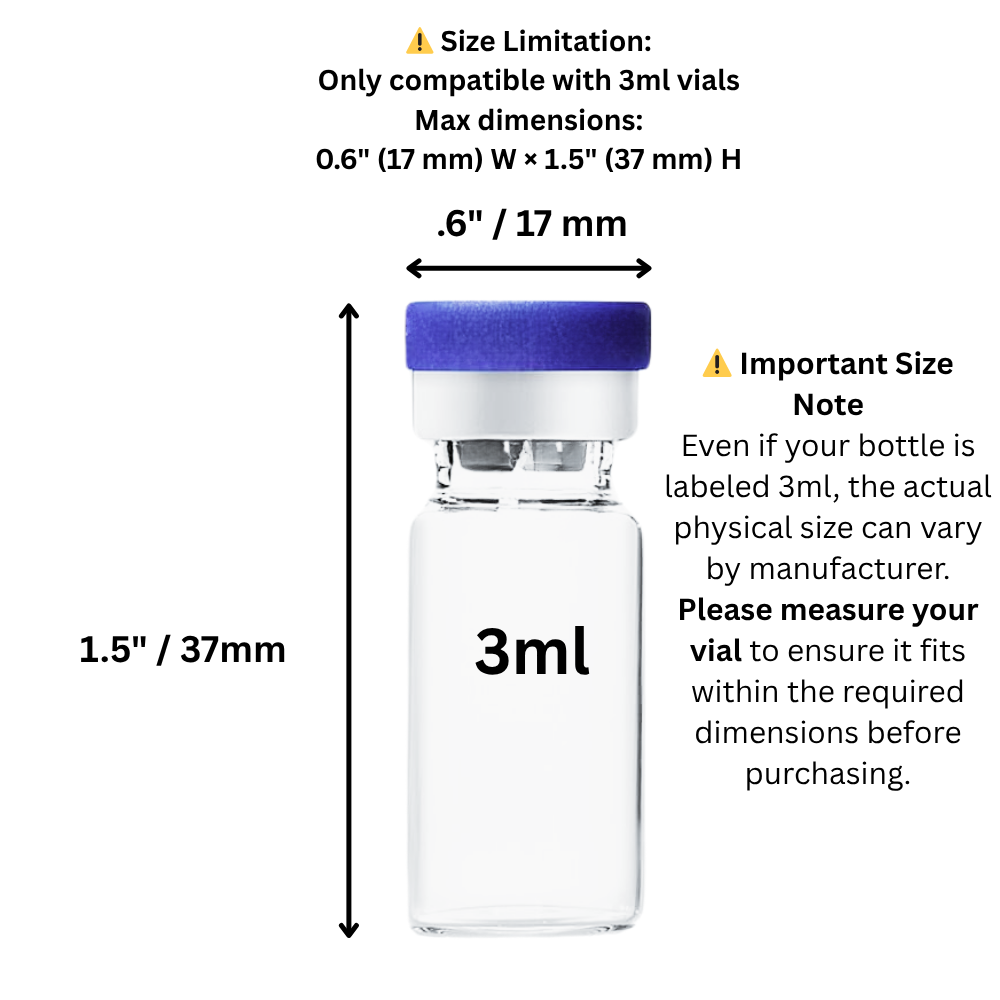
Every option above makes you fit your kit to someone else's layout. A custom case fits the layout to your kit. In the PeptideCase™ builder you add exactly what you keep: 3 mL or 10 mL vials, a peptide pen or injector pen, pen cartridges, syringes, alcohol pads and even a BAC water bottle. Each item gets fitted pockets or an open bay sized for that many, inside an opaque hard shell with a locking latch.
For vial users, that means every vial held upright with its supplies beside it. For pen users, it means a hard shell around the pen instead of a neoprene pouch, with room for spares and needles. And because the builder shows the exact size before you order, you know it will fit your fridge shelf and your travel cooler bag.
Pro tip: If you move between pens and vials when supplies change, design one case with spaces for both and label each pocket. Your setup stays organized through every change, and you never have to rebuild it from scratch.
GLP-1 Storage Rules at a Glance
- Temperature and timing: follow the storage instructions on your product label or from your pharmacist or provider, for pens and vials alike.
- Placement: a main fridge shelf, never the door, and away from the back wall where some fridges freeze.
- Light: if your label says to protect from light, keep pens in their case or carton and vials in an opaque case.
- Travel: carry on, never check, and pack a cooler bag with ice packs if your label calls for cold.
For more on fridge setup, see our fridge organization guide.
Design your own custom semaglutide case
Building a case for a GLP-1 kit takes a few minutes. Open the PeptideCase™ builder, start with an empty case and tap "Add item." Pick what you keep and how many: 3 mL or 10 mL vials, other size vials, a peptide pen or injector pen, pen cartridges, syringes and alcohol pads (flat or standing). Every item becomes fitted pockets or an open bay sized for that many, with a finger scoop in each space.
The tallest item sets the case height, and shorter vials stand on a raised floor so every top lines up at the rim. Auto-arrange finds the most compact layout and shows the case size, height and contents with top, lid and 3D views. Choose Black or RGB Metallic, a wide or deep shape, single or dual latches, and an optional lid design with text or an icon. It's printed to order in the US.