
What You Are Actually Shopping For
The first thing to get clear on when shopping for peptide cases is the difference between a case built for vials and a generic organizer that someone has relabeled for the market. This matters more than any other single factor in your buying decision.
A real vial case is designed around the dimensions of the vials it holds — mostly 3 mL and 10 mL vials, the two most common sizes. Every design decision flows from those dimensions: pocket diameter, pocket depth, the spacing between pockets, and the overall case size.
A relabeled generic organizer starts from a different premise. The slots may be sized for essential oil bottles, makeup, or lab tubes — none of which match peptide vials. You end up with a case where the vials are either too loose (they roll or tip) or too tight (hard to remove without pulling on the stopper). In 2026 there is a third option: a case you design yourself, built around exactly the vials and supplies you keep.
Skip the fixed layouts: design your own
Add the vials and supplies you keep and the builder designs a hard case around them, shows the exact size, and sends it to your cart.
You are not shopping for something that merely holds vials. You are shopping for something that holds your vials correctly, protects them from knocks and light, and works where you actually keep and carry them — including your refrigerator, if your label calls for it.
The 5 Things That Separate a Real Peptide Case from a Prop
Every legitimate vial storage case on the market in 2026 should meet five baseline criteria. If a case fails any one of these, it is not a real peptide case, however it is marketed.
1. Slot Dimensions Sized for 3 mL or 10 mL Vials
A standard 3 mL vial is roughly 14–16 mm across. A slot that is too wide lets the vial tip sideways, defeating the point of the slot. A slot that is too narrow stops the vial from seating fully and makes removal difficult. A good case sizes each pocket to the vial so it sits snugly upright and lifts out cleanly with two fingers.
10 mL vials — common for GLP-1 vials and TRT vials — are larger, roughly 22–24 mm across. The pocket size and case geometry are completely different from a 3 mL case. Make sure the case you buy is sized for the vials you actually use, or that it holds both sizes if you keep both.
2. Hard Shell Material
Soft cases — neoprene pouches, fabric cases, padded bags — don't qualify as protective cases for glass vials. A soft case offers minimal impact protection if dropped, lets light in through flexible seams, and doesn't hold vials in a fixed upright position. The inside of a soft case shifts during transport, and the vials shift with it.
A real vial case has a rigid outer shell that keeps its shape under impact and holds the pockets inside in a fixed, stable position however the case is handled.
3. Light-Blocking Construction
Most product labels say to keep vials away from light. A case that is transparent or translucent lets light reach the vials every time you open the fridge or set the case on a counter. Good light blocking means solid walls on every side and a lid that closes without gaps.
Clear or windowed cases that let you see the vials might be convenient, but that convenience costs you light protection. A well-designed case doesn't need a window, because you know which vial is in which pocket — that is what the layout and your labels are for.
4. Secure Latch
A case that relies only on friction or a weak snap to stay closed is not adequate. In a bag, in a car, in a suitcase, a case that pops open has done nothing to protect the vials inside. A secure latch keeps the case closed under real-world knocks. It also keeps the case closed in the fridge if the shelf is bumped.
5. Temperature-Stable Construction
If your label says refrigerate, your case will spend a lot of time in the fridge, and it may also travel in a hot car or a cold cooler. A well-built case keeps its shape and its pocket dimensions through all of it. Cheap, thin plastics can warp or crack — leaving pockets that no longer hold vials correctly and lids that no longer close flush. Keep in mind that no case is a cooler: the case protects and organizes, and the fridge or a cooler with an ice pack does the cooling.
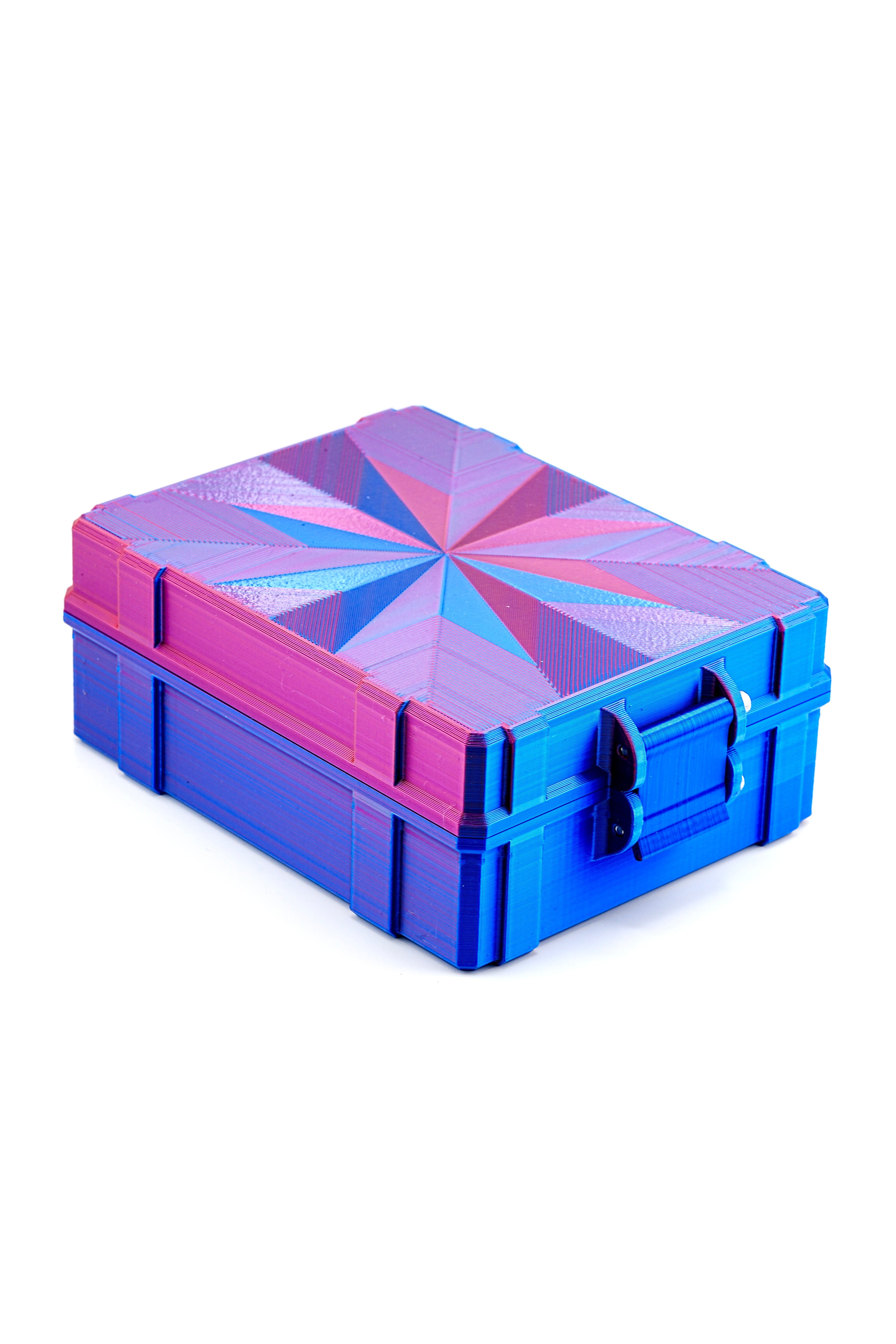
Where Peptide Cases Are Sold — and What to Expect at Each
Peptide cases are sold through several channels in 2026. Each has a distinct character that affects what you are likely to find.
Amazon
Amazon has the widest selection of products labeled as peptide cases or vial storage cases. The volume of options is both its strength and its main problem. Many cases sold under peptide-related search terms are generic cases — essential oil organizers, medication cases, or lab storage — photographed with vials inside and relabeled.
To navigate Amazon, check two things before anything else: the listed slot dimensions (not just "fits 3ml vials" — the actual measurement in millimeters), and the one-star reviews. One-star reviews are usually written by people who received and used the product. They tell you what the marketing doesn't: the slots are too wide, the shell cracked, the latch pops open, or the stated vial fit is wrong. Read at least ten before trusting a listing.
Etsy
Etsy hosts handmade and small-batch products, including some handcrafted vial cases. Quality varies enormously from seller to seller. Some are well made with careful attention to slot dimensions and materials. Others look good in photos but have foam inserts that compress, weak latches, or materials that don't hold up in a fridge.
If you buy from Etsy, message the seller and ask for the slot diameter, the shell material, whether the case is fine in a refrigerator, and how the latch works. A seller who can't answer specifically has probably never tested the case with real vials.
Custom-Built to Order: the PeptideCase™ Builder
Instead of choosing from fixed layouts, you design the case. Start with an empty case, tap "Add item", and add what you keep: 3 mL vials, 10 mL vials, peptide vials, TRT vials, syringes, alcohol pads, a BAC water bottle, pens or pen cartridges. Each item becomes fitted pockets or an open bay sized for that many, shorter vials stand on a raised floor so every top lines up at the rim, and every space has a finger scoop. The builder shows the exact size before you order; Add to cart sends your design to the vialcase.com cart, and the case is printed to order in the US. Custom cases are made to order and final sale, though printing defects are still replaced.
Generic Pharmacy and Medical Supply Stores
Pharmacies and medical supply stores carry insulin cases and medication organizers. These are designed around pens and prefilled syringes, not 3 mL vials with rubber stoppers. The slot geometry is usually wrong, the cases are often too small for several vials, and light blocking is inconsistent. They work as emergency stopgaps, not as a real solution for ongoing vial storage.
Budget Tiers and What to Expect at Each
Price alone doesn't determine quality — there are expensive cases that perform poorly and affordable cases that are well designed. But broad tiers do line up with certain characteristics worth knowing before you buy.
Bargain-Bin Organizers
The cheapest cases are almost always generic organizers. The maker hasn't invested in vial-specific sizing, decent materials, or quality control. Expect slots that let vials tip, thin walls that don't block light, flimsy latches that pop open in transport, and plastics that may warp or crack in the fridge. Fine for craft supplies; not for vials worth more than the case.
Entry-Level Purpose-Built
This is where real vial storage begins: correct slot sizing for one vial size, a hard shell and a basic latch. The trade-off is capacity and flexibility — a small fixed layout suits a simple setup but feels limiting once you add a second vial size or more supplies.
Full-Featured Cases
This tier includes cases with higher slot counts plus space for syringes and alcohol pads. Most people with an established routine land here. The limitation is still the fixed layout: the slot count and accessory space are whatever the designer chose.
Large Capacity and Specialty
These cases are designed for 10 mL vials, high vial counts, or a combination of vial sizes, pens and supplies. This is where a custom case makes the most sense, because a layout designed around your exact combination beats any fixed layout. Very large designs that can't be printed in one go are printed as two parts, lid and base.
Red Flags When Shopping for Peptide Cases
There are specific warning signs in product listings that show a case is not what it claims to be. Learn to spot these before you buy:
- No vial slot specifications listed. A legitimate listing states the slot diameter and depth. If a listing says "holds vials" without dimensions, the seller either doesn't know them or knows they won't hold up to scrutiny.
- "Fits 3ml vials" with no proof. This phrase appears in many listings for cases that do not fit standard vials. Without a slot measurement to check, "fits 3ml vials" is a marketing claim, not a specification.
- Soft shell construction marketed as protective. Neoprene, fabric, and padded cases are carrying pouches, not protective cases. A pouch can protect a case that is already inside it from bumps. It doesn't hold vials upright, doesn't block light at flexible seams, and doesn't stop vials knocking together in transport.
- No reviews from people storing vials. Reviews that mention essential oils, makeup, or lab use suggest the case wasn't designed for vials. Look for reviews that mention vial sizes and how the vials actually fit.
- Images showing loose vials inside the case. Product photos where vials aren't fully seated, or look smaller than their slots, are showing you the real slot geometry. If the vials look loose in the marketing photos, they are loose in real life.
Pro Tip: A case designed for essential oils or makeup can look very similar to a vial case but has none of the protective properties you need. Essential oil bottles have a different diameter and a different center of gravity than vials. Always check slot dimensions in millimeters before buying — not just the claimed vial fit.
What to Ask Before Buying: The 6-Question Checklist
Before committing to any case, run through these six questions. If you can't answer all six from the listing or the seller, keep looking.
- How many vials does it hold? Does that number match what you keep now plus a few spares?
- What are the internal slot dimensions? Get the slot diameter in millimeters and compare it with your vials. A 3 mL vial is typically 14–16 mm across; a 10 mL vial typically 22–24 mm.
- Is the shell rigid? Ask what it's made of, then do the squeeze test: if the walls bend in when you press them, it's not a hard case.
- How does the latch work? Is it a positive-click latch, a clasp, or just a friction fit? Can it open by accident in a bag?
- Does it keep light out? Are the walls solid on all sides, including the lid? Does the lid close without gaps?
- Is it fine in the fridge? If your label says refrigerate, the case needs to live there without warping or cracking.
Why Peptide-Specific Cases Are Worth Paying For
The economics of vial storage are simple, and they favor a proper case over any improvised alternative.
Vials are expensive and often slow to replace, and many people keep several at once. Whatever the total value of what's in your fridge, that is the amount at risk from poor storage.
The most common storage failures are easy to name: vials kept on the door shelf of a busy household fridge, vials left in clear containers in the light, and loose vials tipping and cracking against each other. A hard case with a pocket for every vial, kept at the back of the middle shelf, deals with all three.
One broken or lost vial can cost more than a good case. The math is not close: a proper case pays for itself the first time it prevents a loss.
Buying in Bulk: Cases for Clinics and Research Labs
Individuals aren't the only buyers. Clinics, labs and multi-person households often need to keep many vials organized at once, and they need anyone on the team to find the right vial quickly.
For larger needs, the builder can lay out one big case or several smaller ones: add the vial count you need and Auto-arrange packs it into the most compact layout, with a 5-knuckle hinge and two latches on big cases. A name, department or icon on each lid makes it obvious whose case is whose, and color-coded vial caps help staff tell vial types apart at a glance.
Color-code your vials
Custom snap-on caps for 3 mL or 10 mL vials, with a cap color plus an icon or letters. Sets from 25 caps.
The Bottom Line: Where to Buy and What to Get
Here is a direct recommendation based on the most common setups in 2026. Each one is a builder recipe you can start with and adjust:
- Starting out with one or two kinds of vials: a compact case with a row of 3 mL vials and a few spares. Small, hard shell, one latch.
- Several vials plus syringes and pads: add your 3 mL vials, syringes and alcohol pads (flat or standing) and let Auto-arrange build an all-in-one case.
- GLP-1 or TRT with 10 mL vials: add 10 mL vials or TRT vials; if you also keep 3 mL vials, add them too — shorter vials stand on a raised floor so every top lines up at the rim.
- Pens instead of vials: add a peptide pen or injector pen and pen cartridges.
- Traveling: design the smallest case that holds your trip's vials and supplies so it fits inside your carry-on cooler bag.
Every design shows its exact size, a top view and a 3D view before you add it to the cart.
Make your own custom peptide case instead of buying a generic one
Most cases for sale make you choose between too many slots and too few. The PeptideCase™ builder lets you skip that choice. Start with an empty case, tap "Add item", and pick what you keep and how many: 3 mL vials, 10 mL vials, peptide vials, TRT vials, glutathione vials, other size vials, syringes, alcohol pads, a BAC water bottle, pens, pen cartridges, a custom space with your own width, depth and height, or a temperature sensor spot for a small digital thermometer.
Auto-arrange turns that list into the most compact case, with a top view, a lid view and a 3D view you can open, unlatch and drag to turn. Pick Black or RGB Metallic, a Wide or Deep shape, and one or two latches, then add text, an icon or your own SVG logo to the lid in a second color. Your case is printed to order on our own print farm in the US, and the size shown is exactly what gets built.