
Importing comes up in two very different ways for people who keep vials. Rules on importing medication or research compounds are a legal question for an attorney, your pharmacist and the relevant authorities, and a storage company isn't the place to get that advice.
The import question we can answer is the case those vials live in: do you order a stock case from overseas, or have one printed to order in the US around your own vials? Below we compare the two, then cover how to pack your own prescribed medication when you travel abroad, because that's where cases, paperwork and borders meet.
Skip the import: design your case
Build a case around your exact vials and supplies, see its real size in 3D, and have it printed to order in the US.
Imported Storage Cases: What You Usually Get
Most low-cost vial cases sold online are made overseas in a few stock sizes and shipped in bulk. Some are fine. Many share the same problems:
- Generic foam. Inserts are often cut for cosmetic samples, lab tubes or "universal" vials, so 3 mL and 10 mL vials either rattle or have to be forced in.
- Fixed layouts. Eight slots of one size, whether you keep three vials or eleven, and no place for a BAC water bottle or syringes.
- Vague sizing. Listing photos rarely tell you the inside dimensions, so you find out whether it fits your vials, your fridge shelf or your bag after it arrives.
- Soft or flimsy shells. Zippered pouches and thin plastic boxes that flex under a light squeeze.
- Awkward returns. Sending a cheap case back overseas is rarely worth the trouble, so a case that doesn't fit usually ends up in a drawer.
A Case Printed to Order in the US
A custom case flips the process around. Instead of picking a stock box and hoping your kit fits, you start with your kit. In the PeptideCase™ builder you add the vials and supplies you actually keep, and the planner lays out a case around them. The builder shows the case size (length x width), the height and what it holds, and the size shown is exactly what gets built.
Each case is printed to order on the maker's own print farm in the US. When you're happy with the design, Add to cart sends it to the vialcase.com cart and you check out there. Because every case is made to order, custom cases are final sale, but printing defects are still replaced.
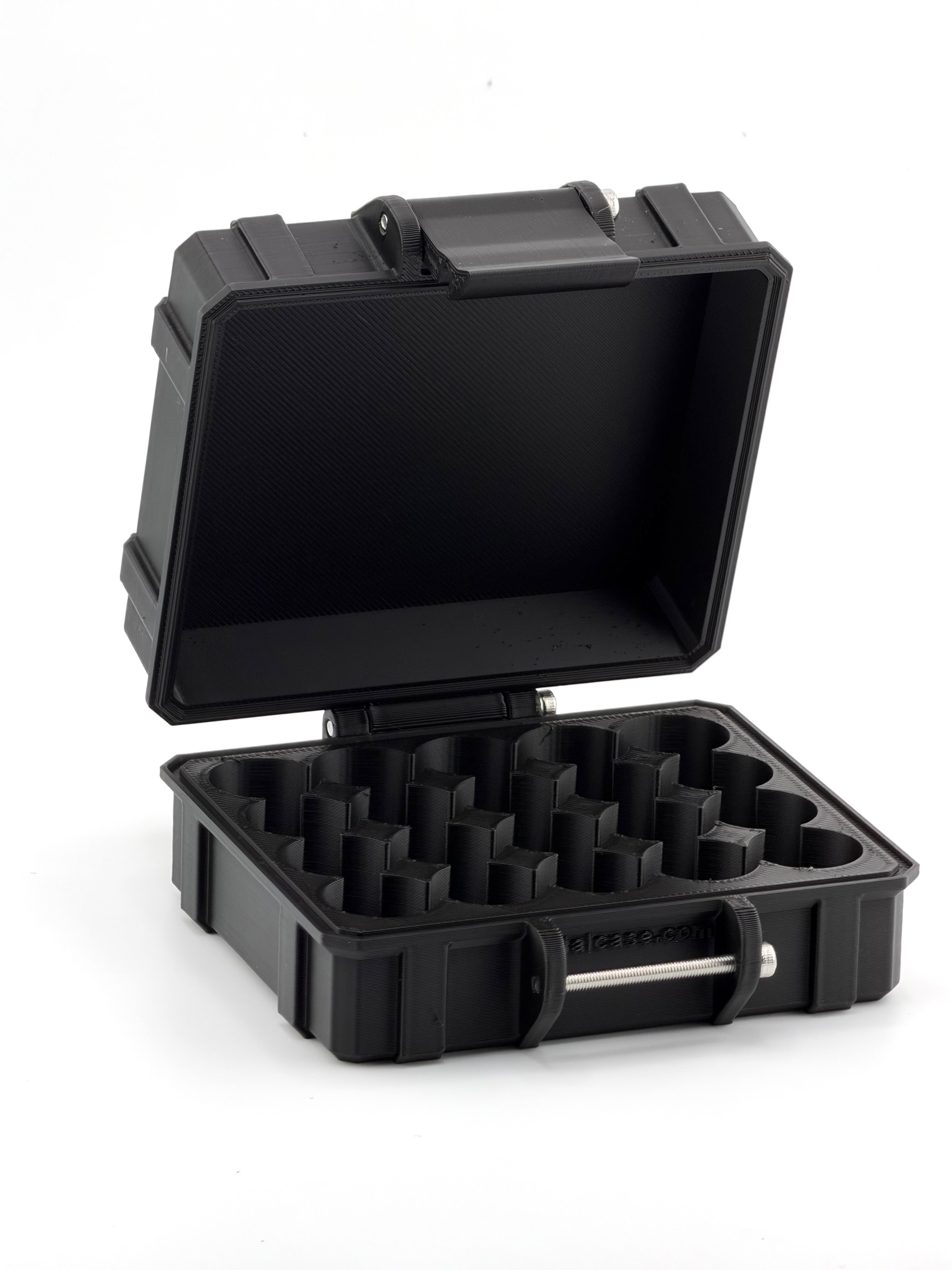
Imported Stock Case vs. Custom Printed Case
| Typical imported stock case | Custom case printed to order | |
|---|---|---|
| Vial fit | Generic foam slots | Fitted pockets for the vials you added |
| Layout | Fixed number of one slot size | Auto-arranged around your exact items |
| Supplies | Often no room for bottles or syringes | Bays for a BAC water bottle, syringes, pads, pens or a custom space |
| Size info | Often vague | Exact length, width and height before you order |
| Closure | Zipper, clip or thin snap | Print-in-place snap hinge and locking latch |
| Personal touch | None | Optional lid text, icon or your own SVG logo |
| Where it's made | Overseas, in bulk | Printed to order in the US |
Traveling Abroad With Your Own Prescribed Medication
If you're taking your own prescribed medication on an international trip, the questions are about paperwork and packing, not importing. A few habits cover most situations:
- Keep medication in its original pharmacy-labeled packaging. The label ties the medication to your name and prescription.
- Carry the prescription and a letter from your prescriber. Both take no space and answer most questions at a border.
- Check the destination's current rules yourself. Some countries want an advance declaration or permit for certain medications or quantities. Look at the official government or customs website before you book, and again before you fly.
- Carry it on. Keep medication in your carry-on, organized in a case, so it stays with you and is easy to show if asked.
- Follow the label on temperature. If it calls for cold, pack the case inside a cooler bag with gel ice packs. A storage case is a protective organizer, not a cooler.
Our international travel guide and our guide to flying to Europe go further on packing and paperwork.
What to Look For in Any Case, Imported or Not
- Pockets that fit your actual vials, measured, not "universal".
- Space for the supplies you keep with the vials.
- A rigid shell and a latch that stays shut in a bag.
- A known size that suits your fridge shelf and your carry-on.
- Vial tops you can reach without pulling vials out by the cap.
Make your own custom case, printed in the US
Skip the guesswork of ordering a stock box from overseas. In the PeptideCase™ builder you start with an empty case, tap "Add item" and choose what you carry: 3 mL vials, 10 mL vials, peptide, TRT, glutathione or other size vials, syringes, alcohol pads, a BAC water bottle, pens, pen cartridges, a custom space with your own width, depth and height, or a temperature sensor window. Every item becomes fitted pockets or an open bay sized for that many, and shorter vials stand on a raised floor so every vial top lines up at the rim. Auto-arrange packs it all into the most compact layout, and you can check the top view, lid view and 3D view before you order. Choose Black or RGB Metallic, Wide or Deep, one latch or two, and add a lid design in a second color if you like. Your case is printed to order on the maker's own print farm in the US. Start your custom case