What Is IGF-1 LR3 and Why Is It So Sensitive?
IGF-1 LR3 — Insulin-like Growth Factor 1 Long Arg3 — is a modified analog of the naturally occurring IGF-1 hormone produced by the liver in response to growth hormone signaling. The "LR3" modification refers to a substitution at position 3 (arginine replacing glutamic acid) combined with a 13-amino-acid extension at the N-terminus. This structural change was engineered to reduce IGF-1's binding affinity to the IGF-binding proteins (IGFBPs) that sequester natural IGF-1 in the bloodstream, extending its active half-life from minutes to approximately 20–30 hours.
That extended activity profile makes IGF-1 LR3 exceptionally potent in research settings. It also makes it exceptionally sensitive to degradation. The same structural features that prevent binding proteins from deactivating it in the body also make it less stable outside of it. The long N-terminal extension is particularly vulnerable to proteolytic cleavage and thermal denaturation. When the peptide unfolds due to heat or pH stress, it doesn't refold correctly — the result is an irreversibly denatured compound that looks identical to intact IGF-1 LR3 but has no biological activity.
This is not a peptide that tolerates careless handling. The researchers and advanced users who get full value from IGF-1 LR3 treat it like the high-value, high-sensitivity compound it is. Everyone else is injecting an increasingly degraded solution and wondering why results are inconsistent.
The Cost Argument for Proper Storage
Most peptides used in research cost $20–$50 per vial. IGF-1 LR3 typically runs $80–$200+ per vial from quality suppliers, and a research cycle often involves multiple vials. That positions IGF-1 LR3 as the single most expensive line item in most peptide protocols.
Now consider what a storage failure costs you:
- A reconstituted vial left at room temperature for several hours: significant potency loss, potentially $50–$150 of compound degraded
- A frozen reconstituted vial: ice crystal formation destroys peptide bonds across the entire vial volume — total loss
- A vial stored at the back of a refrigerator with inconsistent temperature: progressive degradation that erodes your results without you knowing why
- A vial reconstituted in the wrong solvent at the wrong pH: precipitation or irreversible denaturation — complete loss
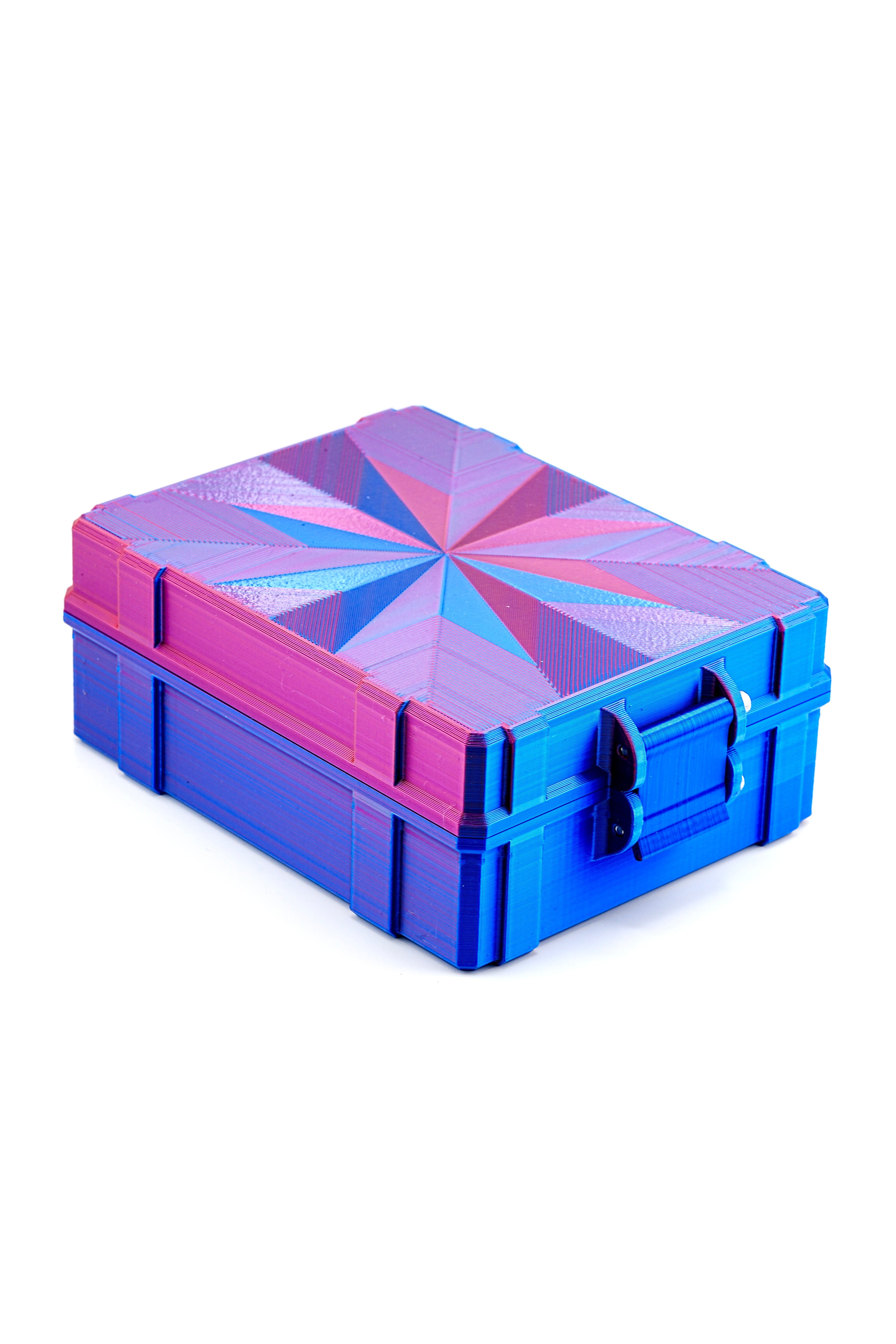
Against those losses, a quality peptide storage case costs a fraction of a single vial. The economics of proper storage are not abstract — they're straightforward. For comparison on where IGF-1 LR3 sits relative to other peptide costs and shelf lives, see the peptide shelf life guide.
Pro Tip: Before opening your IGF-1 LR3 vial, have your reconstitution solvent prepared, your syringe ready, and your storage location cleared and cold. Every minute the lyophilized powder is exposed to ambient humidity before reconstitution is unnecessary risk. Treat the reconstitution event as a procedure, not a casual task.
Lyophilized IGF-1 LR3: Storage Before Reconstitution
In lyophilized form, IGF-1 LR3 is significantly more stable than in solution. The absence of water dramatically slows the hydrolysis and oxidation reactions that degrade the peptide chain. This is the form you want to maintain for as long as possible — reconstituting only when you're ready to begin a protocol cycle.
Temperature Requirements
- Optimal long-term storage: -20°C (-4°F) in a dedicated freezer. At this temperature, lyophilized IGF-1 LR3 retains potency for 12–24 months. This is the standard recommendation from serious researchers and peptide biochemists.
- Acceptable short-term storage: 2–8°C (36–46°F) in a refrigerator, for periods up to 4–6 weeks before reconstitution. This is appropriate if you're planning to reconstitute soon and want to avoid repeated freeze-thaw cycles on the dry powder.
- Room temperature: Acceptable only during transit, for hours — not days. Prolonged room-temperature storage of lyophilized IGF-1 LR3 results in measurable potency loss within weeks.
Minimizing Freeze-Thaw Cycles on Lyophilized Vials
Even in lyophilized form, repeated freeze-thaw cycling introduces stress. Temperature cycling causes microscopic condensation events as water vapor from ambient air interacts with the cold vial surface. Over many cycles, this introduces trace moisture into the powder cake. If you have multiple vials, keep the non-active ones in the freezer and only move a single vial to the refrigerator when you're within a week of reconstituting it. Never move a vial from -20°C directly into warm conditions — allow it to equilibrate in the refrigerator first.
Reconstituting IGF-1 LR3: Acetic Acid vs. BAC Water
This is where IGF-1 LR3 diverges most sharply from other peptides in your protocol. The reconstitution solvent is not interchangeable — the choice between acetic acid and BAC water has direct consequences for stability, pH, and shelf life.
Why Acetic Acid Is the Preferred Solvent
IGF-1 LR3 is pH-sensitive. The peptide is most stable in a mildly acidic environment (pH approximately 3–4). Dilute acetic acid — typically 0.1% acetic acid in sterile water — provides exactly this environment. At this pH, the peptide's charged residues adopt a conformation that resists aggregation and denaturation.
The reconstitution process using acetic acid:
- Prepare 0.1% acetic acid solution: 1ml of glacial acetic acid diluted into 999ml of sterile water, then filter-sterilize through a 0.22-micron filter. Most researchers purchase pre-made 0.1% acetic acid from their peptide supplier to avoid this step.
- Allow the lyophilized IGF-1 LR3 vial to reach refrigerator temperature (2–8°C) before opening. Never reconstitute a vial that came directly from the freezer.
- Inject the acetic acid solution slowly down the inside wall of the vial. Never inject directly onto the powder cake — this creates localized concentration gradients that promote aggregation.
- Do not vortex. Do not shake. Roll the vial gently between your palms for 30–60 seconds until the powder is fully dissolved. The solution should be clear; visible particulate or cloudiness indicates aggregation and the vial should be discarded.
- Dilute before injection. The acetic acid solution is not suitable for direct injection. You must dilute your dose in sterile saline (0.9% NaCl) or sterile water immediately before injection to bring the pH to a physiologically acceptable range. A 1:10 dilution is a common approach.
Can You Use BAC Water Instead?
BAC water has a pH of approximately 5.0–5.5, which is significantly less acidic than the 0.1% acetic acid environment that optimizes IGF-1 LR3 stability. In BAC water, IGF-1 LR3 is more prone to aggregation and has a shorter effective shelf life than in acetic acid. Some researchers use BAC water successfully, but the consensus among advanced users is that acetic acid reconstitution provides better stability outcomes.
If you choose BAC water, apply extra conservatism to your shelf life estimate and temperature management. For comparison with how other peptides handle BAC water reconstitution, see the full guide on reconstituting peptides with BAC water.
Pro Tip: Always inspect your reconstituted IGF-1 LR3 for clarity before drawing each dose. A clear solution is expected. Any cloudiness, visible particles, or color change (it should be colorless to very slightly yellow) indicates aggregation or contamination — discard the vial immediately. With IGF-1 LR3 at its price point, the cost of discarding a questionable vial is always less than the cost of injecting a degraded or contaminated compound.
Reconstituted IGF-1 LR3: Shelf Life and Temperature Rules
This is the most critical section in this guide. Reconstituted IGF-1 LR3 has the shortest effective shelf life of virtually any common research peptide, and the temperature rules are stricter than most users expect.
Maximum Shelf Life: 3–4 Weeks
Reconstituted IGF-1 LR3 stored at 2–8°C (36–46°F) in 0.1% acetic acid has a practical shelf life of 3–4 weeks maximum. Many experienced researchers treat 3 weeks as their hard cutoff. Beyond that point, even under optimal refrigeration, the cumulative effects of hydrolysis and oxidation produce measurable potency loss.
This short window has direct implications for protocol design. A vial of IGF-1 LR3 reconstituted on day 1 should be fully used by day 21–28. If your dosing frequency doesn't allow that, consider working with a smaller reconstituted volume and keeping the remainder lyophilized.
The Non-Negotiable Temperature Rule: 2–8°C (36–46°F) at All Times
Reconstituted IGF-1 LR3 must stay within the 2–8°C (36–46°F) range. This is not a guideline — it's a hard boundary. Here's what happens outside this range:
- Above 8°C (46°F): Degradation rate begins climbing. The higher the temperature and the longer the exposure, the greater the potency loss. At 20°C (68°F) — typical room temperature — reconstituted IGF-1 LR3 begins losing meaningful potency within a few hours.
- Above 25°C (77°F): Rapid thermal denaturation. The peptide's tertiary structure unfolds irreversibly. An hour at 30°C (86°F) can render an entire vial of reconstituted IGF-1 LR3 biologically inert while it still looks like a clear solution.
- Below 2°C (36°F) / Freezing: Ice crystal formation physically shears peptide bonds. A single freeze-thaw cycle on a reconstituted IGF-1 LR3 vial is sufficient to cause significant, irreversible degradation. This is a total-loss event.
Brief Room Temperature Exposure: The Hidden Problem
Many researchers understand the obvious rules — refrigerate, don't freeze — but underestimate the cost of brief room-temperature exposure accumulated over many uses. Consider a realistic scenario: you take your IGF-1 LR3 vial from the refrigerator, prepare your injection, realize you need to find a swab, deal with a distraction, and return to complete the injection 20 minutes later. The vial sat at 22°C (72°F) for 20 minutes.
A single 20-minute room-temperature exposure causes minimal damage in isolation. But if this happens every other day over a 3-week protocol — roughly 10–12 such events — the cumulative thermal stress is substantial. The best practice is to remove the vial from the refrigerator, draw your dose immediately, and return it within 2–3 minutes. Have everything prepared before you touch the vial.
This is one of the most common peptide storage mistakes — and with IGF-1 LR3, its financial and research impact is greater than with any other compound in a typical protocol.
pH Sensitivity: Why IGF-1 LR3 Is Different from Other Peptides
Most research peptides are relatively tolerant of pH variations within the physiological range (6.5–7.5). IGF-1 LR3 is not. Its stability is tightly coupled to pH, and deviations in either direction — too alkaline or too acidic — accelerate aggregation and denaturation.
What Happens at the Wrong pH
At neutral or mildly alkaline pH (above 6.5), IGF-1 LR3 molecules become susceptible to aggregation — they begin clumping together into larger, biologically inactive structures. This process is often visible as cloudiness in the solution, but early-stage aggregation can occur without visible signs. At highly acidic pH (below 2.5), the peptide bonds themselves become vulnerable to acid hydrolysis.
The 0.1% acetic acid reconstitution protocol creates a pH of approximately 3.5–4.0 — the sweet spot for IGF-1 LR3 stability during storage. This is why you cannot substitute plain sterile water (pH 5.5–7.0) or BAC water (pH 5.0–5.5) without accepting reduced stability.
When you dilute your dose immediately before injection in saline or sterile water, the pH rises into a physiologically acceptable range for the injection itself. The storage environment (low pH) and the injection environment (near-neutral pH) serve different purposes, and both matter.
Organizing IGF-1 LR3 in a Multi-Peptide Protocol
IGF-1 LR3 is rarely used in isolation. Researchers commonly stack it with growth hormone secretagogues like Ipamorelin or Sermorelin, with repair peptides like BPC-157 and TB-500, or within broader protocols alongside compounds like GHK-Cu or Epithalon. Managing multiple vials with different reconstitution solvents, dates, and shelf lives is a real organizational challenge.
The Risk of Mix-Ups
Consider what a mix-up looks like with IGF-1 LR3 specifically. If you accidentally inject the acetic acid reconstitution solution without diluting it first, the low pH causes significant local tissue irritation. If you mistake an unlabeled IGF-1 LR3 vial for a vial of BAC water and inject it into another compound, you've contaminated both. These scenarios are not hypothetical — they happen when vials are stored loosely in a refrigerator without a structured system.
What Proper Organization Requires
- Dedicated slots per compound: IGF-1 LR3 should have a fixed, labeled position in your storage case. It never shares a slot with another compound.
- Clear labeling: Every reconstituted vial must be labeled with the compound name, reconstitution date, discard date, solvent used, and concentration. For IGF-1 LR3, also note "dilute before injection" as a reminder.
- Physical separation: Your acetic acid stock, dilution saline, and IGF-1 LR3 vials should be stored together in a dedicated section of your case — separate from your BAC water and other peptide vials.
- Temperature monitoring: If you're running multiple expensive compounds, a small digital thermometer in your refrigerator confirms your storage temperature is consistently in range. Refrigerators with failing seals or overfull shelves can have temperature inconsistencies of ±3–5°C.
For a full system on organizing multiple compounds, see the guide to organizing a peptide protocol and the peptide fridge organization guide.
Traveling with IGF-1 LR3
IGF-1 LR3's strict temperature requirements make travel significantly more demanding than with room-temperature-stable compounds. Any disruption to the 2–8°C (36–46°F) range during transit translates directly to potency loss from your most expensive vial.
Essential Travel Protocol
- Always carry on. Cargo holds are not temperature-controlled for pharmaceutical products. The combination of potential freezing at altitude and heat on the tarmac makes checked baggage completely unacceptable for IGF-1 LR3.
- Use an active or high-quality passive cold system. For trips under 2 hours, a quality insulated case with a pre-chilled interior can maintain 2–8°C. For longer trips, include a pharmaceutical gel pack — not dry ice, which can freeze your vials — pre-chilled to approximately 4°C (39°F).
- Never let the case sit in a vehicle. Car interiors reach 49–65°C (120–149°F) in summer. Even 30 minutes in a parked car is enough to degrade reconstituted IGF-1 LR3 significantly.
- Keep vials upright. Reconstituted IGF-1 LR3 should remain upright to minimize peptide-stopper contact and reduce the risk of contamination or pH change from stopper leaching.
- Travel with documentation. See the complete guide on traveling with peptides through TSA for current best practices.
IGF-1 LR3 Storage: Quick Reference Summary
These are the non-negotiables for every researcher working with IGF-1 LR3:
- Lyophilized, long-term: -20°C (-4°F), up to 24 months
- Lyophilized, short-term: 2–8°C (36–46°F), up to 6 weeks before reconstitution
- Reconstitution solvent: 0.1% acetic acid (preferred) or BAC water (acceptable, shorter shelf life)
- Reconstituted shelf life: 3–4 weeks at 2–8°C (36–46°F) — treat 3 weeks as your hard cutoff
- Temperature range for reconstituted: 2–8°C (36–46°F) at all times — no exceptions
- Never freeze reconstituted IGF-1 LR3 — single freeze-thaw cycle = total loss
- Minimize room-temperature exposure — each event above 8°C degrades potency
- Dilute in saline before injection — do not inject acetic acid solution directly
- Inspect for clarity before every dose — discard any cloudy vial immediately
- Label every vial with compound, solvent, reconstitution date, and discard date
For a broader view of how IGF-1 LR3 compares to other temperature-sensitive compounds, the peptide storage temperature chart is the definitive reference.
This content is for informational and educational purposes only and does not constitute medical advice. Always consult a licensed healthcare provider before beginning any peptide or hormone protocol.