
Why People Want a Cute Peptide Case
Not everyone who keeps peptide vials wants to broadcast it. Maybe you keep a vial or two at the office and would rather your desk drawer didn't look like a pharmacy. Maybe you travel and don't want a cluttered pile of glass vials and supplies catching a screener's eye. Maybe you just have aesthetic standards and you're tired of everything in this space looking like a hospital supply closet.
These are all legitimate reasons. Wanting a peptide case that looks good isn't vanity; it's practical. Discretion keeps things simple at work, at the airport and around people who don't need to know what you carry. And the vials inside are worth protecting, so the case that holds them should feel like it was chosen on purpose.
Across forums, Reddit threads and customer reviews, the same request comes up constantly: "I want something that doesn't look medical." That's the brief. The challenge is finding something that satisfies it without giving up the protection glass vials actually need.
Design a cute case that fits your vials
Pick your vials, choose Black or RGB Metallic, and add your initials, an icon or your logo to the lid.
The Problem with Most "Cute" Options on the Market
Go searching for a cute peptide case and you'll quickly land in cosmetic bag territory. Floral zipper pouches. Pastel makeup organizers. Soft fabric cases with elastic loops meant for eyeliner and mascara. They look clean, they photograph well, and they are close to useless for vial storage.
Here's why they fail in practice:
- No light blocking. Soft fabric and mesh pouches let light pass right through. Many vial labels say to protect the contents from light, and a translucent makeup bag sitting on your desk or in a sunlit bag doesn't do that.
- Wrong dimensions. Insulin cases are sized for insulin pens and cartridges. Makeup bags are sized for cosmetics. Neither is sized for 3 mL peptide vials, so vials rattle around, roll against each other and chip or crack at the neck. Glass-on-glass contact in a soft bag is a recipe for lost vials.
- No structural protection. If you set a soft pouch down hard, drop your bag or pack it into a suitcase with other gear, the vials inside take the impact directly. A soft case with no rigid structure offers zero crush resistance.
- No help with temperature. A fabric pouch doesn't keep anything cold, and neither does a hard case. If your label calls for cold, pair your case with a cooler or a gel pack and follow your label; what the case adds is keeping the vials from breaking along the way.
The aesthetic wins at the cost of everything that matters. You end up with a case that looks fine on your nightstand until a vial cracks after bouncing around in your gym bag for a week.
What a Cute Peptide Case Actually Needs to Do
Let's define the standard before shopping. A case can absolutely look clean and minimal, but it still has to do the following:
- Block light completely. A solid, fully enclosed shell with no translucent sections, so you can follow any "protect from light" instruction on your label without thinking about it.
- Protect glass vials from impact. Individual fitted pockets that hold each vial in place. No rattling, no contact between vials.
- Fit standard vial sizes. 3 mL vials are the most common for peptides; 10 mL for many GLP-1 vials and BAC water. The case needs to actually fit the vials you're using, not approximate them.
- Close and stay closed. A latch that doesn't pop open in a bag, backpack or suitcase. Losing a vial to a case that opened mid-trip is an avoidable disaster.
- Not scream "medication" at casual observers. This is the aesthetic requirement, and it's achievable. A clean hard-shell case with no clinical branding looks like a tech accessory or a small electronics organizer, not a medical supply kit.
The good news: all of these requirements fit a clean, understated design. The bad news: most products marketed as "cute" skip the first four entirely in favor of the last one.
Cute Does Not Mean Flimsy: Why Design and Function Must Coexist
There's a useful inversion here. Many cases marketed explicitly as "medical" or "peptide storage" are actually less appealing than a well-designed hard-shell tech case. They feature clinical white plastic, red crosses or busy labeling that immediately reads as pharmaceutical. That's not what most people want to carry through a gym lobby or pull out at their desk.
The design language of a quality tech accessory, with clean edges, a solid color and a secure latch, happens to line up almost perfectly with what a vial case needs. No translucent windows means full light blocking. Hard-shell construction means impact protection. Fitted pockets mean vials don't move. The visual cleanliness is a byproduct of intentional structure, not a compromise of it.
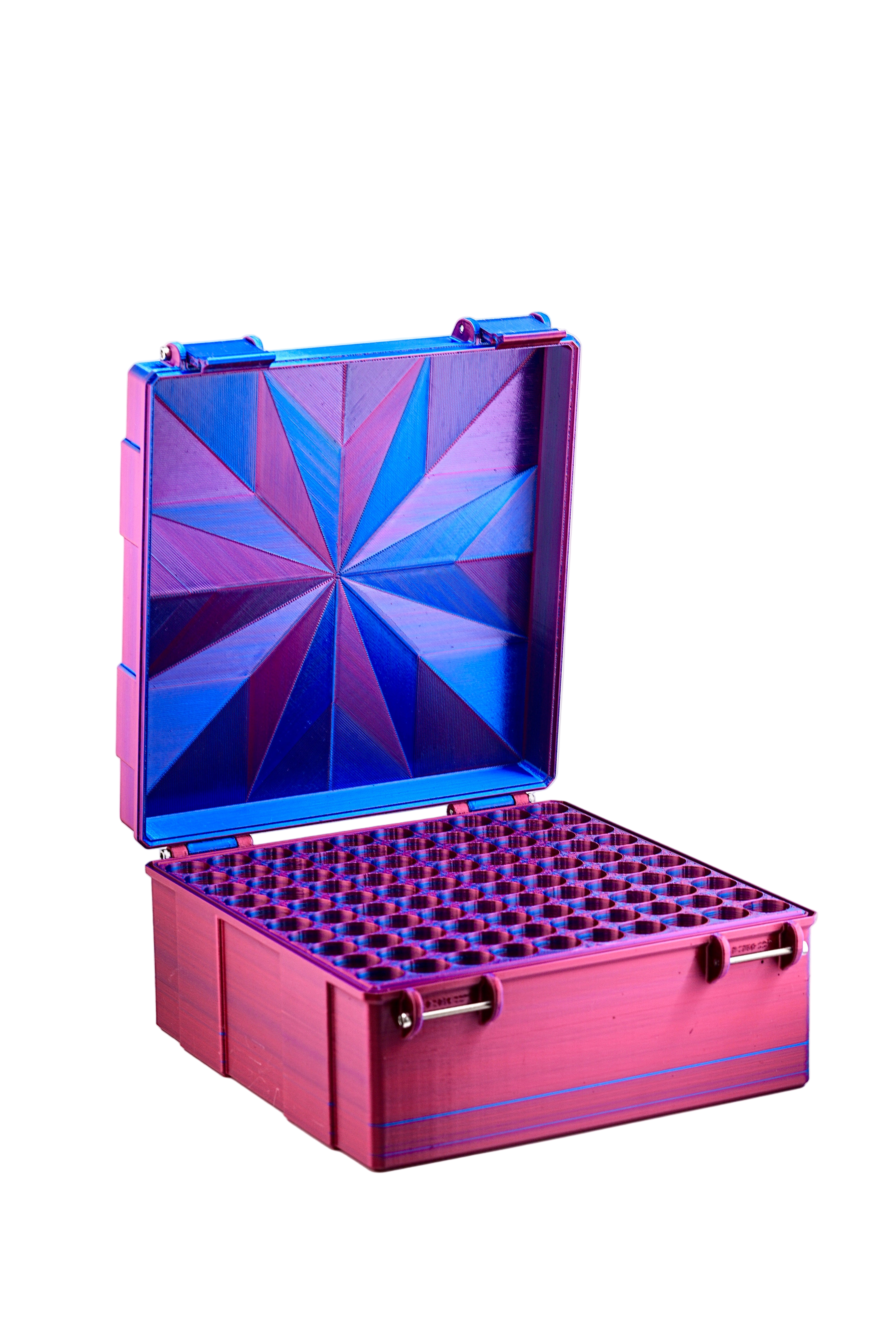
This is the core insight: a well-designed case doesn't look medical because good design doesn't announce itself. A custom case from the PeptideCase™ builder is a good example. You choose a solid Black or an RGB Metallic finish, and the only thing printed on the lid is whatever you decide to put there, or nothing at all. To anyone else it reads as a neat little organizer. To you, it's a fitted home for every vial.
The Best Cute and Discreet Peptide Cases in 2026
The Top Pick: A Custom Case You Design Yourself (PeptideCase™ Builder)
The cutest case is the one that fits your kit exactly and looks the way you want. In the builder you start with an empty case, tap "Add item" and pick what you carry and how many: 3 mL vials, 10 mL vials, peptide vials, a peptide pen, pen cartridges, syringes, alcohol pads or a BAC water bottle. Every item becomes fitted pockets or an open bay sized for that many, and Auto-arrange packs it all into the most compact layout, so the case is no bigger than it needs to be.
Then you make it yours: Black or RGB Metallic, a Wide or Deep shape, one latch or two, and an optional lid design with one or two lines of text, an icon from a large library or your own uploaded SVG logo, printed into the lid in a second color. The builder shows a top view, a lid view and a 3D view you can open, unlatch and drag to turn, so you see exactly what you're getting before you order.
Best for: anyone who wants a case that fits their exact kit and matches their style
Vials: whatever you add, in 3 mL, 10 mL or other sizes
Why it's "cute": compact, clean and personal. Your initials, an icon or your logo on the lid, and no clinical look at all.
The Compact Pick: A Ready-Made 10-Slot Compact Case
If you want something that fits in a jacket pocket or a small crossbody bag and reads as a minor tech accessory, a ready-made compact hard case with ten 3 mL slots is the simplest choice. Each vial sits in its own molded slot inside a closed hard shell, and the form factor is about the size of a sunglasses case. Nobody looks at it and thinks "medication." They think "probably earbuds or a USB drive."
It suits someone who keeps one or two kinds of vials and doesn't need supply storage built in. It's also easy to drop in a bag without adding bulk. The limit is the fixed layout: ten identical 3 mL slots and nothing else.
Best for: small kits, daily carry, gym bag, office discretion
Vials: up to 10 x 3 mL
Why it's "cute": small and unremarkable to outside observers. It doesn't look like anything medical.
The All-In-One: A Ready-Made All-in-One Case
For people who carry vials plus supplies and still want the whole thing to look intentional, a ready-made all-in-one case with twelve 3 mL slots and compartments for syringes, alcohol pads and a BAC water bottle keeps everything together. The exterior reads as a structured organizer, similar to a cable organizer or a small first aid kit. Nothing about it announces what's inside.
It's the right shape for anyone who keeps several kinds of vials and doesn't want to fumble with supplies from different bags. The trade-off is that the compartments are sized for an average kit, so your own supplies may not fit them neatly.
Best for: full-kit carry, several kinds of vials, anyone who wants supplies in the same case
Vials: 12 x 3 mL plus supply compartments
Why it's "cute": a structured hard-shell exterior with an organized interior. It looks like a serious person's travel kit, not a medical bag.
What Not to Buy
A short list of popular options that fail in practice:
- Pink zipper cosmetic pouches. Pretty, completely wrong. No structural protection, no light blocking, wrong dimensions for vials.
- Insulin cases with elastic loops. Sized for insulin pens and cartridges. 3 mL peptide vials don't sit securely, and the loops allow free movement that leads to breakage.
- Neoprene diabetic supply organizers. Neoprene compresses under weight. At the bottom of a gym bag with books or gear on top, your vials are unprotected.
- Craft supply organizers. Bead cases and embroidery floss organizers have slots, but those slots are sized for plastic, not glass. The fit is wrong and the material has no impact resistance.
Color-code your vials
Custom snap-on caps for 3 mL or 10 mL vials, with a cap color plus an icon or letters. Sets from 25 caps.
Color and Material: What Makes a Case Look Good While Protecting Vials
Two choices define how a peptide case looks and works.
A rigid hard shell is the standard for a quality vial case. It's stiff enough to protect glass, solid enough to block light, and clean-looking rather than medical. If you're judging a case on looks, check the surface and the seams first: a tidy, even finish with tight seams reads as designed; a thin, flexy shell reads as cheap.
Fitted pockets are what make the inside look as good as the outside. Pockets that hold each vial separately, rather than loose padding, look organized and intentional when you open the case, not like a jumble of foam and loose supplies. They also stay put; loose foam compresses and lets vials wobble over time.
On color: neutral is almost always right if discretion is the goal. A solid black case reads as intentional and draws no attention. If you'd rather have something with a bit more personality, a metallic finish like RGB Metallic looks deliberate rather than loud, and it's easy to find in a bag. Avoid candy colors and high-visibility patterns if you want the case to blend in.
Discretion at the Gym, Office, and Airport
The places where discretion matters most each have slightly different requirements.
At the gym: you need something small enough for a locker or a gym bag's outer pocket. A compact case wins here: it's pocket-sized and unremarkable, and a hard shell survives being tossed on a bench or into a bag.
At the office: your case will be on your desk, in your bag or in a drawer, and it may have to sit somewhere visible. The key is the clean, structured look: it reads as a tech accessory, not a pharmaceutical kit. Don't leave vials loose in a drawer, and don't pull out a soft medical pouch. A clean hard case that closes completely is what you want at work.
At the airport: screening is where a well-organized case earns its keep. A structured case with clearly separated vials and supplies goes through the X-ray looking like an organized kit. The officer may still pull it for inspection, and that's fine. What you want to avoid is the alternative: a zip bag of rolling vials, loose syringes and random supplies that raises questions. Keep items in their original labeled packaging where you can, carry your paperwork, and check current TSA rules. For more, see our TSA guide for traveling with peptides.
Pro Tip: The most discreet case is an organized one. A cluttered bag of loose vials looks far more suspicious than a clean, structured case with everything in its place. Discretion isn't only about the outside of the case; it's about what an officer, a coworker or gym staff see when it opens.
Make your own custom cute peptide case
If "cute" means a case that's small, tidy and unmistakably yours, designing it yourself is the most direct route. Start with an empty case, tap "Add item" and add only what you carry: a few 3 mL vials, a 10 mL vial, a pen or some alcohol pads. The planner arranges everything into the most compact layout, the tallest item sets the height, and shorter vials stand on a raised floor so every vial top lines up neatly at the rim. Every storage space has a finger scoop.
Then style it. Pick Black for low-key or RGB Metallic for a bit of shine, choose a Wide or Deep shape, and add a lid design: your initials, a short word, an icon from the library or your own SVG logo, printed in a second color. The builder checks that the design is thick enough to print sharply, and the 3D view lets you turn the case around before you order. It's printed to order in the US at exactly the size shown.
Gifting a Peptide Case: What to Buy for Someone Starting Out
A peptide case is a practical, thoughtful gift for anyone who has just started keeping vials. If someone in your life has a new GLP-1 prescription or a first set of peptide vials, a good case is genuinely useful and probably something they haven't thought to buy yet.
For gifting, a custom case is the most personal option: put their initials, a name or an icon they love on the lid, and build the inside around what they keep. If you don't know their exact kit, ask how many vials they keep and what sizes before you design it. Custom cases are made to order and final sale (printing defects are still replaced), so it's worth getting the contents right.
A ready-made compact case also works well as a small add-on gift alongside other organizers, such as a label maker or colored vial caps. Either way, the recipient gets something that solves a problem they may not know they have yet: what to do with their vials once they arrive. Most first-timers put vials in a drawer, a zip bag or a random spot in the fridge. A dedicated case changes that immediately.
Bottom Line: What to Actually Buy
The search for a cute peptide case ends when you stop looking in the cosmetics aisle and start looking at well-designed compact hard cases built for vials. The look you want, clean, minimal and not medical, is fully achievable without giving up light blocking, impact resistance or proper fit.
For most people, the call is simple:
- Want a case that fits your exact kit and looks the way you like: design your own in the builder.
- Keep only a few 3 mL vials and want something pocket-sized off the shelf: a ready-made 10-slot compact hard case.
Both are discreet, both are protective, and neither looks like something from a hospital. That's the standard, and that's what "cute" actually means when vials are involved.
For the full breakdown of cases across every category, see our complete peptide case buyer's guide.