
A lot of people search for "buying peptides in Mexico" while planning a trip south of the border. We don't cover where or how to buy anything, and we don't give advice on bringing compounds across a border. Those rules belong to US Customs and Border Protection, Mexican authorities and your prescriber, and they change.
What we can help with is the part every traveler with vials deals with: packing. Heat, long lines, bumpy roads and beach bags are hard on glass, and a good case handles all of it.
Design a travel case for your next trip
Add the vials and supplies you carry. The builder shows the exact size, so you know it fits your cooler or carry-on.
What this page covers (and what it doesn't)
This page is about protecting vials you already have, such as your own prescribed medication, on a trip to or through Mexico. It is not a guide to buying, importing or declaring anything.
Before any trip with medication, check the current rules yourself:
- US Customs and Border Protection (CBP) for what you may carry when you return to the US.
- Mexico's current rules for what visitors may bring in.
- Your airline or cruise line for carry-on and medication policies.
- Your prescriber or pharmacist for anything specific to your medication.
Keep medication in its original labeled packaging where you can, and carry your prescriptions or a letter from your prescriber.
Why a Mexico trip is hard on glass vials
Trips to Mexico tend to combine every tough condition for vials at once:
- Heat. A parked car in a border town or a beach parking lot gets very hot, very fast.
- Waiting. Land crossings can mean long lines in a car or on foot, with your bag on your shoulder or the floor.
- Rough handling. Bumpy roads, shuttle buses, tender boats at cruise ports and bags tossed onto luggage racks.
- Sand and spills. Beach bags, pool bags and cooler meltwater.
Loose vials in a toiletry bag, or in a soft pouch that crushes when something lands on it, don't survive that well. A hard case with a fitted pocket for each vial does.
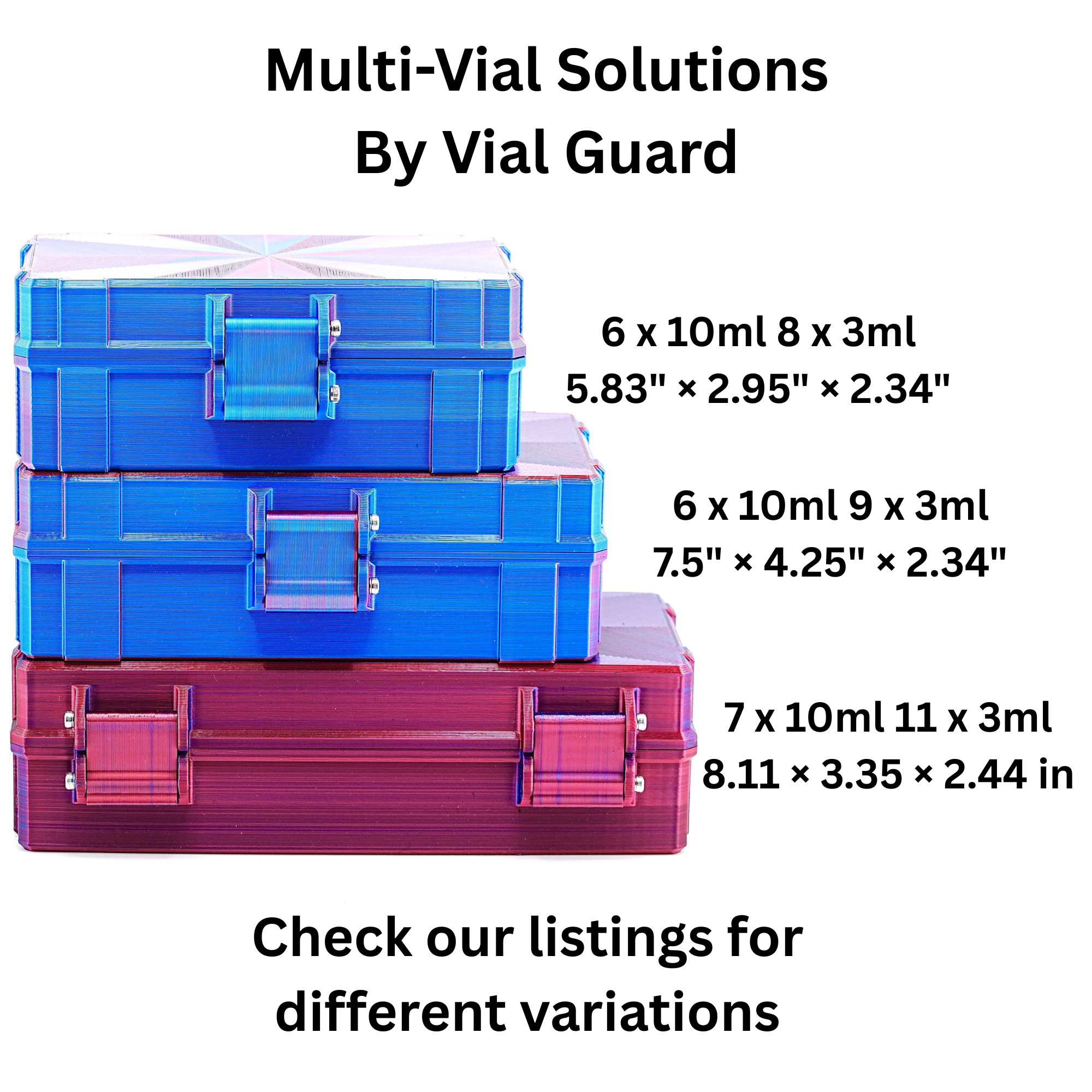
Packing list for a trip with vials
- A hard case with fitted pockets, so vials stand upright and can't touch each other.
- A small cooler and gel cold packs, if your label says to keep the vials cold. Wrap each pack in a cloth so it doesn't press against the glass.
- A small digital thermometer, if you like to keep an eye on the cooler.
- Your prescriptions and labels, in a zip bag where you can reach them.
- Labels on every vial with the name and dates, in case an original label gets wet. See how to label vials.
Remember that the case is a protective organizer, not a cooler. It keeps vials still, upright and in the dark; a cooler with cold packs does the cooling when your label calls for it. For temperature, follow the storage instructions on your product label or from your pharmacist or provider.
Car, flight or cruise: where the case rides
By car: keep the case in the cabin with you, not the trunk, and never leave it in a parked car. If you stop to eat or sightsee, the case comes along.
By plane: carry it on. Keep the case in your carry-on or personal item, never in checked luggage. Check TSA's and your airline's current rules for medical items before you fly; our TSA guide covers the basics, and our international travel guide covers longer trips.
By cruise: check the cruise line's medication policy, keep the case in your cabin, and if your label says refrigerate, confirm the cabin fridge is actually cold before relying on it.
At the hotel: same check for the minibar fridge. Keep the whole case on one shelf rather than spreading vials around.
Cheap imported cases vs a case printed to order in the US
If you were shopping for anything on this trip, it might be a case. Market stalls and online marketplaces are full of generic pill boxes, soft pouches and one-size foam cases. The trouble is fit: a fixed grid made for someone else's vials leaves yours leaning in oversized pockets, or doesn't have room for a 10 mL vial or a water bottle at all.
A case printed to order works the other way around. You tell it what you carry, and it is built to that: the size you see is exactly what gets printed, on the maker's own print farm in the US. It isn't the cheapest option on a market table, but it fits your vials on the first try.
When you get home
- Unpack the case first. Put it wherever your labels say the vials belong.
- Check every label and vial. Replace any label that got wet, and look for cracked glass or damaged stoppers.
- Ask if unsure. If a vial got hot, frozen or wet on the trip, ask your pharmacist or provider before using it.
- Restock the case so it is ready for the next trip.
Make your own custom travel case for a Mexico trip
The PeptideCase™ builder lets you design a travel case around exactly what you bring. Start with an empty case, tap "Add item" and choose 3 mL vials, 10 mL vials, peptide vials, TRT vials, a BAC water bottle, syringes, alcohol pads, pens or pen cartridges, in the quantities you carry. Each item becomes fitted pockets or an open bay sized for that count, with a finger scoop for every space.
The tallest item sets the case height, and shorter vials stand on a raised floor so every top lines up at the rim. Auto-arrange packs everything into the most compact layout, and the builder shows the exact length, width and height, so you can check it fits inside your cooler or carry-on before you order. Add a temperature sensor window for a small digital thermometer, choose one or two latches, and put your name on the lid in a second color in case your bag goes astray. Design your travel case