The popular conversation about peptides and fat loss begins and ends with GLP-1 agonists. That conversation is understandable — semaglutide and tirzepatide represent legitimate clinical breakthroughs. But if you stop at GLP-1, you are looking at one lane of a six-lane highway. Fat loss through peptide biochemistry encompasses growth hormone lipolysis, direct adipocyte fat oxidation, nutrient partitioning via insulin-like growth factor, melanocortin appetite suppression, gut-metabolic optimization, and more.
This guide covers all of it. We rank the 10 best peptides for fat loss in 2026 across every mechanism, with full context on how each one works, what the data actually shows, what a realistic protocol looks like, and — because potency means nothing if storage degrades the compound before it reaches your system — complete storage requirements for every entry. We also include a stack-by-goal section at the end for those who want to combine mechanisms for amplified results.
The Rankings: Every Fat-Burning Peptide Mechanism in 2026
#1 — Retatrutide
Mechanism: GLP-1/GIP/Glucagon Triple Agonist
Retatrutide is the highest clinical fat loss compound ever tested in a human trial. It simultaneously activates three receptors: GLP-1 (appetite suppression, improved insulin sensitivity, slowed gastric emptying), GIP (additional insulin sensitization, direct adipocyte signaling, muscle preservation), and glucagon (increased energy expenditure, hepatic fat mobilization, thermogenesis). The glucagon receptor component is the differentiator — it turns up the body's caloric burn rate at the same time the other two receptors are reducing caloric intake. Nothing else on this list attacks fat loss from all three angles simultaneously.
Clinical Results: Phase 2 data at 12mg weekly showed 24.2% average body weight reduction at 48 weeks. This number has not been matched by any other pharmaceutical compound outside bariatric surgery. Phase 3 trials are ongoing. Compounded versions have entered the telehealth and research marketplace.
Typical Protocol: Weekly subcutaneous injection. Titration from low dose (2mg) escalating over months to a target maintenance dose. Requires consistent dosing discipline — skipped injections during titration can reset tolerance and cause restart side effects.
Storage Requirements: Refrigerate at 2–8°C. Do not freeze. Protect from light — the glucagon-pathway component is particularly vulnerable to photodegradation. Lyophilized powder (unreconstituted) is stable up to 24 months refrigerated. Once reconstituted, use within 28–60 days depending on compounding formulation. Compounded vials are exclusively multi-dose; a case that provides insulated, light-protected, secure multi-vial storage is essential for anyone managing a retatrutide protocol. Full details in our retatrutide storage guide.
#2 — Tirzepatide
Mechanism: GLP-1/GIP Dual Agonist
Tirzepatide's fat loss profile is stronger than semaglutide's for a specific reason: the GIP receptor component is expressed on adipocytes directly, meaning tirzepatide drives fat cell metabolism in addition to central appetite suppression. The result is better body composition outcomes — people on tirzepatide tend to preserve more lean muscle mass relative to total weight lost compared to semaglutide monotherapy. This is not a minor distinction for people focused on body recomposition rather than pure scale weight.
Clinical Results: SURMOUNT-1 showed 20.9% body weight reduction at 72 weeks at 15mg. SURPASS trials confirmed excellent glycemic outcomes. In 2026, tirzepatide is available through Mounjaro/Zepbound pens and widely through compounding pharmacies as multi-dose vials.
Typical Protocol: Weekly subcutaneous injection starting at 2.5mg, titrating every 4 weeks to target dose (commonly 10mg or 15mg). Compounded vials require insulin syringe draw; branded pens are self-contained.
Storage Requirements: Refrigerate at 2–8°C continuously. Branded pens tolerate room temperature (up to 30°C) for 21 days. Compounded vials must remain refrigerated. Do not freeze. Light sensitive — store in original packaging or an opaque case. For the full protocol, see the tirzepatide storage guide and our GLP-1 storage comparison for tirzepatide and semaglutide.
#3 — Semaglutide
Mechanism: GLP-1 Agonist
Semaglutide is the benchmark. The compound that proved pharmaceutical-grade fat loss was possible, that reshaped endocrinology and obesity medicine, and that remains the most prescribed GLP-1 agonist globally in 2026. Its mechanism is pure GLP-1 receptor agonism — central appetite suppression via hypothalamic and brainstem GLP-1 receptors, delayed gastric emptying for prolonged satiety, and improved pancreatic insulin secretion. The fatty acid chain modification gives it a half-life that supports once-weekly dosing.
Clinical Results: STEP 1 trial at 2.4mg weekly: 14.9% body weight loss at 68 weeks. Lower dose (1.0mg Ozempic): 6.5% average. The most-studied GLP-1 compound with the most robust long-term safety data in the category. Compounded semaglutide delivers the same molecule at a fraction of the branded cost.
Typical Protocol: Weekly subcutaneous injection. Titration from 0.25mg over 16–20 weeks to reach 2.4mg. Available as branded auto-injector pens and compounded multi-dose vials.
Storage Requirements: Refrigerate at 2–8°C. Branded pens stable at room temperature (up to 30°C) for 28–56 days once in use. Compounded vials require continuous refrigeration. Light sensitive. Compounded semaglutide storage is the single most commonly mismanaged variable among people on weight loss protocols — see our compounded semaglutide storage guide for the details that matter most.
#4 — AOD-9604
Mechanism: Direct Fat Oxidation via hGH Fragment
AOD-9604 is where the list gets interesting for people who are not GLP-1 candidates or who want targeted fat oxidation without any appetite suppression. This synthetic fragment of human growth hormone (amino acids 176–191 of the hGH C-terminus) was specifically engineered to isolate the lipolytic properties of hGH. It stimulates fat breakdown in adipocytes through a beta-3 adrenergic-like mechanism and simultaneously inhibits new fat storage (lipogenesis). Critically, it does not affect blood glucose, does not raise IGF-1, and has no anabolic properties. It is a pure fat metabolism modulator.
Clinical Results: Phase 2 trials showed 3–4% direct reductions in adipose tissue, particularly visceral and abdominal fat. More meaningfully in a stacking context, AOD-9604 adds a targeted fat oxidation layer on top of GLP-1 appetite suppression without adding side effect load. It has been a consistent component of advanced body recomp stacks for this reason.
Typical Protocol: 250–500mcg subcutaneous injection once or twice daily, typically fasted (before breakfast and/or before bed). Comes as lyophilized powder requiring reconstitution with bacteriostatic water. Research peptide, not FDA-approved.
Storage Requirements: Lyophilized powder stable at 2–8°C for 24+ months; can be frozen at -20°C for very long-term storage. Once reconstituted, refrigerate at 2–8°C and use within 30 days. Highly light sensitive — always store in amber vials or opaque containers. Twice-daily dosing means frequent vial access; a structured case that protects the vial between uses is essential for stability. See the full AOD-9604 storage guide.
Pro Tip: AOD-9604 and GLP-1 agonists work through completely different pathways and do not compete or interfere with each other. Stacking AOD-9604 with semaglutide or tirzepatide adds direct adipocyte fat oxidation on top of appetite suppression — a true mechanism synergy that many body recomp-focused users find produces better fat loss without increased side effects versus increasing the GLP-1 dose alone.
#5 — CJC-1295 + Ipamorelin
Mechanism: GH Lipolysis via GHRH/GHRP Synergy
This combination stack is the gold standard for growth hormone-driven fat loss and body recomposition. CJC-1295 (without DAC) is a GHRH analog — it mimics the body's natural growth hormone-releasing hormone signal, extending and amplifying GH pulses. Ipamorelin is a selective GHRP that triggers GH release from the pituitary without the cortisol, prolactin, or appetite side effects of older GH secretagogues like GHRP-2 or GHRP-6. Together, they produce a clean, synergistic GH pulse. Elevated GH directly drives lipolysis — the release of stored fatty acids from adipocytes for use as fuel — and supports lean mass preservation simultaneously. The fat loss is real but operates on a different timeline than GLP-1 agonists: body recomposition over 12–24 weeks rather than rapid scale weight reduction.
Clinical Results: No large RCTs for fat loss specifically, but extensive research on GHRH analogs and GH secretagogues consistently shows improved body composition — reduced fat mass, increased lean mass — over multi-month protocols. Real-world results are strongest when combined with resistance training and adequate protein intake, which allow the GH-driven lipolysis to translate into visible body composition change.
Typical Protocol: CJC-1295 (without DAC) 100–300mcg + Ipamorelin 100–300mcg, co-injected subcutaneously 2–3 times daily — typically once before bed and once first thing in the morning on an empty stomach to optimize GH pulse timing. Each compound is a separate lyophilized vial, or some compounders offer a pre-mixed formulation.
Storage Requirements: Both lyophilized powders store at 2–8°C or frozen (-20°C) for up to 24 months unreconstituted. Once reconstituted, refrigerate at 2–8°C and use within 30 days. Light sensitive. The twice-to-three-times daily dosing creates more vial handling than any other compound on this list — which means more temperature excursion risk per vial lifetime. A case that holds both vials simultaneously and keeps them cool and dark between draws is not optional at this dosing frequency. See the CJC-1295 + Ipamorelin storage guide and the ipamorelin storage guide for stability specifics.
#6 — Melanotan 2
Mechanism: Melanocortin Appetite Suppression + Fat Mobilization
Melanotan 2 activates the melanocortin system — specifically MC3R and MC4R receptors. MC4R activation in the hypothalamus produces appetite suppression that is chemically distinct from GLP-1 receptor agonism, making MT-2 useful as either a standalone or a complementary agent. MC3R activation on adipocytes promotes fat mobilization. The appetite suppression from MT-2 can be notably stronger than GLP-1 at equivalent weight loss rates, though the off-target effects (skin tanning, other MC4R-mediated effects) require users to manage side effects carefully. In body recomp contexts, MT-2 is used to amplify caloric deficit beyond what GLP-1 alone achieves.
Clinical Results: Research peptide with no approved indication. Phase 1/2 studies showed significant reductions in food intake and measurable visceral fat reduction. Primarily used in research and advanced biohacking protocols. Real-world experience in stacking contexts is well-documented in the body recomp community.
Typical Protocol: 0.5–1.0mg subcutaneous injection every 2–3 days. Lyophilized powder requiring reconstitution. Cycle length typically 8–12 weeks with breaks to manage tachyphylaxis and side effects.
Storage Requirements: Refrigerate at 2–8°C or freeze at -20°C for long-term unreconstituted storage (up to 24 months). Once reconstituted, refrigerate and use within 30 days. Extremely light sensitive — MT-2 is among the most photodegradable peptides in common use. Store in amber glass or wrapped opaque containers. Never leave in sunlight even briefly. A single vial at typical dosing covers 14–28 days, so maintaining one active and one backup vial refrigerated simultaneously is standard practice.
#7 — GHRP-6
Mechanism: GH Pulse Stimulation with Appetite Stimulation Trade-off
GHRP-6 is an older GH secretagogue — a growth hormone-releasing peptide that produces powerful GH pulses and the associated lipolytic benefits. The GH elevation drives fat oxidation, lean mass preservation, and metabolic improvement over time. However, GHRP-6 carries a significant double-edged characteristic that places it lower on this fat loss list: it strongly stimulates appetite via ghrelin receptor activation. For fat loss purposes, you are getting the GH-driven lipolysis benefit while simultaneously fighting increased hunger — a direct contradiction with any caloric restriction strategy. This is why most modern body recomp protocols have migrated to ipamorelin, which provides selective GH release without the appetite spike.
Clinical Results: GHRP-6 GH release is well-documented and robust. Fat loss outcomes in isolation are meaningful over long protocols, but the appetite stimulation effect significantly undermines net caloric deficit. Best deployed in lean-bulk or body recomp phases where increased appetite is acceptable or even desirable for caloric targets.
Typical Protocol: 100–300mcg subcutaneous injection 2–3 times daily on an empty stomach. Lyophilized powder. Typically stacked with a GHRH analog (CJC-1295) for synergistic GH pulse amplification.
Storage Requirements: Lyophilized powder stable at 2–8°C for 24 months; freeze at -20°C for longer storage. Once reconstituted with bacteriostatic water, refrigerate and use within 30 days. Moderate light sensitivity — less photolabile than MT-2 or AOD-9604 but still requires opaque or refrigerated storage. Vials should not be left at room temperature for extended periods between doses.
#8 — Sermorelin
Mechanism: GHRH-Stimulated GH for Sustainable Body Recomposition
Sermorelin is the original GHRH analog — a 29-amino acid fragment of endogenous GHRH that stimulates pituitary GH release through the body's own regulatory axis. It produces gentler, more physiological GH increases compared to synthetic secretagogues, which is both its limitation for aggressive fat loss and its advantage for long-term, sustainable use. The GH elevation from sermorelin drives lipolysis and body recomposition over extended protocols (6–12 months), with a safety and tolerability profile that makes it appropriate for older adults looking to reverse age-related body composition decline.
Clinical Results: Multiple studies on sermorelin in adults with age-related GH decline show improvements in body fat percentage, lean mass, energy, and sleep quality over 6–12 month protocols. Fat loss is real but gradual — typically 2–5% reduction in body fat percentage over a full treatment course. Not a rapid intervention.
Typical Protocol: 200–500mcg subcutaneous injection once daily, typically before sleep to align with natural GH pulsatility. Lyophilized powder requiring reconstitution. Often used continuously for 6–12 months with periodic breaks.
Storage Requirements: Lyophilized powder: refrigerate at 2–8°C (up to 24 months) or freeze at -20°C for extended storage. Once reconstituted, refrigerate and use within 30 days. Light sensitive — store in amber vials or covered containers. Once-daily dosing is the most storage-friendly protocol on this list; one vial access per day minimizes temperature excursion risk. Standard refrigeration with light protection is sufficient for most users.
Pro Tip: Sermorelin, CJC-1295, and ipamorelin all require refrigeration once reconstituted and are all light-sensitive. If you are running multiple GH-axis peptides simultaneously — which is common in advanced protocols — a multi-vial storage case is not just convenient, it is the only practical way to maintain proper storage conditions for every compound without dedicating an entire refrigerator shelf to individually wrapped vials. See our guide to the top 10 peptide storage cases and the full peptide shelf life guide for reconstituted stability data across compounds.
#9 — IGF-1 LR3
Mechanism: Insulin-like Nutrient Partitioning for Indirect Fat Loss
IGF-1 LR3 is a long-acting analog of insulin-like growth factor-1 with an extended half-life (20–30 hours versus 12–15 minutes for native IGF-1). Its fat loss mechanism is indirect but meaningful: IGF-1 acts as a potent nutrient partitioning agent, directing glucose and amino acids into muscle cells preferentially over fat cells. The result is that caloric intake is more likely to be used for muscle protein synthesis than fat storage. Over a body recomp cycle, this shifts body composition — more muscle, less fat — even at maintenance calories. It also suppresses myostatin, supporting lean mass accrual that further increases basal metabolic rate.
Clinical Results: Direct clinical data on IGF-1 LR3 for fat loss specifically is limited, but the nutrient partitioning mechanism is well-established in the growth factor literature. Real-world body recomp results are consistently reported in resistance training contexts where the compound's muscle-sparing effect amplifies fat loss outcomes over 4–6 week cycles.
Typical Protocol: 20–100mcg subcutaneous injection once daily post-workout. Used in cycles of 4–6 weeks due to receptor downregulation. Requires very careful dosing — IGF-1 LR3 is highly potent and hypoglycemia is a real risk at higher doses. Lyophilized powder requiring reconstitution. Research peptide only.
Storage Requirements: Among the most storage-sensitive compounds on this list. Lyophilized powder: store at 2–8°C or frozen at -20°C. Once reconstituted, IGF-1 LR3 is particularly vulnerable to degradation — use within 2–3 weeks of reconstitution at maximum. Highly light sensitive. Should be reconstituted with 0.6% acetic acid rather than plain bacteriostatic water for optimal stability. Store in small-volume aliquots if possible to minimize repeated freeze-thaw cycles. Handles should be minimized — each vial access is a degradation event for this compound.
#10 — BPC-157
Mechanism: Gut Health and Metabolic Optimization for Indirect Fat Loss
BPC-157 (Body Protection Compound-157) is a synthetic pentadecapeptide derived from a gastric protein sequence. Its primary reputation is as a healing and recovery peptide — and that reputation is well-earned — but its relevance to fat loss is through gut-metabolic optimization. BPC-157 upregulates growth hormone receptors in the gut, improves gut microbiome diversity, heals intestinal permeability, and modulates the gut-brain axis. These effects translate to better metabolic signaling, reduced inflammation-driven fat storage, and improved nutrient utilization. For users experiencing GI side effects from GLP-1 agonists, BPC-157 is frequently added to the protocol stack to maintain gut integrity and metabolic function.
Clinical Results: Primarily rodent study data for the metabolic effects, with robust human anecdotal evidence in the recovery and gut health context. Fat loss is indirect — BPC-157 does not directly burn fat — but the metabolic optimization it provides creates a better environment for every other fat loss compound on this list to work effectively. Particularly valuable when running multiple compounds simultaneously, as gut health is the foundation of metabolic efficiency.
Typical Protocol: 200–500mcg subcutaneous injection once to twice daily, or oral administration for gut-specific effects. Lyophilized powder. Cycles of 4–12 weeks are common; many users run it continuously at lower doses as a supportive compound.
Storage Requirements: Lyophilized powder: stable at 2–8°C refrigerated (up to 24 months) or frozen at -20°C. Once reconstituted, refrigerate and use within 30 days. Moderate light sensitivity. BPC-157 is one of the more stable peptides once reconstituted but still requires consistent refrigeration. See the BPC-157 storage guide for reconstitution details and stability data.
Best Fat Loss Stacks by Goal
The real leverage in peptide fat loss comes from combining mechanisms. Appetite suppression + direct fat oxidation + GH lipolysis each target different physiological pathways — combining them produces additive effects that no single compound can match. Here are three evidence-informed stacks by goal, with storage implications for each.
Stack A: Maximum Speed — Retatrutide Solo
For maximum fat loss velocity, retatrutide solo at a titrated dose is the current clinical gold standard. The triple agonism covers appetite suppression (GLP-1), adipocyte signaling and muscle preservation (GIP), and caloric expenditure increase (glucagon) simultaneously. No additional compounds are needed for primary fat loss — the mechanism coverage is comprehensive. The primary stack consideration is supporting compounds for side effect management: BPC-157 for gut integrity during aggressive weight loss, and potentially low-dose sermorelin for GH axis support during rapid body weight change.
Storage requirement: 1–3 vials active simultaneously. Dedicated refrigerated case with light protection is essential. See the retatrutide dosing protocol and retatrutide weight loss results for full protocol context.
Stack B: Body Recomposition — Tirzepatide + CJC-1295/Ipamorelin
For people whose goal is fat loss with simultaneous lean mass building — the true body recomposition outcome — combining tirzepatide's GLP-1/GIP dual agonism with CJC-1295 + ipamorelin's GH-driven lipolysis creates a highly synergistic protocol. Tirzepatide handles appetite suppression and insulin sensitization; CJC/ipamorelin stimulates GH pulses that drive lipolysis and muscle protein synthesis. The GIP component of tirzepatide and the GH axis stimulation complement each other particularly well for body composition outcomes that show on the physique rather than just the scale.
Storage requirement: 3 active vials simultaneously (tirzepatide + CJC-1295 + ipamorelin). Multi-vial organization and consistent refrigeration are non-negotiable. A dedicated storage case that holds all three compounds in a single organized location — eliminating the scramble of individually wrapped vials across a refrigerator shelf — is the practical requirement for running this stack consistently. Compare the top peptide storage cases to find the right fit for a three-vial protocol.
Stack C: Targeted Fat Oxidation — AOD-9604 + CJC-1295/Ipamorelin
For users who want fat loss focused specifically on stubborn adipose deposits without appetite suppression — or who are using a GLP-1 separately and want to add targeted fat oxidation on top — AOD-9604 combined with CJC-1295/ipamorelin is the most direct mechanism combination available. AOD-9604 stimulates direct lipolysis in adipocytes via beta-3 adrenergic-like pathways; CJC-1295/ipamorelin amplifies GH-driven lipolysis systemically. Neither compound touches appetite, blood glucose, or insulin significantly, making this stack well-tolerated and stackable with essentially anything else in the list.
Storage requirement: 3 active vials (AOD-9604 + CJC-1295 + ipamorelin), all requiring refrigeration, all light sensitive, with frequent daily access for the AOD-9604 twice-daily and CJC/Ipa twice-to-three-times-daily schedules. This is the highest-frequency dosing stack on the list — up to 5 injections per day pulling from 3 separate vials. Organization and protected storage are not convenience features; they are the infrastructure that makes the protocol executable on a daily basis. See our AOD-9604 storage guide and CJC-1295 + Ipamorelin storage guide for compound-specific requirements.
Why Storage Is the Deciding Variable
Every compound on this list is a peptide — a chain of amino acids that is structurally fragile in ways that small molecules like statins or antihypertensives are not. Peptides denature with heat. They degrade with light exposure. They lose potency with improper pH or contamination. A peptide that looks identical in the vial after being left on a counter for two hours may have lost 10–30% of its biological activity. You will not see the degradation, but you will see the results — or the lack of them.
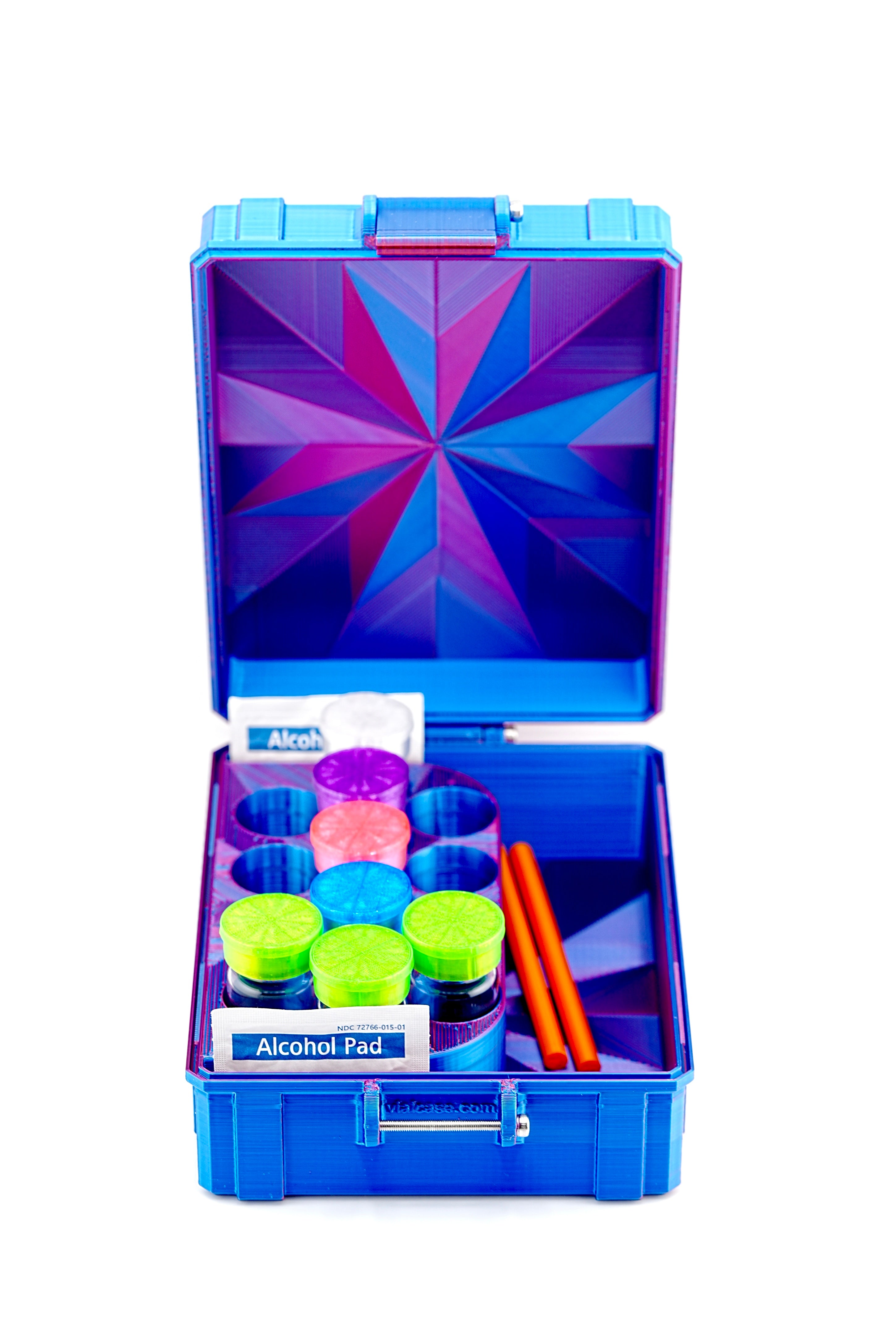
The clinical trial results cited in this guide were produced under controlled, consistent storage conditions. Replicating 24.2% weight loss or meaningful body recomposition in the real world requires the same discipline. That means a dedicated storage case — one that provides insulation against temperature excursions, complete light protection, secure vial retention to prevent breakage, and organized multi-vial capacity for users running stacks.
Whether you are managing a single retatrutide vial or a three-compound stack, the case is the infrastructure that makes the protocol work. Browse our guide to the best GLP-1 storage cases and the top 10 peptide storage cases — or check the full peptide shelf life guide for reconstituted stability benchmarks across every compound in this list.
This content is for informational and educational purposes only and does not constitute medical advice. Always consult a licensed healthcare provider before beginning any peptide or hormone protocol.