What Makes GLP-1 Storage Different
Most research peptides are dosed daily or every other day, which means vials turn over quickly. A 3ml vial of BPC-157 dosed twice daily is gone in a week or two. GLP-1 compounds — semaglutide, tirzepatide, and retatrutide — are dosed weekly. That same 3ml vial of retatrutide might sit in your fridge for five or six weeks between reconstitution and final dose.
That duration changes the storage equation entirely. Light exposure, temperature fluctuations, and physical handling all accumulate over those weeks in a way they simply don't for daily-dosed peptides. A vial that opens and closes in ten days faces a fundamentally different degradation challenge than one sitting refrigerated for six weeks — accumulating ambient light exposure every time the fridge door opens, absorbing minor temperature swings from the door shelves, and handling risk every time it's picked up for inspection. The case you choose needs to account for all of this.
The 5 Features a GLP-1 Case Must Have
1. Complete Light Blocking
Amber glass vials are a partial solution. They filter some UV and blue-spectrum light, but they transmit significant visible light — and GLP-1 compounds are sensitive across a broader spectrum than most users assume. A vial in an amber glass container sitting on an open fridge shelf is still accumulating light degradation with every door opening.
A fully opaque hard-shell case eliminates this entirely. The vial never sees light from the moment it goes into the case. Over a six-week reconstituted shelf life with 15–20 fridge openings per day, that's roughly 600–900 light-exposure events blocked. That accumulated protection is measurable in potency at end of vial.
2. Correct Vial Slot Size
Compounded GLP-1 vials come in two dominant sizes: 3ml and 10ml, depending on the compounding pharmacy and concentration. A case with the wrong slot dimensions isn't just inconvenient — it actively causes damage. A 3ml vial rattling in a 10ml slot chips the rubber stopper over time, creating contamination risk and dose consistency problems. A 10ml vial doesn't fit a 3ml slot at all.
Know your vial size before ordering. Most retatrutide is compounded in 3ml. Semaglutide and tirzepatide are available in both. When in doubt, measure the vial diameter at the widest point — 3ml vials are typically 14–15mm diameter; 10ml are 22–24mm. The right case has precision foam seats matched to your actual vial dimensions.
Check your pharmacy: Some compounding pharmacies use non-standard vial sizes (2ml, 5ml, 8ml). If your vials look different from a standard 3ml or 10ml, contact VialCase before ordering — custom configurations are available for non-standard sizes.
3. Fridge-Ready Dimensions
A GLP-1 case lives in your fridge permanently. It needs to fit on the back of a middle shelf without dominating the available space or preventing the shelf from closing properly. Cases that are too tall tip forward when the shelf slides out. Cases that are too wide block airflow and crowd everything else in the fridge.
The ideal GLP-1 case has a low, flat profile — wide enough to hold your vials securely but short enough to fit under fridge shelves without adjustment. It should slide in and out cleanly with one hand, stay upright without support, and leave room on the shelf for other items. This sounds basic, but most generic cases fail this test in everyday kitchen refrigerators.
4. Insulation for Travel
GLP-1 users travel — sometimes for medical tourism to access compounded vials, sometimes for business on a weekly dosing schedule, sometimes for vacation where missing a dose isn't an option. Every one of those trips creates a cold-chain gap between your fridge and your destination.
Insulated lining with gel cold-pack compatibility maintains 2–8°C for 4–8 hours without active refrigeration. That covers the overwhelming majority of travel scenarios: cross-town commutes, domestic flights, full day trips. The gel pack (not ice) is important — ice sits at 0°C and can freeze the vial if it's in direct contact, crossing the hard line for reconstituted GLP-1 storage. Gel packs maintain temperature near 4°C, well inside the safe zone. See our TSA travel guide for flying with peptides.
5. Space for Syringes and BAC Water
A GLP-1 protocol doesn't just involve vials. It involves insulin syringes, reconstitution syringes, alcohol prep wipes, and a 10ml BAC water vial that needs to stay refrigerated alongside your compound. A case that only fits peptide vials forces you to organize everything else separately — which means things go missing, needles end up loose in the fridge, and reconstitution becomes a scavenger hunt.
The best GLP-1 cases include a dedicated section for syringes and a slot for the BAC water vial. Everything your protocol requires lives in one organized, portable unit that comes out of the fridge as a complete kit.
Why Cheap Alternatives Fail
Ziploc Bags
No light blocking (translucent plastic transmits most of the visible spectrum), no impact protection, no insulation, and no organization. They look suspicious in airport security — a bag of glass vials and syringes is the opposite of "obviously a medical item." They also don't seal well in humid fridge environments, and condensation collects inside the bag, degrading labels and making vial identification impossible after a few weeks.
Generic Medicine Organizers
Pill organizers and generic medicine boxes are designed for tablets and capsules, not glass vials. The slots are the wrong shape, there's no impact protection, no insulation, and most are semi-translucent. They're also not designed for fridge use — the plastic becomes brittle at low temperatures and latches fail. A generic organizer will work for two weeks before something breaks or falls out.
Leaving Vials in Original Packaging
Compounding pharmacies typically send vials in cardboard boxes with basic foam inserts — adequate for shipping, not for weeks of daily-use fridge storage. The cardboard absorbs moisture over time, the foam inserts aren't precision-matched to the vials, and there's no organization system for tracking which vial is which. It's the default but not a real storage solution.
The TSA point: A purpose-built hard-shell case with labeled, organized vials communicates "legitimate medical equipment" instantly at security. A Ziploc bag with loose vials and syringes communicates the opposite. TSA agents have discretion — presentation matters more than most travelers expect.
What NOT to Look For
A few over-engineered options show up in peptide forums that add cost and complexity without adding real protection:
- Dedicated mini-fridges or smart coolers — unless you're storing large quantities, a purpose-built case inside a standard refrigerator is more reliable, more portable, and far cheaper. A $300 smart peptide fridge doesn't protect better than a $50 case in a $0 existing fridge.
- Nitrogen or argon purge systems — designed for ultra-long-term lyophilized storage, not for reconstituted vials in active use. Complete overkill for a 4–6 week rotating vial.
- Vacuum-seal systems — create pressure differentials that can compromise rubber stoppers on vials. Not appropriate for reconstituted peptide vials.
The best GLP-1 storage solution is the simplest one that covers all five features above: opaque hard shell, correct vial slots, fridge-friendly dimensions, travel insulation, and space for accessories. That's exactly what VialCase is built around. See the full VialCase lineup →
The VialCase Solution
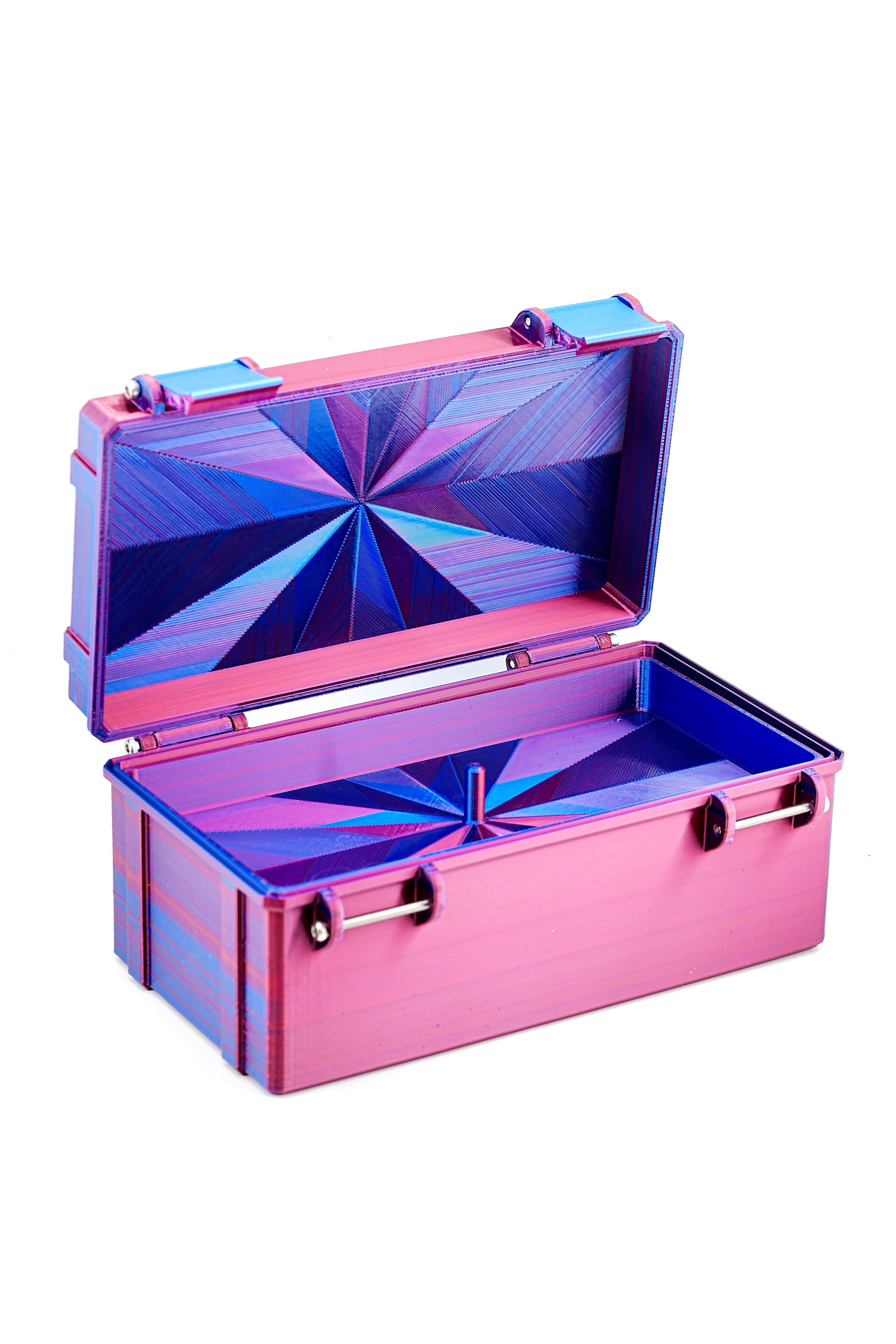
VialCase is the only case brand purpose-engineered for peptide and GLP-1 vials specifically. The fully opaque hard shell provides complete light blocking. Precision foam slots are matched to 3ml and 10ml vial dimensions — the two sizes that cover semaglutide, tirzepatide, and retatrutide entirely. The low-profile footprint fits cleanly on a standard fridge shelf. Insulated configurations include gel cold-pack compatibility for travel. Syringe compartments keep your complete protocol in one place.
It's TSA-friendly, fridge-ready, and available in configurations from single-compound starter setups to full multi-vial stacks. Free shipping, 30-day risk-free trial. Get your VialCase →