What Is PT-141 (Bremelanotide)?
PT-141, also known by its clinical name Bremelanotide, is a synthetic melanocortin receptor agonist derived from Melanotan II. Unlike Melanotan II, PT-141 was specifically developed without the tanning-inducing properties, making it a focused compound for research into sexual dysfunction in both men and women. It works centrally — through the nervous system — rather than directly on vascular tissue, which is what distinguishes it pharmacologically from compounds like sildenafil.
In research settings, PT-141 typically comes as a lyophilized (freeze-dried) white powder in 10mg vials. Those 10mg vials carry real value, and the chemistry behind the compound makes proper storage non-negotiable. Bremelanotide is a cyclic heptapeptide — a ring-shaped chain of seven amino acids — and like all peptides, the bonds holding that structure together are vulnerable to heat, light, and moisture.
Understanding the degradation mechanisms helps you understand why specific storage rules exist. Heat causes deamidation and hydrolysis of peptide bonds. Light, especially UV, drives oxidative damage. Moisture — even from humid air — can initiate bond cleavage in lyophilized powder. Address all three and your PT-141 stays potent; fail even one and you're injecting a degraded compound of unknown efficacy.
Lyophilized PT-141: Storage Before Reconstitution
The lyophilized form is the most stable state PT-141 can be in. Because freeze-drying removes nearly all water content, the oxidation and hydrolysis reactions that degrade peptide bonds are dramatically slowed. This stability is why reputable suppliers ship and sell PT-141 as a dry powder rather than a pre-mixed liquid.
Temperature Requirements for Dry PT-141
- Long-term storage (6 months to 24 months): -20°C (-4°F) in a freezer. At this temperature, the peptide bonds in Bremelanotide are essentially locked in place, and verified shelf life runs up to 24 months.
- Medium-term storage (up to 3 months): 2–8°C (36–46°F) in a standard refrigerator. This is appropriate if you plan to reconstitute within a few weeks and want the vial accessible without repeated freeze-thaw cycles.
- Room temperature (above 20°C / 68°F): Acceptable only in transit, for a few hours at most. Extended room-temperature storage even of lyophilized PT-141 will result in measurable potency loss over weeks.
Protecting the Vial Seal
Lyophilized PT-141 vials are sealed under an inert atmosphere. The rubber stopper is the only barrier between the peptide and ambient moisture and oxygen. Avoid puncturing the stopper until you're ready to reconstitute — every puncture is a potential entry point for contaminants. Store the vial in an upright position to minimize stopper contact with any residual moisture that may condense near the neck of the vial.
Pro Tip: If you've purchased multiple 10mg PT-141 vials, keep all but your active vial in the freezer at -20°C (-4°F). Only move a vial to the refrigerator when you're within a week of reconstituting it. This single habit can extend your total supply shelf life by months.
Reconstituting PT-141: BAC Water Is the Right Choice
Reconstitution is the process of adding a sterile liquid to the lyophilized powder to create an injectable solution. For PT-141, the right liquid choice matters enormously because it directly determines how long your reconstituted solution remains safe and effective.
Why BAC Water, Not Sterile Water
Bacteriostatic water (BAC water) contains 0.9% benzyl alcohol, a preservative that inhibits bacterial growth after the vial stopper is punctured. Every time you draw a dose from a reconstituted PT-141 vial, you introduce a small risk of microbial contamination through the needle and the air exchange. BAC water's preservative action suppresses that risk between doses.
Sterile water contains no preservative. A vial of PT-141 reconstituted in sterile water should be treated as a single-use container — use within 24 hours. For most users running a multi-dose protocol across 4–6 weeks from a single 10mg vial, sterile water is the wrong choice entirely.
For the complete step-by-step reconstitution process, see our guide on reconstituting peptides with BAC water. The technique matters: inject the BAC water slowly down the side of the vial, never directly onto the powder cake, and never vortex or shake the solution. Roll the vial gently between your palms to mix.
How Much BAC Water to Add
The volume you add to a 10mg PT-141 vial determines the concentration of your solution, which in turn determines your injection volume per dose. A common approach is adding 2ml of BAC water to a 10mg vial, yielding a concentration of 5mg/ml. This makes dosing math straightforward. Other researchers prefer 1ml for a 10mg/ml concentration. What matters for storage purposes is that the total reconstituted volume stays within the vial's capacity and that you note the concentration and reconstitution date on the vial label.
Reconstituted PT-141 Shelf Life and Temperature Sensitivity
This is the section most people get wrong, and it's the most consequential. Once PT-141 is in solution, its stability window closes significantly compared to the lyophilized form.
Refrigerated Shelf Life
Reconstituted PT-141 stored at 2–8°C (36–46°F) in BAC water has a practical shelf life of 4–6 weeks. At the 6-week mark, even under optimal refrigeration with BAC water, potency loss becomes a real concern. If you're past 6 weeks, discard the vial and reconstitute fresh.
This 4–6 week window assumes:
- Continuous refrigeration at 2–8°C (36–46°F)
- Reconstitution with BAC water, not sterile water
- The vial is never frozen after reconstitution
- The vial is kept away from light
- Proper aseptic technique is used on each draw
The 25°C (77°F) Degradation Threshold
Reconstituted PT-141 is highly sensitive to heat. Above 25°C (77°F), the rate of peptide bond hydrolysis accelerates sharply. This isn't a gradual decline — it's a kinetic reaction that compounds over time. A vial left on a countertop at 28°C (82°F) for a few hours loses a measurable percentage of its potency. Left overnight, the degradation is significant enough to affect results.
Practical implications: don't leave your reconstituted PT-141 out while preparing an injection. Take the vial from the refrigerator, draw your dose immediately, and return the vial to cold storage. The whole process should take under two minutes.
Never Freeze Reconstituted PT-141
This rule applies to all reconstituted peptides, and PT-141 is no exception. Freezing a peptide solution causes water molecules to form ice crystals. Those crystals grow and exert mechanical stress on the peptide chains, physically breaking the bonds that define the compound's structure. A freeze-thawed reconstituted PT-141 vial may look identical to an intact one, but its potency will be degraded in ways you cannot assess visually.
If you need long-term storage, freeze the lyophilized vial before reconstitution — never after.
Pro Tip: Label every reconstituted PT-141 vial with the reconstitution date and the discard date (reconstitution date + 6 weeks). Use a piece of lab tape or a small adhesive label directly on the vial. This takes 30 seconds and eliminates all guesswork about whether your solution is still within its effective window. Unlabeled vials are one of the most common peptide storage mistakes.
Light Sensitivity and PT-141
PT-141 is sensitive to UV and visible light, particularly in its reconstituted form. Light-driven oxidation attacks the aromatic amino acid residues in the peptide chain — the same mechanism that makes melanocortin peptides like this one sensitive to photodegradation.
How to Block Light Effectively
Amber glass vials provide partial protection by filtering some UV wavelengths, but they do not block visible light. The only reliable solution is storing vials inside an opaque container. A dedicated peptide storage case with a hard, light-blocking shell eliminates photodegradation risk entirely during storage.
During injection preparation, minimize light exposure by working quickly and returning the vial to its case immediately. Don't leave PT-141 vials sitting in a window, on a sunlit countertop, or under direct overhead lighting for any extended period.
Refrigerator Light
Most refrigerators have an interior light that activates when the door is open. If your PT-141 vials are sitting on an open shelf, they're exposed to this light every time the refrigerator is accessed. Store your vials inside an opaque case, a dedicated peptide fridge organizer, or even a folded paper bag. Any opaque barrier is better than none.
Traveling with PT-141
PT-141 requires cold storage, which makes travel more demanding than with room-temperature-stable compounds. Whether you're flying to a conference, driving several hours, or crossing a border, the principles are the same.
Short Trips (Under 3 Hours)
An insulated case without active cooling can maintain temperatures below 25°C (77°F) for 2–3 hours in most ambient conditions. Avoid leaving the case in direct sunlight or a hot vehicle interior — car interiors routinely reach 49–65°C (120–149°F) on warm days, which would destroy your reconstituted PT-141 in under an hour.
Long Trips (3 Hours or More)
- Use a gel cold pack. A pharmaceutical-grade gel pack (not loose ice) keeps temperatures in the 2–8°C range for 6–12 hours depending on ambient temperature. Wrap the pack in a cloth layer to prevent the vial from freezing on direct contact.
- Always carry on, never check. Checked baggage can experience cargo hold temperatures as low as -30°C (-22°F) and as high as 49°C (120°F). Either extreme damages reconstituted PT-141. Carry your peptides in your personal bag or carry-on at all times.
- Use a hard-shell case. Glass vials are fragile. A crush-resistant peptide case protects against impact from rough handling and maintains light-blocking properties during transit.
- Carry documentation if applicable. If you have a prescription or research documentation, keep it accessible. Review our guide on traveling with peptides through TSA before your trip.
Organizing PT-141 in a Multi-Peptide Protocol
PT-141 is often used alongside other peptides in broader wellness protocols. If your current stack includes compounds like BPC-157, TB-500, or Ipamorelin, you're managing multiple vials with different reconstitution dates, concentrations, and shelf lives. The risk of mix-ups is real, and the consequences range from inconvenient to serious.
What a Dedicated Case Solves
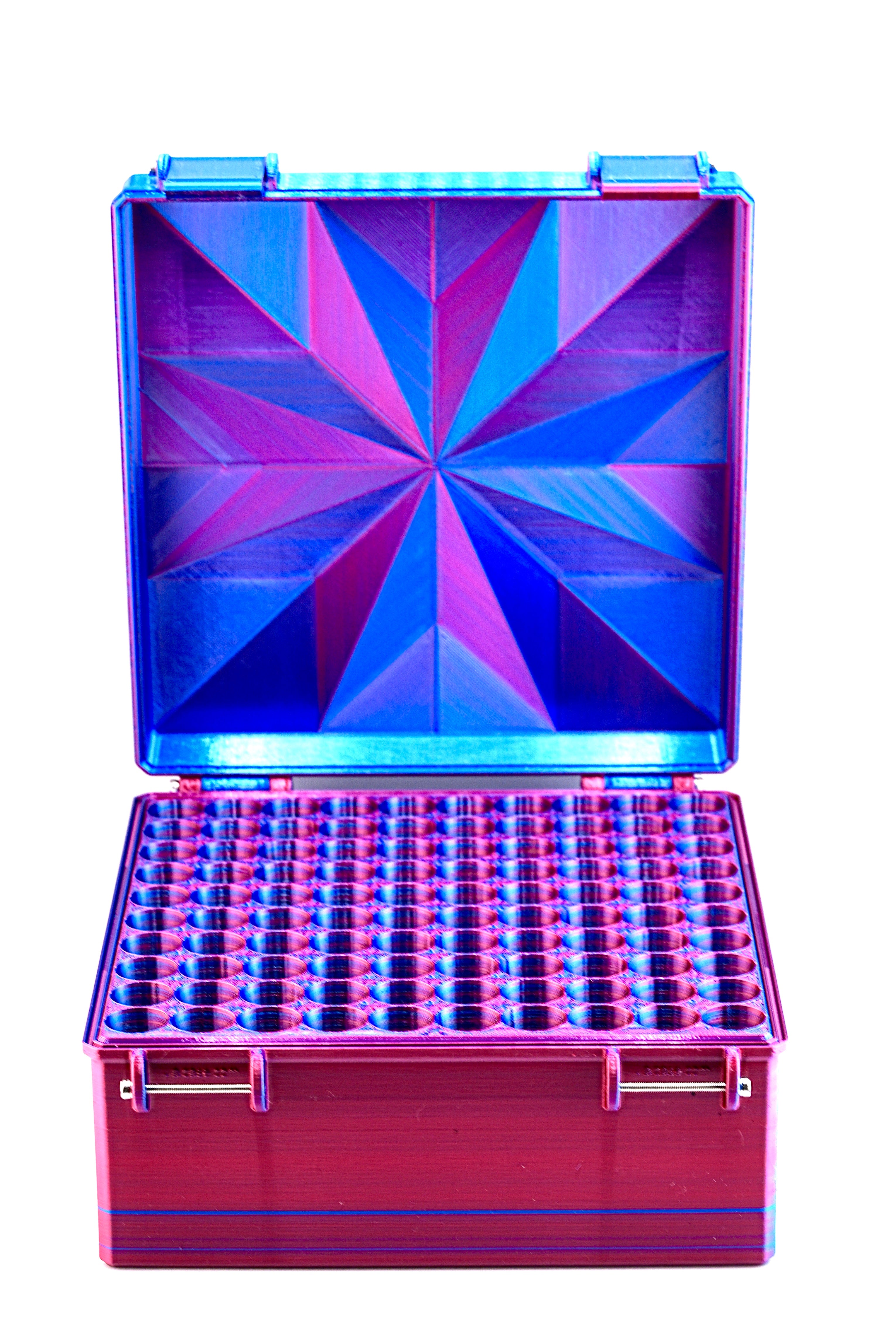
A purpose-built peptide storage case eliminates the chaos of managing multiple compounds in an ordinary refrigerator. Purpose-built cases engineered for 10ml vials provide individual slots that prevent glass-to-glass contact, block light completely, and create a dedicated labeled space for each compound in your protocol.
Consider the full picture of what proper storage requires for PT-141:
- Continuous 2–8°C (36–46°F) refrigeration after reconstitution
- Complete light blockage during refrigerator access and transport
- Physical protection against impact and vibration
- Clear labeling and organization to prevent mix-ups between compounds
- Temperature-stable transport for trips exceeding a few hours
A quality peptide case addresses every one of these requirements simultaneously. For a full breakdown of how to structure your storage setup, see the peptide storage temperature chart and our guide to organizing a peptide protocol.
PT-141 Storage: Quick Reference Summary
If you remember nothing else from this guide, keep these facts at hand:
- Lyophilized, long-term: -20°C (-4°F), up to 24 months
- Lyophilized, short-term: 2–8°C (36–46°F), up to 3 months
- Reconstituted in BAC water: 2–8°C (36–46°F), 4–6 weeks maximum
- Reconstituted in sterile water: 2–8°C (36–46°F), 24 hours maximum
- Heat threshold (reconstituted): Rapid degradation above 25°C (77°F)
- Never freeze reconstituted PT-141
- Always protect from light — amber glass alone is insufficient
- Label every vial with reconstitution date and discard date
For context on how PT-141's storage requirements compare to the full landscape of research peptides, see the complete peptide shelf life guide.
This content is for informational and educational purposes only and does not constitute medical advice. Always consult a licensed healthcare provider before beginning any peptide or hormone protocol.