The Two Formats: What They Actually Are
When people talk about peptides and injectable medications, they are referring to two fundamentally different product formats that happen to contain similar or identical active compounds. Understanding the physical and chemical difference between them is the starting point for everything else in this comparison.
Lyophilized Vials (The Vial Format)
A lyophilized vial contains a peptide or protein compound in freeze-dried powder form. The water content has been removed through a vacuum-assisted sublimation process, which dramatically increases the compound's stability at refrigeration temperatures and extends its shelf life. The vial comes sealed with a rubber stopper and aluminum crimp cap. Before use, you add a diluent — almost always bacteriostatic water — to reconstitute the powder into a solution, then draw individual doses with an insulin syringe.
This format dominates the research peptide market. BPC-157, TB-500, sermorelin, CJC-1295/Ipamorelin blends, PT-141, GHK-Cu, epithalon, melanotan II — all of these are sold in lyophilized vials, typically in 3ml (small) or 10ml (standard) glass containers. Compounded pharmaceutical versions of GLP-1 medications like semaglutide and tirzepatide are also frequently dispensed as lyophilized vials or multi-dose solution vials from compounding pharmacies.
Pre-Filled Syringes and Auto-Injector Pens (The Pen Format)
A pre-filled syringe or auto-injector pen comes with the active compound already in solution at a fixed concentration, ready to inject. No reconstitution is required. The user selects a dose on the dial, attaches a needle tip, and injects. Brand-name GLP-1 medications are the dominant example of this format: Ozempic (semaglutide, 0.25–2mg/dose), Wegovy (semaglutide, up to 2.4mg/dose), Mounjaro (tirzepatide, 2.5–15mg/dose), and Zepbound (tirzepatide, 2.5–15mg/dose) all come as pre-filled, multi-dose injection pens.
Some pharmaceutical HCG preparations and testosterone formulations have also been offered in pre-filled formats, though these are less common. In general, the pen format is characteristic of brand-name pharmaceutical products, while the vial format is characteristic of compounded medications and research-grade peptides.
Storage Requirements: Where the Formats Diverge Most
Storage is where the vial and pen formats have the most consequential differences for daily users. Get this wrong and you waste expensive medication regardless of which format you are using.
Lyophilized Vial Storage
Lyophilized peptide vials have a two-phase storage requirement: before reconstitution and after. The rules are different for each phase, and confusing them is one of the most common storage mistakes in the peptide community.
- Before reconstitution (lyophilized powder): Depending on the specific compound, refrigerate at 2–8°C (36–46°F) for 6–24 months, or freeze at -20°C (-4°F) for 2+ years. Peptides that are particularly sensitive to ambient temperature — BPC-157, sermorelin, CJC-1295 — should be frozen for long-term storage. Check compound-specific guidance in our peptide storage temperature chart.
- After reconstitution (liquid solution): Always refrigerate at 2–8°C (36–46°F). Use within 30–60 days depending on the specific peptide and diluent used. Never freeze a reconstituted vial — ice crystal formation shears peptide bonds and destroys the compound. Never leave a reconstituted vial at room temperature for extended periods — protein degradation accelerates dramatically above 8°C (46°F).
The reconstituted vial requires active temperature management every time it is accessed. You pull it from the fridge, draw your dose, and return it promptly. Every handling event is a potential temperature excursion if you are not disciplined about the process. This is not burdensome once it becomes routine, but it does require consistent habit and the right equipment.
Pre-Filled Pen Storage
Brand-name GLP-1 pens follow storage requirements published in their FDA-approved package inserts. The rules for the major products currently on market:
- Unopened Ozempic (semaglutide) pen: Refrigerate at 2–8°C (36–46°F). Do not freeze. Good until expiration date printed on label (typically 24–30 months from manufacture).
- Opened/in-use Ozempic pen: May be stored at room temperature up to 30°C (86°F) OR refrigerated at 2–8°C for up to 56 days (8 weeks) after first use. Discard after 56 days regardless of remaining dose.
- Unopened Mounjaro (tirzepatide) pen: Refrigerate at 2–8°C (36–46°F). Do not freeze.
- In-use Mounjaro pen: May be stored at room temperature up to 30°C (86°F) for up to 21 days after first use. Single-dose pens are discarded after use.
- Wegovy (semaglutide 2.4mg) pen: Refrigerate at 2–8°C (36–46°F) before use. Once in use, may be stored at room temperature below 30°C (86°F) for up to 28 days.
The in-use room temperature allowance for pens is a meaningful convenience advantage — you do not need to refrigerate a pen that is actively being used, as long as ambient temperatures are below 30°C. For most users in temperature-controlled environments, this means a current pen can live on the bathroom counter without risk. For travel in hot climates, the 30°C limit still applies and must be managed. See our detailed post on Ozempic and semaglutide storage and our guide to tirzepatide and Mounjaro storage for more specifics.
Pro Tip: The room temperature tolerance of in-use GLP-1 pens does not mean they are heat-tolerant. The 30°C (86°F) limit is easily exceeded in a car, a bag left in the sun, or a hot bathroom without air conditioning. If you are traveling in summer or in a warm climate, pens still need insulated storage during transit. The vial-vs-pen distinction matters less here than the universal rule: never leave any peptide or protein-based medication in a hot vehicle or direct sunlight.
Head-to-Head Comparison: Vials vs. Pens Across Key Dimensions
Cost Per Dose
This is the most dramatic practical difference between the two formats, and the primary reason serious peptide users default to vials.
- Brand-name GLP-1 pens: Without insurance, Ozempic lists at approximately $900–$1,000 per month. Mounjaro and Zepbound are similar. Even with insurance, copays can run $25–$300 per month depending on the plan. The pen format is deeply expensive at list price.
- Compounded semaglutide vials: Compounded semaglutide from a licensed 503B outsourcing facility or 503A compounding pharmacy has been available at $100–$300 per month for equivalent doses — a fraction of brand-name cost. The same cost dynamic applies to compounded tirzepatide.
- Research peptides in vials: BPC-157, TB-500, CJC-1295, and similar peptides typically cost $30–$100 per vial containing 5–10mg of active compound, which for most dosing protocols represents weeks to months of supply. Cost per dose is dramatically lower than any brand-name pharmaceutical.
The cost advantage of vials is substantial enough that it alone justifies the additional steps of reconstitution and the investment in proper storage equipment. A quality peptide storage case costs less than a single week of brand-name GLP-1 medication.
Protocol Flexibility and Dosing Precision
- Vials: Highly flexible. You control the reconstitution volume, which sets the concentration, which determines the dose per unit volume. If your protocol calls for 250mcg of BPC-157 per injection, you can mix your vial to make that exactly 0.1ml for easy measurement. Dose adjustments require only changing the volume drawn — no new prescription, no new device.
- Pens: Fixed dose increments set by the manufacturer. Ozempic clicks in 0.25mg increments. Mounjaro comes in fixed-dose prefilled single-use pens at specific strengths (2.5mg, 5mg, 7.5mg, 10mg, 12.5mg, 15mg). Dose titration requires a new prescription at each step. You cannot customize dose beyond the available increments.
For anyone managing a nuanced protocol — micro-dosing GLP-1 for metabolic support alongside other peptides, running individualized BPC-157 healing cycles, or managing TRT-adjacent compounds — vials offer control that pens simply cannot match.
Shelf Life (Before and After First Use)
- Lyophilized vials (before reconstitution): 12–24 months at refrigeration temperatures; longer when frozen. This is the most shelf-stable format for peptides.
- Reconstituted vials (after mixing): 30–60 days under proper refrigeration. The clock starts the moment you add diluent.
- Unopened brand-name GLP-1 pens: 24–30 months from manufacture, refrigerated. Excellent shelf life before opening.
- In-use brand-name pens: 21–56 days after first use depending on product. Comparable to reconstituted vials, but without the precision control over concentration.
For detailed shelf life data across a broad range of compounds, see our peptide shelf life guide.
Contamination Risk
- Vials: Each needle puncture of the rubber stopper is a contamination event, mitigated but not eliminated by alcohol swab technique and bacteriostatic water's benzyl alcohol preservative. Over 20–30 punctures in a 60-day reconstituted vial, the cumulative risk is real. Proper technique — fresh needle for each draw, wiped stopper — keeps this risk negligible.
- Pens: The needle tip is replaced after each injection, and the pen mechanism does not expose the drug reservoir to air in the same way a vial stopper does. Contamination risk is lower, particularly for inexperienced users. This is one genuine safety advantage of the pen format for beginners.
Beginner Friendliness
- Pens: Designed for self-administration by patients with no prior injection experience. Dose selection is mechanical and visual. Needle attachment is one step. The learning curve is measured in minutes.
- Vials: Require understanding reconstitution math, correct diluent selection, sterile technique, and syringe gauge selection. The learning curve is real — though manageable with clear instructions. See our reconstitution guide for a complete walkthrough. Most users are comfortable with the process after 2–3 attempts.
Travel Convenience
- Pens: In-use pens with room temperature tolerance travel more easily. A pen in your pocket or carry-on bag for a day trip does not require a cold pack. The pen format is compact and discreet.
- Vials: Require consistent refrigeration or an insulated case with cold packs for travel beyond a few hours. Multiple vials for a complex protocol take more space than a single pen. However, a quality insulated vial case makes travel entirely manageable — even internationally. See our TSA travel guide for the complete protocol.
Pro Tip: If you are traveling with vials and want the convenience that pens offer, the solution is not to switch formats — it is to invest in a purpose-built insulated travel case that holds your vials safely at temperature for 12–24 hours without active refrigeration. This eliminates the main travel disadvantage of vials while preserving all the cost and flexibility advantages.
Why Vials Dominate the Research Peptide Market
Outside of the brand-name GLP-1 category, virtually every peptide sold in the research and compounded pharmaceutical market comes in vial format. This is not an accident — the vial format has specific technical and economic advantages that make it the natural default for this market segment.
First, lyophilization is the most cost-effective way to achieve long-term peptide stability. Maintaining a sterile, pre-mixed liquid solution in a sealed syringe or pen device requires manufacturing infrastructure — controlled fill environments, device engineering, regulatory compliance for combination drug-device products — that adds enormous cost and complexity. For compounders and research suppliers who cannot absorb those costs, the lyophilized vial is the only viable format.
Second, vials are compatible with flexible dosing across a wide range of users. A single 5mg BPC-157 vial can serve a user running 250mcg/day just as well as one running 500mcg/day — just reconstitute to different concentrations. A pre-filled pen at a fixed concentration serves only users who need that exact dose.
Third, the research peptide community skews toward experienced biohackers and protocol-driven users who value control over convenience. These users understand reconstitution, have established injection routines, and optimize for cost and flexibility rather than ease of use. Vials match that profile precisely. Even among GLP-1 users, those managing their own protocols through compounding pharmacies increasingly prefer vials for the cost savings alone.
The result: if you are running any serious multi-peptide protocol — BPC-157 and TB-500 simultaneously, a GHRH/GHRP combination like CJC-1295/Ipamorelin, or a combined GLP-1 and metabolic support stack — you are almost certainly managing multiple vials. That reality requires a storage system designed for vials, not pens.
The Hidden Cost of Improper Vial Storage
The cost argument for vials versus pens is compelling on the surface. But it assumes the vials are stored correctly. If they are not, that cost advantage evaporates — and may reverse.
Consider a three-month supply of compounded semaglutide at $200/month. That is $600 in vials. If a reconstituted vial is left on the counter during a long injection prep session, or if the fridge temperature drifts above 10°C (50°F) without the user noticing, or if a vial is accidentally frozen, the compound in that vial may be partially or fully degraded. The user sees reduced results, assumes the dose needs to be increased, and spends more on the next order. Or worse, they conclude the protocol does not work for them and abandon it entirely.
Now consider what a quality insulated peptide storage case costs: typically $40–$80 one-time. That investment protects indefinitely. Every vial you store in it is protected from temperature excursion, light exposure, and physical breakage. Over a year of protocol use, the case pays for itself many times over in peptide preservation alone — to say nothing of the peace of mind and organizational clarity it provides.
This is the fundamental reason vials need a dedicated case and pens generally do not: vials are more sensitive, more valuable per storage event, and more dependent on consistent conditions across a multi-week use window. A pen's built-in room temperature tolerance provides a degree of buffer that vials simply do not have. Vials earn their advantages — lower cost, greater flexibility, longer lyophilized shelf life — but those advantages are only realized when storage is handled correctly.
For more on what constitutes a proper multi-peptide storage setup, see our guides on the best ways to store peptides and organizing a multi-compound protocol. For GLP-1 specific comparisons that include both compounded vials and brand-name pens, see our GLP-1 storage comparison.
When the Pen Format Actually Makes Sense
This is not an argument that pens are always inferior. There are specific situations where the pen format is clearly the right choice:
- Brand-name GLP-1 for type 2 diabetes management under physician supervision. When you have insurance coverage, a physician managing your care, and need the device safety and regulatory oversight that comes with an FDA-approved combination product, brand-name Ozempic or Mounjaro is the appropriate choice. The pen's ease of use and contamination resistance matter in a clinical context.
- Complete injection inexperience. If someone has never self-injected and finds the reconstitution process overwhelming, a brand-name pen removes the technical barrier to getting started. The convenience premium is justified by adherence — a protocol you actually follow beats a vial protocol you abandon.
- Short-term use where cost is not the primary concern. A one-month trial, a single induction cycle, or a situation where insurance makes the cost irrelevant — pens are perfectly adequate when the economics do not favor vials.
- Travel without reliable cold storage access. If you are in a situation where you cannot maintain refrigeration reliably and the destination lacks resources for obtaining cold packs, an in-use pen at ambient temperatures is more manageable than a reconstituted vial. This is an edge case — most travelers can manage vials with planning — but it exists.
The key insight is that the pen format provides convenience at a high cost premium and with reduced flexibility. That trade-off makes sense in specific circumstances. For most users running ongoing peptide protocols — particularly those managing multiple compounds, working with research peptides, or sourcing through compounding pharmacies — vials are the practical standard, and the storage investment they require is simply part of the cost of running a protocol correctly.
The Practical Conclusion: Vials Need a Case, Pens Mostly Do Not
Brand-name GLP-1 pens are engineered with the end-user in mind. The device does a lot of the storage work for you: fixed concentration eliminates dilution errors, the sealed pen mechanism reduces contamination risk, and the in-use room temperature tolerance gives you flexibility during travel and daily use. These are genuine advantages that justify the pen format for certain users.
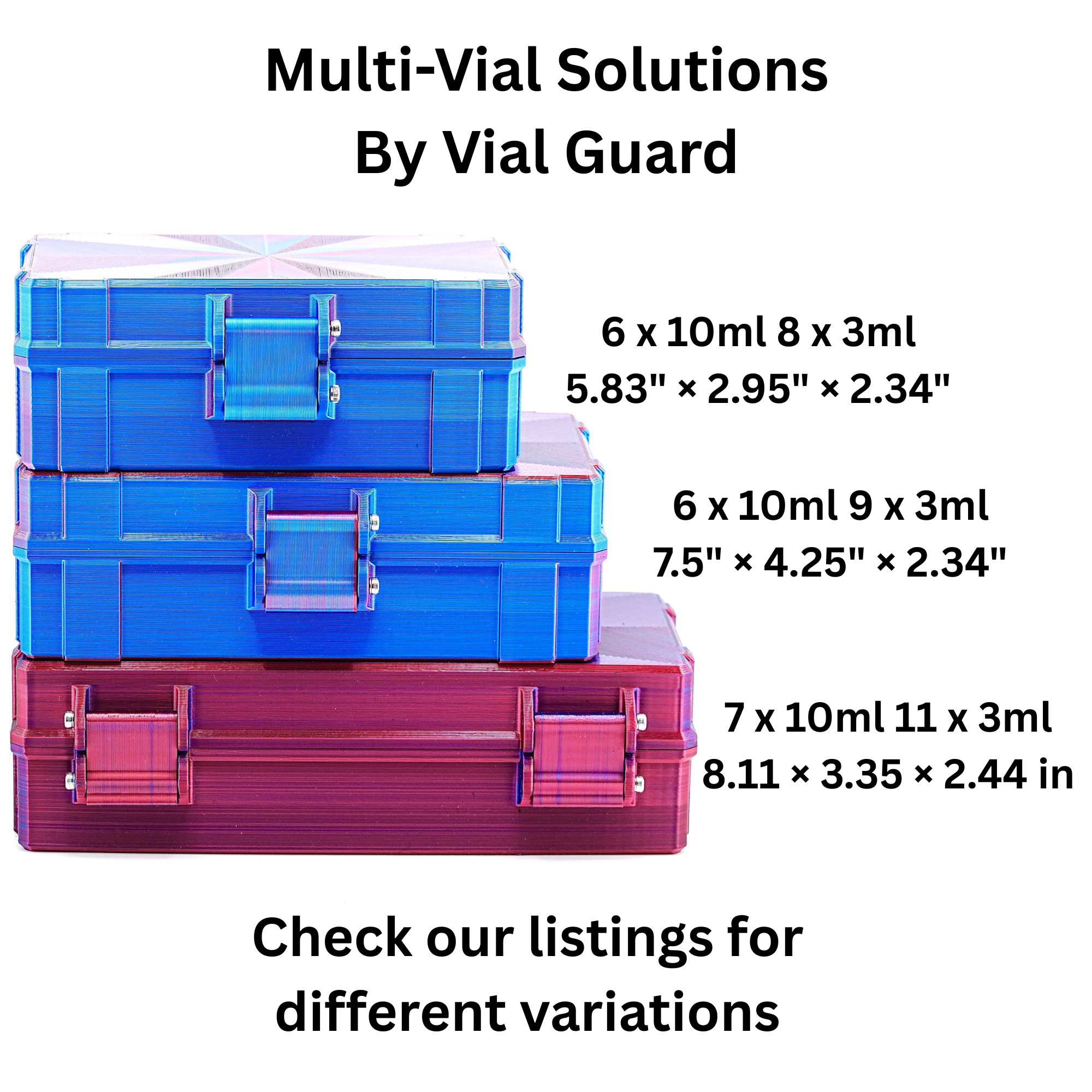
But research peptide vials and compounded medication vials are unprotected glass containers holding fragile, temperature-sensitive compounds in a solution that begins degrading the moment temperature control lapses. They require a case that provides: light blocking (photodegradation is a real concern for many peptides), impact protection (glass-on-glass contact in a refrigerator drawer breaks vials), temperature insulation for transport, and organizational structure to manage a multi-compound protocol without errors.
The vial format's lower cost and greater flexibility are real advantages — but they come with real storage responsibilities. A purpose-built insulated vial case is the tool that converts those responsibilities from burdens into a simple, reliable system. If you are running vials, the case is not optional equipment. It is a core part of the protocol infrastructure.
This content is for informational and educational purposes only and does not constitute medical advice. Always consult a licensed healthcare provider before beginning any peptide or hormone protocol.