Disclaimer: This article is for informational and educational purposes only. Many peptides discussed are not FDA-approved for human use. Laws regarding peptide purchase, import, and use vary by country and jurisdiction. Consult a qualified healthcare provider and legal counsel before purchasing or using any research compound.
The Four Sourcing Channels: A Quick Map
Every peptide buyer in 2026 is essentially choosing between four categories of source, each with a distinct tradeoff profile:
- US domestic research chemical suppliers — legal gray market, sold "for research purposes only," no prescription required, ships domestically, highly variable quality
- Chinese manufacturers and suppliers — lowest cost, source of most domestic US supplier inventory, ships internationally, quality verification is essential
- Mexican pharmacies and clinics — some GLP-1 compounders operate legally in Mexico, in-person purchase or cross-border transport, physical quantity limits apply
- US telehealth + compounding pharmacies — prescription required, highest cost, legal and regulated, quality is verified by pharmacy compounding standards
No single channel is right for everyone. Where you land depends on what you're sourcing, your legal risk tolerance, your budget, and how much you're willing to invest in quality verification. Let's go deep on each.
US Domestic Research Chemical Suppliers
How This Market Works
Dozens of US-based companies sell peptides labeled "for research use only" or "not for human consumption." This legal framing exists in a regulatory gray area: the FDA has not explicitly scheduled most research peptides, so selling them as research chemicals is technically legal in many cases, but selling them with intent for human use is not. In practice, the "research only" label is a legal shield that both sellers and buyers understand is performative.
Most of these US suppliers are not manufacturers. They source bulk peptide API (active pharmaceutical ingredient) from Chinese manufacturers, repackage it in small vials with their branding, and sell it at a significant markup. The value they provide is: domestic shipping (fast, no customs), some level of vendor accountability, and — if they're reputable — third-party purity testing.
Quality Range Is Wide
The US domestic research peptide market has no regulatory oversight on quality, so the quality range is extreme. Some suppliers have rigorous third-party HPLC testing protocols and post certificates of analysis (COAs) for every batch. Others sell whatever they can source cheaply with no meaningful testing. A vial labeled "BPC-157 5mg" from a discount supplier may contain anywhere from 3mg to 6mg of actual peptide, may have impurity levels that matter for regular use, or may in rare cases contain misidentified compounds entirely.
Reliable indicators of quality in a US domestic supplier:
- Third-party HPLC/MS testing with published COAs for each batch — not just "we test our products" but actual documents you can read
- Visible batch numbers that correspond to the COAs they post
- Established community reputation in peptide forums (not just paid review sites)
- Responsive customer service that can answer technical questions
- Clear physical address and business registration (not just a PO box)
Cost
US domestic pricing typically runs 3–5x the cost of ordering directly from Chinese sources. A 5mg BPC-157 vial might cost $25–50 from a US supplier; a comparable product ordered directly from China might cost $5–12. The markup reflects domestic overhead, repackaging, and in some cases actual quality investment — but not always. The premium is worth paying for suppliers with genuinely rigorous testing; it is not worth paying for suppliers who are just reselling untested Chinese stock at a markup.
Red Flag: Any US supplier who refuses to share a third-party COA for a specific batch you're ordering is selling you blind. COAs should be batch-specific and issued by an independent lab, not the supplier's in-house testing. An in-house COA from the supplier is not verification — it's marketing.
Chinese Suppliers and Manufacturers
Why China Dominates Peptide Manufacturing
The global supply chain for research peptides runs through China. The overwhelming majority of peptide API sold anywhere in the world — including what ends up in US domestic supplier vials — originates from Chinese manufacturers, primarily clustered in Wuhan, Chengdu, and Shenzhen. China has the industrial-scale solid-phase peptide synthesis infrastructure, the chemical precursors supply chain, and the cost structure to produce peptides at prices that no other country can match at scale.
This is not inherently a problem. Chinese pharmaceutical manufacturers produce API for legitimate pharmaceutical companies worldwide, including FDA-regulated products. The issue is that the peptide research chemical market has no mandatory quality floor — Chinese manufacturers range from ISO-certified facilities with pharmaceutical-grade quality systems to small operations with minimal quality controls. The buyer cannot tell the difference from a product listing.
Ordering Direct: The Tradeoffs
Experienced buyers who want to minimize cost often go direct to Chinese manufacturers via platforms like Alibaba, through established peptide community contacts, or through Chinese suppliers who have developed English-language websites targeting international buyers. The savings are real: going direct can reduce cost by 60–80% compared to buying from a US domestic reseller.
The tradeoffs are significant:
- Import legal risk: Importing peptides from China is a customs and FDA-jurisdiction issue. Personal-use quantities rarely result in enforcement action, but seizures happen, particularly for GLP-1 compounds that have attracted recent FDA attention. See our full peptide import legal guide for the current regulatory picture.
- Shipping time: 2–4 weeks from China vs 1–3 days from US domestic. During transit, temperature control is absent. If your peptide spends two weeks in a cargo hold, reconstituted or improperly packaged product arrives degraded.
- Quality verification burden falls on you: There is no US supplier standing between you and the manufacturer's quality decisions. You need to either verify independently (send a sample to an independent lab for HPLC testing) or rely on community reputation for the specific supplier.
- Payment and communication complexity: Wire transfers, cryptocurrency, or third-party escrow. Returns and refunds are difficult. Communication requires patience if your contact's English is limited.
How to Verify Quality from a Chinese Source
The most reliable verification approach is independent HPLC/MS testing. Services like Janoshik Analytical, Roid-Test (for some compounds), and independent labs in the US and EU will test a sample of your peptide for identity, purity, and quantity. Testing costs $30–80 per compound — worth every dollar if you're ordering in bulk. Detailed guidance on what to test for and how to interpret COAs is in our China peptide quality guide.
For community-vetted sources, established peptide forums maintain reputation threads and ban sellers who produce confirmed fakes or misdosed product. These community recommendations carry real signal, though they can be influenced by affiliate arrangements — triangulate across multiple independent sources before trusting any single recommendation.
Mexican Pharmacies and Cross-Border Sourcing
What's Actually Available in Mexico
Mexico operates a different pharmaceutical regulatory framework than the US. Some compounded GLP-1 preparations (including semaglutide and tirzepatide compounds) are available through Mexican compounding pharmacies and clinics, sometimes without the prescription burden of US telehealth. Additionally, some research peptides available only as gray-market products in the US are sold more openly through certain Mexican suppliers.
The practical Mexico peptide sourcing model typically looks like one of three things:
- In-person at a Mexican pharmacy or wellness clinic — particularly in border cities (Tijuana, Nuevo Laredo, Ciudad Juárez) or medical tourism destinations (Mexico City, Guadalajara). You visit, you pay, you receive product.
- Cross-border transport after in-person purchase — bringing product back across the US border. Subject to CBP regulations; personal-use quantities of prescription medications are often tolerated but not guaranteed. Peptides without a valid US prescription occupy legal gray area.
- Mail-order from Mexican suppliers — functionally similar to importing from China in terms of customs risk; the Mexican origin doesn't provide regulatory protection at the US border.
Quality Considerations
Quality from Mexican sources is highly variable and source-dependent. Licensed compounding pharmacies operating under COFEPRIS (Mexico's FDA equivalent) oversight produce to pharmaceutical standards. Informal street-level sources or unregulated supplement shops do not. Do not assume that "bought in Mexico" equals pharmacy-grade; ask about the dispensing pharmacy's COFEPRIS registration and compounding license.
For GLP-1 compounds specifically, well-reviewed Mexican compounding pharmacies that have been vetted by the cross-border medical tourism community are generally reliable. For research peptides (BPC-157, TB-500, CJC-1295, etc.), the Mexican market is less developed than either US domestic or Chinese sourcing channels, and quality standards are less consistently applied.
The Border Crossing Variable
Personal importation of prescription drugs for personal use is nominally restricted by FDA and CBP regulations but is tolerated in practice under the FDA's personal importation policy for quantities that represent a 90-day supply. Research peptides without a US prescription have a less well-defined status. Border officers have discretion; seizures happen, particularly for larger quantities or compounds that have been in recent enforcement news. Detailed current guidance is in our Mexico peptide buying guide.
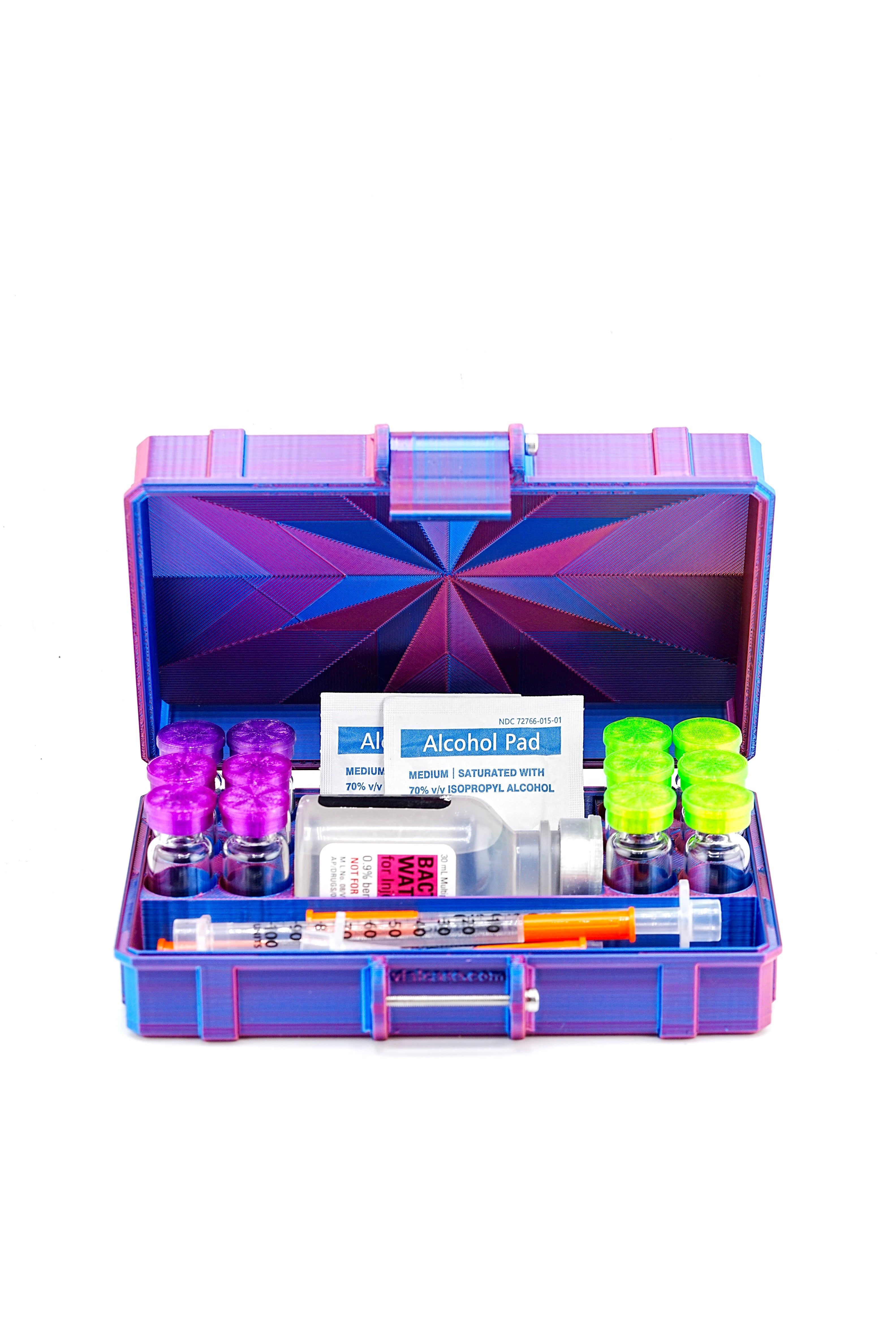
Practical Note on Transport: Whether you're bringing peptides from Mexico or receiving an international shipment, proper storage during transport matters. Lyophilized (freeze-dried) peptides survive travel far better than reconstituted solutions. Transport lyophilized when possible; reconstitute after you're home. A crush-resistant travel case protects glass vials from the inevitable physical hazards of border crossings and checked luggage.
US Telehealth + Compounding Pharmacies
The Legal, Regulated Option
For GLP-1 compounds specifically — semaglutide, tirzepatide, and increasingly retatrutide as it advances toward approval — the US telehealth route is the only fully legal option that provides actual pharmaceutical-grade quality assurance. The model: you consult with a licensed prescriber via a telehealth platform, receive a prescription, and that prescription is filled by an FDA-registered 503A or 503B compounding pharmacy. The pharmacy is inspected, the compounders are licensed, and the product meets USP standards.
This route exists primarily for GLP-1 agonists; for research peptides like BPC-157, TB-500, or CJC-1295, there is essentially no telehealth + compounding pathway because no licensed prescriber will write a prescription for compounds with no approved medical indication.
Cost
Telehealth-sourced compounded GLP-1 is the most expensive option by a significant margin. A month of compounded tirzepatide through a US telehealth platform typically runs $200–500 depending on dose, platform, and whether subscription pricing applies. The same dose purchased through a Chinese supplier would cost $20–60. The premium buys: legal protection, verified pharmaceutical quality, and a prescriber supervising your protocol.
For people who want maximum legal protection and quality assurance and are primarily using GLP-1 compounds, the telehealth route is the right answer despite the cost. For people using a broader peptide stack that includes non-GLP-1 research peptides, the telehealth route doesn't cover most of what they're using anyway.
Quality Assurance
503A compounding pharmacies (patient-specific) and 503B outsourcing facilities (batch compounding) operate under FDA oversight with periodic inspections and USP quality standards. Potency testing, sterility testing, and endotoxin testing are required. This is a different quality standard than anything available in the research peptide market. If pharmaceutical-grade assurance matters to you — and for many GLP-1 users it should — this is the only sourcing channel that provides it.
Side-by-Side Comparison
| Factor | US Domestic | China Direct | Mexico | Telehealth |
|---|---|---|---|---|
| Cost (relative) | Medium–High | Low | Medium | Very High |
| Legal risk (US) | Low–Medium | Medium | Medium | None |
| Quality floor | Variable | Variable | Variable | Regulated |
| Quality ceiling | High (tested suppliers) | High (verified sources) | High (licensed pharmacy) | Pharmaceutical |
| Peptide selection | Broad | Broadest | GLP-1 focused | GLP-1 only |
| Shipping time | 1–5 days | 2–4 weeks | Variable | 3–7 days |
| Prescription needed | No | No | Sometimes | Yes |
What to Verify Regardless of Source
No matter which channel you use, the following verification steps apply before you inject anything:
1. Confirm Identity and Purity with a COA
Request the certificate of analysis for your specific batch. A credible COA shows: the compound name and molecular formula, the testing method (HPLC or LC-MS/MS), the purity result (above 98% is the target for research-grade peptides), and the identity confirmation. COAs from the manufacturer's own lab are a minimum; independent third-party COAs are the gold standard. If a supplier cannot produce a COA, do not order.
2. Inspect the Physical Vial on Arrival
Before reconstituting, inspect every vial. The lyophilized powder should be white to off-white, intact as a lyocake or powder, and free of discoloration, moisture, or particles. The vial should be sealed with an intact rubber stopper and crimp cap. Any sign of moisture in a lyophilized vial (clumping, yellow or brown tinting of the powder) indicates degradation from improper storage during shipping.
3. Assess Reconstitution Behavior
After reconstituting, the solution should clear completely with gentle swirling. Persistent cloudiness, particulate matter, or unusual color (pink, orange, brown) in solution is a red flag. Properly reconstituted peptides dissolve to clear, colorless or faintly yellow solutions. See our guide to spotting degraded peptides for detailed visual inspection criteria.
4. Independent Lab Testing for High-Value or Recurring Purchases
If you're buying the same compound regularly from the same supplier, send one vial to an independent lab (Janoshik is the most commonly used in the peptide community) every few orders. Suppliers do change their manufacturing sources. Batch-to-batch quality can drift. $50 of testing on a $200 order is cheap insurance.
Storage: The Variable That Cuts Across All Sources
Here's what's often overlooked in sourcing discussions: the quality of your peptide when it arrives is a function of both what was manufactured and how it was stored in transit and at your home. A pharmaceutical-grade compound stored incorrectly rapidly becomes a degraded one. A high-quality product from a vetted Chinese source stored properly at 2–8°C, in an opaque container, without freeze-thaw cycling, will outperform a lower-quality product stored haphazardly regardless of sourcing channel.
Once peptides arrive — from any source — the storage equation is the same:
- Lyophilized: refrigerate at 2–8°C (can freeze at -20°C for long-term stockpiles)
- Reconstituted: refrigerate at 2–8°C, use within 4–6 weeks with BAC water
- All vials: protect from light, protect from physical impact, maintain temperature consistency
A purpose-built peptide storage case provides the opaque shell, the individual vial slots that prevent glass-on-glass contact, and the organization that makes it easy to track reconstitution dates and compound identity across a multi-compound protocol. No matter where you source, proper storage is non-negotiable for maintaining what you paid for.
The Bottom Line: Matching Source to Situation
If you're using GLP-1 compounds and want full legal protection: Telehealth + US compounding pharmacy is the only answer. The cost premium is substantial but the regulatory and quality assurance is real.
If you're using GLP-1 compounds and want to minimize cost: A well-vetted US domestic supplier with third-party COAs is the middle path. Verify each batch. Keep documentation.
If you're running a multi-compound research stack at scale: Direct Chinese sourcing with independent lab verification is how experienced users manage cost at volume. The verification investment is non-negotiable; without it, you're flying blind.
If you're near the Mexico border or traveling: Mexican pharmacies offer a practical middle option for GLP-1 compounds specifically, particularly for in-person purchase from licensed compounders. Understand the border transport rules before you go.
Whatever source you choose, your peptides will only perform as well as how they're stored after they arrive. Invest in the sourcing research. Invest equally in the storage infrastructure.