Why People Buy Peptides in Mexico
The math is simple: peptides that cost $150-$300 per vial in the US can often be found at Mexican farmacias for $30-$80. For anyone living in border states — Texas, Arizona, New Mexico, California — a day trip across the border can save hundreds or even thousands of dollars on a multi-month protocol.
Popular compounds available at Mexican pharmacies include:
- BPC-157 — healing peptide, often 60-70% cheaper than US sources
- Semaglutide — GLP-1 weight loss compound (brand names vary)
- Tirzepatide — dual-agonist GLP-1, increasingly available
- TB-500 — systemic healing peptide
- HGH — human growth hormone, significant cost difference
- Various GH secretagogues — CJC-1295, Ipamorelin, GHRP-6
The savings are real. But here's what most people don't plan for: the 2-6 hour trip home through desert heat, border wait times, and uncontrolled temperatures can destroy the very compounds you just saved money on.
The Border Trip Storage Problem
Consider a typical border run from, say, San Diego to Tijuana or El Paso to Juarez:
- Pharmacy stop: 30-60 minutes in an air-conditioned farmacia. Vials are fine.
- Walking back to the border: 10-30 minutes in direct sunlight. Ambient temperature 35-45°C (95-113°F) in summer. UV exposure at maximum.
- Border wait time: 30 minutes to 3+ hours standing in line or sitting in a car. Interior car temperatures can hit 60°C (140°F) in parked vehicles.
- Drive home: 1-4 hours depending on distance. Even with AC, the trunk or glovebox stays hot.
Total uncontrolled temperature exposure: potentially 4-8 hours. That's enough to significantly degrade any reconstituted peptide and even damage lyophilized powder.
The Rule: Plan your storage before you cross the border — not after. Bring your case, cold packs, and insulation with you. You're spending $200-$500 on peptides; a $25 storage case and a $3 cold pack are the cheapest insurance possible.
What to Bring on Your Border Trip
Pack these items before you leave the US:
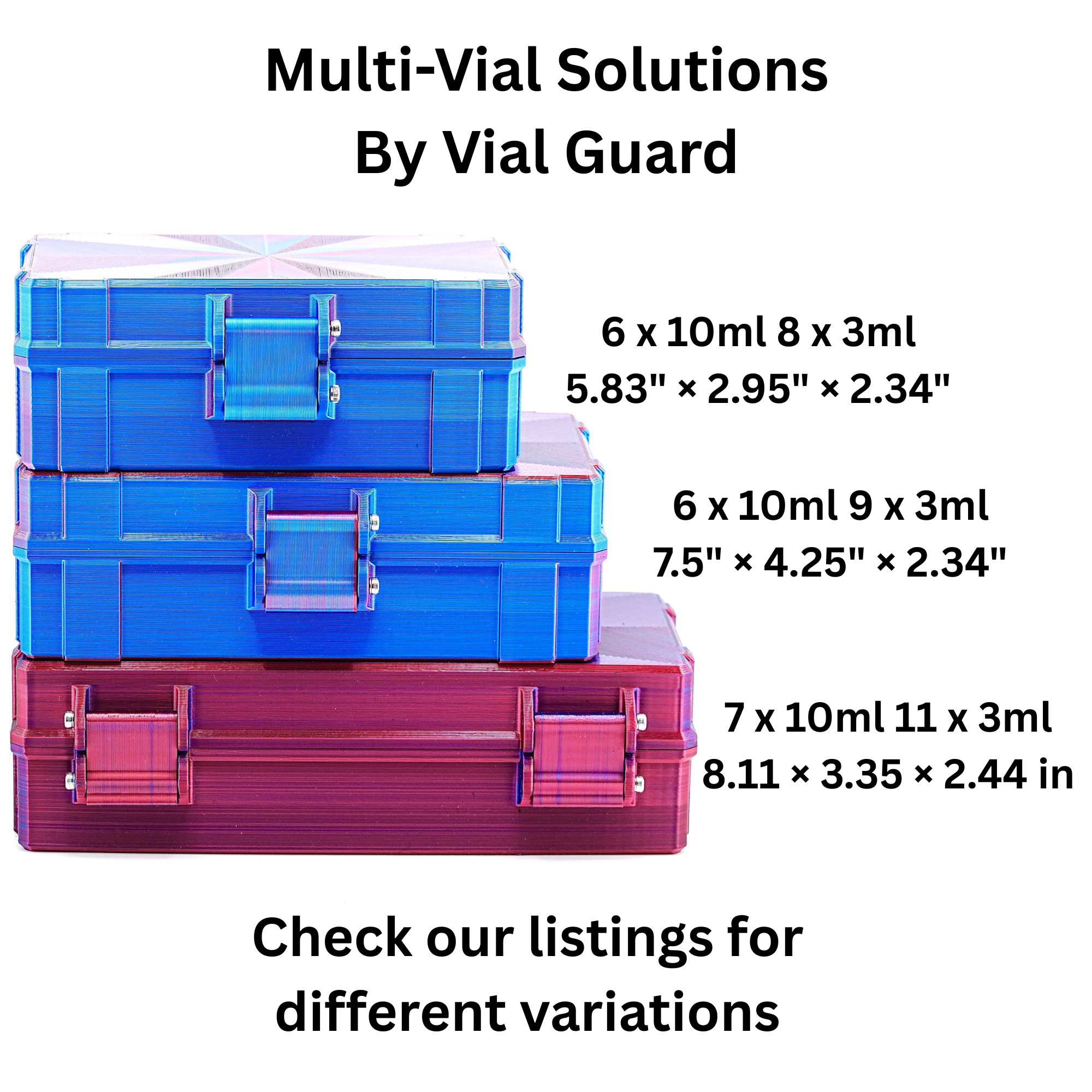
- A hard-shell peptide storage case. This is non-negotiable. A proper peptide case blocks light, prevents vial breakage, and keeps everything organized. It also looks professional if border agents want to inspect your purchases — which is far better than a Ziploc bag of loose vials.
- Gel cold packs (2-3). Freeze them overnight before your trip. Wrap each in a thin cloth or paper towel to prevent direct contact with glass vials.
- A small insulated bag or cooler. Your peptide case goes inside this. Even a basic lunch cooler adds significant temperature buffering during the border wait.
- Receipts. Keep your farmacia receipts with your peptides. If customs or border patrol asks about your purchases, having a receipt from a legitimate pharmacy is extremely helpful.
- A permanent marker. For labeling vials with the compound name and purchase date — especially if the vials have Spanish-only labeling.
Temperature Timeline: How Fast Do Peptides Degrade?
Understanding the degradation timeline helps you prioritize:
- Lyophilized (powder) peptides at room temperature: Minimal degradation for 1-2 days. These are relatively stable — your main concern is extreme heat (above 40°C/104°F) rather than brief room-temp exposure.
- Lyophilized peptides in a hot car (50-60°C): Measurable degradation within hours. Proteins begin denaturing above 40°C. A car interior in Phoenix or Tucson in summer easily exceeds this.
- Reconstituted peptides at room temperature: Begin degrading within hours. If you're buying pre-mixed solutions (some farmacias sell them), these need cold chain immediately.
- Light exposure: BPC-157 and other photosensitive peptides degrade rapidly in sunlight — even through amber vials. The walk from the pharmacy to the border crossing is a critical window.
Summer Trips: If you're crossing the border between May-September, your temperature management needs to be aggressive. Double up on cold packs, keep your cooler in the passenger cabin (not the trunk), and minimize time in direct sun. The savings from buying in Mexico evaporate if half your supply degrades on the drive home.
At the Border: What to Expect
Thousands of Americans cross the border daily with pharmaceutical purchases. A few practical tips:
- Personal-use quantities are generally fine. US customs allows bringing back a reasonable personal supply of medications purchased in Mexico. "Reasonable" is typically interpreted as a 90-day supply.
- Keep items in original packaging when possible. Mexican pharmacy labels add legitimacy.
- Have receipts accessible. A clear purchase trail from a licensed pharmacy demonstrates legitimacy.
- An organized case helps. Border agents who see professionally organized medical supplies in a proper case react very differently than agents seeing loose vials in a brown paper bag.
- Be straightforward if asked. "Personal medications purchased at a pharmacy" is a simple, accurate answer.
Note: This is general information, not legal advice. Regulations change. Research current CBP guidelines for your specific compounds before your trip.
When You Get Home
Your peptides aren't safe until they're properly stored at home:
- Refrigerate immediately. The moment you walk through your front door, get your vials into the fridge at 2-8°C.
- Transfer to your home storage case if you used a travel-specific setup. Your daily-use case should live in the fridge.
- Label everything. Write the compound name, purchase date, and source on each vial. Vials with Spanish labels can be confusing weeks later.
- Freeze what you won't use soon. If you bought a 6-month supply, keep your near-term vials in the fridge and freeze the rest at -20°C. Only move vials to the fridge when you're ready to reconstitute them.
- Inventory your purchase. Take a quick photo of all vials organized in your case. This serves as a reference for your protocol and as documentation of your supply.
Bulk Buyers: Storing a Large Supply
The cost savings often motivate people to buy 3-6 months of peptides in a single trip. Storing a large supply properly requires a system:
- Separate active from reserve. Active vials (reconstituted, in current use) go in a fridge case. Reserve vials (lyophilized, for future use) go in the freezer.
- Rotate stock. Use older vials first. Even frozen lyophilized peptides have a finite shelf life (12-24 months).
- Consider a larger case. If you're storing 10-20 vials, a multi-slot case keeps your entire inventory organized, protected, and easily visible.
- Track reconstitution dates. A simple spreadsheet or phone note — "BPC vial #3, reconstituted April 1, discard by May 1" — prevents using expired solutions.
Bottom Line: Buying peptides in Mexico can save you serious money — but only if the compounds survive the trip home. Bring a proper case, cold packs, and insulation. Plan for heat, light, and border wait times. The $25 you spend on a storage case can protect $500 in peptides.