The Gray Zone Peptides Live In
Most research peptides occupy a legally ambiguous space in the United States. They are not scheduled controlled substances under the DEA. They are not FDA-approved drugs with established import pathways. They are not food supplements. They exist in a gray zone — technically legal to possess in many cases, but subject to FDA import authority when crossing the border in commercial quantities or with therapeutic labeling.
Customs and Border Protection (CBP) enforces FDA import regulations at the border. When a package flags for inspection, the CBP officer must make a judgment call based on labeling, quantity, country of origin, and declared value. That judgment call doesn't always go your way, even when you're ordering a completely legal personal-use quantity from a legitimate vendor.
Understanding what triggers that judgment call — and how to minimize risk — is what separates repeat customers who always receive their orders from those who regularly lose shipments at the border.
The Most Common Reasons Customs Seizes Peptides
Seizures don't happen randomly. They're triggered by specific flags that draw inspector attention. The most common causes:
- Therapeutic or drug-like labeling. The single biggest trigger. If a package declares the contents as “Injectable Peptide — For Human Use” or lists dosing instructions, it is functionally labeled as an unapproved drug. CBP is required to act on this. Reputable vendors label research peptides as “research chemicals” or “not for human use” precisely to avoid this flag.
- Quantity exceeding personal use. A single order of 10 identical vials at a $400 declared value reads as personal use. An order of 100 vials at a $4,000 declared value reads as resale or distribution. CBP uses quantity thresholds (informally around a 90-day supply) to determine intent.
- High-risk country of origin. Packages from China, India, and certain Eastern European countries receive higher scrutiny than packages from Canada or the EU — not because the products are different, but because those shipping lanes have higher rates of counterfeit and mislabeled goods overall.
- Known vendor flagging. CBP and FDA maintain watch lists of known suppliers. If your vendor has had previous seizures, their packages are flagged at the port level regardless of contents.
- Declared value discrepancy. Under-declaring value (a common vendor practice to reduce customs fees) can trigger a review. If the declared value doesn't match the actual market value of the contents, it raises questions about what is actually in the package.
- X-ray or physical anomaly. Dense packing, liquid vials in unusual configurations, or foam packaging that looks like it's concealing something can trigger a physical inspection — at which point labeling and content become decisive.
Highest-Risk Ports and Shipping Routes
Not all ports of entry carry the same seizure risk. Enforcement intensity varies significantly by location and by the shipping carrier used.
- Los Angeles / Long Beach (LAX/LGB): The highest-volume port for Chinese imports. High seizure rates correlate with sheer volume — more packages, more inspections. EMS (China Post Express Mail Service) packages through this port have historically had elevated seizure rates for research chemicals.
- JFK International Mail Facility: The primary processing hub for international mail entering the East Coast. High scrutiny for packages from known research-chemical origins.
- Chicago O'Hare Mail Center: Midwest hub with similar profile to JFK for international mail.
- DHL / FedEx / UPS Hubs: Private carriers like DHL (Cincinnati) and FedEx (Memphis) typically have lower seizure rates than USPS international mail for legitimate commercial shipments — but they also require more accurate customs declarations, which some vendors resist.
The practical takeaway: packages shipped via DHL Express with accurate commercial declarations from reputable vendors tend to clear customs at significantly higher rates than EMS packages with vague declarations from unknown Chinese senders.
Pro Tip: When evaluating vendors, ask specifically what carrier they ship via internationally and what they declare on the customs form. A vendor who ships DHL with accurate declarations is signaling that they operate above board. A vendor who insists on EMS with “gift” declarations is telling you they expect scrutiny — and transferring that risk to you.
What Happens After Seizure: The Notice Letter
If your package is seized, you'll receive a seizure notice in the mail from CBP or the FDA. This document is important — don't ignore it. It contains:
- A description of the seized goods
- The legal basis for seizure (typically an FDA import violation or CBP authority)
- Your right to petition for remission or mitigation within 30 days
- The option to contest through a formal legal process
For personal-use quantities with no therapeutic labeling, a petition for remission — essentially a letter explaining the personal nature of the import — sometimes results in the goods being released. This requires a letter from a physician stating medical need, documentation that the quantity is personal use, and a declaration that you will not resell.
Realistically, for small personal-use seizures of low declared value, most people write off the loss rather than engage in a 60-day petition process. The process exists and occasionally works, but the threshold of effort is high. The better strategy is prevention.
How to Minimize Seizure Risk on Future Orders
These practices, taken together, substantially reduce the probability of a seizure:
- Order personal-use quantities. One to three vials per compound, reflecting a 30–60 day supply, reads as personal use across every enforcement framework.
- Choose vendors who use DHL or FedEx. Private carrier packages with legitimate commercial invoices clear at higher rates than USPS international mail.
- Prefer domestic U.S. suppliers. Domestic vendors — particularly those who source from U.S.-based compounding pharmacies or hold their own stock stateside — eliminate customs risk entirely. You pay more, but the shipment arrives.
- Avoid vendors who under-declare value. It seems like it reduces fees, but it flags your package for additional scrutiny and is technically fraud. Legitimate vendors declare accurate values.
- Don't order to the same address repeatedly from the same flagged vendor. CBP tracks patterns. An address that has received multiple seizures from the same vendor is a higher-scrutiny address going forward.
Pro Tip: Domestic sourcing has expanded dramatically since 2024. Many U.S.-based suppliers now carry semaglutide, tirzepatide, BPC-157, and other popular compounds. The price premium over Chinese imports is real, but the certainty of delivery — and the quality assurance — often justifies it for people on active protocols.
Domestic Sourcing vs. International: The Real Tradeoff
The peptide community often presents this as a binary: buy cheap from China and risk customs, or pay a premium for domestic. The reality is more nuanced. Domestic vendors vary enormously in quality and compliance. Some are excellent. Some are operating compounding pharmacies with full COAs and sterility testing. Others are simply re-labeling imported product at a domestic address.
The questions to ask any domestic vendor: Do they provide HPLC purity certificates from a U.S.-accredited third-party lab? Are vials produced in an ISO-certified or USP-compliant facility? Do they offer batch testing transparency? Answers to these questions distinguish genuine domestic supply from domestic arbitrage of the same imports you'd otherwise risk at customs.
For GLP-1 agonists like tirzepatide and semaglutide, domestic compounding pharmacy options are well-established and FDA-scrutinized, making them the cleanest path for people on active GLP-1 protocols.
Protecting What You Do Receive
After navigating customs — whether your package arrived clean or after a close call — your job is to protect the investment you made. Peptides that clear customs are often shipped in suboptimal conditions: ambient temperature packages, limited cushioning, and sometimes inadequate cold packs that were already melted when the box was sealed.
The moment your peptides arrive, inspect every vial for particulate matter, unusual color, or compromised seals. Transfer immediately to proper cold storage in a dedicated peptide case in your refrigerator. If vials arrived warm, assess based on compound and reconstitution status — see our temperature chart for specific guidelines.
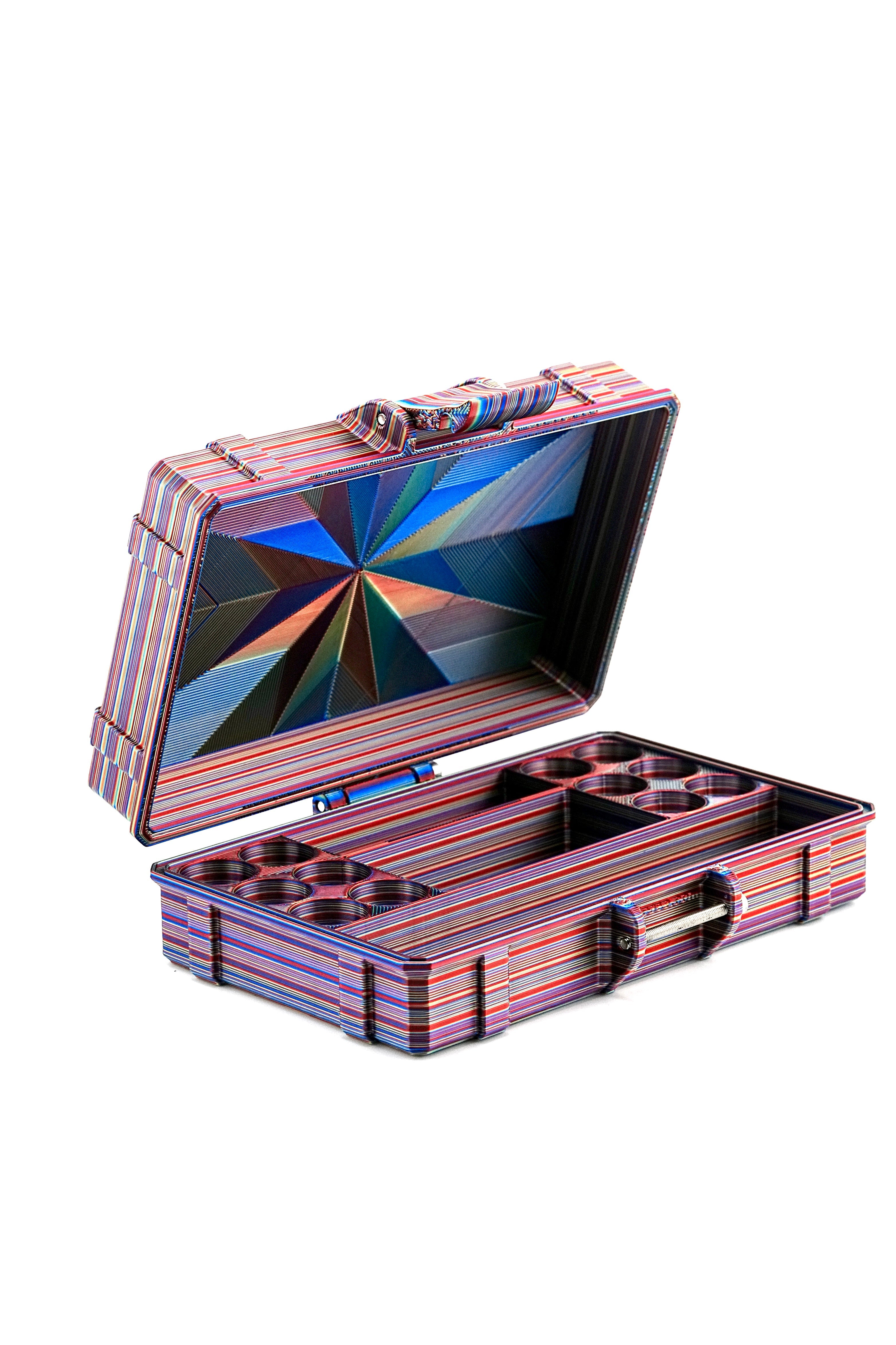
A quality PeptideCase keeps every vial organized, labeled, and temperature-stable from the moment it enters your possession. After everything you went through to get the compounds to your door, proper storage is the last thing that should be an afterthought.