Disclaimer: This article is for informational purposes only and does not constitute legal advice. Laws and enforcement priorities change. Consult an attorney familiar with FDA and import regulations for advice specific to your situation.
FDA's Personal Importation Policy: The 90-Day Supply Rule
The FDA has a formal personal importation policy that allows enforcement discretion for individuals importing unapproved drugs for personal use under specific conditions. The most widely cited threshold is a 90-day supply — meaning that quantities consistent with personal use for roughly three months are less likely to trigger enforcement action than larger quantities that suggest commercial resale or distribution.
The key word is "discretion." This policy does not make such imports legal; it describes circumstances under which the FDA may choose not to act. The full criteria in FDA's guidance include: the product is for personal use and not for resale, the product does not pose an unreasonable safety risk, the importer acknowledges the product is for personal use, and the quantity does not exceed a 90-day supply. Meeting all of these conditions improves (but does not guarantee) your odds of successful import.
It's also worth noting that this is FDA policy, not law. The Food, Drug, and Cosmetic Act technically prohibits importing unapproved drugs for human use regardless of quantity. The personal importation policy is an administrative exercise of prosecutorial discretion — not a statutory right that you can invoke if challenged.
What "Research Use Only" Labeling Actually Means
Most research peptides sold online carry labels stating "Research Use Only — Not for Human Use." This language is a legal hedge used by vendors to avoid FDA marketing violations. The FDA prohibits selling unapproved drugs with claims of safety or efficacy for human use. By labeling products as "research use only," vendors argue they are not making human-use claims.
This does not create a legal exemption for buyers. If you purchase a "research use only" peptide and use it on yourself, you are using a drug that has not been approved for human use by the FDA. Whether that carries legal consequences depends entirely on context — personal use with no commercial element is low on every enforcement agency's priority list. But the label itself is not a legal shield for the end user; it's a legal shield for the seller.
From a practical standpoint, "research use only" labeling on an import declaration is likely to attract more scrutiny than less, not less. CBP agents are not necessarily familiar with the nuances of FDA research compound policy. Plain labeling that accurately describes the contents (e.g., "peptide sample, research compound") without inflammatory language is generally preferable.
Pro Tip: Quantity matters more than labeling for import success. Keep orders to quantities consistent with personal use (a few vials, not dozens), avoid bulk orders that look like resale inventory, and never order to a business address or request commercial-quantity packaging.
Scheduled vs. Unscheduled Compounds: A Critical Distinction
Not all peptides are legally equivalent at the border. The DEA schedules controlled substances under the Controlled Substances Act. Most research peptides — including BPC-157, Retatrutide, Tirzepatide analogues, TB-500, GHK-Cu, and most GLP-1 compounds — are not scheduled controlled substances. They are regulated by the FDA as unapproved drugs but are not criminally controlled in the same way that anabolic steroids or benzodiazepines are.
This distinction matters enormously at customs. Seizing an unscheduled peptide typically results in a civil administrative action — a detention notice or seizure letter — rather than criminal referral. The package is simply stopped and you receive a letter. Compare this to scheduled substances, where import can trigger criminal investigation regardless of quantity.
Peptides that exist in legal grey areas include some SARMs (which the FDA has taken enforcement action against) and certain synthetic peptide hormones that may be scheduled in specific states. Check both federal scheduling and your state's controlled substances list before importing any compound you're uncertain about.
CBP vs. FDA: Who Actually Makes the Decision
Customs and Border Protection (CBP) is the agency that physically intercepts your package. FDA is the agency whose regulations govern whether the substance is legal to import. In practice, the two agencies have different priorities and different levels of expertise about specific compounds.
CBP agents are primarily focused on drugs of abuse, counterfeit goods, and prohibited agricultural products. Research peptides are a low priority relative to narcotics, counterfeit electronics, and weapons. Most small shipments of research peptides pass through mail facilities without triggering any inspection at all — not because they're legal, but because the volume of international mail vastly exceeds inspection capacity.
When CBP does intercept a shipment suspected of violating FDA rules, they can refer it to FDA for review or make an independent decision to release it. FDA's Import Operations staff then applies the personal importation criteria and decides whether to release or seize. The practical result is that enforcement is highly inconsistent and dependent on which facility processes your package, current enforcement priorities, and what the package declaration says.
How to Maximize Import Success
Based on what is publicly known about FDA personal importation enforcement, these practices tend to reduce seizure risk:
- Keep quantities reasonable. Order what you need for a protocol cycle, not a year's supply at once. Two to four vials raises far less concern than twenty.
- Ship to a residential address. Business addresses can trigger commercial quantity assumptions.
- Use reputable vendors who understand international shipping. Experienced vendors know how to package and declare shipments appropriately.
- Avoid consolidating multiple compounds into one large shipment. Separate orders over time are less conspicuous than a large multi-compound package.
- Don't request expedited shipping that attracts attention. Standard international mail (USPS / Royal Mail / Deutsche Post international) passes through facilities with the least intensive inspection relative to DHL or FedEx international parcels, which face higher inspection rates.
- Have documentation ready if asked. A COA or product information sheet in English showing the compound is a research chemical (not a known drug of abuse) can help if your package is flagged for review.
What to Do If You Receive a Seizure Notice
If your package is seized, you'll typically receive an FDA Import Alert notice or a CBP seizure notice in the mail. This is not an arrest warrant or criminal charge — it's an administrative notice that your shipment has been detained and is being considered for destruction.
Your options in response to a seizure notice: you can consent to destruction (do nothing, package is destroyed), request the FDA reconsider based on the personal importation criteria, or in rare cases petition for the return of the shipment with documentation. For most research peptide seizures involving personal-use quantities, the practical outcome is that you lose the package and the money — there is no follow-up enforcement action against the importer.
If you receive multiple seizure notices in a short period, that pattern may attract greater scrutiny. Keep records of all correspondence, and if you've received more than one notice, consider consulting an attorney before responding or placing additional orders.
Domestic US Sources: A Lower-Risk Alternative
For buyers who want to eliminate import risk entirely, domestic US-based research peptide vendors offer another path. These vendors import bulk quantities themselves (often facing the same legal ambiguity but at commercial scale) and resell to end users within the US. Domestic shipping carries no customs risk and typical delivery times are 2-5 business days.
The tradeoff is that domestic vendors are generally more expensive than direct-from-China sources — sometimes significantly so for GLP-1 compounds. Quality varies just as widely as international sources, so the same COA verification standards from our Chinese peptide quality guide apply equally to domestic vendors.
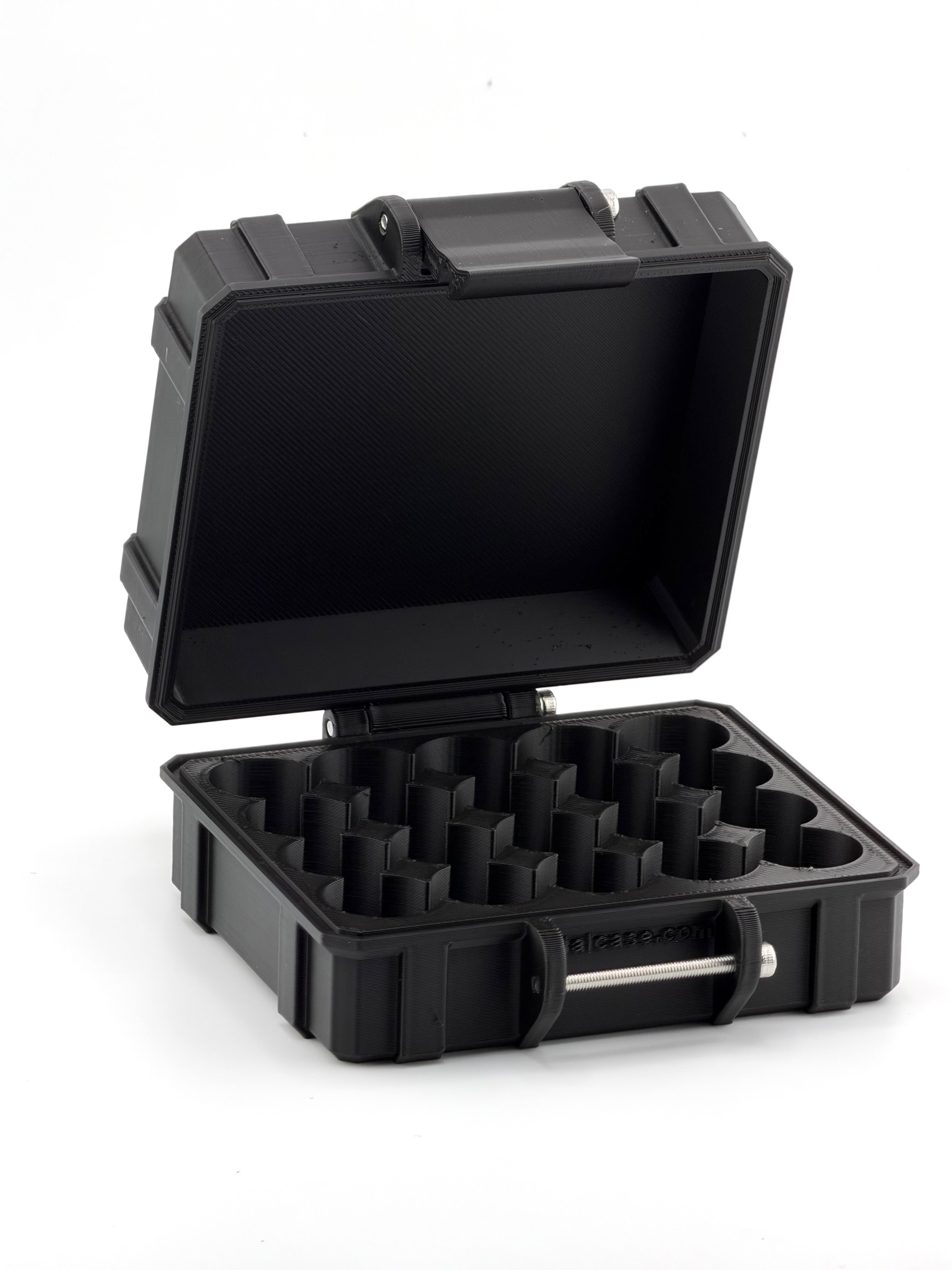
Whether you import directly or buy domestically, the moment your verified peptides arrive, storage quality becomes your primary responsibility. A dedicated peptide case protects the investment you've made regardless of where the peptides came from — keeping them at the right temperature, protected from light, and organized for your protocol from first dose to last. Browse the full PeptideCase collection to find the right size for your vials.
Bottom Line: Most personal-use peptide imports pass without issue. Seizures happen and are annoying but rarely result in follow-up enforcement. Keep quantities small, use reputable vendors, and always store properly once your peptides arrive safely.