Why Storage Method Matters More Than Most People Realize
Peptides are structurally fragile molecules. Unlike small-molecule drugs that tolerate a degree of environmental abuse, peptides — whether you're running BPC-157, semaglutide, tirzepatide, or retatrutide — degrade in response to three primary stressors: heat above 8°C, light exposure, and physical impact that breaks glass vials or compromises stoppers. The difference between a well-stored peptide and a poorly stored one isn't visible to the naked eye, but it shows up in results.
The problem is that most people default to whatever is convenient — tossing vials in the fridge door, using a sandwich bag, or repurposing a random box — without thinking through what each of those choices actually costs them in terms of compound integrity. This guide ranks every commonly used storage solution from worst to best, scores each on the five dimensions that actually matter, and gives you a clear bottom line.
The five scoring dimensions used throughout this guide:
- Temperature control — does the solution keep vials in the stable 2–8°C range?
- Light protection — does it block ambient and UV light from reaching the vial?
- Organization — can you identify and access individual vials without disturbing others?
- Travel capability — can this solution travel safely with temperature retention?
- Impact protection — does it protect glass vials from drops, pressure, and vibration?
Each solution is scored Poor / Fair / Good / Excellent on each dimension. No solution earns Excellent in every category except the one at #1.
Pro Tip: Before you read the rankings, know your vial size. The most common sizes are 3ml and 10ml. GLP-1 compounds like semaglutide and tirzepatide from compounding pharmacies typically come in one of these two sizes. Your storage solution needs to match your actual vial dimensions — otherwise you're creating the exact rattle-and-impact problems that break stoppers and contaminate contents.
The Rankings: #10 to #1
#10 — Nothing (Loose Vials in the Fridge Door)
The default choice for people who haven't thought about storage yet is no solution at all — vials loose in the fridge door rack, sitting alongside condiments and leftovers. This is, without question, the worst possible approach.
The fridge door is the single most temperature-unstable location in any refrigerator. Every time the door opens, it swings into room-temperature air. The door shelf heats up faster than any interior location and takes longer to return to the set temperature. Studies of domestic refrigerator temperature variation consistently show door shelves experiencing swings of 4–10°C during normal use — far outside the 2–8°C safe range for reconstituted peptides.
Beyond temperature, loose vials get knocked over, roll into each other, and fall out of the door rack entirely. Glass-on-glass contact chips stoppers and creates micro-fractures. There is no light protection — every door opening floods the vials with full-spectrum kitchen light. There is no travel capability. There is no organization.
- Temperature control: Poor — door shelf is the most thermally unstable zone
- Light protection: Poor — zero shielding from ambient or direct light
- Organization: Poor — vials roll, tip, and intermingle
- Travel capability: Poor — completely unusable for transport
- Impact protection: Poor — glass-on-glass contact is the norm
Bottom line: Compounds priced at $100–$600 per vial deserve better than the condiment shelf. This approach degrades your investment at every level simultaneously.
#9 — Ziploc Bag
The Ziploc bag is a marginal improvement over nothing — it at least keeps the vials together and prevents them from rolling into the back of the fridge. But it addresses none of the real failure modes. A bag provides zero light blocking; the clear plastic offers no filtration of the light spectrum that damages photosensitive compounds like GHK-Cu, melanotan-2, and the GLP-1 class. There is no impact protection: glass vials inside a bag can and do contact each other, and the bag itself offers no crush resistance if a food container lands on top of it.
A bag also provides no temperature stability. It's equally bad in the fridge door or the interior, and completely unusable for travel without a secondary container. On the organization front, a bag of vials with no labeling system is a mystery grab every time you need a dose. See our guide on how to label peptide vials for why labeling matters regardless of which container you use.
- Temperature control: Poor — provides no thermal insulation or stability
- Light protection: Poor — clear plastic blocks nothing
- Organization: Poor — vials heap together with no separation
- Travel capability: Poor — no structure for transport
- Impact protection: Poor — no crush resistance
Bottom line: The Ziploc bag is a temporary measure at best. It keeps vials in one place but does nothing to protect them from the stressors that actually degrade peptide integrity.
#8 — Cardboard Box
A cardboard box — whether it's the original shipping box your vials arrived in or a repurposed pantry item — provides slightly better impact protection than a bag, and it does block ambient light to a degree. But it introduces its own problems. Cardboard absorbs moisture, which creates a humid microenvironment that can degrade rubber stoppers over time. It provides no thermal insulation. It has no vial-specific organization; vials tip and roll inside a box. And cardboard is not travel-ready — it compresses under weight and offers no protection against the specific point-load impact of a dropped case or luggage shifting in an overhead bin.
The light-blocking benefit is real but limited. A cardboard box left in a room still allows some light through seams and the cardboard material itself, particularly when it's thin. It's meaningfully better than clear plastic but still not a real solution for photosensitive compounds that will sit for weeks or months.
- Temperature control: Fair — provides minimal insulation but no active thermal management
- Light protection: Fair — blocks ambient light but not fully opaque at seams
- Organization: Poor — no slots or separation for individual vials
- Travel capability: Poor — compresses under weight, not portable
- Impact protection: Fair — better than nothing, not adequate for drops
Bottom line: A marginal improvement for static in-fridge storage, but still a completely inadequate solution. The moisture problem alone makes it worse than it appears.
#7 — Pill Organizer Repurposed for Vials
Pill organizers — the kind with day-of-week compartments for tablets and capsules — are sometimes pressed into service for vial storage by people looking for an inexpensive organizational tool. The concept is reasonable; the execution is wrong. Pill organizer compartments are sized for tablets and gel caps, not 3ml or 10ml glass vials. Vials sit loosely in oversized slots, tip sideways, and make glass-to-glass contact with neighboring compartments. The lids on most pill organizers are thin plastic and provide no crush resistance.
Most pill organizers are translucent or fully transparent, meaning light protection is essentially zero. They're not insulated. They're not designed for fridge use — the thin plastic can become brittle at refrigerator temperatures over time. And they're not meaningfully travel-ready: the snap-close lids that work fine for tablets will pop open when a vial tips and puts lateral pressure on the seam.
- Temperature control: Poor — no thermal properties
- Light protection: Poor — most are translucent or clear
- Organization: Fair — creates compartments, but wrong dimensions for vials
- Travel capability: Poor — lids not secure enough for vial weight
- Impact protection: Poor — thin plastic shell, no vial-specific retention
Bottom line: Wrong tool for the job at a fundamental level. Slot dimensions that don't match vial geometry create problems regardless of how inexpensive the solution is.
#6 — Small Generic Cooler Bag
A small insulated lunch cooler — the kind sold for keeping beverages cold during travel — addresses temperature better than any solution ranked below it. If you add a gel ice pack, a cooler bag genuinely can maintain 2–8°C for several hours, which makes it the first option on this list that has any legitimate travel capability. For that reason alone, it ranks higher than the options above.
But a generic cooler bag fails everywhere else. There are no vial-specific slots; vials rattle around against the ice pack and each other. Light protection depends entirely on whether the exterior fabric is opaque (most are; some are not). There is no impact protection against point-load pressure. Organization is zero — a cooler bag is a bag, not an organizer. And while it travels, it doesn't travel well: no hard shell means the contents are vulnerable to compression in a bag or checked luggage.
- Temperature control: Good — genuine thermal retention with ice pack
- Light protection: Fair — depends on fabric opacity, not designed for this
- Organization: Poor — no slots, vials rattle
- Travel capability: Fair — portable but no crush resistance
- Impact protection: Poor — no hard shell or vial retention
Bottom line: The first option with real temperature capability, but it solves one problem while ignoring the rest. Best used as a temporary travel solution when nothing better is available.
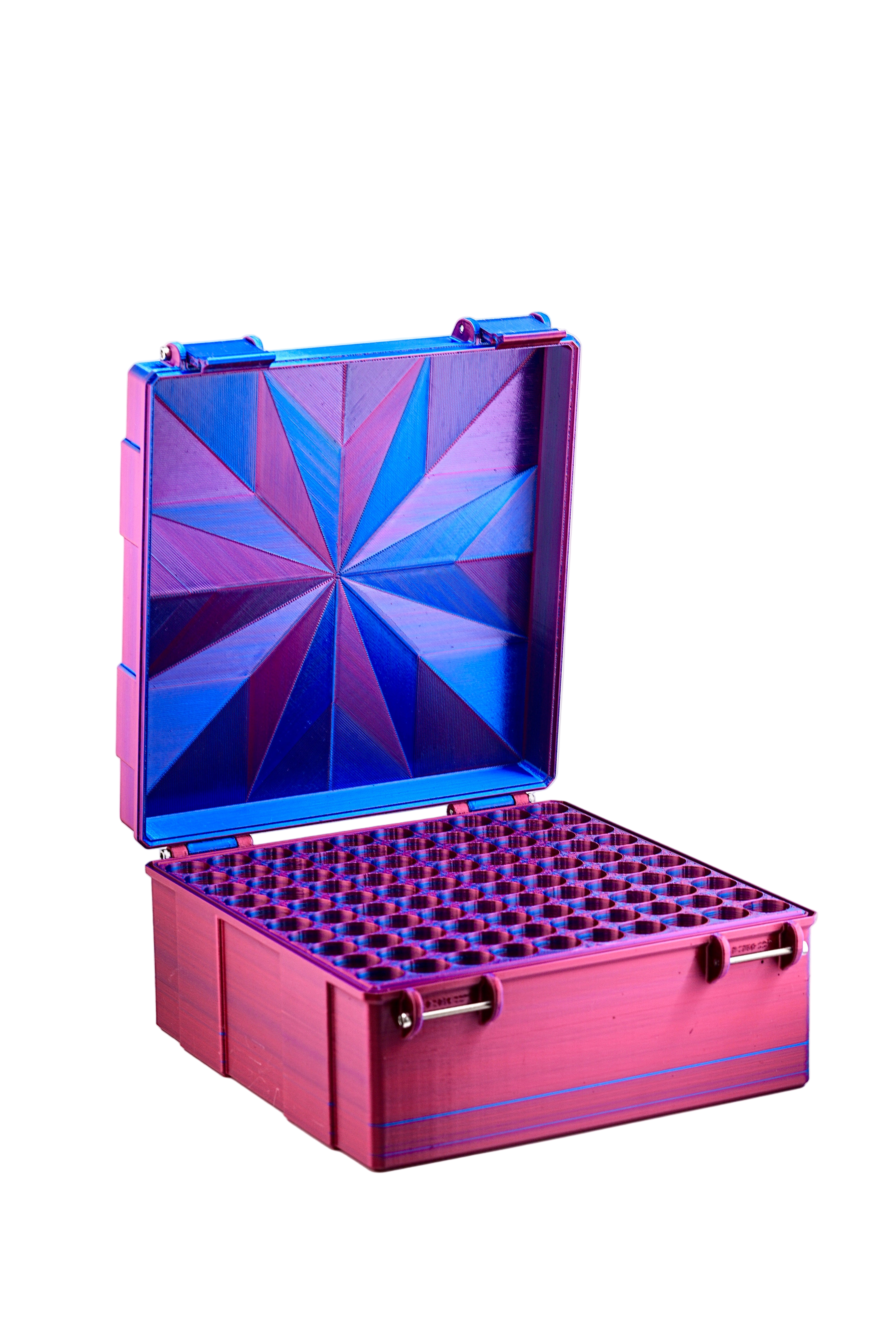
#5 — Medicine Cabinet Organizer
A dedicated organizer on a bathroom or kitchen medicine shelf — a step-up bin, a tiered organizer, or a cabinet insert — provides genuine organization benefits. Individual vials get their own space, you can see them clearly, and you can label them properly. For a static protocol that never leaves the house, this approach is notably better than anything ranked below it purely from an organizational standpoint.
The critical failure: room temperature. A medicine cabinet is typically 20–24°C. Reconstituted peptides stored at room temperature degrade dramatically faster than refrigerated ones — for most compounds, room temperature storage reduces effective shelf life from weeks to days. Even lyophilized (dry powder) peptides that tolerate room temperature for short periods should not be permanently stored outside refrigeration. See our peptide storage temperature chart for compound-by-compound data. A room-temperature organizer is only acceptable for very short-term holding of specific compounds.
- Temperature control: Poor — room temperature accelerates degradation for most compounds
- Light protection: Fair — cabinet blocks light when closed, but no guarantee
- Organization: Good — dedicated slots, visible, label-friendly
- Travel capability: Poor — designed for static placement only
- Impact protection: Fair — better than loose, not protective against drops
Bottom line: Good organization, catastrophic temperature management. Unless you're storing only dry-powder peptides with verified room-temperature stability, this is not a viable option for active protocols.
#4 — Dedicated Fridge Shelf or Drawer
Assigning a specific shelf or drawer inside your refrigerator exclusively to peptide vials is a meaningful protocol upgrade. It moves your compounds out of the door (the worst temperature zone) and into the interior, where temperature is far more stable. A dedicated shelf means you're not digging through food to find vials, which reduces the time the fridge door stays open during access. It also provides a clear home for your protocol that makes organization intuitive.
The limitations are real, though. A bare shelf provides zero impact protection — vials can still tip and roll, especially in households with children or pets. There is no light protection when the fridge opens. And most importantly, a dedicated shelf provides no travel solution whatsoever. Your peptides live in the fridge; they stay there. For users whose protocol never leaves home, this is a genuinely acceptable solution for the in-fridge portion, but it's incomplete as a full storage system. Read more about peptide fridge organization to get the most out of a dedicated shelf setup.
- Temperature control: Good — interior shelf is stable and within the 2–8°C range
- Light protection: Fair — fridge is dark when closed, exposed during access
- Organization: Good — dedicated space improves protocol hygiene
- Travel capability: Poor — zero portability
- Impact protection: Fair — better than door, but vials still unprotected
Bottom line: The best purely home-based approach for temperature control. Still incomplete as a storage system — add a case for impact protection even if you never travel.
Pro Tip: If you use a dedicated fridge shelf, place your vials in the middle shelves toward the back — not the front, not the door. The back of the middle shelf has the most stable temperature in any domestic refrigerator. Front-of-shelf placement gets briefly exposed to warm air every time the door opens. The difference is small but compounds over weeks of storage.
#3 — Generic Hard Case (Pelican-Style Without Foam Inserts)
A generic hard-shell case — the kind sold for camera equipment, tools, or small electronics — provides a meaningful jump in impact protection over everything ranked below it. A hard shell rated for drops survives the impacts that are lethal to glass vials. An opaque hard case also blocks light completely when closed. For these two dimensions, a generic hard case is the first solution on this list that earns Excellent marks.
The failure is internal. Generic hard cases ship with either no foam or pick-n-pluck foam that requires custom configuration. Without vial-specific slots machined or cut to 3ml and 10ml diameters, vials sit loosely inside the case and bang against each other and the interior walls during transport. The very rigidity that makes the case excellent at stopping external impact actually amplifies internal vial movement unless the interior is properly configured. A hard case with loose vials inside is, counterintuitively, worse for glass breakage than a soft case with vials wrapped in padding.
- Temperature control: Fair — no thermal properties; relies on fridge or ice pack
- Light protection: Excellent — opaque hard shell blocks all light
- Organization: Fair — without vial-specific inserts, organization is minimal
- Travel capability: Good — hard shell survives travel, but interior movement is a risk
- Impact protection: Good — excellent externally, poor internally without proper foam
Bottom line: Right idea, incomplete execution. A generic hard case without vial-specific foam inserts solves the external impact problem while creating a new internal impact problem. Better than everything below it, but not a complete solution.
#2 — Foam-Padded Case with Vial Slots (Non-Purpose-Built)
A foam-padded case with pre-cut vial slots — typically a camera lens case, a medical equipment case, or a DIY case with aftermarket foam inserts — addresses the internal impact problem of the generic hard case. When each vial sits in its own foam-lined slot, it can't contact neighboring vials, and the foam absorbs drop energy instead of transferring it to the glass. This is a materially better solution than a bare hard case.
The limitation is fit. Foam inserts in cases not built specifically for 3ml and 10ml peptide vials are cut to different dimensions — camera lens sizes, laboratory tube standards, or arbitrary round holes that don't precisely match the diameter of a peptide vial. Vials either sit too loosely (still rattle) or require force to insert and remove (stopper contamination risk). There is also typically no cold-pack slot, no labeling system, and no consideration for the mixed 3ml/10ml vial combinations common in multi-compound protocols. It gets you 80% of the way to the right answer but not 100%.
- Temperature control: Fair — foam provides minimal insulation but no active thermal retention
- Light protection: Good — opaque shell with foam lining blocks light well
- Organization: Good — individual slots for each vial, but dimensions may not match
- Travel capability: Good — hard shell with retained vials travels well
- Impact protection: Good — foam-cushioned slots absorb energy, glass protected
Bottom line: The best generic solution available. Gets most of the work done. Falls short only on precision fit and purpose-built features. For users who can't access a purpose-built option, this is the right approach — with the caveat that imprecise slot dimensions are the remaining weak point.
#1 — Purpose-Built Peptide Vial Case (VialCase)
The VialCase is the only storage solution on this list engineered specifically for 3ml and 10ml peptide vials from the ground up. Every other option is either repurposed from a different application or a generic case that approximates the right form factor. The VialCase starts with the vial and builds outward.
The machined foam inserts are cut to exact 3ml and 10ml vial specifications — vials seat flush, don't rattle, and don't require force to insert or remove. The hard outer shell is fully opaque with zero light penetration at seams or closures — no amber filtering, no partial blocking, complete blackout. The shell is crush-resistant and rated for drops, meaning external impacts don't transfer to the glass. The compact form factor fits on a standard fridge shelf without monopolizing space.
For travel, the VialCase fits TSA carry-on requirements, holds a gel cold pack in configurations that include a cold-pack slot, and maintains temperature for hours away from refrigeration. For protocol management, the slot layout supports labeling with standard round labels or the included label kit, making dose tracking and reconstitution date management straightforward. For users running semaglutide, tirzepatide, or retatrutide, the case handles the 10ml compounded vials that GLP-1 protocols typically use. For multi-compound stacks — BPC-157, TB-500, CJC-1295, Ipamorelin — the 8-slot configuration covers a full protocol with room for BAC water. See our detailed best peptide case for 2026 guide for side-by-side configuration comparisons.
- Temperature control: Excellent — paired cold pack maintains 2–8°C for hours; fridge-optimized footprint
- Light protection: Excellent — fully opaque hard shell, zero light penetration
- Organization: Excellent — precision-machined slots for exact vial sizes, label-ready
- Travel capability: Excellent — TSA-compliant, cold-pack compatible, hard-shell travel case
- Impact protection: Excellent — crush-resistant shell with foam-lined vial-specific slots
Bottom line: The only solution that earns Excellent across all five dimensions. Purpose-built beats repurposed in every single category. If you are spending $100–$600 per vial on peptides, the storage case is not the place to cut corners. See all VialCase configurations →
The Scorecard: All 10 Solutions Side by Side
Here is the full comparison across all five dimensions for every solution ranked in this guide:
- #10 — Loose vials, fridge door: Poor / Poor / Poor / Poor / Poor
- #9 — Ziploc bag: Poor / Poor / Poor / Poor / Poor
- #8 — Cardboard box: Fair / Fair / Poor / Poor / Fair
- #7 — Pill organizer: Poor / Poor / Fair / Poor / Poor
- #6 — Generic cooler bag: Good / Fair / Poor / Fair / Poor
- #5 — Medicine cabinet organizer: Poor / Fair / Good / Poor / Fair
- #4 — Dedicated fridge shelf: Good / Fair / Good / Poor / Fair
- #3 — Generic hard case (no foam): Fair / Excellent / Fair / Good / Good
- #2 — Foam case (non-purpose-built): Fair / Good / Good / Good / Good
- #1 — Purpose-built peptide case (VialCase): Excellent / Excellent / Excellent / Excellent / Excellent
The pattern is clear. No solution below #3 earns Good or better on more than two dimensions. Purpose-built wins every single category, not by a small margin, but categorically. The gap between #2 and #1 is the difference between approximate and precise — and for glass vials carrying biological compounds worth hundreds of dollars, precision is the correct standard.
Frequently Asked Questions
Can I just use the original packaging my peptides came in?
Original shipping packaging is designed for single transit, not ongoing storage. Cardboard mailers and foam inserts that survive a FedEx shipment are not rated for months of fridge use, temperature cycling, or repeated access. The cardboard absorbs moisture. The foam isn't cut to hold vials upright long-term. Original packaging is a starting point, not a storage system.
Does my storage solution need to be different for GLP-1 versus research peptides?
The storage requirements are essentially the same — 2–8°C, light protection, no physical shock — but GLP-1 vials are often 10ml, larger than typical 3ml research peptide vials. Make sure your case has the right slot size for your vial. A 3ml slot will not accommodate a 10ml vial. A 10ml slot is too large for a 3ml vial. Many users running mixed protocols need a case that handles both sizes. See our best GLP-1 storage case guide for configuration-specific recommendations.
Is it overkill to use a purpose-built case for just one or two vials?
No. A single vial of compounded semaglutide can cost $200–$400. A purpose-built case costs a fraction of that and provides protection for the lifetime of your protocol. The economics strongly favor the case regardless of how many vials you're storing. A 2-slot or 4-slot configuration is available for small protocols without requiring you to overbuy capacity.
What about freezer storage for lyophilized peptides?
Dry-powder (lyophilized) peptides can be stored at −20°C for 12–24 months. Most of the solutions above are not rated for freezer temperatures — standard plastics become brittle, cardboard absorbs frost, and many foam formulations compress and crack at sustained low temperatures. If you're storing dry-powder peptides in the freezer, use a case specifically rated for those conditions. The VialCase freezer-safe configuration uses cold-tolerant materials and a silicone gasket that maintains the seal at −20°C.
This content is for informational and educational purposes only and does not constitute medical advice. Always consult a licensed healthcare provider before beginning any peptide or hormone protocol.