Quick Answer: Does Testosterone Need to Be Refrigerated?
No. Testosterone cypionate and testosterone enanthate do not require refrigeration. The correct storage temperature is room temperature — 68–77°F (20–25°C) — as specified by the USP (United States Pharmacopeia) for controlled room temperature storage. Putting testosterone in the fridge is not just unnecessary; it actively works against you by thickening the carrier oil and making injections more difficult.
This surprises a lot of people who are used to storing GLP-1 peptides like semaglutide or refrigerating their BPC-157 vials. The rules for testosterone are completely different, and understanding why requires a quick look at the underlying chemistry.
Bottom Line Up Front: Store testosterone vials at room temperature, in a dark location, away from direct sunlight and humidity. Do not refrigerate. Do not freeze. Mark the date of first use on the vial label.
Why TRT Storage Is Different from Peptide Storage
Peptides and testosterone are fundamentally different molecules with fundamentally different storage needs. Understanding this distinction prevents the most common mistakes.
Testosterone is a steroid hormone dissolved in a carrier oil — typically sesame oil, cottonseed oil, or MCT oil — at concentrations like 200 mg/mL. The oil-based solution is chemically stable at room temperature. The testosterone ester (cypionate or enanthate) is an oil-soluble compound that bonds to the carrier oil, protecting it from rapid degradation. This stability is exactly why testosterone injections work on weekly or twice-weekly schedules rather than daily dosing — the ester releases testosterone slowly over days.
Peptides, by contrast, are chains of amino acids dissolved in water (after reconstitution). They are inherently fragile. Amino acid bonds are vulnerable to heat, light, oxidation, and bacterial contamination in ways that an oil-soluble steroid ester simply is not. This is why BPC-157 requires refrigeration while testosterone sits fine at room temperature.
The practical upshot: you cannot treat your testosterone vial the same way you treat your peptide vials. Refrigerating testosterone does not preserve it — it just makes it harder to use. If you are running TRT alongside peptides, you need to manage two different sets of storage requirements simultaneously, which we will cover in detail below.
Official Storage Requirements for Testosterone Cypionate
Testosterone cypionate USP carries a clear directive: store at controlled room temperature 20–25°C (68–77°F). This is the standard "room temperature" definition in pharmaceutical compendium terminology — it does not mean "wherever happens to be room temperature in your house on a hot summer day." It means a consistently cool, climate-controlled indoor space.
Additional labeling language typically includes:
- Protect from light
- Protect from freezing
- Keep out of reach of children
- For multi-dose vials: discard unused portion within the in-use period noted on the label
No pharmaceutical labeling for testosterone cypionate recommends refrigeration. If you received testosterone from a compounding pharmacy and the label says something different, follow the label — compounding pharmacies sometimes use different excipients that affect storage requirements. But for standard oil-based testosterone formulations, room temperature is the answer.
Testosterone Enanthate: Same Rules Apply
Testosterone enanthate follows identical storage guidelines. Room temperature, protected from light, no refrigeration required. The enanthate ester has a slightly longer half-life than cypionate (10–14 days vs. 8–12 days), but the storage requirements are the same — both are oil-based injectable steroids with comparable chemical stability.
The only practical difference between the two from a storage standpoint is viscosity. Testosterone enanthate tends to be slightly more viscous than cypionate at the same temperature, which makes keeping it at room temperature (rather than cold) even more important for smooth draws.
Why You Should Not Refrigerate Testosterone
Refrigeration causes a genuine problem with oil-based injectables: it thickens the oil significantly. Most carrier oils — sesame, cottonseed, MCT — become noticeably more viscous at refrigerator temperatures (35–40°F / 2–4°C).
When you try to draw cold testosterone oil through an 18–21 gauge needle, you encounter several problems:
- Increased draw resistance. Cold oil requires substantially more force on the plunger. This slows down the draw and strains the syringe mechanism.
- Air bubble formation. The extra force and turbulence when drawing cold oil creates micro-bubbles that are difficult to purge before injection.
- Incomplete draw. Thick oil clings to the vial walls and stopper more aggressively, making it harder to draw the full intended dose.
- Harder injection. Oil that is still cold at injection time pushes back harder against the plunger. This makes slow, controlled injection (which minimizes post-injection pain) more difficult.
If you accidentally refrigerated a vial, the fix is simple: warm the vial in your hand for 30–60 seconds, or place it in a cup of lukewarm (not hot) water for a minute or two. The oil will return to its normal viscosity. Never microwave a testosterone vial.
Pro Tip: Even at room temperature, warming your testosterone vial for 30 seconds in your hand before drawing can make a noticeable difference in injection smoothness. Body temperature (98.6°F / 37°C) is above controlled room temperature and reduces viscosity further.
Light Sensitivity: Protect Your Testosterone Vials from UV
Testosterone is light-sensitive. UV radiation and extended exposure to bright visible light can degrade testosterone esters over time through a process of photolytic degradation — essentially, light energy breaks apart the molecular bonds holding the ester together.
This is why pharmaceutical testosterone comes packaged in amber-colored vials. Amber glass filters UV wavelengths more effectively than clear glass, providing meaningful protection. But amber glass is not a complete shield — it still transmits visible light, and extended exposure to sunlight or bright indoor lighting adds up over the weeks of a multi-dose vial's in-use period.
The practical implications:
- Do not store testosterone on a windowsill or countertop where it receives daily sunlight
- Do not leave the vial under bright overhead lighting any longer than necessary during your injection protocol
- Store in a drawer, cabinet, or opaque case that blocks ambient light entirely
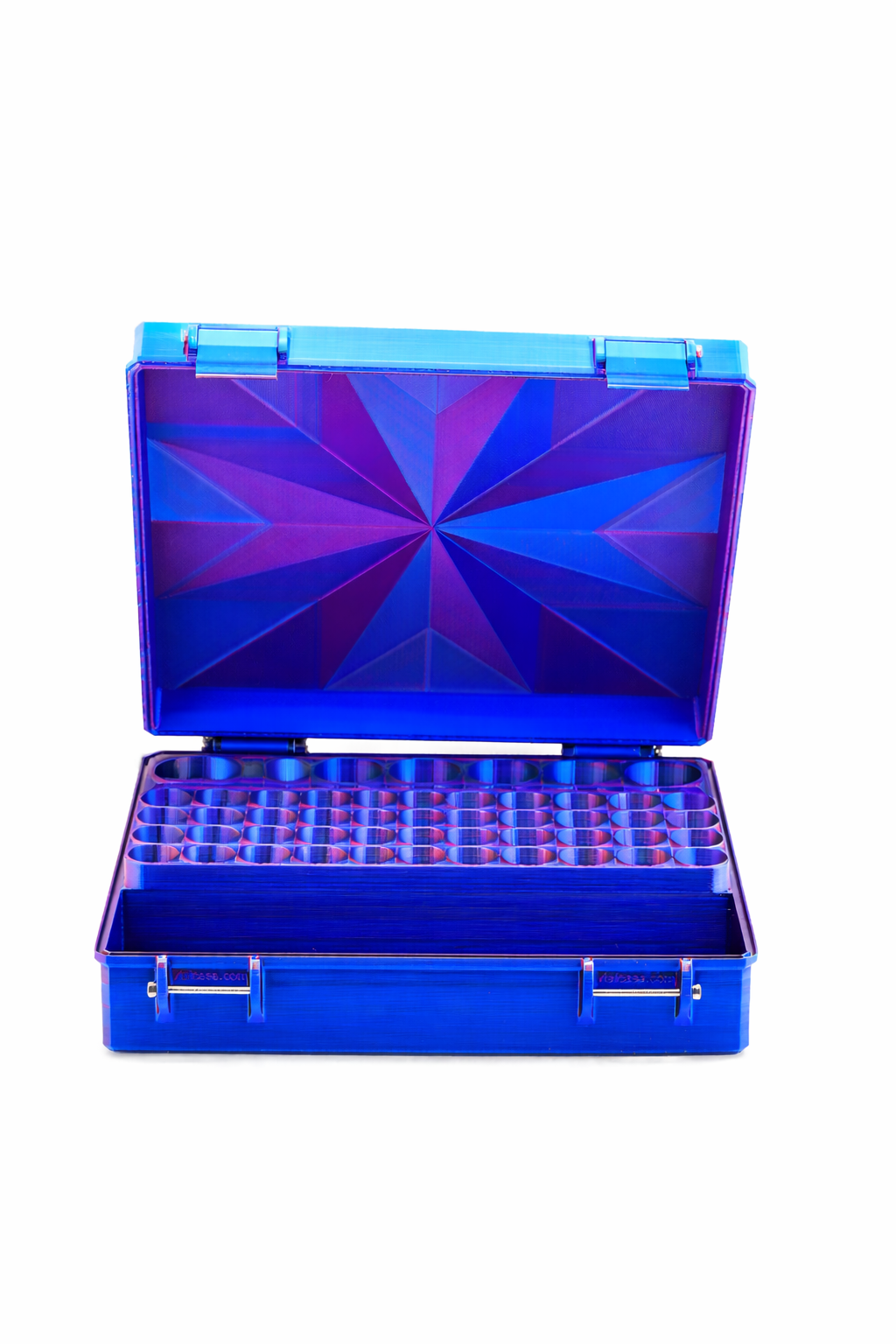
- An opaque hard-shell vial case doubles as both physical protection and a light shield — similar to the recommendation for amber vs. clear vials for light-sensitive compounds
Light degradation of testosterone happens slowly — you are unlikely to notice a difference from a single day's sunlight exposure. The concern is cumulative degradation over the lifespan of a multi-dose vial that is punctured weekly for a month or more.
Multi-Dose Vial Shelf Life: Unopened and After First Use
Testosterone vials have two relevant expiration dates: the manufacturer's expiration date (printed on the label, typically 2–5 years from manufacture) and the in-use expiration (which starts the moment you puncture the stopper for the first time).
Unopened vials: Follow the manufacturer's expiration date on the label. Stored correctly at room temperature, away from light, an unopened testosterone vial remains potent until that date. There is no need to use it faster.
After first puncture: This is where most TRT patients are less certain. The standard compounding pharmacy guideline for multi-dose vials is 28 days after first use. Some branded, pharmaceutical-grade multi-dose vials (like Depo-Testosterone) carry longer in-use periods specified on their labeling — check your specific product.
The 28-day guideline exists because every time you puncture the stopper with a needle, you introduce a small risk of contamination. Benzyl alcohol (the preservative used in most testosterone formulations) inhibits bacterial growth, but it is not infinitely effective against repeated puncture contamination.
Important habit: Write the date of first use on the vial label with a permanent marker the moment you open it. Do not rely on memory. A 10 mL vial at 200 mg/mL gives you 50 doses at 0.5 mL — if you inject once a week, that vial lasts about 12 months. Long before it runs out, the 28-day in-use clock has expired multiple times. Track your vials.
Temperature Limits: What to Avoid
While testosterone handles room temperature without issue, there are upper limits to respect. Avoid storing testosterone above 30°C (86°F) for extended periods. At elevated temperatures, the ester bond between the testosterone molecule and the fatty acid chain (cypionate or enanthate) can begin to hydrolyze — breaking down over time and potentially affecting potency.
Specific situations to avoid:
- Hot cars in summer. A parked car in direct sun can reach 140°F (60°C) within an hour. Do not leave testosterone vials in a parked car on a warm day. Brief transit in a car with air conditioning is fine.
- Near heat sources. Keep vials away from radiators, space heaters, or appliances that generate ambient heat.
- Checked luggage in warm climates. Aircraft cargo holds can experience significant temperature extremes. If you are traveling with testosterone, carry it on.
- Direct sunlight through windows. Even in a cool room, a vial sitting on a sunny windowsill can reach temperatures well above the recommended range.
Brief temperature excursions — a 20-minute drive in a warm car — are generally not a concern. Cumulative exposure over hours at high temperatures is the real risk.
Compounded vs. Pharmaceutical-Grade Testosterone: Storage Comparison
Whether your testosterone comes from a compounding pharmacy or is a branded pharmaceutical product (like Depo-Testosterone by Pfizer), the core storage requirements are the same: room temperature, protected from light, no refrigeration.
That said, there are a few nuances worth knowing:
- Carrier oil differences. Compounded testosterone sometimes uses different carrier oils (MCT, grapeseed oil) that may have slightly different viscosity profiles, but all are appropriate for room temperature storage.
- Benzyl alcohol concentration. Most compounded testosterone uses 0.9% benzyl alcohol as a preservative — the same as standard. Some formulations use benzyl benzoate as an additional co-solvent. These differences do not change the core storage guidance.
- Label guidance overrides everything. If your compounding pharmacy's label specifies a different storage condition — refrigeration, for example, due to a specialized formulation — follow the label. This guide covers standard oil-based testosterone formulations.
Best Places to Store Testosterone at Home
Given the requirements — room temperature, dark, low humidity, away from heat — here are the best home storage locations for testosterone vials, ranked:
- A cool, dark drawer in a bedroom or office. Consistent temperature, no light exposure, away from humidity. This is the ideal spot for most people.
- A medicine cabinet in a temperate room (not the bathroom). If the cabinet is in a room that stays cool, it works well. The key qualifier is "not the bathroom" — bathroom medicine cabinets are notorious for humidity and temperature swings from hot showers.
- A nightstand drawer. Convenient for injection-day access, typically in a climate-controlled bedroom. Works well as long as the nightstand is not in direct sunlight.
- A dedicated vial case in a drawer or shelf. A hard-shell case keeps the vial organized, protected from physical impact, and shielded from light — all in one place.
Locations to avoid:
- The bathroom — humidity, temperature swings, steam from showers
- The refrigerator — thickens oil, no storage benefit
- The freezer — solidifies oil, can damage the vial and ester
- A windowsill or counter with sunlight exposure
- Near the stove, oven, or other heat-producing appliances
- A car glove compartment (fine for quick day-trip transport; not for ongoing storage)
Traveling with TRT: TSA Rules and What to Pack
Testosterone is an injectable medication, which means TSA rules apply. The good news: traveling with TRT is straightforward if you are prepared. The even better news compared to traveling with peptides — testosterone does not require refrigeration during travel, which eliminates the need for insulated cases and ice packs.
TSA rules for testosterone:
- Injectable medications are allowed in carry-on baggage
- You do not need a note from your doctor to pass through security, though having documentation is strongly recommended
- Syringes and needles are allowed in carry-on when accompanying injectable medication
- Inform the TSA officer at the checkpoint that you have injectable medication if you are concerned about secondary screening
- Sharps containers (for used needles) are also allowed
For international travel, requirements vary significantly by country. Testosterone is a controlled substance in the US and is regulated differently in other countries. Research the destination country's rules before traveling internationally with TRT. Carry a letter from your prescribing physician and a copy of your prescription.
For more detail on navigating airport security with injectables, see our full guide on TSA rules for injectables.
Travel distinction: Unlike GLP-1 peptides (semaglutide, tirzepatide) or reconstituted peptides like BPC-157 — which require cold packs and insulated cases during transit — testosterone travels at ambient temperature with no special temperature management needed. A hard-shell case for impact protection and organization is sufficient.
Building Your TRT Travel Kit
An organized TRT travel kit makes airport security smoother, reduces the risk of forgetting anything, and protects your vials during transit. Here is what to include:
- Multi-dose testosterone vial — carry only what you need for the trip, plus one extra dose as backup
- Syringes — typically 3 mL Luer-lock syringes for drawing; smaller insulin syringes for subcutaneous injection if applicable
- Needles — 18–21 gauge for drawing, 25–27 gauge for IM or subcutaneous injection
- Alcohol swabs — individually wrapped, for vial tops and injection sites
- Sharps container — a small travel-size sharps container for used needles; do not leave loose sharps in a hotel room or case
- Documentation — prescription printout, physician letter, and a copy of your insurance card if applicable
- A hard-shell vial case — keeps the vial secured, protects from breakage, provides a professional appearance at security checkpoints
A purpose-built case with a syringe compartment alongside the vial slot is the cleanest solution. You do not need an insulated case for TRT alone (unlike GLP-1 medications). Browse vial cases designed for TRT protocols that include room for both the vial and injection supplies.
Running TRT Alongside a Peptide Stack: Storage Strategy
Many people on TRT also run peptide protocols — BPC-157 for recovery, GLP-1 peptides for body composition, TB-500 for healing, growth hormone peptides like ipamorelin. This creates a storage challenge: your testosterone needs room temperature, while your peptides need refrigeration.
The most practical approach:
- Keep peptides in the refrigerator in an organized vial case or dedicated compartment. Reconstituted peptides should always be refrigerated between uses.
- Keep testosterone at room temperature in a separate case or drawer compartment. Do not mix it into the refrigerator case — you will forget which vials are room-temperature-only.
- On injection day, pull what you need from the fridge and from your room-temperature storage into one location for your protocol. Return peptides to the fridge promptly after use.
- Label everything clearly. When you have multiple vials of different compounds, clear labeling prevents mix-ups. A case with dedicated labeled slots makes this systematic.
If you are traveling with both testosterone and peptides simultaneously, the logistics become more involved. You will need an insulated section for the peptides (with a cold pack to maintain 2–8°C) and a separate compartment for the testosterone vial at ambient temperature. See our guide on managing GLP-1 and TRT in one case for a detailed setup.
Note: unlike peptides, testosterone does not require reconstitution — it comes pre-dissolved in carrier oil and is ready to draw from the vial. There is no equivalent of the BAC water reconstitution process for testosterone. If you see someone recommending you "mix" or "reconstitute" testosterone, that is incorrect — you are likely reading information about peptides that has been misapplied.
Stack management tip: A two-section case — one insulated for refrigerated peptides, one standard for room-temperature testosterone — is the cleanest travel solution for a full biohacker stack. You pull the correct section based on what each compound needs, rather than trying to remember which temperature applies to what.
Common TRT Storage Mistakes
These are the mistakes that show up repeatedly in TRT communities. If you are doing any of these, fix them now:
- Refrigerating testosterone. Thickens the oil, makes injection harder. No storage benefit whatsoever. Take it out of the fridge.
- Storing in the bathroom medicine cabinet. Hot showers create heat and humidity that cycle repeatedly around anything in the bathroom. Even a well-sealed vial is subject to more temperature variation than a bedroom drawer.
- Leaving the vial in direct sunlight. UV exposure degrades testosterone esters over time. This is a slow process but it compounds across the multi-week lifespan of an open vial.
- Not tracking first-use date. The 28-day in-use clock starts on first puncture, not when you receive the vial. Mark the date on the label immediately.
- Leaving vials in a hot car. Even for a few hours in summer, parked car temperatures reach levels that are well above the safe storage range for testosterone. Carry it with you if leaving the car in the heat.
- Treating testosterone like a peptide. Testosterone is not water-soluble, does not require reconstitution, does not need refrigeration, and cannot be frozen for long-term storage. Applying peptide storage rules to testosterone creates problems in both directions.
Frequently Asked Questions
How should I store a TRT vial?
At room temperature — 68–77°F (20–25°C) — in a cool, dark location such as a bedroom drawer or non-bathroom medicine cabinet. Do not refrigerate. Protect from direct sunlight and high heat. After first use, mark the date on the label and use within 28 days (or per your specific label's guidance).
Where should I store testosterone vials?
A cool, dark drawer or cabinet in a bedroom or office is ideal. Avoid the bathroom (humidity and temperature swings), windowsills (sunlight), near appliances that generate heat, and any location with inconsistent temperatures. The refrigerator is also not an appropriate storage location for testosterone.
Does TRT need to be refrigerated?
No. Testosterone cypionate and enanthate are oil-based and stable at room temperature. Refrigeration thickens the carrier oil without providing any preservation benefit. Store at controlled room temperature, not in the fridge.
How long does an open testosterone vial last?
Standard compounding guidelines call for discarding multi-dose vials 28 days after first puncture. Some branded multi-dose vials (like Depo-Testosterone) may carry longer in-use periods — check your specific label. Always mark first-use date on the vial and follow the shorter of the in-use period or the manufacturer expiration date.
Can you freeze testosterone?
No. Freezing testosterone causes the carrier oil to solidify and can damage the compound. Testosterone is not a lyophilized peptide — there is no storage benefit to freezing it. Keep it at room temperature at all times. If a vial accidentally freezes, allow it to return slowly to room temperature before use and inspect for any cloudiness or precipitation before drawing.
The Right Case Makes the Protocol Easier
Managing TRT storage is simple once you understand the rules, but organization makes it even easier. A purpose-built vial case provides physical protection against breakage, blocks ambient light, keeps syringes and supplies together, and presents professionally at airport security.
For people running a full biohacker stack — testosterone plus peptides plus GLP-1 medications — having the right organizational system prevents errors and ensures every compound is stored according to its specific requirements. The investment in a quality case is minor relative to the cost of a month's worth of testosterone and peptides being improperly stored.
Browse purpose-built cases designed for TRT and peptide protocols at vialcase.com.
Disclaimer: This article is for informational purposes only and does not constitute medical advice. Consult your prescribing physician for specific storage instructions for your prescribed testosterone formulation. Testosterone is a controlled substance in the United States — it is legal to possess only with a valid prescription, and its use and storage should comply with all applicable laws and regulations. Always follow the labeling and instructions provided by your pharmacist or physician.