What Is HCG and Why Does Storage Matter So Much?
Human Chorionic Gonadotropin (HCG) is a glycoprotein hormone — a large, structurally complex molecule that consists of two subunits (alpha and beta) held together by non-covalent bonds. That structural complexity is exactly what makes it valuable in clinical medicine, and exactly what makes it so fragile. Unlike small-molecule drugs that are chemically stable at room temperature, HCG is a protein. Proteins denature. They unfold, aggregate, and lose their biological activity when exposed to heat, repeated freeze-thaw cycles, or prolonged storage at the wrong temperature.
In the TRT (Testosterone Replacement Therapy) community, HCG is used primarily to maintain testicular volume and endogenous testosterone production — particularly the intratesticular testosterone that supports spermatogenesis. Men on exogenous testosterone who want to preserve fertility almost universally run HCG as an adjunct. In PCT (Post Cycle Therapy) following anabolic steroid use, HCG is used to restart the hypothalamic-pituitary-gonadal (HPG) axis more rapidly. Women use it for ovulation induction in fertility protocols, typically under close medical supervision. In all of these contexts, the compound's potency is not optional — it is the entire point.
Poor HCG storage does not just reduce potency by 10 or 20 percent. In worst-case scenarios — leaving reconstituted HCG on the counter for two days, or accidentally freezing a reconstituted vial — the compound can be rendered entirely inactive. You inject what is essentially water, see no results, and wrongly conclude the protocol isn't working. Understanding proper storage eliminates this variable entirely.
HCG Comes in Two Forms: Know the Difference
HCG is dispensed in lyophilized (freeze-dried) powder form, accompanied by a separate ampule or vial of bacteriostatic water or sterile water for reconstitution. These two forms have very different storage requirements, and confusing them is one of the most common and costly mistakes users make.
Lyophilized HCG Powder (Unreconstituted)
The dry, freeze-dried powder is significantly more stable than the reconstituted solution. Lyophilization removes water — the primary medium through which chemical degradation occurs — and leaves the protein in a desiccated state that slows molecular activity dramatically. Proper storage for lyophilized HCG:
- Refrigerate at 2–8°C (36–46°F). This is the standard manufacturer recommendation. Lyophilized HCG stored at this temperature retains full potency for 6–12 months from the manufacturing date, well within the labeled expiration window of most pharmaceutical products.
- Do not freeze lyophilized HCG. While the powder is more robust than the reconstituted solution, pharmaceutical-grade lyophilized HCG is not intended for freezer storage. Some compounded preparations specify different instructions — always follow what is printed on your specific product labeling.
- Keep the powder dry and sealed. Even freeze-dried protein can absorb ambient moisture if the vial seal is compromised. Store in the original sealed vial until you are ready to reconstitute.
- Avoid temperature fluctuations. Repeatedly moving the vial between refrigeration and room temperature — even without breaching storage temperature limits — creates mechanical stress on the protein structure over time. Minimize unnecessary handling.
Reconstituted HCG (Liquid Form)
Once you add bacteriostatic water to the powder, the rules change completely. Reconstituted HCG is far more temperature-sensitive and has a much shorter effective window:
- Refrigerate immediately at 2–8°C (36–46°F). After mixing, the vial goes straight into the refrigerator. There is no grace period at room temperature.
- Use within 30–60 days. Most pharmaceutical references and compounding pharmacy guidelines cite 30 days as the conservative window for reconstituted HCG in BAC water, with some extending to 60 days under ideal refrigeration. After this period, potency degrades measurably even under proper storage conditions.
- Never freeze reconstituted HCG. This is an absolute rule. Freezing the liquid solution causes ice crystal formation that physically damages the glycoprotein structure. The alpha-beta subunit complex can dissociate, and the molecule loses its ability to bind LH receptors in testicular Leydig cells. Freeze a reconstituted HCG vial once and it is garbage.
- Never leave reconstituted HCG at room temperature for extended periods. Brief exposure — say, drawing a syringe — is unavoidable. But reconstituted HCG left on a counter at 22–25°C (72–77°F) begins degrading within hours. Studies on protein stability in aqueous solutions confirm that ambient temperature accelerates hydrolysis and aggregation significantly.
Pro Tip: When you reconstitute HCG, write the date directly on the vial with a fine-tip permanent marker or a printed label. Given the 30–60 day use window, a vial mixed on April 1st needs to be discarded by May 1st at the latest. This habit also protects against accidentally using an expired reconstitution if you have multiple vials in rotation. See our full guide on how to label peptide vials for a complete labeling system.
Reconstitution Protocol: Step-by-Step
Proper reconstitution technique matters not just for safety but for the longevity of the resulting solution. Aggressive mixing or using the wrong diluent can denature HCG before it ever enters the syringe.
- Gather your materials. You need: the HCG vial, bacteriostatic water (BAC water — not sterile water, not saline), a 1ml insulin syringe for injecting the diluent, an alcohol swab, and a permanent marker for labeling. Never use plain tap water or distilled water — BAC water's 0.9% benzyl alcohol preservative content is what makes multi-use dosing safe over a 30–60 day window.
- Wipe both stoppers with alcohol. Clean the top of the HCG vial and the BAC water vial with separate alcohol swabs. Let the alcohol dry fully before inserting any needle — this takes about 15 seconds and is not optional.
- Draw the diluent slowly. Pull the required amount of BAC water into the syringe. Standard reconstitution volumes vary by vial size — common HCG preparations are 5,000 IU or 10,000 IU per vial, and typical dilution is 1–2ml of BAC water. A 5,000 IU vial diluted in 1ml gives you 500 IU per 0.1ml, which is a practical dose for TRT protocols (typically 250–500 IU per injection, 2–3x per week).
- Inject the water gently against the side of the vial. Do not aim the stream directly at the powder. Let the water run down the inside glass wall and reach the powder slowly. Direct forceful injection creates turbulence that can damage protein structure.
- Roll, don't shake. Once the water is in the vial, gently roll it between your palms for 20–30 seconds. Shaking creates air bubbles and mechanical stress that degrades the glycoprotein. The powder should dissolve completely into a clear, colorless to slightly pale-yellow solution. If the solution is cloudy, contains particulates, or has a pink/brown tint, discard it.
- Label immediately. Write the reconstitution date and concentration (IU/ml) on the vial before it goes into the fridge. Never leave a vial unlabeled.
For a detailed walkthrough on diluents and reconstitution technique applicable to peptides broadly, see our guide to reconstituting peptides with BAC water.
HCG in TRT Protocols: The Storage Challenge of Frequent Access
TRT patients who include HCG in their protocol typically inject it 2–3 times per week — often on injection days alongside testosterone. That pattern of frequent access creates a storage problem that patients running monthly depot injections do not face: every time you open the refrigerator, pull out the vial, warm it briefly in your hands, draw your dose, and return it, you are creating micro-temperature excursions and needle-puncture events that gradually compromise the compound.
A typical weekly TRT protocol might look like: testosterone cypionate Monday and Thursday, HCG Monday, Wednesday, and Friday. That means the HCG vial is accessed 12–15 times per month. Each access event is a contamination risk if technique is poor, and a temperature stress event if the vial sits out on the counter during the process. Here is how to mitigate this:
- Minimize time out of refrigeration. Pull the HCG vial out only when you are ready to draw. Return it within 60 seconds if possible. The compound does not need to be at room temperature to inject — a cold injection is not uncomfortable for subcutaneous administration.
- Use a 29–31 gauge insulin syringe. Smaller gauge needles create smaller stopper punctures, which reduces the risk of coring (rubber particles entering the vial) and maintains the integrity of the rubber septum over many punctures.
- Keep HCG and testosterone vials stored separately but systematically. Testosterone cypionate (in oil) has very different storage requirements — it does not require refrigeration and is far more temperature-stable. Storing them in the same dedicated case helps with protocol organization, but make sure your system is clear enough that you never accidentally leave the HCG vial out on the counter thinking it is the oil. A two-compartment or labeled storage solution prevents this mix-up entirely.
- Discard at 60 days regardless of remaining volume. If you have leftover HCG at the 60-day mark, do not push the timeline. A partially used vial accessed 30+ times over two months has accumulating contamination and degradation risk. The cost of a vial is far lower than the cost of a compromised protocol.
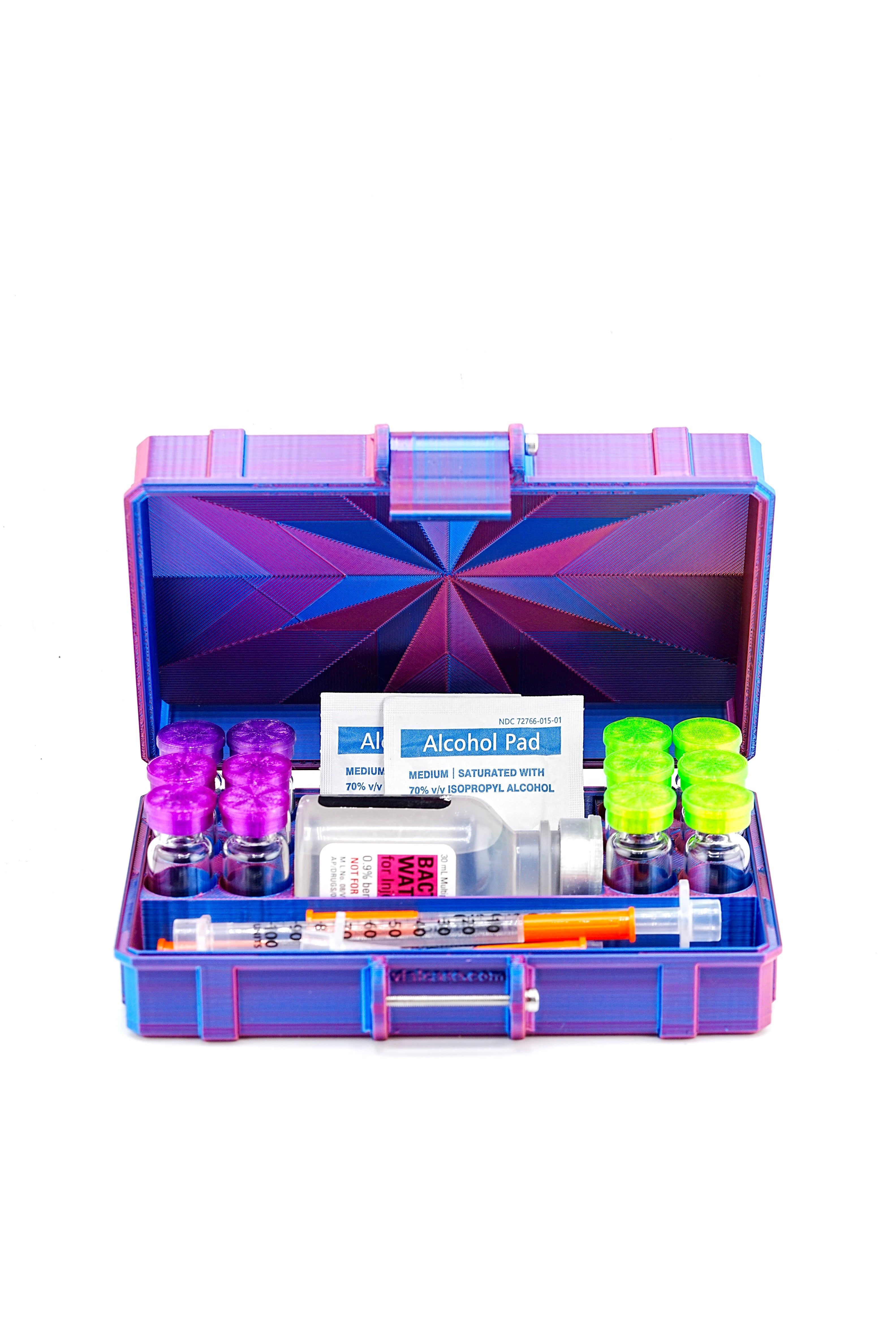
Pro Tip: Men on TRT who run HCG typically have multiple compounds to manage — testosterone, HCG, possibly an aromatase inhibitor, and needles and syringes of multiple gauges. A purpose-built TRT storage case with labeled slots and secure closures keeps the entire protocol organized and eliminates the risk of leaving HCG out during an injection session. See our roundup of the best TRT storage cases for options that handle the full protocol.
Shelf Life Summary: What You Can Actually Expect
The following represents conservative, practical shelf life expectations for HCG under proper storage conditions. These are guidelines, not guarantees — lot-to-lot variation in manufacturing, and the specific conditions of your refrigerator, will affect actual potency over time.
- Lyophilized HCG, refrigerated at 2–8°C: 6–12 months from manufacture date, not to exceed labeled expiration
- Reconstituted HCG in BAC water, refrigerated at 2–8°C: 30–60 days from reconstitution date
- Reconstituted HCG in sterile water, refrigerated at 2–8°C: 7–14 days maximum, single-use vials only
- Reconstituted HCG left at room temperature (22–25°C / 72–77°F): Potency degrades significantly within 24–48 hours; discard after 8 hours at room temperature as a practical rule
- Reconstituted HCG that has been frozen: Discard immediately; the compound is not viable after a freeze-thaw cycle
For a broader comparison of how HCG shelf life compares to other peptides and hormones in a typical protocol, consult our peptide shelf life reference guide.
Traveling with HCG: What You Need to Know
HCG's strict refrigeration requirement makes it one of the more logistically challenging compounds to travel with. The same rules that govern peptide travel apply here with additional urgency because the temperature window is tighter and the consequences of excursion are more severe.
Domestic Air Travel
HCG is a prescription medication in the United States, and TSA does not prohibit passengers from carrying prescription medications — including injectable medications with needles — in carry-on luggage. Key rules:
- Always carry on. Cargo hold temperatures on aircraft can drop to -20°C (-4°F) or lower at cruising altitude, which would freeze your reconstituted HCG and destroy it entirely.
- Inform TSA at the checkpoint that you have a medication requiring refrigeration. Keep it in an insulated case with a cold pack to demonstrate compliance with the 2–8°C requirement.
- A physician's letter or copy of the prescription is advisable for flights over 2 hours and essential for international travel. Keep it accessible, not packed in a checked bag.
- For flights shorter than 2–3 hours with a well-insulated case, you may not need an active cold pack — the insulation alone will hold temperature adequately.
Ground Travel and Road Trips
Vehicles are one of the most dangerous environments for HCG. A car parked in direct sunlight in summer can reach 60–70°C (140–158°F) in the interior within 20 minutes. Even moderate outdoor temperatures of 30°C (86°F) can push car interior temperatures well above 40°C (104°F). Ground rules for road travel:
- Never leave HCG in a parked vehicle in warm weather. If you are stopping for more than a few minutes, take the case with you.
- Use an insulated peptide case with a gel cold pack. Keep the case in the air-conditioned cabin, not the trunk.
- If traveling for multiple days, confirm your accommodation has a functioning refrigerator before you depart. A hotel mini-fridge set to maximum cold is typically 2–4°C — acceptable, but verify with a small thermometer if you want certainty.
For a comprehensive checklist of everything to consider before traveling with injectable medications and peptides, see our detailed guide to traveling with peptides.
Power Outage Protocol: What to Do When the Fridge Goes Down
Power outages are an underappreciated risk for anyone running an HCG protocol. Reconstituted HCG sitting in a non-functioning refrigerator at rising ambient temperatures is on a clock. Here is how to respond:
- First 2 hours: A closed refrigerator maintains temperature for approximately 2–4 hours depending on its age, insulation, and how full it is. Do not open the door. The thermal mass of the food inside slows the temperature rise. Your HCG is likely still viable.
- 2–6 hours: If power is restored within this window, check the internal temperature with a thermometer if you have one. If the fridge reads under 8°C (46°F), the HCG is almost certainly fine. If it has exceeded 10–12°C (50–54°F) for an extended period, use caution and consider replacing the vial.
- Beyond 6 hours: Transfer the HCG vial to an insulated cooler with gel packs or ice (protecting the vial from direct ice contact with a cloth or paper towel). This extends safe cold storage by another 12–24 hours depending on cooler quality.
- Beyond 24 hours without cold: Discard and replace. The risk of degraded potency and contamination from temperature excursion outweighs the cost of a new vial.
A dedicated insulated peptide storage case doubles as an emergency cooler in power outage scenarios — the same insulation that slows temperature rise during transit maintains cold during brief outages if you add a pre-frozen gel pack.
HCG Storage for Women: Ovulation Induction Protocols
Women using HCG for ovulation induction (as part of IUI or IVF protocols, or natural-cycle fertility support) follow the same storage rules as TRT patients — the compound is identical. The key difference is dosing frequency. Ovulation trigger doses are typically administered as a single injection (5,000–10,000 IU) rather than the ongoing 2–3x per week TRT protocol. This means a vial is reconstituted and used entirely in one session, which simplifies storage considerations significantly. However, if you are self-administering as part of a monitored protocol and your provider has given you the HCG in advance of your trigger day, the lyophilized vial must be refrigerated at 2–8°C from the moment you receive it until the day you mix and inject.
Common HCG Storage Mistakes and How to Avoid Them
The most common peptide storage mistakes apply to HCG with extra consequence given the compound's sensitivity. The following mistakes are consistently observed among TRT patients and PCT users:
- Freezing the reconstituted vial. This is the single most destructive error. It typically happens when someone puts the vial in the freezer "just to be safe" without understanding that reconstituted glycoproteins cannot survive freeze-thaw. Result: inactive compound, wasted money, failed protocol.
- Leaving the vial out during injection prep. Setting the vial on the bathroom counter, drawing a syringe, getting distracted, and leaving it out for 30–60 minutes is a common scenario. Even moderate room temperature exposure over many such events has a cumulative degradation effect.
- Not dating the vial. Without a reconstitution date on the label, you cannot enforce the 30–60 day rule. A vial that has been in the fridge for an unknown duration may be expired and ineffective.
- Using sterile water instead of BAC water. Sterile water contains no preservative. A multi-use vial of HCG reconstituted in sterile water is a contamination risk after the first puncture and should be treated as single-use. BAC water is the correct diluent for any HCG vial that will be accessed more than once.
- Shaking the vial to mix. Vigorous shaking introduces air-water interface stress that can denature the protein. Always roll, never shake.
- Assuming the fridge temperature is correct. Most household refrigerators are set by the user's preference, not calibrated for pharmaceutical storage. An inexpensive fridge thermometer placed at the shelf where you store HCG is a worthwhile investment — you may discover your fridge is running at 10°C or that the back shelf near the air vent is freezing.
Organizing Your TRT Storage Setup
A complete TRT storage setup typically involves: testosterone cypionate or enanthate vials (10ml, oil-based), HCG vials (powder and/or reconstituted), bacteriostatic water ampules, needles in at least two gauges (18g draw needles, 29–31g injection needles), syringes, alcohol swabs, and possibly an aromatase inhibitor in tablet form. Managing all of this without a system leads to disorganization, missed doses, and the storage errors described above.
A dedicated storage case with clearly labeled compartments solves most of these problems at once. The case keeps your HCG refrigerated inside an insulated housing, protects glass vials from breakage, and gives you a single location for everything in the protocol so that injection prep is fast, systematic, and consistent. For a review of the best purpose-built cases for this use case, see our roundup of the top 10 TRT storage cases.
When organizing your fridge shelf, keep the peptide and HCG section of our fridge organization guide in mind. The back of the fridge, near the evaporator, runs colder and can freeze the vial stopper if temperatures fluctuate. The door shelves experience the greatest temperature swings from repeated opening. A middle shelf, away from air vents, is ideal.
Pro Tip: If you are running both HCG and a GLP-1 medication like semaglutide or tirzepatide — an increasingly common combination as TRT patients manage metabolic health alongside hormonal optimization — both compounds require the same 2–8°C refrigeration and share the same prohibition against freezing. A single well-organized case handles both, but label everything clearly so you never accidentally draw from the wrong vial.
Final Checklist: HCG Storage Done Right
Apply these rules consistently and your HCG will remain potent from the day you receive it to the day of your last injection:
- Refrigerate lyophilized powder at 2–8°C (36–46°F) from day one
- Use bacteriostatic water, not sterile water or saline, for reconstitution
- Roll gently to mix — never shake
- Label every vial with reconstitution date and concentration immediately after mixing
- Return reconstituted vials to the refrigerator within 60 seconds of use
- Discard reconstituted HCG at 30–60 days from mixing date regardless of remaining volume
- Never freeze reconstituted HCG under any circumstances
- Use a calibrated thermometer to verify your fridge is genuinely at 2–8°C
- Transport in an insulated case; never leave in a hot vehicle
- Store the complete TRT protocol in a dedicated, organized case to prevent mixing errors
This content is for informational and educational purposes only and does not constitute medical advice. Always consult a licensed healthcare provider before beginning any peptide or hormone protocol.