GHRP-6 and Hexarelin: Understanding What You're Storing
GHRP-6 (Growth Hormone Releasing Peptide-6) is a synthetic hexapeptide that acts as a ghrelin mimetic, binding to the GHS-R (growth hormone secretagogue receptor) in the pituitary and hypothalamus to stimulate pulsatile GH release. It was among the first synthetic GH secretagogues characterized, and its pharmacology has been studied extensively since the 1980s. Typical research doses run from 100–300mcg per injection, two to three times daily, with timing optimized around fasting states for peak GH response. One of GHRP-6's most reliably reported effects is a pronounced increase in hunger mediated by its ghrelin-agonist activity — a practical consideration that shapes how most researchers time and manage their dosing schedule.
Hexarelin (also known as Examorelin) is a structurally similar hexapeptide that was developed as a more potent evolution of GHRP-6. The key functional difference is potency: Hexarelin produces significantly larger GH pulses than GHRP-6 at equivalent molar doses, making it one of the most powerful GH secretagogues studied in research settings. Typical Hexarelin doses run from 100–200mcg per injection — lower than some GHRP-6 protocols — with the understanding that its effects are proportionally stronger. Hexarelin also demonstrates some desensitization with extended daily use, which is why many protocols cycle it rather than running continuous multi-month blocks.
Both peptides arrive as lyophilized (freeze-dried) white powder in sealed vials, typically in 2mg or 5mg fill weights. Both require reconstitution before use, both are temperature and light sensitive, and both share fundamentally identical storage requirements — which simplifies life considerably when you're managing a stack that includes both compounds. The meaningful storage difference between GHRP-6 and Hexarelin is not the temperature target but the consequence of imprecision: because Hexarelin is more potent per microgram, storage-induced degradation has a larger proportional impact on effective dose per injection.
Temperature Requirements: Lyophilized and Reconstituted States
Both GHRP-6 and Hexarelin follow the standard storage protocol for lyophilized research peptides. There is no meaningful divergence between the two compounds at any storage stage.
Lyophilized (dry powder, unopened or pre-reconstitution):
- Long-term storage: -20°C (-4°F). Under these conditions, GHRP-6 and Hexarelin retain stable potency for 12–24 months. The lyophilized state removes the water activity that drives most peptide degradation pathways, making the dry powder substantially more stable than reconstituted solution.
- Short-term storage (1–3 months): 2–8°C (36–46°F) is acceptable. If you're planning to reconstitute a vial within the next month, keeping it refrigerated rather than frozen is fine and avoids unnecessary freeze-thaw cycling of the powder.
- Room temperature: Not recommended for more than 24–48 hours. Heat exposure at room temperature (20–25°C / 68–77°F) begins accelerating oxidation and hydrolysis. In hot environments (>30°C / 86°F), degradation accelerates further. Even lyophilized powder in a sealed vial is not immune to long-term heat exposure.
Reconstituted (in BAC water, after adding solvent):
- Refrigerated at 2–8°C (36–46°F): Usable shelf life of 4–6 weeks from reconstitution date. The bacteriostatic preservative (benzyl alcohol) in BAC water prevents microbial growth, but does not stop chemical peptide degradation over time.
- Never freeze reconstituted solution: Ice crystal formation during freezing physically disrupts peptide bonds. Reconstituted GHRP-6 or Hexarelin that has been frozen and thawed should be discarded. This is an irreversible loss.
- Light protection at all times: Both peptides are sensitive to UV and visible light exposure, which drives oxidation of susceptible amino acid residues. Store in amber vials when possible, or keep vials in an opaque case or wrapped in foil between uses.
For a side-by-side comparison of these requirements against other GH-axis peptides, the peptide storage temperature chart is the quickest reference.
Reconstitution: Volume Calculations for GHRP-6 and Hexarelin
Accurate reconstitution is the foundation of dosing accuracy. Miscalculate your concentration and every subsequent dose in the protocol is wrong by a fixed percentage. Use bacteriostatic water for reconstitution of any peptide you plan to use over more than 24–48 hours. Our complete BAC water reconstitution guide covers the full technique, but here is the dose math for GHRP-6 and Hexarelin at standard fill weights and doses:
GHRP-6 (common fill weight: 5mg):
- Add 2.5ml BAC water → concentration = 2mg/ml = 2000mcg/ml
- 100mcg dose: draw 0.05ml (5 units on U-100 syringe)
- 200mcg dose: draw 0.1ml (10 units)
- 300mcg dose: draw 0.15ml (15 units)
- Total doses at 300mcg: approximately 16 doses per 5mg vial
Hexarelin (common fill weight: 2mg or 5mg):
- 2mg vial + 2ml BAC water → concentration = 1mg/ml = 1000mcg/ml
- 100mcg dose: draw 0.1ml (10 units)
- 200mcg dose: draw 0.2ml (20 units)
- Total doses at 100mcg from a 2mg vial: 20 doses
- 5mg vial + 2.5ml BAC water → concentration = 2mg/ml = 2000mcg/ml
- 100mcg dose: draw 0.05ml (5 units) — at the lower limit of reliable measurement
- Consider adding 5ml BAC water to a 5mg Hexarelin vial instead: concentration = 1mg/ml, 100mcg = 10 units. Easier to measure, still well within shelf life window if used in 4–6 weeks.
The Hexarelin calculation deserves special attention. Because Hexarelin is more potent than GHRP-6 per microgram, researchers typically use lower doses — and that means smaller draw volumes at equivalent concentrations. If you reconstitute a 5mg Hexarelin vial at 2mg/ml and your target dose is 100mcg, you're drawing 5 units on a U-100 syringe. That is a very small volume, and small measurement errors become large percentage errors. Reconstituting to a lower concentration (1mg/ml) by adding more BAC water doubles your draw volume and significantly improves measurement accuracy, without any negative effect on the peptide.
Pro Tip: For Hexarelin specifically, always reconstitute to a concentration that gives you a draw volume of at least 10 units (0.1ml) on a U-100 insulin syringe. If your target dose is 100mcg, that means a maximum concentration of 1mg/ml. This single adjustment eliminates the most common source of dosing errors with high-potency peptides.
GHRP-6's Hunger Effect: Why Storage Location Matters for Dosing Compliance
GHRP-6 is uniquely disruptive compared to cleaner secretagogues like Ipamorelin because of its ghrelin-agonist activity. Ghrelin is the primary hunger-signaling peptide in the body, and GHRP-6 directly mimics its receptor binding. Most research subjects experience pronounced hunger within 20–30 minutes of a GHRP-6 injection — strong enough that many find it uncomfortable if it occurs at a socially inconvenient time.
This pharmacological reality shapes how most researchers structure their GHRP-6 dosing schedule. Pre-sleep dosing is extremely common because: (1) GH pulses during sleep are physiologically normal and synergistic with the exogenous stimulus, (2) the hunger effect occurs while the subject is asleep and therefore not disruptive, and (3) recovery and tissue repair during sleep benefit from the elevated GH environment. Pre-workout dosing is also common, where the appetite stimulus can be redirected into a post-training meal.
The storage implication of this dosing pattern is direct. If your primary GHRP-6 dose is pre-sleep, you need your storage case accessible in the bedroom or immediately adjacent to it — not stored in a fridge in the kitchen that requires a trip through the house at 10pm. This is not a casual convenience consideration. Dosing compliance across a multi-week protocol depends on making the correct behavior easy and the incorrect behavior harder. A purpose-built insulated peptide case that holds your vials at stable temperature while sitting on your nightstand, then gets returned to the refrigerator in the morning as a single unit, is the most practical cold-chain solution for a bedside dosing protocol.
The math works: a properly insulated case with a pre-chilled gel insert maintains 2–8°C for 6–10 hours at typical indoor temperatures (20–22°C / 68–72°F). A vial pulled from the refrigerator at 9pm, used for a 10pm dose, and returned to the refrigerator by 7am the next morning stays within safe temperature ranges throughout. Over a 6-week protocol, this pattern is far safer than leaving the vial at room temperature overnight or repeatedly warming and chilling it with brief refrigerator trips.
Shelf Life Across Both Compounds and Dosing Frequency
Understanding shelf life in practical terms means working backward from your protocol to determine when you need to reconstitute new vials. Both GHRP-6 and Hexarelin reconstituted in BAC water have a refrigerated shelf life of 4–6 weeks. Here is how that maps to common protocol structures:
GHRP-6 at 300mcg three times daily from a 5mg vial (2mg/ml concentration): 5mg = 5000mcg total. At 900mcg/day, the vial is depleted in approximately 5.5 days — well within shelf life. For a 6-week protocol, you'll use roughly 8 vials, keeping most lyophilized and frozen until needed. Only reconstitute what you'll use within 5–6 days.
GHRP-6 at 100mcg twice daily from a 5mg vial: At 200mcg/day, the same vial lasts 25 days — approaching the edge of the 4-week shelf life window. Label your reconstitution date visibly and check the peptide shelf life guide if you're uncertain whether a stored vial is still usable.
Hexarelin at 100mcg twice daily from a 2mg vial (1mg/ml concentration): 2mg = 2000mcg total. At 200mcg/day, the vial lasts 10 days — comfortably within shelf life. You'll need roughly 4 vials per month at this dosing frequency. Keep 3 frozen and reconstitute one at a time.
Hexarelin at 200mcg once daily from a 5mg vial (1mg/ml concentration): 5mg = 5000mcg. At 200mcg/day, the vial lasts 25 days — again approaching the 4-week mark. Use the freshest reconstituted solution for the most potent doses, and track dates rigorously.
The consistent pattern across these scenarios: track your reconstitution date on every vial, and never assume a vial is still good without checking when it was made. Common peptide storage mistakes almost always include failing to date vials at reconstitution.
Stacking with CJC-1295 and Ipamorelin: Managing Multiple Vials
GHRP-6 and Hexarelin are both GHRPs — they act on the GHS-R receptor to stimulate GH release. To maximize the GH pulse, many researchers stack them with a GHRH analogue that prolongs the release window. The most common combinations are:
- GHRP-6 + CJC-1295 (with DAC): CJC-1295 with Drug Affinity Complex provides a sustained GHRH signal that extends the GHRP-6-induced GH pulse. Dosed once or twice weekly for CJC-1295, daily for GHRP-6.
- GHRP-6 + CJC-1295 (no DAC) + Ipamorelin: A three-compound stack for maximum pulse amplitude and duration. CJC-1295 no-DAC (also called Mod GRF 1-29) and Ipamorelin are dosed together with each GHRP-6 injection.
- Hexarelin + CJC-1295: A high-potency stack that requires conservative dose management due to Hexarelin's desensitization potential and strong pulse magnitude. See our CJC-1295 and Ipamorelin storage guide for the GHRH component storage details.
All of these companion peptides share the same temperature requirements as GHRP-6 and Hexarelin: lyophilized at -20°C, reconstituted at 2–8°C, never freeze reconstituted solution, protect from light. This uniformity is logistically convenient — a single refrigerator section managed at 4–6°C handles all your reconstituted vials without any temperature conflicts.
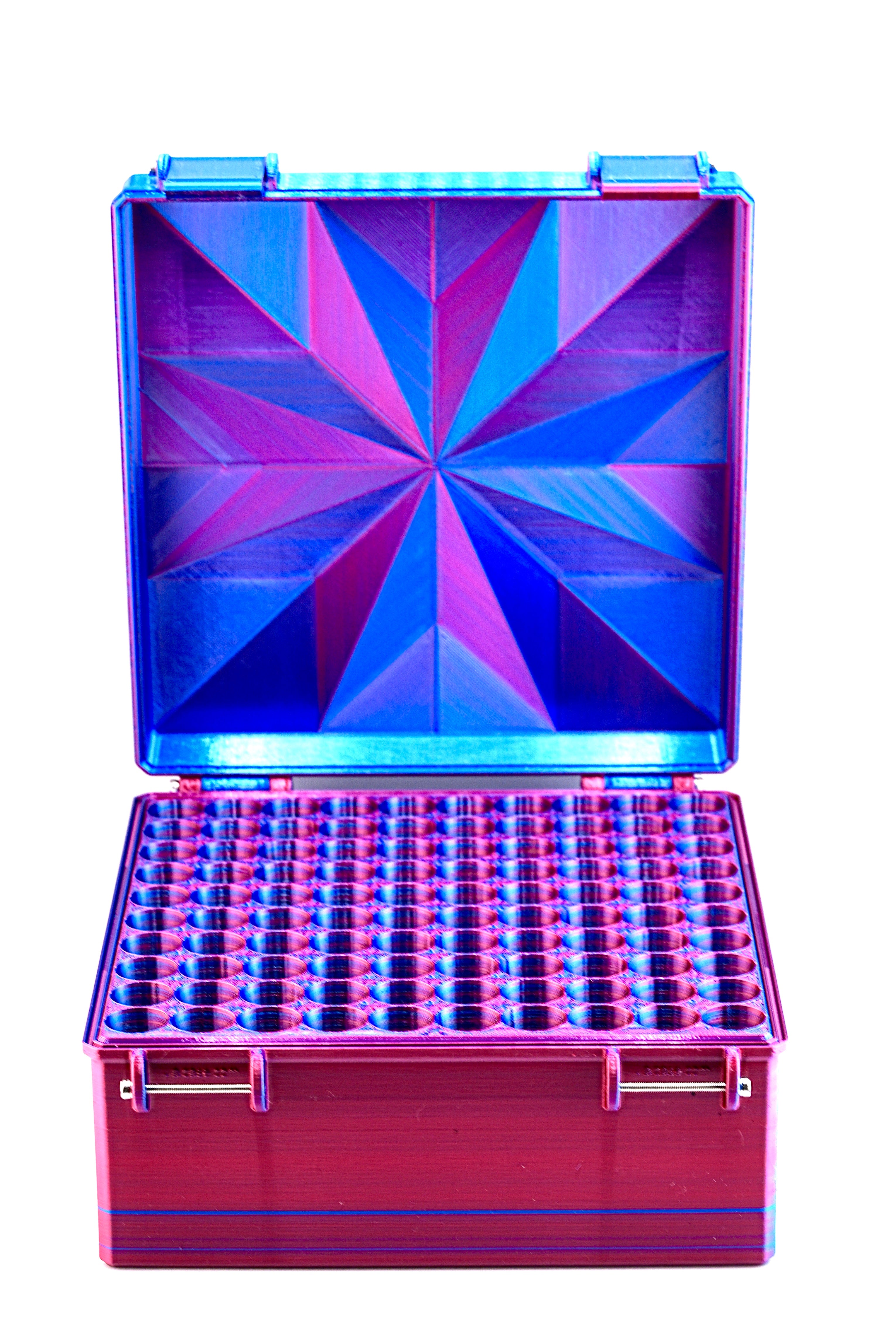
The organizational challenge in a three- or four-compound stack is physical differentiation. If your GHRP-6, Hexarelin, CJC-1295, and Ipamorelin vials all look identical in your fridge — clear glass, white powder, unlabeled rubber stopper — you will eventually draw from the wrong one. Hexarelin at a GHRP-6 dose is a meaningful overdose. GHRP-6 instead of Hexarelin gives you an underdose with an unexpected hunger response at the wrong time. Label every vial clearly, use colored stickers or markers for secondary identification, and store compounds in dedicated, labeled slots. Our guide to organizing a multi-peptide protocol covers systematic approaches to exactly this challenge.
Pro Tip: When running a GHRP-6 and Hexarelin stack, store them in physically separate compartments of your case — never side by side in unlabeled adjacent slots. The consequence of confusing a high-potency compound (Hexarelin) for a lower-potency one (GHRP-6) is a significant accidental overdose. Physical separation, combined with color-coded labeling, makes compound confusion essentially impossible regardless of lighting conditions or cognitive state when you're dosing.
Long-Term Lyophilized Storage and Freeze-Thaw Cycling
If you're purchasing peptides in bulk or stocking up for a 3–6 month protocol run, proper long-term storage of your lyophilized reserve is essential. Both GHRP-6 and Hexarelin remain stable at -20°C (-4°F) for 12–24 months provided they are protected from light, moisture, and repeated temperature fluctuations.
The frost-free freezer is the most common long-term storage location in domestic settings, and it introduces a risk that most researchers don't account for. Frost-free (auto-defrost) freezers run heating cycles every 6–12 hours to prevent ice buildup. During a defrost cycle, the interior temperature of the freezer can rise by 5–10°C above the set point. For a freezer set to -20°C, this means interior temperatures may briefly reach -10°C or above during each cycle. Over months and dozens of cycles, this thermal variation is not trivial for sensitive peptides.
The solution is to store lyophilized GHRP-6 and Hexarelin vials inside a secondary insulated container within the freezer. A small hard-shell case or a tightly sealed foam-lined box provides enough thermal mass to buffer against defrost cycle temperature swings. Combined with desiccant packets to prevent moisture intrusion, this secondary container approach gives your lyophilized reserve maximum stability throughout long-term storage.
Also critical: never put a lyophilized vial back in the freezer after it has been taken out, warmed to room temperature, and then decided not to reconstitute. The warm-then-refreeze cycle causes moisture condensation on the powder and inside the vial, which degrades the peptide and can cause clumping. If you take a vial out, keep it refrigerated (not frozen) until you reconstitute it. For a comprehensive look at all aspects of freezer storage for peptides, see our freezer storage guide.
Travel Storage for GHRP-6 and Hexarelin Protocols
A two-to-three-times-daily injection protocol presents real travel storage challenges, particularly for GHRP-6 users who need a bedside dose option away from home. Here is how to manage cold-chain continuity across common travel scenarios:
Short trips (1–3 days): Bring only reconstituted vials for the doses you need, plus one backup. Use a pre-chilled insulated hard-shell case with a gel ice pack. Keep the case in your carry-on bag. At your destination, transfer vials to the hotel mini-fridge immediately on arrival (mini-fridges typically maintain 4–6°C). Pre-draw your bedside doses each evening before the vial goes into the mini-fridge so you're not fumbling with needles in a dark hotel room.
Longer trips (4–14 days): Bring both reconstituted vials for immediate use and additional lyophilized vials as reserve. Lyophilized vials are more thermally stable during transit and can be reconstituted at your destination if you have access to BAC water. Calculate the exact number of doses you need, add 25% buffer, and bring that many vials total split between active and reserve. Always carry everything in your carry-on luggage — checked baggage holds are not temperature-controlled and can reach extremes in either direction depending on route and season.
Airport security: TSA guidelines permit medically necessary liquids in carry-on bags. Present your vials in their case separately at the checkpoint. Labeled vials and clear storage organization demonstrate legitimate medical use and minimize delays. Our TSA peptide travel guide covers the full checkpoint procedure and documentation recommendations. For international travel considerations, refer to the international travel guide for country-specific rules that vary significantly from domestic TSA procedures.
The overnight scenario deserves specific planning. If your protocol calls for a 10pm GHRP-6 or Hexarelin dose in a hotel room, and you've stored your case in the in-room mini-fridge: retrieve the case 10 minutes before your dose to allow the vial to equilibrate slightly, draw your dose, return the case immediately, and set your syringe capped on the nightstand if you prefer not to immediately inject. The key is that the vial spends the minimum necessary time outside refrigeration, and the case (not just individual vials) goes back into the fridge as a unit for overnight storage.
Why Hexarelin's Potency Makes Organized Storage Non-Optional
The argument for disciplined, organized storage is compelling for any peptide, but it is especially strong for Hexarelin because of the dose-response relationship. Most peptides have a relatively forgiving dose range where modest inaccuracies don't produce dramatic changes in effect. Hexarelin, as one of the most potent GH secretagogues in research, operates on a steeper dose-response curve. The difference between 100mcg and 200mcg is a very large difference in GH pulse magnitude — and the difference between 100mcg of fresh, properly stored Hexarelin and 100mcg of degraded Hexarelin that has lost 30% potency is effectively the difference between 100mcg and 70mcg.
Storage-induced degradation is essentially an invisible underdose. You inject what you believe to be 100mcg, but receive the physiological equivalent of 70mcg because the compound has partially degraded from improper temperature management. Over weeks or months of a protocol, this cumulative potency loss can meaningfully undermine results without any obvious signal that anything went wrong.
The solution is straightforward: consistent refrigeration, proper labeling with reconstitution dates, light protection, physical separation from other vials, and a dedicated storage case that makes all of these habits the path of least resistance. A purpose-built peptide case eliminates the organizational friction that leads to the lazy shortcuts — leaving a vial out too long, storing reconstituted and lyophilized vials mixed together, forgetting which vial was reconstituted when — that gradually compromise a protocol. For ideas on setting up a complete organized refrigerator storage system for a multi-peptide stack, our peptide fridge organization guide is the practical starting point.
This content is for informational and educational purposes only and does not constitute medical advice. Always consult a licensed healthcare provider before beginning any peptide or hormone protocol.