Why People Want a Cute Peptide Case
Not everyone running a peptide protocol wants to broadcast it. Maybe you're injecting GHK-Cu at the office and you'd rather it not look like you're shooting up in the bathroom. Maybe you travel with peptides and don't want your bag searched at TSA because a cluttered pile of glass vials and syringes caught a screener's eye. Maybe you just have aesthetic standards and you're tired of everything in the biohacking space looking like a hospital supply closet.
These are all legitimate reasons. Wanting a peptide case that looks good isn't vanity — it's pragmatic. Discretion keeps things simple at work, at the airport, and with people who don't know what you're doing and don't need to. And when you're spending several hundred dollars on peptides per cycle, the case that holds them should reflect the seriousness of your investment.
The "cute" category is also particularly relevant for anyone focused on aesthetic outcomes. If you're running GHK-Cu for skin, MT2 for pigmentation, or CJC-1295/Ipamorelin for body composition changes, your whole approach is about intentional self-improvement. The tools you use should reflect that intentionality — including the case you store them in.
Across forums, Reddit threads, and customer reviews, the aesthetic request comes up constantly: "I want something that doesn't look medical." That's the brief. The challenge is finding something that satisfies it without sacrificing the protection your peptides actually need.
The Problem with Most "Cute" Options on the Market
Go searching for a cute peptide case and you'll quickly land in cosmetic bag territory. Floral zipper pouches. Pastel makeup organizers. Soft fabric cases with elastic loops meant for eyeliner and mascara. They look clean, they photograph well, and they are essentially useless for peptide storage.
Here's why they fail in practice:
- No light blocking. Soft fabric and mesh pouches let ambient light pass right through. Peptides like BPC-157, TB-500, and GHK-Cu are photosensitive. Prolonged light exposure accelerates degradation and shortens shelf life significantly — and a translucent makeup bag sitting on your desk or in a sunlit bag is the worst possible environment.
- Wrong dimensions. Insulin cases are sized for insulin pens and cartridges. Makeup bags are sized for cosmetics. Neither is sized for 3ml peptide vials. The result: vials rattle around, roll against each other, and chip or crack at the stopper. Glass-on-glass contact in a soft bag is a recipe for lost product.
- No structural protection. If you set a soft pouch down hard, drop your bag, or pack it into a suitcase with other gear, the vials inside absorb the impact directly. A soft case with no rigid structure offers zero crush resistance.
- Temperature instability. Fabric doesn't insulate. If you're transporting reconstituted peptides and need even a few hours of temperature buffering, a fabric bag provides none. A hard-shell case, by contrast, slows heat transfer and can pair with a gel pack for short-term temperature control.
The aesthetic wins at the cost of everything that matters. You end up with a case that looks fine on your nightstand until your vials start degrading faster than expected, or one cracks after bouncing around in your gym bag for a week.
What a Cute Peptide Case Actually Needs to Do
Let's define the standard before shopping. A case can absolutely look clean and minimal — but it still has to do the following:
- Block light completely. Opaque hard shell, fully enclosed, no translucent sections. This is non-negotiable for any photosensitive peptide.
- Protect glass vials from impact. Individual molded slots or foam inserts that hold each vial in place. No rattling, no contact between vials.
- Fit standard vial sizes. 3ml vials are the most common for peptides; 10ml for GLP-1 compounds and BAC water. The case needs to actually fit the vials you're using — not approximate them.
- Close and stay closed. A latch or closure that doesn't pop open in a bag, backpack, or during travel. Losing a vial to a case that opened mid-transit is an avoidable disaster.
- Not scream "medication" at casual observers. This is the aesthetic requirement — and it's achievable. Matte hard-shell cases with minimal branding look like a tech accessory or a small electronics organizer, not a medical supply kit.
The good news: all of these requirements are compatible with a clean, understated design. The bad news: most products marketed as "cute" skip requirements 1-4 entirely in favor of the last one.
Cute Does Not Mean Flimsy: Why Design and Function Must Coexist
There's a useful inversion here. Many cases marketed explicitly as "medical" or "peptide storage" are actually less visually appealing than a well-designed hard-shell tech case. They feature clinical white plastic, red crosses, or busy labeling that immediately reads as pharmaceutical. That's not what most users want to carry through a gym lobby or pull out at their desk.
The design language of a quality tech accessory — matte finish, clean edges, neutral color, secure latch — happens to align almost perfectly with the functional requirements of a peptide case. No translucent windows means full light blocking. Hard-shell construction means impact protection. Molded internal slots mean vials don't move. The visual cleanliness is a byproduct of intentional structural design, not a compromise of it.
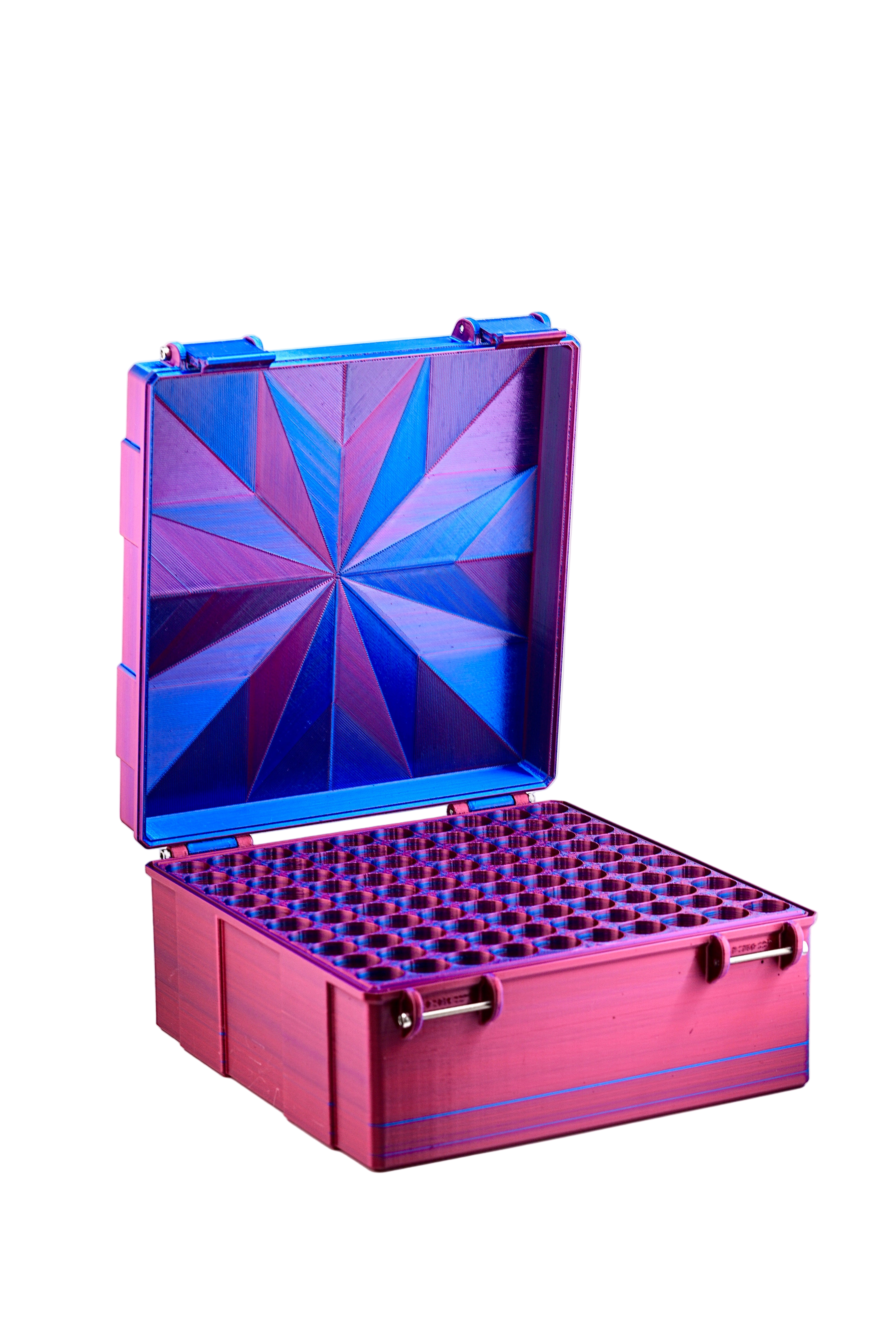
This is the core insight: a well-designed case doesn't look medical because good design doesn't announce itself. VialCase products are a strong example of this. The cases are matte, structured, and compact — they read as a tech organizer or travel accessory to anyone who doesn't know what's inside. To you, they're precision vial storage. The two aren't in conflict.
The Best Cute and Discreet Peptide Cases in 2026
The Compact Pick: VialCase 10-Slot Compact ($13.99)
If you want something that fits in a jacket pocket or small crossbody bag and reads as a minor tech accessory, the 10-Slot Compact from VialCase is the pick. At $13.99, it's the most approachable entry point in the lineup.
Ten individual slots hold 3ml vials in molded positions — each vial is separated, protected, and blocked from light by the fully opaque hard shell. The form factor is small and rectangular, similar in size to a small sunglasses case. Nobody looks at it and thinks "medication." They think "probably holds earbuds or a USB drive."
It's best suited for users running one or two peptides who don't need syringe storage built in. If you're using GHK-Cu once daily and storing two to four active vials, this covers you completely. It's also the easiest to drop in a bag without adding meaningful bulk — a key factor if you're injecting at work or traveling light.
Best for: 1-2 peptide protocols, daily carry, gym bag, office discretion
Vials: Up to 10 x 3ml
Why it's "cute": Small, matte, unremarkable to outside observers. It doesn't look like anything medical.
The All-In-One: VialCase 12-Slot All-in-One ($36.99)
For users who need to carry peptides plus syringes plus prep supplies — and still want the whole thing to look intentional — the 12-Slot All-in-One at $36.99 is the most complete discreet option available.
Twelve slots for 3ml vials, plus dedicated compartments for insulin syringes, alcohol prep pads, and BAC water. The whole kit fits in a hard-shell case with a secure latch. The exterior reads as a structured organizer — similar in appearance to a cable management case or a small first aid kit of the kind that comes in car emergency packs. Nothing about it announces "peptide protocol."
It's the right choice for anyone running a multi-compound stack who needs everything in one place and doesn't want to fumble around assembling supplies from different bags. Pull it out, open it, everything is where it belongs.
Best for: Full protocol carry, looksmaxers running 3+ compounds, anyone who wants a complete kit in one case
Vials: 12 x 3ml plus syringe and supply storage
Why it's "cute": Structured, hard-shell exterior with a professional, organized interior. Looks like a serious person's travel kit, not a medical bag.
What Not to Buy
A short list of popular options that fail in practice:
- Pink zipper cosmetic pouches. Pretty, completely wrong. No structural protection, no light blocking, wrong dimensions for vials.
- Insulin cases with elastic loops. Sized for insulin pens and cartridges — 3ml peptide vials don't fit securely, and the elastic loops allow free movement that leads to breakage.
- Neoprene diabetic supply organizers. The neoprene material compresses under weight. If it's at the bottom of a gym bag with books or gear on top, your vials are unprotected.
- Craft supply organizers. Bead cases, embroidery floss organizers — they have slots, but those slots are sized for plastic, not glass. The fit is wrong and the material has no impact resistance.
Color and Material: What Makes a Case Look Good While Protecting Vials
Two material choices define the appearance and function of a peptide case.
Hard-shell plastics and ABS composites are the standard for quality vial cases. They're rigid enough to protect glass, opaque enough to block light, and available in matte finishes that look clean and modern rather than medical. The key is the matte surface — glossy plastic reads as cheap; matte plastic reads as designed. If you're evaluating a case on aesthetics, matte finish is the first thing to check.
EVA foam interiors provide the vial-specific molding that holds each vial separately. EVA is soft enough to cushion glass on impact, firm enough to hold vials upright, and doesn't compress into nothing the way soft fabric does. A quality case combines a rigid exterior shell with precision-molded EVA interior — and the result looks organized and intentional when you open it, not like a jumble of padding and loose supplies.
On color: neutral is almost always right. Black, gray, dark navy — these read as intentional and designed. Brightly colored cases draw attention; neutral cases don't. If your goal is discretion, avoid cases in candy colors or high-visibility patterns regardless of how nice they look in photos.
Discretion at the Gym, Office, and Airport
The environments where discretion matters most each have slightly different requirements.
At the gym: You need something small enough to fit in a locker or gym bag exterior pocket. The 10-Slot Compact wins here — it's pocket-sized and unremarkable. Nobody questions what it is. You can inject in the locker room without it becoming an event. The hard shell also survives the casual abuse of being tossed on a bench or into a bag.
At the office: Your case will be on your desk, in your bag, or in a drawer. You may need to leave it somewhere visible. Again, the key is the matte, structured look — it reads as a tech accessory, not a pharmaceutical kit. Don't leave vials loose in a drawer. Don't pull out a soft medical pouch. A clean hard case that closes completely is what you want in an office environment.
At the airport: TSA screening is where a well-organized case is worth its weight in gold. A structured case with clearly separated vials and supplies goes through X-ray looking like an organized kit. The screener may flag it for inspection — that's fine. What you want to avoid is the alternative: a Ziploc bag of rolling vials, loose syringes, and random supplies that looks chaotic and raises questions. An organized case answers questions before they're asked. For more on this, see our TSA guide for traveling with peptides.
Pro Tip: The most discreet case is an organized one. A cluttered bag of loose vials looks far more suspicious than a clean, structured case with everything in its place. Discretion isn't just about how the outside of the case looks — it's about what TSA, coworkers, or gym staff see when it opens.
The Looksmaxing Connection
A large share of people running peptide protocols in 2026 are doing so for deliberate aesthetic improvement. GHK-Cu for collagen and skin quality. Melanotan-II for pigmentation. Retatrutide or tirzepatide for body composition. CJC-1295/Ipamorelin for GH pulse optimization and facial structure. This is the looksmaxing peptide stack — and the people running it tend to care a great deal about how things look.
It's not inconsistent to spend time optimizing your skin protocol and also want the case that holds your compounds to look good. Intentionality extends across all the tools you use. A well-organized, aesthetically clean case is part of a broader mindset: every detail matters, every system is optimized, nothing is left to chance or random.
If you're newer to aesthetic peptide use and want to understand the compounds that make up a full beginner looksmaxing protocol, the beginner looksmaxing peptide guide covers exactly that — which compounds to start with, what results to expect, and how to build a protocol that actually produces visible changes.
Gifting a Peptide Case: What to Buy for Someone Starting Their First Protocol
Peptide cases have become a practical and thoughtful gift for anyone entering the biohacking space. If someone in your life is starting their first protocol — whether that's a GLP-1 compound, a peptide stack for recovery, or an aesthetic protocol — a quality case is genuinely useful and likely something they haven't thought to buy yet.
For gifting, the 12-Slot All-in-One at $36.99 is the strongest option. It's complete enough to be immediately useful — holds vials, syringes, and supplies — without requiring the recipient to know exactly what their protocol will involve. The price point is reasonable for a gift, and the case will outlast any single peptide cycle. It also just looks nice, which matters when you're handing something to someone.
The 10-Slot Compact at $13.99 works well as a starter add-on gift alongside other supplies — less of a standalone statement piece, but practical and appreciated. It pairs well with a lab notebook, colored vial caps, or other organizational accessories.
Either way, the recipient gets something that solves an immediate problem they may not know they have yet: what to do with their vials once they arrive. Most first-time peptide users put their vials in a drawer, a Ziploc bag, or a random spot in the fridge. A dedicated case changes that immediately.
Bottom Line: What to Actually Buy
The search for a cute peptide case ends when you stop looking in the cosmetics aisle and start looking at well-designed compact organizers built for vial protection. The aesthetic you want — clean, minimal, doesn't-look-medical — is fully achievable without giving up light protection, impact resistance, or proper fit.
For most users, the call is simple:
- Running 1-2 compounds and want something pocket-sized: 10-Slot Compact ($13.99)
- Running a full stack and need syringes + supplies included: 12-Slot All-in-One ($36.99)
Both are discreet, both are protective, and neither looks like something you'd find in a hospital. That's the standard. That's what "cute" actually means when peptide storage is involved.
For the full breakdown of available cases across all categories and budgets, see our complete peptide case buyer's guide.
Disclaimer: PeptideCase provides informational content about peptide storage equipment only. We do not sell peptides, provide medical advice, or endorse any specific compound or protocol. Peptides are research chemicals in many jurisdictions. Consult a licensed medical professional before beginning any peptide protocol. Nothing on this site constitutes medical, legal, or financial advice.