Tirzepatide (the dual GLP-1/GIP agonist behind Mounjaro® and Zepbound®) requires refrigeration at 2–8°C, light protection, and careful handling of the glass vials or pen cartridges that deliver each dose. Compounded tirzepatide in 10ml vials adds the complexity of reconstituted solution that has a finite shelf life once prepared. Here are all 10 storage approaches ranked, including how each handles the weekly injection cadence most users are on.
#10 — Worst: Bathroom Medicine Cabinet
The default for most people who have any injectable medication. Bathroom cabinets are the single worst storage location in the home: temperature spikes every time someone showers, humidity is persistently elevated, and most medicine cabinets are poorly sealed. Tirzepatide stored in a bathroom cabinet is exposed to repeated thermal and humidity cycling that accelerates peptide degradation. Any other room in the house — even a kitchen counter (away from the stove) — is better than a bathroom cabinet.
#9 — Loose in the Main Fridge (No Container)
Better temperature control, but still no light protection and no organization. Every time the fridge door opens, the vial gets a full-spectrum light hit. A weekly injection protocol means your tirzepatide vial is refrigerated for six or seven days between doses, accumulating light exposure from every family member who opens the fridge. Over a 4–6 week vial lifespan, this exposure is measurable.
#8 — Branded Medication Pouch (Neoprene)
Soft neoprene pouches branded for GLP-1 medications are widely marketed to Mounjaro® and Ozempic® users. They’re sized primarily for auto-injector pens. If you’re using compounded tirzepatide in 10ml vials, the pen-sized pockets don’t fit your vials properly. The soft construction provides no drop protection, and most are not truly opaque — they admit diffuse light through the neoprene material.
#7 — Insulated Travel Pouch with Ice Pack
Purpose-built for temperature maintenance during transport, not for permanent home storage. If you need to transport tirzepatide to a clinic, travel by car, or move it between home and work, an insulated pouch with a slim ice pack is the correct tool. For home storage, it’s overkill — your fridge is already handling temperature — and the ice pack needs periodic refreshing to maintain efficacy.
#6 — Zip-Up Hard Case (Clear)
Hard-shell, latching, clear-panel cases designed for cosmetics or accessories are a popular repurpose. Rigid shell handles drops well, and the case keeps all tirzepatide supplies together. The clear construction is the main limitation for refrigerated storage — every fridge door opening exposes the vial to full light. For a weekly injection cadence over a multi-week protocol, cumulative light exposure through a clear case is a legitimate concern.
Pro Tip: Compounded tirzepatide vials reconstituted with bacteriostatic water should be used within 4–6 weeks. Mark the reconstitution date on a small piece of tape on the vial. If you’re on a weekly protocol with a 10mg dose at 5mg/mL concentration, a 10ml vial provides approximately 5 doses — tracking your dose count alongside the date helps you never hit dose day with an expired vial.
#5 — Generic Medicine Organizer Box (Opaque)
A basic opaque plastic box with a latching lid. Solves the light problem that clear cases introduce. Vials, syringes, and swabs all live in one place. The remaining issues: no foam padding means vials shift during fridge movements, and compartments designed for oral medications don’t fit 10ml vials and syringes cleanly. A workable budget option for someone on a simple tirzepatide-only protocol.
#4 — Pelican-Style Hard Case (No Foam Customization)
The watertight, drop-resistant Pelican-style case is a step up on impact protection. Fully opaque, sealed against humidity, and durable enough to survive travel. Without custom foam inserts, the interior cavity still allows vials to roll and rattle. The case is doing the right job on the outside; the vials still need immobilization on the inside. Option #2 on this list shows what happens when you add the foam.
#3 — Compounding Pharmacy’s Provided Case
Some compounding pharmacies provide a branded case with their tirzepatide orders. Quality varies widely — some are foam-lined and genuinely useful, some are thin cardboard sleeves that fall apart after two weeks in the fridge. If yours is a substantial foam-lined case, use it. If it’s a flimsy cardboard or soft pouch, treat it as temporary packaging and upgrade to a purpose-built solution before the first week is out.
#2 — Custom Foam-Lined Hard Case (DIY)
A properly executed foam insert inside a Pelican or similar hard case is excellent for tirzepatide storage. Vials don’t move, the case is opaque and durable, and it fits neatly in the fridge. The gap between this and #1: integrated protocol organization. A DIY foam case has a vial slot (or several) but no designed home for your BAC water, needles, alcohol swabs, or reconstitution supplies. Everything else is still loose.
#1 — Best: VialCase Dedicated Peptide Storage Case
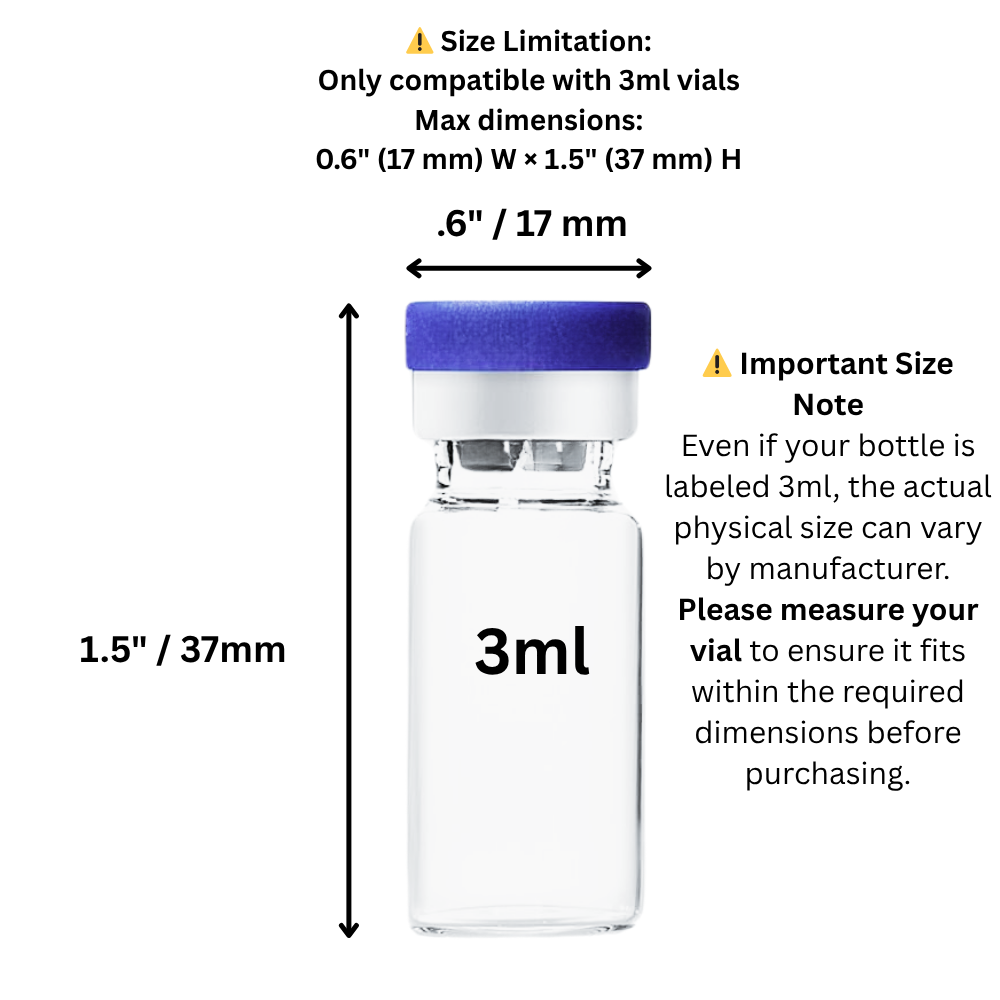
Sized exactly for 10ml peptide vials — the standard format for compounded tirzepatide. Precision foam slots hold each vial without movement. Fully opaque hard shell with a secure latch. Syringe compartment for pre-loaded doses or spare needles. BAC water slot. Everything needed for your weekly tirzepatide injection in one organized, light-blocking, impact-resistant case.
The discipline that makes tirzepatide work — consistent weekly dosing at the right concentration — is easier to maintain when your entire protocol lives in an organized system. Shop tirzepatide cases at VialCase →
Pro Tip: Never shake tirzepatide vials to mix. If your reconstituted solution looks cloudy, gently roll the vial between your palms. Shaking introduces air bubbles and can cause peptide aggregation that reduces bioavailability.
Tirzepatide Storage: Key Rules
Lyophilized tirzepatide powder: store at 2–8°C (or −20°C for long-term storage of unreconstituted vials, per supplier guidance). Reconstituted tirzepatide with bacteriostatic water: 2–8°C for up to 4–6 weeks. Never freeze reconstituted tirzepatide — freezing damages the peptide structure in solution. Keep away from light at all times. For detailed reconstitution protocol, see our tirzepatide storage guide.
Frequently Asked Questions
Can tirzepatide be stored at room temperature?
Briefly. Eli Lilly’s prescribing information for Mounjaro® states it can be stored at room temperature (up to 30°C / 86°F) for up to 21 days once removed from the fridge. For compounded tirzepatide in vials, most compounding pharmacies recommend keeping it refrigerated at all times unless actively in use. When in doubt, fridge storage is always the conservative choice.
What happens if tirzepatide gets too warm?
Tirzepatide exposed to temperatures above 30°C begins to degrade. The compound doesn’t become visually different immediately, but potency reduction starts occurring. Repeated temperature excursions — the kind caused by door-shelf storage or bathroom cabinet storage — have a cumulative effect. A single warm episode is usually recoverable; chronic improper storage is not.
How do I know if my compounded tirzepatide has degraded?
Visual signs: cloudiness, particulate matter, discoloration, or unusual viscosity compared to when first reconstituted. However, potency loss can occur without visible changes. The safest approach is strict date tracking — discard any reconstituted tirzepatide older than 6 weeks regardless of appearance.