Whether you’re running compounded semaglutide, research-grade tirzepatide, or retatrutide, the storage requirements are consistent: refrigeration at 2–8°C, complete light shielding, and physical protection for glass vials that can’t be replaced cheaply. The case you choose either delivers all three or cuts corners on at least one. Here are all 10 common storage approaches, ranked.
#10 — Worst: No Container at All
Bare vials on a fridge shelf. Zero light protection, zero organization, and every fridge vibration risks a vial tipping over. For GLP-1 compounds specifically, uncontained storage on a door shelf — where many people default to — means temperature spikes of 5–8°C with every door opening. GLP-1 peptides are particularly sensitive to these repeated thermal excursions. This is the least acceptable option for any compound costing $50+ per vial.
#9 — Insulated Lunch Bag (No Ice Pack)
A soft insulated bag without refrigeration does nothing useful for at-home storage. At room temperature, GLP-1 compounds degrade within hours to days depending on formulation. The only legitimate use case for an insulated bag is short-duration transport (under 12 hours) with ice packs included. Without cold, it’s just an opaque bag that provides a false sense of protection.
#8 — Ziploc Bag in the Fridge
Clear Ziploc bags solve exactly one problem: keeping vials together. They block no light, provide no impact cushion, and the vials shift freely on every vibration. One advantage of a Ziploc over no container at all: the bag provides slight spill containment and makes it easier to pull the whole GLP-1 kit out of the fridge at once. Still a poor solution for anything beyond a day or two.
#7 — Insulin Pen Carrying Case
Marketed directly at GLP-1 users because of the pen injector overlap. Neoprene or fabric soft cases with pen-sized pockets are everywhere. The problem for research-compound vial users: these cases are designed for rigid auto-injector pens, not fragile 3ml or 10ml glass vials. The pockets are too stiff to accommodate different vial sizes, and soft-case construction offers no impact protection if the bag is dropped.
#6 — Small Cooler Bag with Ice Pack
For travel, this is better than nothing. An insulated bag with a thin ice pack will hold GLP-1 compounds at adequate temperature for 6–12 hours depending on pack quality. The limitations at home: ice packs need refreshing, the bag takes up fridge space inefficiently, and there’s no organization for multiple vials. This belongs in the travel toolkit as a supplement, not as primary home storage.
Pro Tip: For GLP-1 compounds in multi-vial protocols, keep a printed log inside your storage case tracking: compound name, reconstitution date, concentration, and remaining volume. Swapping between semaglutide and tirzepatide vials without clear labels is how dosing errors happen.
#5 — Repurposed Small Toolbox or Craft Box
Latching plastic boxes — the kind sold for fishing tackle or craft supplies — can work surprisingly well if they’re opaque. They latch shut, stack, and can fit multiple vials. The downside is the lack of foam padding inside (vials rattle) and the fact that they’re sized for fishing lures or beads, not 10ml vials. Worth trying if you already own one; not worth buying specifically for GLP-1 storage.
#4 — Clear Hard-Shell Travel Container
Hard case with clear panels. Better than soft cases for impact, worse than opaque cases for light. If your GLP-1 vials are amber glass, clear-case storage is more forgivable; if they’re clear glass, you’re relying entirely on the fridge being cold and dark when the door is closed. Fine for compounded semaglutide stored in protected amber vials; not ideal for anything in clear glass.
#3 — Opaque Hard-Shell Case (Generic)
Opaque, rigid, sealed. This covers the three core needs: temperature is handled by the fridge (the case doesn’t affect that), light is blocked, and vials can’t escape the container. Still missing: foam vial slots to prevent vial-on-vial contact, and organized compartments for BAC water, needles, and swabs. A legitimate solution for someone running a single GLP-1 compound with minimal protocol accessories.
#2 — Foam-Cut Pelican-Style Case
A properly foam-fitted hard case with individual slots for each vial is excellent. No movement, no contact between vials, and the hard shell handles drops. The gap between this and #1 is integration: a DIY foam case has no designated space for BAC water, syringes, or alcohol pads — those end up loose in the fridge or in a separate container, which defeats the purpose of organized protocol management.
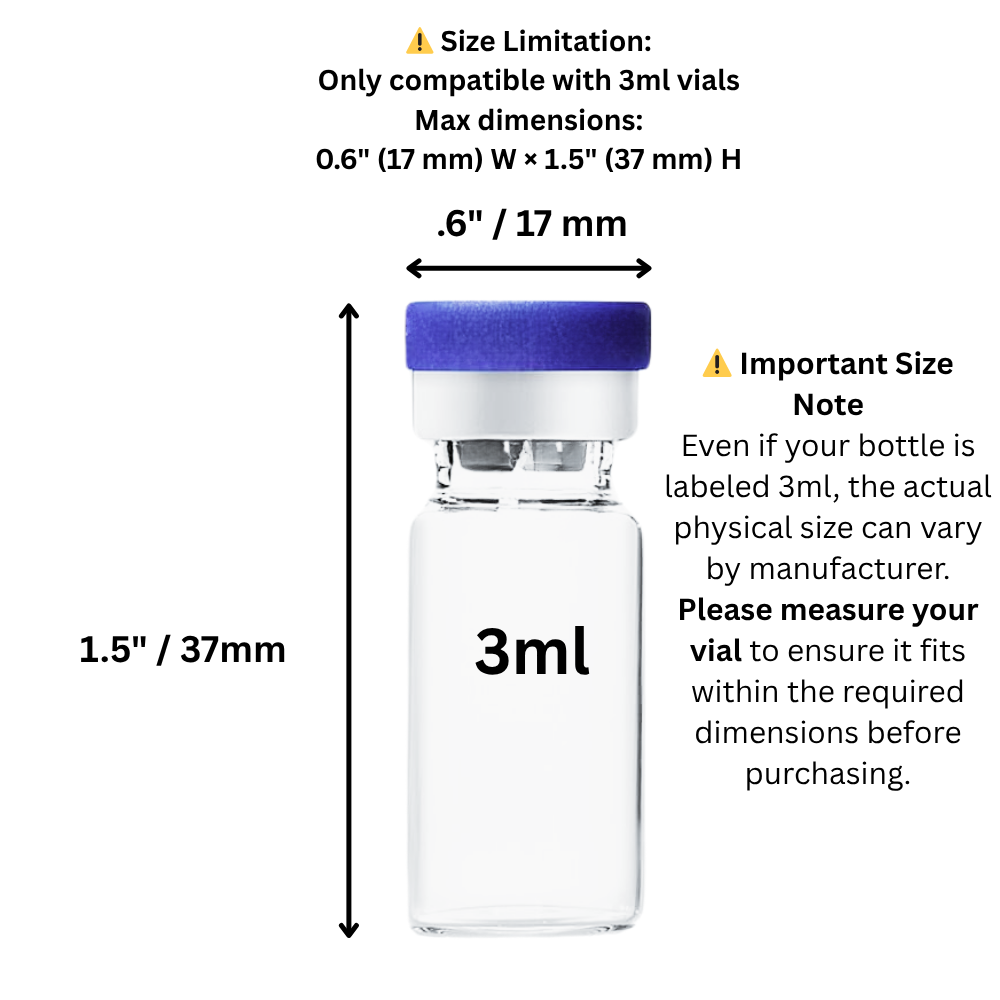
#1 — Best: VialCase Dedicated Peptide Case
Designed specifically for 3ml and 10ml research vials, which is exactly what most GLP-1 compounds arrive in. Precision foam slots hold each vial without movement. Fully opaque shell. Compact fridge footprint designed for the back-of-middle-shelf position. Integrated slots for BAC water, syringes, and accessories. Every element of your GLP-1 protocol is in one organized, light-protected, impact-resistant case.
If you’re spending $100–$300+ per month on GLP-1 compounds, the storage solution should be the last place you cut corners. See all GLP-1 cases at VialCase →
Pro Tip: Store your GLP-1 case in the back of the middle shelf, never on the door. Door shelf temperature fluctuates 5–8°C with every opening. Back-middle shelf is the coldest and most stable zone in your fridge — typically 3–4°C and nearly constant.
GLP-1 Storage Requirements by Compound
All major GLP-1 compounds share the same core requirements but have slightly different shelf lives after reconstitution. Compounded semaglutide in bacteriostatic water: 4–6 weeks refrigerated. Tirzepatide (research grade): 4–6 weeks refrigerated. Retatrutide: 4–6 weeks refrigerated. Liraglutide: typically shorter, check your supplier’s COA. In all cases, lyophilized powder lasts significantly longer than reconstituted solution — don’t reconstitute more than you’ll use within the stated window.
Frequently Asked Questions
Can I use the same case for multiple GLP-1 compounds?
Yes, as long as each vial is clearly labeled with compound name, concentration, and reconstitution date. Running multiple GLP-1s simultaneously (e.g., transitioning from semaglutide to retatrutide) is common, and a multi-slot case with clear labeling is the safest way to manage them together.
Do GLP-1 peptide vials need to be kept upright?
Ideally yes, especially reconstituted vials. Keeping vials upright prevents the rubber stopper from prolonged contact with the solution, which can leach compounds from certain stopper materials. A case with vertical foam slots handles this automatically.
How do I know if my GLP-1 compound has degraded?
Visual signs include cloudiness, particulate matter, color change, or unusual viscosity. However, peptide degradation often occurs before visible changes appear — which is why proper storage conditions matter more than visual inspection alone. When in doubt, check reconstitution date and discard per the 4–6 week guideline.