The Core Difference: Dual vs Triple Agonist
Tirzepatide and Retatrutide are both GLP-1 receptor agonists, but that description undersells the difference between them. Tirzepatide (sold as Mounjaro for diabetes and Zepbound for obesity) is a dual GIP/GLP-1 agonist — it activates the glucose-dependent insulinotropic polypeptide receptor and the glucagon-like peptide-1 receptor simultaneously. This dual action is what made it such a significant advance over earlier single-agonist GLP-1 drugs like semaglutide (Ozempic/Wegovy).
Retatrutide goes one step further. It is a triple GIP/GLP-1/glucagon receptor agonist. The added glucagon receptor agonism does something the other two don't: it directly stimulates fat oxidation and increases energy expenditure (metabolic rate). While GLP-1 and GIP primarily work through appetite suppression and insulin regulation, the glucagon component tells the body to actively burn stored fat, not just eat less of it.
This mechanism difference is not just theoretical — it shows up directly in clinical trial outcomes and in the side effect profile.
Weight Loss Results: What the Trials Actually Show
Comparing clinical trials across different compounds is imperfect — different populations, different trial designs, different follow-up periods. But the numbers are striking enough to be directionally meaningful.
- Semaglutide (STEP 1 trial, 68 weeks): 14.9% mean body weight reduction at 2.4 mg weekly
- Tirzepatide (SURMOUNT-1 trial, 72 weeks): 20.9% mean body weight reduction at 15 mg weekly (highest dose arm)
- Retatrutide (Phase 2 trial, 48 weeks): 24.2% mean body weight reduction at 12 mg weekly (highest dose arm)
Retatrutide's 24% result at 48 weeks — a shorter trial period than Tirzepatide's SURMOUNT-1 — suggests it would reach even higher totals at 72 weeks. More notably, the weight loss curve in the Retatrutide trial had not plateaued at 48 weeks, unlike Tirzepatide and Semaglutide where participants reached a clear plateau. This implies Retatrutide may have a longer active weight loss window before the body fully adapts.
For context: a 24% body weight reduction means a 250 lb person could expect to lose approximately 60 lbs on a full Retatrutide protocol. These are not incremental improvements — they represent a generational step change in what pharmacological weight loss can achieve.
Important context: These are mean results from controlled clinical trials with structured dietary counseling. Individual results vary substantially based on starting weight, diet, activity level, adherence, and genetic factors. The numbers establish what's possible, not what's guaranteed.
Side Effect Profiles: How They Differ
Both compounds share the same class of side effects — primarily gastrointestinal — because GLP-1 receptor agonism slows gastric emptying in all of them. The experience differs in intensity and in a few Retatrutide-specific effects from the glucagon component.
Shared side effects (both compounds):
- Nausea — most common, typically peaks 1–3 days post-injection and fades with adaptation
- Reduced appetite — the intended mechanism, but can cause under-eating if not managed
- Constipation or diarrhea — GI motility changes affect people differently
- Fatigue — especially during the first few weeks and at each dose increase
- Injection site reactions — minor redness or swelling, typically resolves within 24 hours
Where Retatrutide differs:
- More pronounced nausea during titration. The triple-agonist mechanism creates a more intense GI adaptation window, particularly at the 2 mg and 4 mg steps. Slower titration (4-week holds) is especially important with Retatrutide.
- Heart rate elevation. Glucagon receptor agonism can increase resting heart rate by 5–10 bpm, more than tirzepatide. This is generally benign in healthy individuals but warrants monitoring in those with cardiovascular conditions.
- Potentially more muscle loss. Very rapid fat loss at high Retatrutide doses may come with proportionally more lean mass loss than tirzepatide. High protein intake and resistance training are strongly recommended on any GLP-1 protocol, but particularly on Retatrutide.
- Facial volume loss. The accelerated fat loss that makes Retatrutide so effective also affects facial fat depots. See our separate guide on Retatrutide and facial fat loss for more on this.
Availability and Cost in 2026
This is where the practical comparison diverges most sharply.
Tirzepatide is FDA-approved (Mounjaro, Zepbound) and widely available through compounding pharmacies in the United States. The compounding pathway, while under ongoing FDA scrutiny, has made tirzepatide accessible to millions of patients at prices well below the branded list price. Typical compounded tirzepatide costs $200–$400/month depending on dose. It is also available through telehealth platforms, retail pharmacy with insurance, and domestic research suppliers. Supply is generally reliable and consistent.
Retatrutide has not yet received FDA approval as of April 2026. It is available exclusively through research chemical vendors and a small number of compounding pharmacies operating in gray-area frameworks. Supply is variable — some vendors maintain consistent stock; others have frequent out-of-stock periods. Cost is typically $300–$600/month at maintenance doses when sourced from research suppliers. Because it is not FDA-approved, insurance coverage does not apply, and compounding pharmacy access is limited.
For most people, tirzepatide is the more practical choice today — more accessible, more studied in real-world use, better supply chain, and a clearer legal status. Retatrutide is the choice for those who have plateaued on tirzepatide, who want the most potent option currently available, or who are willing to navigate the research compound sourcing landscape.
Pro Tip: If you're considering switching from tirzepatide to Retatrutide, don't start the new compound at your current tirzepatide dose equivalent. Start Retatrutide fresh at 0.5 mg and titrate from scratch. Cross-tolerance between these compounds is not well-characterized, and the glucagon component in Retatrutide creates meaningfully different physiological effects even if the GLP-1 side feels familiar.
Who Should Use Each Compound
Tirzepatide is the better starting point if:
- You are new to GLP-1 agonists and want a well-characterized compound with extensive real-world data
- You have access to telehealth or compounding pharmacy prescriptions and want a legitimate supply chain
- Your weight loss goal is 15–20% of body weight — tirzepatide is fully capable of getting you there
- You have a cardiovascular history where the heart rate effects of glucagon agonism would be a concern
- Cost and supply reliability are primary factors in your decision
Retatrutide may be worth considering if:
- You have already run a full tirzepatide protocol and plateaued before reaching your goal
- Your weight loss target exceeds 20% and you want the most potent option available
- You are comfortable navigating research compound sourcing, quality verification, and the legal gray zone
- You are working with a physician who can monitor metabolic markers, lean mass, and cardiovascular parameters during the protocol
Dosing Frequency: Both Weekly, Same Routine
One practical similarity that matters for daily life: both compounds are dosed once weekly. You pick a day, you inject, you're done until the same day next week. There is no daily dosing, no twice-weekly schedule, no circadian timing to optimize. This makes both compounds highly adherent in practice — weekly habits are easy to build and maintain.
Both compounds are also administered subcutaneously with an insulin syringe. Injection technique is identical. If you've been injecting tirzepatide and switch to Retatrutide (or vice versa), the physical routine changes only in the volume drawn from the vial.
Storage: Identical Requirements, One Case Handles Both
Here's the good news for anyone managing both compounds or switching between them: the storage requirements are essentially identical. Both tirzepatide and Retatrutide should be stored at 2–8°C (refrigerator temperature), protected from light and heat, and not frozen. Reconstituted vials should be used within 4–6 weeks. Neither compound tolerates temperature excursion well once reconstituted.
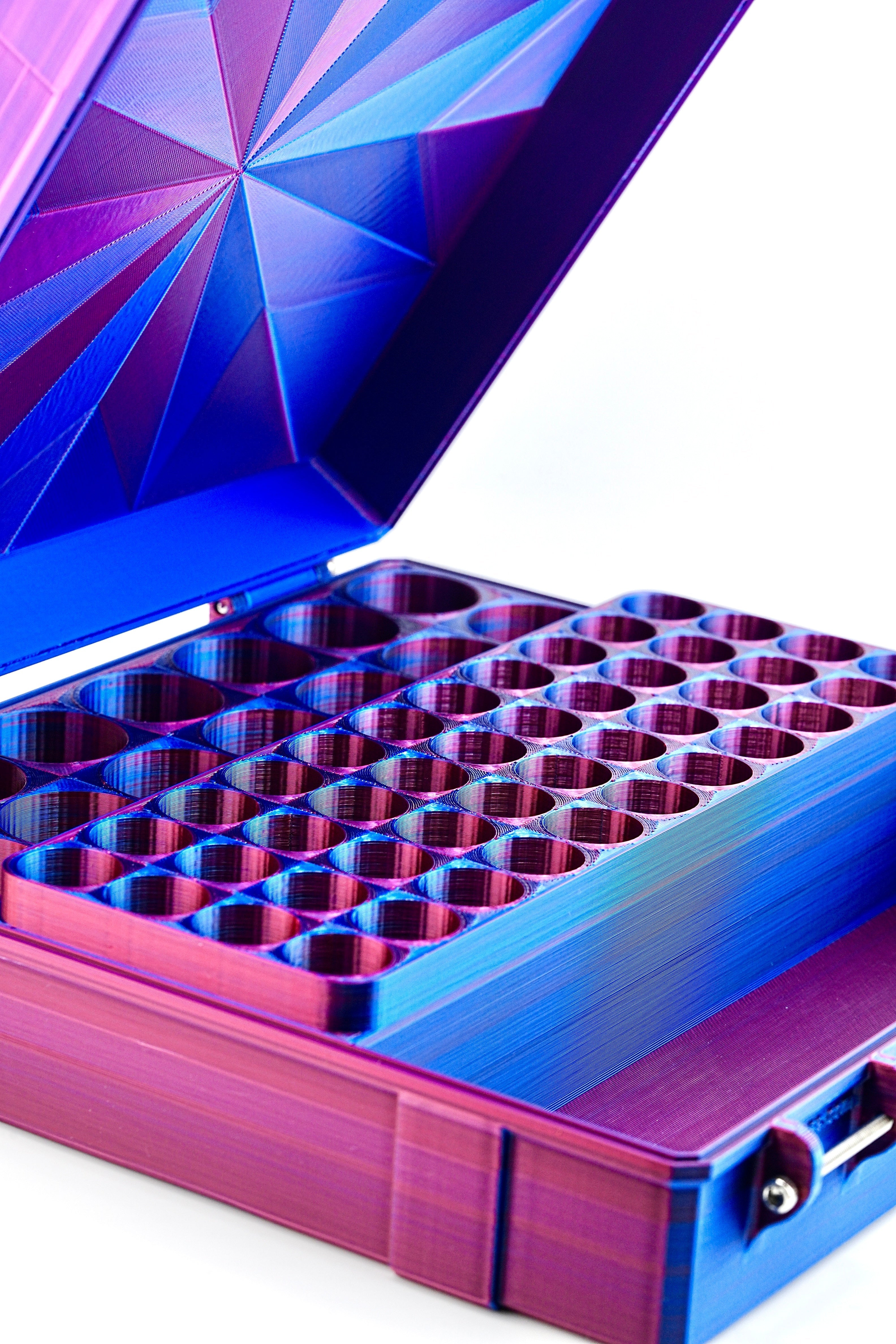
This means one PeptideCase handles your entire GLP-1 protocol regardless of which compound you're on — or if you're running both during a transition. The dedicated vial slots, insulated foam, and refrigerator-ready design work identically for 3ml research vials and standard compounded pharmacy vials. For the full storage details on each compound, see our Retatrutide storage guide and GLP-1 storage guide.
Whichever compound you choose, the protocol works best when your storage is organized, consistent, and purpose-built. Keeping $400–$600 worth of peptide in a dedicated case in your fridge — labeled, temperature-controlled, always in the same place — is the foundation that makes the rest of the protocol reliable.
Bottom Line: Tirzepatide is the practical, accessible, well-characterized choice for most people starting a GLP-1 protocol. Retatrutide is the more potent option for those who have maxed out on tirzepatide or who specifically want the triple-agonist mechanism. Both require the same storage setup — one case, one fridge spot, labeled vials — so the infrastructure investment is identical regardless of which path you take.