Retatrutide (LY3437943) is a triple agonist GLP-1/GIP/glucagon receptor compound that routinely runs $150–$300+ per vial from research-grade suppliers. It requires consistent refrigeration at 2–8°C, complete light protection, and protection from mechanical shock that can denature the peptide structure. The case you choose either handles all three or it doesn’t.
Here are the 10 most common storage approaches for retatrutide vials, ranked from worst to best based on real-world protection.
#10 — Worst: Loose in the Refrigerator
No container whatsoever — vials rolling freely on a fridge shelf. Every door opening floods the vials with light, every nudge risks tipping a vial, and there’s no record of which vial was reconstituted when. For a compound this expensive, this is simply negligent storage. The only scenario where this is acceptable is for the first 20 minutes between delivery and setting up proper storage.
#9 — Ziploc Freezer Bag
Better than nothing in exactly one way: vials stay grouped. A Ziploc blocks zero light, offers zero impact protection, and the vials rattle freely inside the bag on every fridge shelf vibration. The bag also doesn’t prevent moisture wicking from fridge condensation. If you’re using this as your primary retatrutide container, you’re taking on unnecessary risk with a compound that costs this much per dose.
#8 — Insulin Pen / Medication Pouch
Soft neoprene or fabric pouches sold for insulin pens are popular for GLP-1 storage because of the overlap in user base. The problem: these pouches are designed for pen-style injectors, not 10ml research vials. A 10ml retatrutide vial will either not fit or rattle uselessly in the oversized pocket. No rigid protection, no foam lining, and most pouches are thin enough that a dropped fridge shelf item can still make contact with the vial.
#7 — Original Vendor Shipping Packaging
The foam insert your retatrutide shipped in. This is legitimately acceptable for the first week — it blocks light, holds the vial upright, and was designed for the exact vial dimensions. The problem is durability: cardboard in a refrigerator absorbs moisture over days and weeks, softening the structure that keeps your vial from moving. After 10–14 days, the original shipping box is a liability, not an asset.
#6 — Repurposed Prescription Medication Vial Box
Some people reuse small cardboard boxes from compounding pharmacies. Similar problem to vendor packaging: cardboard degrades in humid fridge conditions. These boxes also rarely fit 10ml research vials — they’re sized for 5ml pharmacy vials. A retatrutide vial in a slightly-too-small box can crack the rubber stopper if forced in, which immediately compromises sterility.
#5 — Generic Eyeglass Case (Hard Shell)
This gets creative points. A hard-shell glasses case is opaque, rigid, compact, and can fit a 10ml vial with padding. The real limitation is organization: there’s one cavity, no individual slots, no space for BAC water or syringes, and no way to store more than one or two vials securely. If you’re running retatrutide as your only compound, this is a workable short-term hack. If you’re stacking it with GLP-1 or other peptides, you’ll immediately outgrow it.
Pro Tip: Whatever container you use, place a small desiccant packet inside to absorb moisture. Retatrutide lyophilized powder is hygroscopic — ambient fridge humidity accelerates degradation of unreconstituted vials stored without adequate sealing.
#4 — Clear Tupperware Container
A sealed container is a real step up: contained, stable on the shelf, and protected from spills. Clear Tupperware fails on light — every fridge door opening hits your retatrutide with full-spectrum light. If your vials are amber glass, some UV wavelengths are filtered; visible light still gets through. For short protocols, this is workable. For multi-week retatrutide courses where cumulative light exposure is the threat, it’s not ideal.
#3 — Opaque Hard-Shell Container (Generic)
An opaque box — dark Tupperware, a black storage container, anything that blocks light — solves the main flaw of option #4. Light protection plus spill protection plus organization. What’s still missing: foam vial slots (retatrutide vials can still shift and rattle), a dedicated BAC water slot, and any syringe or swab organization. If you own one already and only run retatrutide, this is a legitimate budget solution.
#2 — Pelican-Style Foam-Lined Hard Case
A compact hard-shell case with custom-cut foam. When the foam is cut precisely to 10ml vial diameter, this provides excellent impact protection and zero vial movement. The downside is effort: cutting foam to exact vial specs is tedious, and most DIY cuts are imprecise enough that vials still have some movement. Also no integrated BAC water or syringe storage. An excellent storage solution if you want to DIY it — just make sure the foam density is appropriate (medium-density closed-cell, not the soft polyurethane that compresses too easily).
#1 — Best: VialCase Dedicated Peptide Storage Case
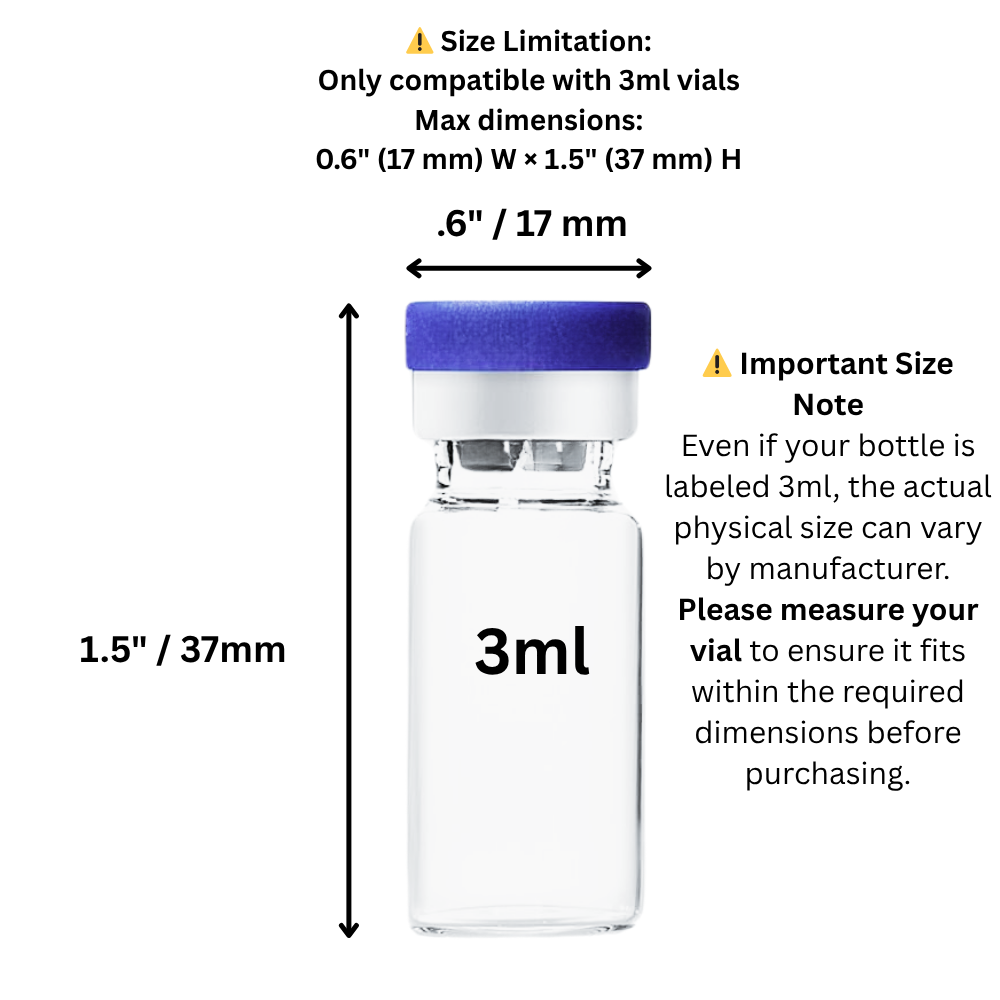
The only case on this list engineered from the ground up for 3ml and 10ml peptide vials. Precision-machined foam holds each retatrutide vial in its own slot with zero movement. The fully opaque hard shell blocks 100% of light. The compact footprint sits flat in the back of a middle fridge shelf — the most temperature-stable zone. Dedicated slots for BAC water, syringes, and alcohol swabs mean your entire retatrutide protocol lives in one organized case.
When you’re paying $200+ per vial, improvised storage isn’t worth the risk. Browse retatrutide-ready cases at VialCase →
Pro Tip: Label each retatrutide vial slot with the reconstitution date using a fine-tip marker on a small piece of tape. Retatrutide reconstituted with BAC water has a 4–6 week fridge window. Knowing exactly when you reconstituted each vial prevents accidentally dosing degraded compound.
Why Retatrutide Storage Is Especially Unforgiving
Most research peptides are forgiving of brief storage lapses. Retatrutide is less so for two reasons. First, it’s a long-chain triple-receptor agonist — structurally more complex than single-receptor GLP-1s, which means more potential degradation pathways. Second, the cost per vial means that a single degraded vial from careless storage is a $200+ mistake.
The three degradation threats in order of real-world impact: temperature excursions (storing near the door or in a fridge running warm), repeated light exposure (clear containers, loose vials), and mechanical disruption (vials rattling against each other or against hard surfaces during transport). A purpose-built case addresses all three simultaneously.
Frequently Asked Questions
What temperature should retatrutide be stored at?
Lyophilized (powder) retatrutide: store at 2–8°C (standard refrigeration). Reconstituted retatrutide: also 2–8°C, for no more than 4–6 weeks with bacteriostatic water. Do not freeze reconstituted retatrutide — freezing a solution disrupts peptide structure. See our full retatrutide storage guide for complete protocols.
Can I travel with retatrutide in my carry-on?
Yes. Retatrutide as a research compound is not subject to the same TSA medication volume rules as prescription drugs. Keep it in a hard-shell insulated case, pack BAC water separately, and ensure vials are in a secure, labeled container to avoid questions. See our peptide TSA guide for full carry-on protocols.
How long does retatrutide last in the fridge after reconstitution?
With bacteriostatic water: 4–6 weeks at 2–8°C in proper light-blocking storage. With sterile water: 5–7 days. These windows assume consistent temperature and complete light protection. Temperature excursions or light exposure shorten the effective window. Always track reconstitution date and discard when in doubt.