Peptide refrigerator storage is one of those things that looks simple until you realize how much variability there is between a $200 vial sitting loose on a fridge shelf versus that same vial inside a dedicated hard-shell case. Light, moisture, impact, and temperature fluctuation all threaten potency. The container you choose either fights all four threats or ignores them.
Here are the 10 most common fridge storage approaches for peptides, ranked from worst to best. Each one is something real people actually use.
#10 — Worst: Loose in the Fridge (No Container)
Rolling directly on a fridge shelf. No organization, no protection, no light blocking. Every time the fridge light turns on — which is every time the door opens — your reconstituted peptides take a direct hit. Vials tip over, knock each other, occasionally fall out entirely. If you spill anything on the shelf, your vials are swimming in it. No redeeming qualities for anything except the most casual short-term use.
#9 — Ziploc Bag
A marginal step up: at least the vials stay grouped and you get a tiny bit of spill protection. But a clear Ziploc blocks zero light. You still have no impact protection, no foam, no padding. The bag sits flat and vials roll around inside. Opaque freezer bags are slightly better but still offer no structure or vial-specific slots. Fine as a secondary layer around a real container, not as the primary solution.
#8 — Original Vendor Cardboard Packaging
The box your peptides shipped in. For the first week, this is actually acceptable — it blocks light and holds vials upright in their foam inserts. The problem is time. Cardboard in a refrigerator absorbs ambient moisture and slowly becomes soft and unreliable. The foam inserts aren't reusable across different peptides, and stacking multiple boxes quickly becomes disorganized. Good for the first few days, inadequate for any protocol that spans weeks.
#7 — Generic Pill Organizer
Pill organizers have compartments, which is appealing. The fatal flaw: pill compartments are sized for tablets, not 3ml or 10ml vials. Peptide vials will either rattle uselessly in oversized cells or not fit at all. No light blocking (most are translucent), no foam, and the lids don't create a reliable seal. Convenient to find, wrong tool for the job.
#6 — Clear Tupperware Container
A sealed container is a real improvement over a Ziploc — better spill protection, keeps vials from rolling, and creates a stable microenvironment inside the fridge. The major problem with clear Tupperware is light. A clear container provides zero light attenuation. Your vials are still fully exposed every time the fridge door opens. Still, for someone using opaque amber vials on a short protocol, this is a workable budget option.
Pro Tip: If you already own Tupperware, wrap your vials in a single layer of aluminum foil before placing them inside. You get DIY light blocking at zero cost. It's not elegant, but it works.
#5 — Aluminum Foil Wrapping
Actually effective for its primary purpose — foil blocks light completely. This is why pharmaceutical manufacturers use foil-backed blister packs. The problems are practical: foil tears when you handle it repeatedly, doesn't protect from impact, offers zero organization (which vial is which?), and looks like a science experiment gone wrong when someone opens your fridge. It works, it's just the worst version of a solution that has much better implementations.
#4 — Opaque (Dark-Colored) Tupperware
Swap the clear container for an opaque one and you've solved the light problem. This is a legitimate storage solution for budget-conscious users. Vials are in the dark, contained, and protected from spills. What's still missing: foam padding (vials rattle and can chip against each other), purpose-sized slots (you can't tell organization status at a glance), and there's no dedicated space for BAC water, syringes, or alcohol swabs. If you're running a single peptide for a short protocol, this works.
#3 — Generic Medicine / Travel Case
These are foam-lined hard-shell cases sold for medications or first aid. Better than Tupperware because the hard shell provides impact resistance and most are opaque. The limitation: they're designed for oral medication vials or small syringes, not 10ml peptide vials. Slots are often the wrong diameter and depth. A 10ml vial will either not fit or fit so loosely it still rattles. You'll spend more time making do than actually being organized.
#2 — Custom Foam-Lined Box
Cut-to-fit foam inside a small box or pelican-style case. When done well — proper foam density, correct hole diameter, snug fit — this is excellent protection. Vials can't move, can't tip, can't rattle. The foam itself provides some insulation against brief temperature excursions. The downsides are the effort required (cutting foam to fit 3ml vials precisely is finicky) and the lack of integrated storage for BAC water, syringes, and other protocol supplies. A great DIY solution if you have the time.
#1 — Best: VialCase Dedicated Peptide Storage Case
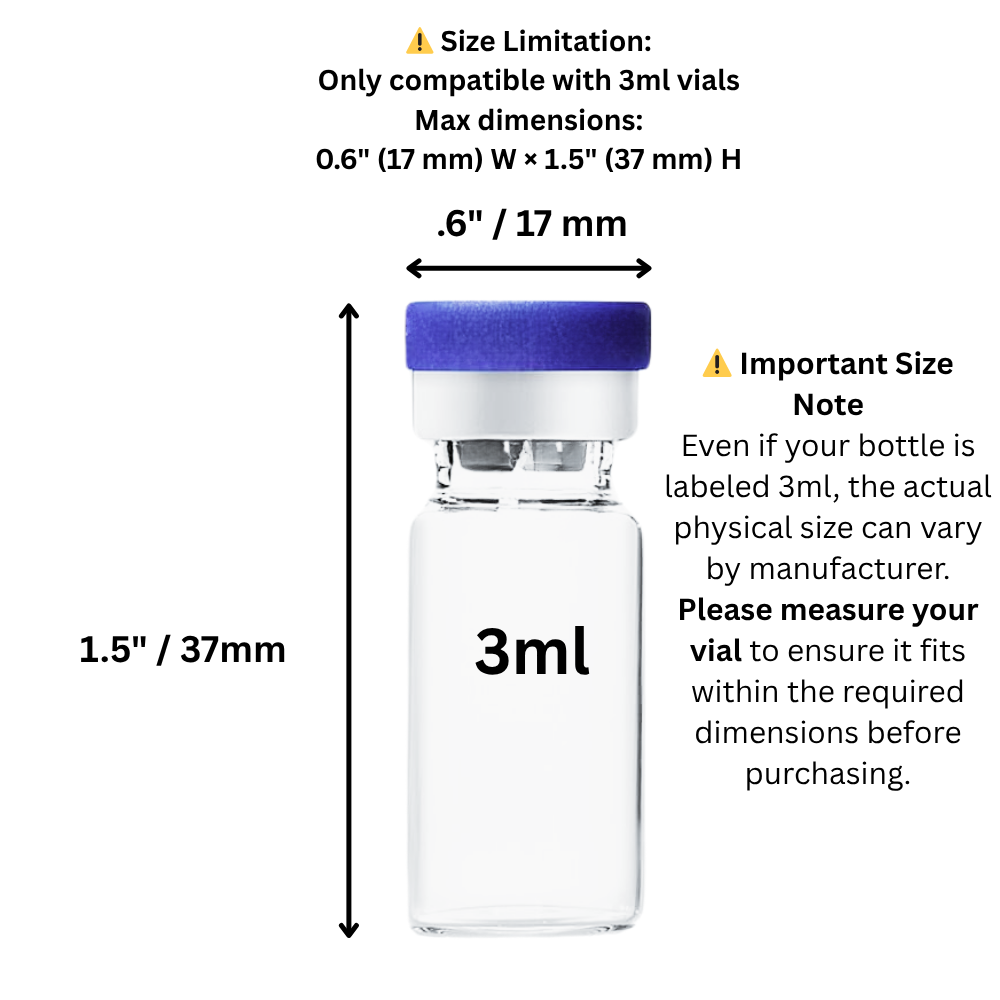
The VialCase is the only option on this list engineered specifically for 3ml and 10ml peptide vials. Precision-machined foam slots hold each vial snugly — no rattling, no tipping, no contact between vials. The fully opaque hard shell blocks 100% of light even when the fridge door swings open. The compact footprint is sized to sit in the back of the middle shelf, the coldest and most temperature-stable zone. There's a dedicated slot for BAC water and a syringe compartment so your entire protocol lives in one organized case.
The result: every threat to your peptides — light, impact, disorganization, moisture from spills — is addressed by design, not improvisation. If your peptides are worth $100+, they're worth a purpose-built case. Browse PeptideCase options →
Pro Tip: Label each vial slot with the peptide name and reconstitution date using a fine-tip marker on a small piece of tape. Knowing exactly when each vial was reconstituted lets you track the 4–6 week BAC water window without guessing.
Why Fridge Placement Matters As Much As the Container
Even the best storage case can't fix bad fridge placement. Temperature inside a standard home refrigerator varies by 2–4°C depending on location:
- Back of the middle shelf — coldest and most stable spot. Air circulation from the back vents keeps this zone closest to the thermostat setpoint (usually 3–4°C). This is where your peptides belong.
- Door shelves — temperature spikes 5–8°C every time the door opens. If you open the fridge 15 times a day, that's 15 thermal excursions. Over six weeks, this repeated cycling degrades reconstituted peptides measurably faster than back-of-shelf storage.
- Top shelf — warmer air rises. Top shelf runs 1–2°C warmer than middle shelf. Avoid for sensitive peptides.
- Crisper drawer — acceptable backup. More stable than the door but higher humidity, which matters for lyophilized powder stored without a sealed container.
The ideal setup: VialCase in the back of the middle shelf, never on the door. Your peptides stay at 3–5°C with minimal thermal cycling for the entire protocol duration.
How Often Should You Check Your Peptide Fridge?
A brief weekly check takes under 60 seconds and catches problems before they become expensive mistakes:
- Fridge temperature — a $10 digital fridge thermometer in the back-middle zone should read 2–8°C. If it's reading 10°C+, your fridge needs servicing.
- Vial appearance — reconstituted peptides should be a clear, colorless solution (some are faintly yellow). Cloudiness, particulate matter, or color change means the vial is compromised — discard it.
- Reconstitution dates — anything reconstituted more than 6 weeks ago with BAC water, or more than 7 days ago with sterile water, should be discarded regardless of appearance.
- Case integrity — check that the case is fully closed and seated properly. An ajar lid means light exposure every time the door opens.
Frequently Asked Questions
Can I store peptides in the fridge door?
No. The fridge door is the worst location in a refrigerator for temperature-sensitive compounds. Every time the door opens, the door shelf temperature spikes significantly. The back of the middle shelf is the coldest, most stable location in your fridge — always store peptides there.
Do I need an opaque container or will an amber vial protect my peptides?
Amber glass filters some UV wavelengths but not the full visible spectrum. Studies on peptide photo-degradation show that amber vials reduce but do not eliminate light-induced potency loss. An opaque hard-shell container (like VialCase) provides complete protection that amber glass alone cannot. Use both for maximum protection.
How long can reconstituted peptides stay in the fridge?
Reconstituted with bacteriostatic (BAC) water: 4–6 weeks at 2–8°C. Reconstituted with sterile water: 5–7 days. These windows assume consistent refrigeration in a proper container. Temperature excursions or light exposure shorten the effective shelf life. Always track your reconstitution date — when in doubt, discard and reconstitute fresh. See our full peptide shelf life guide for peptide-specific timelines.